
Comprehensive Guide to Abdominoplasty: Understanding the Tummy Tuck Procedure in Colombia
If you are struggling with excess skin and stubborn fat around your midsection, you might be highly interested in exploring the tummy tuck procedure in Colombia to restore your body's natural contours. This transformative surgical intervention, medically referred to as abdominoplasty, goes far beyond the capabilities of simple fat reduction techniques. It meticulously addresses the underlying weakened muscles and sagging skin that are often caused by various unavoidable life events.
Many frustrated individuals eventually discover that even the most rigorous diet and exercise routines alone cannot resolve these specific structural physical changes. Understanding the intricate medical details of this cosmetic surgery is the critical first step toward making a truly informed decision about reshaping your body. By comprehensively evaluating the benefits, risks, and recovery processes, you can confidently determine if this procedure aligns with your personal aesthetic goals. Let us delve deeply into the fascinating mechanics of abdominal contouring and how it can profoundly rejuvenate your physical appearance and self-confidence.
Video Chapters
What is a Full Tummy Tuck Surgery and Who is the Ideal Candidate?
A [00:01] full tummy tuck surgery, scientifically known as abdominoplasty, ranks among the most highly requested cosmetic enhancements globally. This specialized surgical intervention is explicitly designed to eradicate loose abdominal skin and fat deposits that refuse to budge. It also significantly reduces the visual severity of stretch marks located across the lower abdominal region.
By addressing these specific aesthetic concerns, the procedure delivers a dramatically more toned, taut, and proportionate midsection. However, it is paramount to recognize that not every individual qualifies as a perfect candidate for this extensive operation. The most suitable candidates are men and women who maintain a relatively stable body weight and are in excellent overall physical health.
It is a common medical misconception that a tummy tuck serves as an alternative to weight loss or a direct treatment for clinical obesity. Medical professionals strongly emphasize that patients must view this surgery strictly as an abdominal body contouring surgery rather than a shortcut to shedding pounds. [01:15]
Achieving high patient satisfaction relies heavily on possessing realistic expectations regarding the final surgical outcomes. A comprehensive physical evaluation performed by a highly skilled, board-certified plastic surgeon is the only definitive way to accurately determine your surgical suitability.
Key Traits of an Ideal Patient
- Weight Stability: Maintains a stable, healthy weight for at least six uninterrupted months prior to the consultation.
- Lifestyle Choices: Does not smoke, or is entirely willing to quit smoking well before the scheduled procedure to ensure proper healing.
- Future Planning: Is absolutely finished having children, as future pregnancies can reverse the intricate surgical muscle repair.
- Surgical Realism: Possesses realistic expectations regarding the precise size and placement of the permanent surgical scars.
Understanding the Primary Causes of Loose Abdominal Skin and Fat Deposits
There are several unavoidable physiological factors that directly contribute to the loss of skin elasticity and the stubborn accumulation of fat in the abdominal area. Multiple pregnancies stand out as one of the most prominent leading causes for these physical alterations. [00:10] The miraculous process of carrying a child inherently stretches the vertical abdominal muscles and the overlying skin far beyond their natural capacity to rebound.
Furthermore, an individual's unique genetic makeup plays a massive, often underestimated role in dictating exactly how and where their body naturally stores excess fat. Significant, rapid weight loss is another major contributing factor that can leave behind substantial amounts of excess, hanging skin. [00:25]
When human skin has been stretched tightly for an extended period, the internal collagen and elastin fibers become permanently damaged. Consequently, the skin completely loses its biological ability to shrink back to its original, tighter shape. This frustrating condition often persists stubbornly despite engaging in rigorous core-strengthening exercise routines and adhering to strict caloric deficits.
These lasting physical changes can unfortunately make the abdomen appear highly disproportionate when compared to the rest of the individual's body. This stark visual disproportion can severely negatively impact an individual's self-esteem and their daily comfort when wearing fitted clothing.
Common Causes of Abdominal Profile Changes
| Primary Cause | Observable Physical Effect | Targeted Surgical Solution |
|---|---|---|
| Pregnancy | Separated abdominal muscles and overly loose skin | Sutures internal muscles and excises the exterior skin flap |
| Massive Weight Loss | Heavy, hanging skin folds over the pubic area | Removes large volumes of redundant superficial tissue |
| Genetics | Stubborn, localized fat pockets that resist exercise | Utilizes contouring techniques and targeted fat cell removal |
Pre-Surgical Preparation and Anesthesia for Your Abdominal Body Contouring Surgery
The overall duration of a standard abdominoplasty procedure can vary quite significantly based on several patient-specific physiological factors. The exact amount of excess tissue that requires surgical removal heavily dictates the active timeline of the operation. [01:50] Typically, a full, comprehensive contouring procedure will last anywhere from two to five solid hours inside the operating room. [02:05]
Before the surgical intervention officially begins, the attending medical team will meticulously clean and sanitize the entire targeted abdominal area. The lead surgeon will then use a specialized medical marker to precisely draw the planned incision sites directly onto the patient's skin. [02:10]
Because this is a highly complex and invasive procedure that often involves the removal of a large quantity of tissue, proper anesthesia administration is absolutely non-negotiable. It is highly probable that the specialized surgical team will administer general anesthesia to ensure the patient remains completely unconscious and pain-free throughout the entire process. [02:27]
In some distinctly less complex scenarios, or when performing a targeted "mini" tummy tuck, a different anesthetic approach might be carefully selected. The anesthesiologist may occasionally opt to administer a powerful local anesthesia combined with a deep intravenous sedative. This specific combination guarantees that the patient remains incredibly relaxed, fully comfortable, and entirely unaware of the active surgical process occurring. [02:35]
Prior to the scheduled surgery date, patients are heavily advised to prepare a highly comfortable recovery space within their home environment. Stocking up on soft, easily digestible foods and placing essential daily items within arm's reach heavily prevents unnecessary physical straining during the initial healing days. It is also absolutely mandatory to arrange for a responsible adult to drive the patient home and provide continuous assistance for the first critical forty-eight hours.
Step-by-Step Breakdown of the Full Abdominoplasty Procedure Timeline
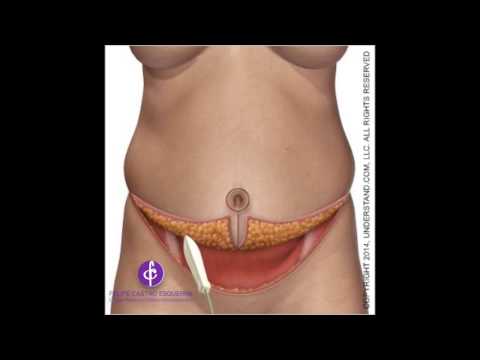
Once the administered anesthesia has fully taken effect, the operating surgeon officially initiates the core phase of the full abdominoplasty procedure timeline. The absolute first major surgical step involves creating the primary lower incision, which is strategically placed just slightly above the pubic hairline. [02:46]
This specific extended incision travels horizontally right across the lower abdomen, generally stretching evenly from one prominent hipbone over to the other. The precise length and the exact curvature of this incision are entirely dependent on the specific physical contours of the patient's body and the total volume of skin being addressed.
Following the successful lower incision, the surgeon expertly creates a secondary, much smaller circular incision that completely surrounds the natural navel. [03:17] This highly delicate cut carefully frees the belly button from the surrounding abdominal skin, allowing the top layer of skin to be safely shifted without displacing the underlying central navel stalk.
Next, utilizing a specialized surgical cautery tool, the surgeon gently separates the thick protective layer of skin and fat from the underlying abdominal muscle wall. [03:28] This separated tissue flap is then carefully lifted upward toward the patient's lower rib cage. Elevating this heavy tissue is a highly critical maneuver, as it provides the surgeon with unobstructed, direct visual access to the vertical abdominal muscles that desperately require structural repair. [03:30]
Repairing Weakened Abdominal Muscles for a Flatter Midsection
One of the most medically significant and visually impactful steps in repairing weakened abdominal muscles occurs immediately once the upper tissue flap is lifted. The surgeon will briefly focus entirely on the vertical abdominal muscles, which have often been aggressively stretched apart and severely weakened over many years. [00:54]
Using incredibly strong, medical-grade permanent sutures, the surgeon systematically pulls these separated vertical muscles securely back toward the absolute center of the abdomen. [04:12] By forcefully tying these core muscles closely together, the surgeon essentially rebuilds and fortifies the entire structural integrity of the internal abdominal wall.
This deep internal suturing process is what truly creates a noticeably firmer, flatter, and structurally sound foundation for the patient's beautiful new midsection. It goes far beyond simple surface aesthetics; it functionally corrects the anatomical separation known scientifically as diastasis recti. As these muscles are pulled completely tight, the patient naturally achieves a much narrower and highly defined waistline.
This specific internal phase of the surgery brilliantly highlights exactly why a tummy tuck offers dramatic results that surface-level fat removal simply cannot match. It permanently restores the youthful, tight internal muscular corset that naturally holds the heavy abdominal organs inward, effectively preventing the common protruding "pooch" appearance.
Navel Repositioning and The Combination of Liposuction and Tummy Tuck
After the underlying abdominal muscles have been fully repaired and heavily secured, the operating surgeon smoothly moves on to the delicate skin redraping phase. The previously lifted, heavy layer of skin and fat is pulled down incredibly firmly over the newly tightened muscular framework. [04:43]
Because the original skin flap has been stretched distinctly downward, the patient's original belly button is now completely covered by this freshly redraped tissue. To easily correct this, the surgeon carefully measures and creates a brand-new surgical opening directly in the descended skin flap. [05:05] The underlying natural navel is then pulled precisely through this new hole and meticulously sutured into its natural, aesthetically pleasing central position.
To further refine the final body silhouette, many top surgeons strongly recommend utilizing the combination of liposuction and tummy tuck during the exact same operation. [01:05] While the tummy tuck genuinely excels at removing hanging skin and repairing separated muscle, liposuction is entirely unparalleled for directly targeting stubborn, localized fat deposits situated aggressively on the flanks and waist.
This highly effective dual-modality approach entirely ensures that the entire midsection looks incredibly smooth, highly harmonious, and exquisitely contoured from every possible viewing angle. Finally, the extreme excess, overhanging skin situated well below the original surgical incision line is fully excised and permanently removed from the body. [05:11]
Essential Post-Operative Care and Tummy Tuck Recovery Timeline Explained
Navigating the complex tummy tuck recovery timeline and care protocol is just as tremendously important as the surgery itself for ensuring optimal, beautiful healing results. Immediately following the successful completion of the active procedure, patients are securely fitted with a specialized medical compression garment or a heavy-duty abdominal binder. [05:40]
This noticeably firm, highly elastic garment is absolutely critical for actively reducing post-operative swelling and aggressively preventing the dangerous accumulation of fluids directly beneath the skin. It also rapidly provides essential physical support and comforting bodily stability to the sensitive healing abdominal tissues as the recovering patient slowly begins to move around. [05:48]
During the initial stressful weeks of the active recovery process, it is highly likely and completely biologically normal to experience localized abdominal pain, significant dark bruising, and moderate fluid swelling. [06:08] The attentive surgical team will immediately prescribe targeted pain medications to perfectly ensure these widely expected bodily symptoms are managed highly effectively, safely keeping the healing patient as physically comfortable as possible.
Most dedicated patients excitedly find that they are sufficiently healed to successfully return to a standard desk job or non-strenuous daily physical activities within a quick span of one to three short weeks. [06:53] However, achieving full bodily recovery is absolutely a marathon, not a quick sprint.
At-Home Recovery Essentials
- Front-Opening Clothing: Loose shirts that do not require pulling over the head.
- Elevation Pillows: Firm pillows to prop up the knees and back to reduce incision tension.
- Hydration Station: Keeping bottled water nearby to flush out anesthetics.
Managing Scars, Drainage Tubes, and Long-Term Expectations for Abdominoplasty
To highly proactively prevent the extremely uncomfortable buildup of excess biological fluid during the highly crucial early surgical healing stages, surgeons routinely utilize specialized surgical drainage tubes. [05:17] These incredibly small, highly flexible plastic tubes are temporarily, safely inserted right into the lower abdomen and will typically remain properly in place for roughly two to three full weeks.
Recovering patients will be thoroughly and carefully instructed on exactly how to safely empty, strictly measure, and accurately record the daily fluid levels from these drains entirely at home. Once the daily fluid output significantly decreases to a medically safe threshold, the plastic surgeon will painlessly and quickly remove the tubes during a routine follow-up medical appointment.
When seriously discussing the honest long-term expectations for abdominoplasty, interested patients must fully understand the completely permanent nature of the resulting surgical incision scar. Although the long scar is meticulously placed low enough to be easily and effectively hidden beneath most standard underwear and bikini swimwear, it will unfortunately never completely vanish from the skin. [07:11] However, with highly proper daily scar care, it will beautifully, gradually fade and wonderfully flatten over the course of several long months to a full year.
To fully protect and perfectly preserve your stunning new surgical investment, immediately committing to a highly healthy, physically balanced lifestyle is absolutely mandatory. [07:30] Unplanned future pregnancies or experiencing highly substantial weight fluctuations can severely stretch out the tightly repaired internal muscles and the beautifully tightened exterior skin. [01:35] By strictly maintaining your stable weight through proper daily nutrition and a highly regular exercise routine, the beautiful, transformative results of your abdominal contouring surgery can easily last for many glorious decades.
Ready to Transform Your Midsection with Abdominoplasty?
If you are fully considering an abdominal body contouring surgery to rapidly achieve a noticeably firmer, highly flattering stomach, deeply take the highly important next step today. Consult with top board-certified plastic surgeons and discover exactly how a premium tummy tuck procedure in Colombia can safely and beautifully restore your ultimate body confidence.
Get Free QuoteView Full Video Transcript
00:01
La cirugía de abdomen o abdominoplastia es uno de los procedimientos quirúrgicos cosméticos más comúnmente realizados. Con frecuencia, factores tales como embarazos múltiples y la genética pueden contribuir al desarrollo de piel floja, depósitos de grasa y estrías en la región abdominal.
00:25
Incluso la pérdida sustancial de peso puede contribuir al desarrollo de piel floja en el abdomen. Debido a que estas áreas generalmente persisten a pesar de llevar una buena alimentación y realizar ejercicio, pueden provocar que el abdomen se vea desproporcionado en relación con el resto del cuerpo.
00:44
La abdominoplastia completa remueve la piel suelta, los depósitos de grasa y las estrías de la región abdominal. Además, se tensan los músculos abdominales verticales que se han estirado y debilitado con el tiempo, restituyendo así el aspecto de un abdomen más firme y plano.
01:05
Los procedimientos de abdominoplastia pueden realizarse solos, pero con frecuencia se realizan con liposucción para mejorar aún más los contornos corporales. No debe considerarse a la abdominoplastia como un tratamiento para la obesidad ni como un sustituto de una buena alimentación y ejercicio.
01:25
Las personas que consideren someterse a una abdominoplastia deben estar sanas y tener un estado físico relativamente bueno. Los futuros embarazos y los cambios sustanciales de peso luego de una abdominoplastia, al igual que la presencia de cicatrices de cirugías anteriores, pueden disminuir la efectividad y la duración del tratamiento.
01:50
La duración de un procedimiento de abdominoplastia puede variar según la cantidad de tejido a remover o la necesidad de un procedimiento adicional como la liposucción. Sin embargo, la mayoría de los procedimientos de abdominoplastia duran aproximadamente de dos a cinco horas.
02:10
Antes de comenzar con el procedimiento de abdominoplastia, se limpiará el área de tratamiento y se marcarán los sitios de incisión. En procedimientos complejos que implican la remoción de una gran cantidad de tejido o que se realizan en combinación con otro procedimiento, es probable que se administre anestesia general.
02:35
En cambio, para aquellos procedimientos menos complejos, puede administrarse anestesia local y un sedante, que contribuirán a su comodidad y relajación. En general, los procedimientos de abdominoplastia completa requieren dos incisiones.
02:46
El cirujano realizará una incisión justo por encima del área púbica que se extiende de un hueso coxal al otro. La longitud de la incisión y su forma dependerán del alcance del tratamiento y de los contornos de su cuerpo. Aunque el cirujano intentará realizar la incisión en un lugar que pueda ocultarse con un traje de baño o con la ropa interior, es importante saber que la cicatriz será permanente. Generalmente se realiza una segunda incisión alrededor del ombligo.
03:22
La piel y capas de grasa ubicadas por sobre la pared abdominal se separan de ella utilizando un dispositivo de cauterio. Luego, se levanta el tejido hacia la caja torácica para exponer los músculos abdominales.
04:12
Para tensar el abdomen, el cirujano suturará los músculos abdominales, tirando de ellos y uniéndolos, lo cual creará una pared abdominal más plana y firme, y una cintura más delgada. El cirujano estirará la capa de piel y grasa que se había levantado anteriormente y la colocará de vuelta firmemente sobre la pared abdominal.
04:53
Aunque su ombligo permanece intacto y unido a la pared abdominal, quedará cubierto por la capa de piel cuando esta sea colocada nuevamente en su lugar. Por lo tanto, el cirujano realizará una incisión en las capas de piel y grasa para crear un nuevo hoyo para su ombligo.
05:11
Se removerá la piel y la grasa que cuelgan por encima de la línea de incisión original. Para evitar la acumulación de líquido durante la cicatrización, es probable que se coloquen tubos de drenaje en el abdomen, que permanecerán allí durante dos a tres semanas aproximadamente.
05:30
Las incisiones se suturarán y se colocarán vendajes y gasas. Es muy probable que deba usar un tipo de vendaje de compresión similar a una faja. Este vendaje ajustado contribuirá a reducir la hinchazón evitando la acumulación de líquido y proveerá comodidad y sostén a lo largo del proceso de cicatrización.
05:55
Según el alcance de la cirugía, es posible que deba usar este vendaje de compresión durante varias semanas. Al igual que con cualquier procedimiento de cirugía mayor, es probable que experimente dolor, hematoma e hinchazón, que en su mayor parte disminuirán en el transcurso de unas pocas semanas.
06:18
Aunque posiblemente no pueda pararse completamente en posición erguida, es importante que comience a caminar durante cortos períodos inmediatamente luego del procedimiento con el fin de facilitar el flujo sanguíneo. Los puntos se disolverán con el tiempo. No obstante, los puntos no disueltos se removerán luego de aproximadamente una semana, mientras que las suturas pueden permanecer en su lugar por hasta dos semanas.
06:51
La mayoría de los pacientes pueden regresar al trabajo en el lapso de una a tres semanas. Sin embargo, puede tomarle de seis a ocho semanas antes de que se sienta capaz de retomar sus actividades normales, incluyendo actividades de levantamiento de objetos pesados y ejercicios extenuantes.
07:11
Aunque la cicatriz será permanente, se desvanecerá gradualmente con el transcurso del tiempo. Es importante saber que si queda embarazada o si experimenta una pérdida o aumento sustancial de peso, los resultados del procedimiento pueden verse comprometidos.
07:28
No obstante, con una buena alimentación y una rutina de ejercicios, los resultados de la abdominoplastia pueden mantenerse durante varios años.


.png)




.png)

.png)
.png)
.jpg)
.jpg)
.jpg)
.jpg)








Share this listing