


Revolutionary Stem Cell Therapy for Avascular Necrosis: Kemi's Path to Pain-Free Living
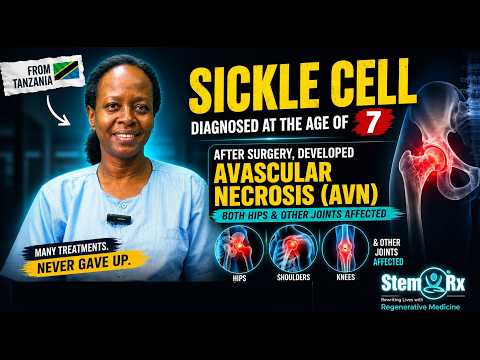
For individuals living with Sickle Cell Disease, the battle for health is often a lifelong marathon starting from infancy. Kemi Rembe Kibogoyo, a 47-year-old woman from Tanzania, faced this reality since she was just nine months old. However, the complications didn't stop there. Her journey took a harrowing turn through kidney stones, intensive care, and eventually the debilitating onset of Avascular Necrosis (AVN) in her hips and shoulders.
In this featured video, we witness a breakthrough in regenerative medicine. By choosing stem cell therapy in India over invasive total joint replacement surgery, Kemi found a way to regain her mobility and independence. This is a story of hope, advanced science, and the power of epigenetic modulation in treating conditions once thought to be permanent or only solvable through major surgery.
Video Chapters & Quick Navigation
A Lifelong Battle: Sickle Cell Disease and Progressive Complications
Sickle Cell Anemia is a genetic blood disorder where red blood cells take on a rigid, crescent shape. These "sickle" cells often get stuck in small blood vessels, blocking blood flow and oxygen to various parts of the body. For Kemi, this diagnosis [00:11] began at nine months old, leading to decades of "crises"—episodes of severe pain and potential organ damage.
The complexity of her case increased significantly in 2021 when she was diagnosed with kidney stones [02:12]. What should have been a standard medical issue resulted in a cholecystectomy and a harrowing multi-week stay in the ICU. The physiological stress of these events, combined with the underlying sickle cell condition, set the stage for further vascular collapse.
In 2023, after traveling to Hyderabad for further treatment, Kemi required a total blood exchange [02:45] to manage the sickle cell complications during surgery. By early 2024, her health took another blow with a pulmonary embolism [03:09]. This series of events culminated in the most restrictive condition yet: Avascular Necrosis.
Understanding Avascular Necrosis (AVN) in Sickle Cell Patients
Avascular Necrosis, also known as osteonecrosis, occurs when the blood supply to the bone is interrupted. Without blood, the bone tissue dies and eventually collapses. In sickle cell patients, the abnormal red blood cells frequently cause these micro-obstructions in the femoral head (hip) and the humeral head (shoulder).
Kemi describes the agonizing reality of living with AVN [03:26]. The pain wasn't just internal; it manifested as a total loss of daily function. She reached a point where she could no longer perform basic self-care tasks. The "simple" act of combing her hair, putting on a shirt, or wearing a jacket became impossible feats due to the necrosis in her shoulders.
The Limitations of Conventional Surgery
Most hospitals suggested Kemi undergo total joint replacement for both her hips and both her shoulders—four major surgeries in total [04:11]. For a patient with a history of pulmonary embolism, sickle cell crisis, and ICU admissions, four major surgeries presented an astronomical risk. This is where regenerative medicine offers a safer, more holistic alternative.
The Stem Cell Breakthrough at StemRx Hospital
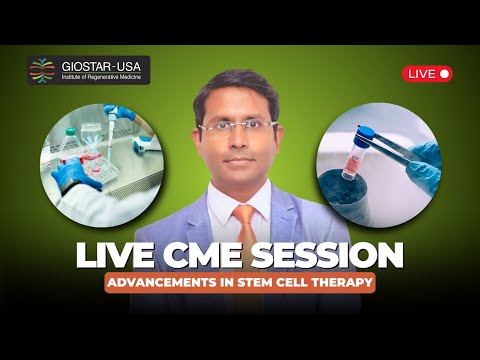
Seeking an alternative to the daunting four-operation plan, Kemi connected with Professor Pradeep Mahajan and his team at StemRx Hospital in India. Professor Mahajan, a pioneer in regenerative medicine, has been developing specialized protocols for AVN since 2016 [01:15].
The treatment Kemi received was not a simple injection. It involved a comprehensive protocol that targeted both the localized bone death and the systemic sickle cell environment. Unlike traditional surgery that replaces the joint with metal and plastic, stem cell therapy aims to regrow the dead bone and restore natural blood flow to the area.
| Treatment Aspect | Traditional Approach | StemRx Regenerative Approach |
|---|---|---|
| Procedure | Total Joint Replacement (Hips/Shoulders) | Stem Cell Implantation & Epigenetic Modulation |
| Recovery Time | 6-12 months for multiple surgeries | Rapid improvement within 30 days |
| Risk Profile | High (Infection, Embolism, Sickle Crisis) | Low (Minimally invasive, autologous cells) |
| Longevity | Artificial joints may wear out (15-20 years) | Restores natural biological function |
The Science of Epigenetic Modulation
Dr. Michael Everist Magoti, a medical doctor from Tanzania and disciple of Professor Mahajan, explains that Kemi underwent a two-pronged innovative treatment [00:45]. The first focused on the AVN in her shoulders and hips. The second, and perhaps most revolutionary, was epigenetic modulation [01:27].
Epigenetic modulation involves changing how the body expresses its genes without changing the DNA sequence itself. In the context of Sickle Cell Anemia, this approach aims to encourage the body to produce more "fetal hemoglobin" or healthier red blood cells, reducing the frequency of the "sickling" that causes bone death in the first place. This addresses the root cause of her AVN, not just the symptoms.
Rehabilitation and Miraculous Results: Restoring Daily Life
The medical team at StemRx emphasizes that stem cell implantation is the catalyst, but comprehensive rehabilitation is the engine of recovery. Kemi underwent intensive physiotherapy designed to stimulate the newly implanted cells and retrain her muscles [05:25].
After just 30 days of treatment [04:45], the results were visually stunning. Kemi, who previously couldn't raise her arms, demonstrated full range of motion. "Now I can actually do this," she says while reaching behind her head [06:07]. "I couldn't reach the back of my head before."
Key Milestones in Kemi's Recovery:
- Mobility: Restored ability to walk without pain after prolonged sitting [03:47].
- Self-Care: Gained the ability to comb her own hair and dress herself independently [05:05].
- Professional Function: Restored the ability to point and gesture, which is vital for her line of work [06:16].
- Sleep Quality: Significant improvement in sleep, as the constant joint pain had previously made resting impossible.
The Patient Experience: Excellence in Medical Tourism
Traveling to a foreign country for medical care can be daunting. Kemi speaks warmly about the hospitality and professionalism at StemRx. She highlights the "one prick" IV expertise of the nursing staff [06:57]—a small detail that means the world to a sickle cell patient whose veins are often scarred from years of hospitalizations.
The personalized care from the rehabilitation center ensured that her exercises were perfectly calibrated—not too much to cause pain, but enough to ensure the stem cell implantation worked effectively. "The staff have been very friendly... otherwise, I wouldn't have survived living in a foreign country with different food and language," she notes [06:31].
A Global Perspective on Healing
Kemi's story is a testament to the evolving landscape of global healthcare. By combining the expertise of Tanzanian doctors like Dr. Michael with the pioneering regenerative technology of India's Professor Mahajan, Kemi accessed a treatment that was unavailable or cost-prohibitive elsewhere. She concludes her testimonial with a wish for Professor Mahajan: "May God give him long life so he keeps on doing what he is doing. It’s magical." [07:26].
Ready to Explore Stem Cell Therapy in India?
PlacidWay Medical Tourism connects you with world-leading regenerative medicine centers like StemRx. Recover your mobility and avoid invasive surgeries with customized stem cell protocols.
GET A FREE QUOTEView Full Video Transcript
00:00:11 I have been diagnosed with sickle cell since I was nine months old.
00:00:21 Since 2021, I was diagnosed with kidney stones which also brought some complications which took me to ICU for a couple of weeks.
00:00:23 I'm happy. Any word to Prof? So that he keeps on doing what he is doing, it's magical.
00:00:25 My name is Dr. Michael Everist Magoti, I'm a medical doctor and actually a disciple of Professor Mahajan.
00:00:42 Kemi came for treatment and she was undergoing two treatments at a time. One was about the AVN (Avascular Necrosis) on both shoulders and hips.
00:00:59 And the second one, this was actually an innovative treatment which if it goes very well for her, it might be another success in alternative for people having sickle cell anemia.
00:01:27 When it comes to epigenetic modulation, this is another means of treatment and probably it will be a breakthrough in sickle cell caretaking.
00:01:37 My name is Kemi Rembe Kibogoyo from Tanzania, 47 years old female with sickle cell disease.
00:01:59 In 2021, I had to undergo a cholecystectomy which brought complications to ICU. Then in 2023, I went to Apollo India where they had to put a stent.
00:02:44 They had to do blood exchange, total blood exchange for the process to go smoothly because of my sickle cell disease.
00:03:03 In 2024 January, I got very sick... they told me I had pulmonary embolism which I was admitted for about one month.
00:03:26 After treatment of embolism, that's when they realized I have Avascular Necrosis towards the end of 2024.
00:03:41 Even doing basic chores was difficult. Walking was difficult. I couldn't comb my hair, I couldn't put on my shirt, I couldn't even tie my hair back.
00:04:05 Most hospitals said I have to undergo total replacement for both hips and shoulders. Four operations.
00:04:25 I heard about StemRx through Dr. Michael Magoti from Tanzania. He connected me with Professor Pradeep Mahajan.
00:04:45 I have been here for 30 days. Since June 3rd until today July 2nd. My movements have increased. I can do everything by myself.
00:05:12 I can sleep well, I can comb my hair, I can wear my own shirt. Proper care from the rehabilitation center where they have been so attentive.
00:05:40 Stem cell implantation through my joints is actually going to work according to the plan. I'm very much grateful.
00:06:07 Now I can actually do this (reaches back of head). I couldn't do this before.
00:06:21 In my line of work, I have to show people things and I couldn't raise my hand to do that.
00:06:31 The staff have been very friendly. The nurses were very kind. The best thing is when they want to prick you to find a vein for IV, it's just one prick. No repeat.
00:07:26 May God give Prof long life so he keeps on doing what he is doing. It's magical.

















Share this listing