
Joint Stability: Knee Replacement Surgery in Hamburg, Germany
For millions of individuals worldwide living with chronic knee pain, simple daily movements like walking, climbing stairs, or standing up from a chair can gradually turn into painful obstacles. Severe osteoarthritis, traumatic injuries, and progressive cartilage degradation often leave patients struggling to maintain their independence and quality of life. When non-surgical and conservative interventions no longer yield relief, seeking specialized orthopedic treatment becomes a paramount decision. Hamburg, Germany, stands out as a leading destination for international patients offering world-class care in joint endoprosthetics.
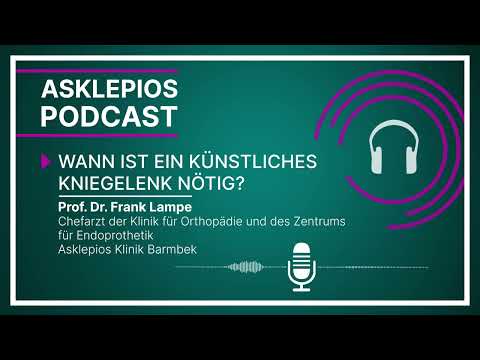
In this featured expert episode from the Asklepios Health Podcast, Kirsten Carla sits down with Prof. Dr. Frank Lampe, Chief Physician of the Department of Orthopedics and Center for Endoprosthetics at Asklepios Klinik Barmbek. Together, they explore the critical indicators for knee replacement, the biomechanical differences between partial and total knee implants, cutting-edge computer-assisted navigation and robotic surgical techniques, and realistic timelines for rehabilitation and recovery. Whether you are currently exploring Knee Replacement Surgery in Hamburg Germany options or seeking specialized medical care abroad, this comprehensive guide offers the insights needed to make an informed medical decision.
Video Chapters & Quick Navigation
Identifying the Right Time: When Is Knee Surgery Recommended?
Determining the exact moment to move forward with knee replacement surgery in Hamburg Germany is a personalized clinical decision. Patients often wonder whether there is an absolute metric or specific radiological stage that immediately dictates surgery. As Prof. Dr. Frank Lampe explains at [00:01:01], the single most decisive factor is the individual's "level of suffering" combined with the failure of conservative treatment modalities.
Most patients presenting for knee replacement in Germany have endured years of progressive discomfort. They have typically exhausted conservative therapeutic steps including physical therapy, targeted weight management, anti-inflammatory medications, intra-articular injections, and lifestyle modifications. When these non-surgical interventions fail to provide lasting pain relief and daily tasks become unbearable, joint endoprosthetics should be thoroughly considered.
Primary Clinical Indicators for Knee Replacement:
- Persistent joint pain during basic activities, such as walking, standing, or negotiating stairs.
- Chronic, nagging knee pain during rest or sleep that prevents restorative rest.
- Severe stiffness that restricts the natural range of motion and limits bending or straightening the leg.
- Progressive joint deformity, such as the noticeable development of bow-legged or knock-kneed alignment.
- Inability to participate in personal hobbies, social outings, or maintain employment functions.
At [00:01:18], Prof. Lampe emphasizes that when quality of life degrades to the point where independence is compromised, surgical intervention becomes a constructive solution to restore mobility rather than a last resort of despair.
Age Factors and Patient Eligibility: Is There an Age Limit?
A common misconception among orthopedic patients is that artificial knee in Germany treatments are exclusively reserved for elderly populations, or conversely, that younger patients must suffer through pain until reaching a arbitrary age threshold. Prof. Dr. Frank Lampe addresses this myth directly at [00:01:43], explaining that there is no rigid lower or upper age barrier for endoprosthetic procedures.
Younger adults may experience severe localized cartilage destruction due to post-traumatic osteoarthritis resulting from sports injuries, industrial accidents, or congenital malalignments. For these individuals, enduring decades of severe pain and physical limitations is unfeasible. If non-surgical options are completely exhausted, an artificial joint can restore career stability and active living.
Similarly, advanced age alone is not a contraindication for undergoing knee surgery in Germany. At [00:02:07], Prof. Lampe points out that preserving mobility in older individuals is vital to overall health. Losing the ability to walk independently increases risks associated with cardiovascular decline, systemic frailty, and social isolation. Therefore, as long as a comprehensive medical evaluation confirms sufficient general health and manageable surgical risk factors, senior patients can benefit immensely from modern joint replacement techniques.
Understanding Your Options: Partial vs. Total Knee Prosthesis
Not every patient requiring surgical intervention needs a complete joint replacement. Contemporary endoprosthetics focuses on targeted preservation, replacing only the damaged cartilage and underlying bone while leaving healthy anatomical structures intact. As discussed at [00:02:35], medical teams carefully analyze whether a partial or total knee prosthesis in Germany is required.
| Criteria / Feature | Partial (Unicompartmental) Prosthesis | Total Surface Replacement Prosthesis |
|---|---|---|
| Arthritis Scope | Localized to a single compartment (medial or lateral). | Widespread, multicompartmental degeneration. |
| Ligament Requirements | Requires fully intact cruciate (ACL/PCL) & collateral ligaments. | Accommodates ligament degeneration or structural laxity. |
| Bone & Tissue Preservation | Preserves healthy cartilage, bone, and key stabilization ligaments. | Replaces damaged weight-bearing surfaces across the joint. |
| Kinematics & Feeling | Offers a highly natural joint sensation and rapid motion recovery. | Provides exceptional long-term stability and pain elimination. |
At [00:02:54], Prof. Lampe notes that unicompartmental knee prostheses are ideal when the patient can point directly to a localized point of pain, supported by X-ray findings showing isolated cartilage erosion. However, for a partial knee replacement to succeed long-term, the patient's anterior and posterior cruciate ligaments, as well as the lateral collateral ligaments, must be fully healthy and functional [00:04:21].
The Clinical Diagnostic Process at Asklepios Kliniken Hamburg
A successful surgical outcome depends on rigorous pre-operative clinical evaluation. At Asklepios Klinik Barmbek in Hamburg, Germany, every patient undergoes a standardized, thorough diagnostic pathway to map out their exact joint biomechanics before entering the operating room.
As detailed by Prof. Lampe at [00:04:54], the diagnostic journey includes three main stages:
- Comprehensive Medical History: A deep discussion regarding pain duration, trigger movements, prior conservative treatments, personal activity goals, and underlying medical conditions.
- Detailed Clinical Examination: Physical assessment of active and passive range of motion, ligament stability, alignment, swelling, localized tenderness, and gait mechanics.
- Diagnostic Imaging Protocols: High-resolution conventional X-rays in standing, weight-bearing positions. As Prof. Lampe notes at [00:05:21], standard weight-bearing radiographs are usually sufficient to evaluate cartilage loss and bone-on-bone contact, often making costly MRIs unnecessary unless soft tissue pathology needs separate clarification.
Demystifying the Procedure: Modern "Surface Replacement" Concepts
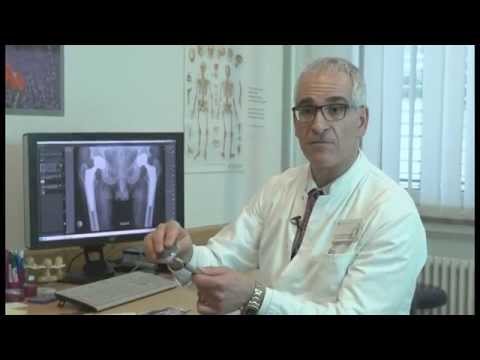
The term "total knee replacement" often creates anxiety because patients assume the surgeon completely amputates or removes the entire biological knee joint. During the interview at [00:05:53], Prof. Dr. Frank Lampe demonstrates using a physical anatomical model that contemporary procedures are better described as "surface replacement prostheses."
Rather than removing the joint in its entirety, the surgical procedure closely resembles placing a protective dental crown over a damaged tooth:
- Minimal Bone Resection: Surgeons remove only thin, damaged slices of worn bone and damaged cartilage from the distal femur and proximal tibia [00:06:23].
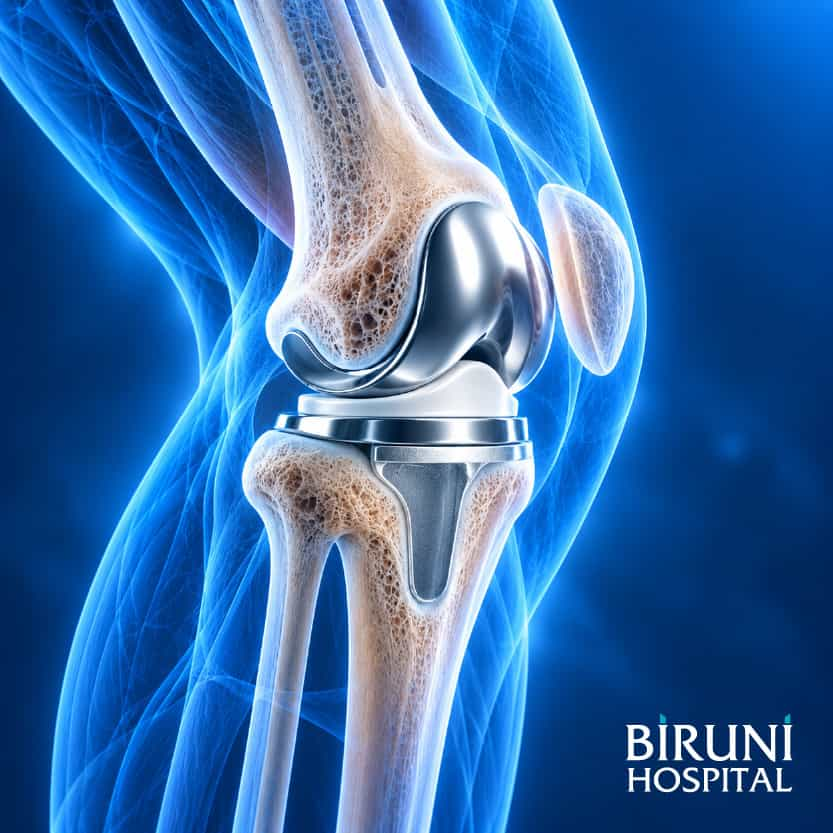
- Anatomical Capping: Precision-engineered metallic alloy caps are securely fitted over the prepared bone ends.
- Smooth Articulation: A durable, highly cross-linked medical polyethylene spacer is inserted between the metallic surfaces to act as new artificial cartilage, facilitating smooth glides and bends.
- Ligament Preservation: The surrounding natural ligaments, tendons, and joint capsule remain largely intact to guide natural kinematic movement [00:06:28].
High-Precision Surgery: Computer Navigation and Robotic Assistance
Achieving ideal biomechanical alignment and long-term durability requires extreme precision. Even minor deviations in implant positioning can lead to uneven wear, persistent pain, or premature loosening. At [00:07:55], Prof. Lampe explains how advanced computer-assisted navigation and modern robotic systems elevate knee replacement surgery in Hamburg Germany to new standards of accuracy.
Prior to and during the procedure, computer navigation tools construct a precise 3D digital model of the patient's unique knee anatomy and axis alignments [00:08:48]. This allows the surgical team to make adjustments down to the millimeter and degree, correcting severe deformities such as severe varus (bow-legged) or valgus (knock-kneed) malalignments [00:07:38].
Addressing a crucial point about technology, Prof. Lampe clarifies at [00:09:28] that computer systems do not operate autonomously. Drawing a helpful analogy to a car's GPS navigation system [00:09:40], he explains that while the navigation device provides highly accurate real-time directional data and recommendations, the surgeon remains entirely behind the wheel. The primary objective of utilizing digital precision tools is not merely speeding up surgery, but dramatically enhancing long-term implant survival rates, joint functionality, and patient satisfaction [00:11:06].
Rehabilitation & Recovery Timeline: What to Expect Post-Surgery
Understanding the postoperative journey helps set realistic expectations for physical recovery. Patients undergoing knee surgery in Germany benefit from early mobilization protocols designed to stimulate blood flow, encourage bone integration, and prevent joint stiffness.
Recovery Milestones at a Glance:
- Day 1 (Day of Surgery): Initial bed-side mobilization with physical therapy assistance, taking first supported steps with walking aids.
- Hospital Stay (Days 2 to 5): Progressive gait training, stair navigation instruction, and range-of-motion exercises in the ward.
- Inpatient/Outpatient Rehab (Weeks 2 to 5): Focused physical therapy lasting roughly 3 weeks to strengthen supporting quadriceps and hamstring muscles.
- Everyday Functional Return (Weeks 4 to 6): Recovery of routine daily activities, walking without assistive devices, and returning to sedate desk work.
- Full Recovery & Heavy Activities (Months 3 to 9): Resuming heavy gardening, extended travel, driving, or low-impact sports, with continual kinematic improvements observed up to 9 months post-op.
As Prof. Lampe highlights at [00:12:00], although basic daily independence returns within four to six weeks, major life events or demanding physical undertakings should ideally be scheduled after a full three months of dedicated healing.
Why Choose Asklepios Kliniken Hamburg for Joint Surgery?
Selecting the right hospital and surgical team is one of the most critical factors in securing a successful orthopedic outcome. Asklepios Kliniken Hamburg represents one of Europe's premier medical networks, combining clinical excellence, rigorous safety protocols, and cutting-edge medical infrastructure.
The Center for Endoprosthetics at Asklepios Klinik Barmbek, led by experienced specialists like Prof. Dr. Frank Lampe, performs thousands of successful joint replacement procedures annually. International patients choose Asklepios for several key reasons:
- Certified Endoprosthetics Expertise: High-volume surgical centers accredited for specialized joint care and complex revision surgeries.
- State-of-the-Art Technology: Routine integration of high-precision computer navigation, digital preoperative modeling, and soft-tissue-sparing minimally invasive techniques.
- Multidisciplinary Care: Seamless integration of orthopedic surgery, specialized pain management, cardiological evaluation, and immediate post-operative rehabilitation.
- Dedicated International Services: Multi-lingual support, transparent treatment plans, administrative assistance, and tailored international patient services.
Ready to Restore Your Mobility with Top Orthopedic Experts in Germany?
PlacidWay Medical Tourism connects you directly with leading orthopedic centers for Knee Surgery in Germany like Asklepios Kliniken Hamburg. Receive personalized surgical consultations, transparent cost estimates, and comprehensive travel support tailored to your journey.
GET A FREE QUOTEView Full Video Transcript
[00:00:00] When Is an Artificial Knee Joint Necessary?
[00:00:04] Hello and welcome to the Asklepios Health Podcast, the Asklepios health podcast with Kirsten Carla and doctors from Asklepios Clinics.
[00:00:17] Welcome to the Asklepios Health Program.
[00:00:21] Today we are talking about your knee. If you constantly have pain, if everyday life with your knee becomes increasingly difficult, then a knee prosthesis may be an option for you. And now we want to answer the question: Under what circumstances is this necessary? When should you decide to have one? How does the procedure work, and how long does recovery take?
[00:00:40] Joining me is Professor Dr. Frank Lampe, Chief Physician of the Department of Orthopedics and the Center for Endoprosthetics at Asklepios Klinik Barmbek. It is great to have you here, Professor Lampe.
[00:00:51] Yes, thank you very much. I am pleased to be here.
[00:00:55] Tell me, when am I ready for an artificial knee joint? Is there a specific point in time?
[00:01:01] For me, the decisive factor is always the level of suffering — your personal level of suffering. Usually, there is a history of knee problems. Various treatment options have already been tried, especially non-operative, conservative treatments. Then there comes a point when you say, "None of this is helping me enough anymore." My quality of life is poor, I have a very high level of suffering, and perhaps I can no longer manage my daily activities. I can no longer pursue my hobbies. That is when you have to start considering whether surgery might be able to help.
[00:01:36] So, I think "level of suffering" is the key phrase. Is there an age range for this? Do you say, "You are too young for this"?
[00:01:43] Not really. There are also relatively young patients who already suffer from severe osteoarthritis. Perhaps they had an accident when they were young that led to it. For them, too, the rule is: if the level of suffering is significant, if their quality of life is no longer satisfactory, and they have exhausted non-operative treatment options, then the time has come to consider a knee prosthesis. And regarding older age, there is actually no upper age limit. Of course, you always have to consider how healthy the patient is and whether they have any risk factors. But an older person who is gradually becoming immobile and losing mobility can also benefit from a knee prosthesis. Losing mobility is a significant event, and they can naturally benefit just as much from a knee replacement.
[00:02:31] Do you always have to implant a total knee prosthesis right away?
[00:02:35] No, you don't. There are actually patients whose osteoarthritis is limited to a specific area of the knee joint. The entire knee is not affected. In such cases, it is possible to implant what is known as a partial prosthesis, often called a unicompartmental knee prosthesis. It is not suitable for every patient. Each case has to be examined very carefully. But for a certain group of patients with partial osteoarthritis of the knee, this partial or unicompartmental prosthesis can be a very good solution.
[00:03:09] So, you have to be able to point to the exact spot and say, "This is where it hurts"?
[00:03:14] That would actually be the ideal situation. The patient points to a specific area and says, "This is exactly where I have my pain." If I then see on the X-ray that there is cartilage loss in that same area, and the osteoarthritis is localized there, then that is a good indication for a partial or unicompartmental prosthesis.
[00:03:30] So what is the advantage of that? As a patient, I would probably say the less I have implanted in my body, the better. Is that really the case?
[00:03:41] Basically, that is correct. A large part of the knee joint is preserved, including the areas that are not worn. That is certainly an advantage. Only the actually damaged area is replaced by the artificial joint. As a result, the procedure is somewhat smaller compared with a total replacement. We have found that patients often achieve somewhat better function in the end than with a total knee prosthesis. They also often have a stronger feeling that "this is my knee joint" — a more natural sensation, which is often better preserved with a partial prosthesis than with a total prosthesis.
[00:04:15] If you say the patient needs to point to one specific area, does that also mean the rest of the knee has to be intact?
[00:04:21] Exactly. The ligaments have to be intact. We need intact collateral ligaments, as well as an intact anterior and posterior cruciate ligament. They should be intact because these partial joints depend on intact ligament guidance. They need this to function properly.
[00:04:40] If you were to recommend a total knee prosthesis, what would the process be? We know what is going on in the knee and I decide that I want treatment. You treat me and I want a total prosthesis.
[00:04:54] We always begin with a detailed medical history. We discuss the patient's problems in order to properly assess them. Then a clinical examination is performed. We assess how mobile the knee still is, how stable the ligaments are, where the pain is, and how severe the pain is. After the knee examination, we perform diagnostic imaging, usually an X-ray. In cases of advanced osteoarthritis, a standard conventional X-ray is often sufficient. You do not necessarily need an MRI. We then look at the X-ray to determine how advanced the osteoarthritis is, how far the cartilage loss has progressed, and where it is most pronounced. Based on these findings, we can decide whether a prosthesis is the right solution for the patient.
[00:05:46] Like the one on the table?
[00:05:47] Exactly. This is an example of a model. I can show it to you. You call it a total prosthesis, but they are actually called surface replacement prostheses. And there is a reason for that. Many patients imagine that when an endoprosthesis is implanted, the entire joint is removed. But that is not the case at all. The joint is essentially preserved, including its ligaments. Only the damaged surfaces are removed. I can demonstrate this. Essentially, if you like, using the example of the thigh bone, it is basically like placing a crown over the joint with this prosthetic component. This means that only very thin slices of bone are removed and then replaced by the implant. The actual joint remains preserved, including the ligaments that guide and stabilize the joint. In the end, the artificial joint functions and moves much like a natural joint.
[00:06:45] How do you know that it is positioned correctly? You are removing some of the knee, after all. The patient is lying there in front of you, not standing or walking. But afterward, the knee has to function properly during movement.
[00:07:02] In addition to the clinical examination, we also perform a special X-ray to plan the knee before surgery. A digital measurement image of the knee is created. Then, before the operation, we can use the X-ray and computer to plan the position of the implant. During the operation, we then have appropriate aids, such as cutting guides and measuring templates, that help us position the knee joint so that it functions as optimally as possible afterward. One goal is always to straighten the leg axis. For example, if a patient comes into surgery with severe bow legs, the knee joint has to be implanted so that after surgery the leg is properly aligned. This is very important. There are various tools available for conventional surgery. There are also modern computer-assisted procedures that allow us to make the entire process even more precise.
[00:08:01] So they are probably particularly useful for difficult cases?
[00:08:02] They are particularly suitable for difficult cases where it is challenging to find the optimal positioning, align the leg precisely, and stabilize the ligaments perfectly. We always want to restore the most natural possible kinematics of the artificial joint. These computer-assisted procedures allow us to work even more precisely than with conventional methods.
[00:08:29] Can you explain in more detail how the measuring and computer system works?
[00:08:32] There are navigation systems. These are computer-assisted systems that allow us to measure the kinematics and anatomy of the knee joint. This can be done using imaging before surgery or during the operation, creating an individual digital, virtual model of the patient's knee on the computer. During the operation, we can use this computer model to plan the ideal position of the knee joint. Navigation then helps us in difficult cases. Modern robotic systems can also help implant the prosthesis exactly as planned.
[00:09:20] Can the computer make suggestions that you, as a human, might reject?
[00:09:26] Exactly. That is an important question. The computer does not work autonomously. It only provides the surgeon with highly precise measurement data, based on which the surgeon decides how the prosthesis should be positioned. I often compare it to a navigation system in a car. It suggests certain routes, but it is your decision as the driver whether to follow the route or take a different one. It does not actively take control of the steering wheel. You drive the car, while the navigation system provides precise data so that you always know where you are and what a possible route to the destination is. It is exactly the same with computer systems in the operating room.
[00:10:07] And what is the advantage for the patient?
[00:10:10] The quality of the result — the functionality of the knee joint and how long the knee lasts — are naturally related to how perfectly the implant is positioned. For example, I mentioned the straight alignment of the leg axis, or the perfect balancing of the ligaments. These systems simply help the surgeon achieve this more precisely than with conventional surgical instruments. You can implant it with millimeter- and degree-level precision. This is generally not possible with manual instruments to the same degree. Therefore, we can hope for improved treatment outcomes.
[00:10:56] Does this also mean that patients can get back on their feet faster?
[00:11:00] Yes, that is certainly possible. But I believe it is primarily aimed at improving long-term results. That is where the effect is likely to be more noticeable. In terms of quickly regaining joint function and achieving rapid rehabilitation, I think other factors are even more important. For example, how we handle the soft tissue and whether we operate as gently as possible. There is a term that many people know: minimally invasive surgery. It works particularly well for the hip. With the knee joint, you have to think about it somewhat differently. Nevertheless, we naturally try to preserve the soft tissues as much as possible. I believe these are factors that help patients get back on their feet faster. The precision of the implant may also have an effect, but the main goal is better long-term results, better function, and greater durability. The prosthesis should last longer. Those are the main goals.
[00:11:58] And when will my knee be ready for normal use? I know the saying, "The knee takes a long time."
[00:12:01] That is not entirely wrong. You have to distinguish between different things. For everyday functionality — getting back to normal daily life — this takes place during the rehabilitation phase after surgery. I would say that approximately four to six weeks is the period in which patients can generally regain everyday functionality. Everyday functionality also includes the ability to work, but that naturally depends heavily on the occupation. This always has to be discussed and decided individually with the patient. With modern rehabilitation methods, patients are already mobilized for the first time on the day of surgery. They still need walking aids, of course, but they are already helped out of bed and can take their first steps. During the first few days, they learn to move around the hospital ward and also climb stairs. After that, the actual rehabilitation phase begins, which usually lasts around three weeks. Patients can then return home and generally manage their everyday activities quite well. People often say not to drive for six weeks. That is a general rule of thumb. But to be honest, I always tell patients that if they are planning something such as a round-the-world trip or redesigning their garden, I would definitely allow three months of recovery time. And I think your question also touches on the fact that the knee joint continues to develop afterward. It is quite possible that even after six or nine months, further improvement can occur. For example, mobility may continue to improve. But the major improvements generally occur during the first few weeks after surgery.
[00:13:45] Thank you very much for this interesting conversation.
[00:13:47] Thank you.
[00:13:48] And we will see you again on www.asklepios.com, on Facebook and YouTube, or in the next podcast. Stay healthy.





















Share this listing