
Infrared Thermography in Sports Science: The Future of Injury Prevention and Athletic Health
In the high-stakes world of professional athletics, the difference between a championship season and a devastating setback often comes down to millimeters and milliseconds. Traditional sports medicine has long been reactive—treating injuries after they occur. However, a revolutionary shift is happening through the use of infrared thermography in sports science. By utilizing high-resolution thermal imaging cameras, medical teams can now "see" the invisible physiological changes that precede pain. This proactive approach allows for unprecedented precision in monitoring athlete health, ensuring that players like those from the FC Juárez Femenil "Bravas" remain at the peak of their game through non-invasive, real-time data analysis.
Video Chapters & Quick Navigation
The Evolution of Infrared Thermography in Sports Medicine
Infrared thermography (IRT) was once the exclusive domain of military surveillance and industrial inspections. However, its transition into sports science and elite health research has redefined how we understand the human body in motion. At its core, IRT measures the infrared radiation emitted by the skin, which is directly related to skin temperature and, by extension, underlying blood flow and metabolic activity. For athletes, these "heat maps" are more than just colorful images; they are vital signs of physiological stress.
As shown at [00:00], the thermal camera captures a spectrum of temperatures that reveal how the body is distributing heat. In a healthy, balanced state, the human body exhibits "thermal symmetry." When an athlete starts to overcompensate for a hidden strain or develops localized inflammation, that symmetry is broken. By detecting these thermal asymmetries early, medical professionals can intervene weeks before an actual muscle tear or ligament injury occurs.
New Technology in the Field of Sports Injury Prevention
The primary goal of integrating thermal imaging into professional training programs is the prevention of sports-related injuries. We see this technology in action at [00:04], where it is described as "new technology in the field of prevention." In modern soccer, basketball, and track, "load management" is a buzzword, but thermography provides the objective evidence needed to make those management decisions accurately.
Traditional methods of assessing an athlete's readiness often rely on subjective feedback—asking the player how they feel. However, elite athletes are conditioned to play through discomfort. Thermal imaging bypasses this subjectivity by providing a "physiological mirror" that doesn't lie. If a player's left hamstring is significantly warmer than their right, it indicates increased metabolic demand or inflammation, signaling the coaching staff to adjust that player's training intensity immediately.
Key Benefits of Thermal Monitoring for Elite Teams
- Early Detection: Identifying subclinical inflammation before the athlete experiences physical pain.
- Symmetry Analysis: Comparing left vs. right limbs to find biomechanical imbalances.
- Recovery Tracking: Monitoring how quickly body temperature returns to baseline after high-intensity training.
- Objective Benchmarking: Creating a "thermal baseline" for every player to refer to throughout the season.
A Fast, Non-Invasive, and Objective Process
One of the greatest hurdles in sports medicine is athlete compliance. If a diagnostic test is painful, time-consuming, or invasive, players and coaches may resist frequent testing. As highlighted at [00:11], the infrared thermography process is "fast and non-invasive." There are no needles, no radiation (unlike X-rays), and no physical contact required to obtain the data.
The subject simply stands in front of the camera, and within seconds, high-definition thermal images are captured [00:08]. This speed allows entire squads to be screened in a single morning, making it a viable daily tool for professional clubs. Because the camera only detects emitted heat, it is completely safe for repeated use, allowing for longitudinal studies of an athlete's health over several years.
Case Study: FC Juárez Femenil "Bravas"
The video showcases a real-world application with the FC Juárez Femenil "Bravas", a professional first-division soccer team [00:15]. In professional soccer, where the schedule is grueling and travel is frequent, maintaining the health of the starting lineup is crucial for success. By implementing thermal imaging, the "Bravas" medical staff can combat injuries before they sideline key players.
By measuring the heat of the athlete's body [00:21], the team can tailor individualized recovery protocols. For instance, if the thermal scan shows significant heat accumulation in the lower legs after a match, that specific player might be assigned to a longer cryotherapy session or a modified "active recovery" drill the following day, while a player with a "cool" scan can proceed with regular training.
| Feature | Traditional Assessments | Infrared Thermography |
|---|---|---|
| Invasiveness | Varies (Blood tests, palpation) | Zero contact / Non-invasive |
| Speed | Slow (Requires lab time or detailed exams) | Instant (Real-time imaging) |
| Objectivity | Often subjective (Pain scales) | 100% Objective temperature data |
| Detection Timing | Reactive (Post-injury) | Proactive (Pre-symptom) |
Immediate Decision-Making with Objective Data
The power of this technology lies in its ability to facilitate immediate decision-making [00:29]. In the past, a coach might have a "gut feeling" about a player's fatigue. Now, they have an objective report that quantifies it. Software platforms, such as those demonstrated in the video [00:36], allow medical staff to establish personalized reports that track an athlete's "thermal signature" over time.
By processing these images [00:40], clinicians can visualize results that might indicate anything from a simple bruise to early-stage tendonitis. This data is then shared with the technical coaching staff to determine if a player should be "loaded" (trained hard) or "unloaded" (rested) during the next session. This synergy between the medical and technical departments is what separates modern, elite-performing clubs from traditional ones.
Real-Time Movement Monitoring with Drone Thermal Cameras
Taking technology to the next level, the Pain Medical Group utilizes drone-mounted thermal cameras [00:43]. Static thermal imaging is excellent for pre- and post-training analysis, but drones allow for the observation of "real-time thermal movement." As athletes sprint, cut, and jump across the soccer pitch, the drone tracks their thermal output from an aerial perspective.
This "action-based" thermography provides insights into how the body manages heat dissipation during peak exertion. It can reveal if an athlete's cooling mechanisms are functioning correctly or if they are at risk of heat-related illness. Furthermore, it helps biomechanical experts see how force is distributed across the lower extremities during dynamic movements, offering another layer of data to prevent long-term wear and tear on the joints.
Interventional Pain Management and Thermal Research
Beyond the soccer field, the application of infrared thermography in health and research is expanding rapidly. The Pain Medical Group, as featured in the video, uses these tools within their "Advanced Center in Interventional Pain Management and Palliative Care" [00:57]. For patients suffering from chronic pain, thermography can help pinpoint the exact nerve pathway or muscular trigger point responsible for the discomfort, leading to more accurate interventional treatments like injections or physical therapy.
In a research context, IRT is being used to study the effects of new medications, the efficacy of different rehabilitation exercises, and even the physiological impact of psychological stress on the body. It is a tool that bridges the gap between high-performance sports and general medical wellness, proving that the tech used to keep professional soccer players on the field can also be used to improve the quality of life for the general population.
Ready to Restore Your Health and Performance?
Discover advanced interventional pain management and cutting-edge diagnostic technology with the Pain Medical Group. Whether you're an elite athlete or seeking relief from chronic pain, world-class care is just a click away.
GET A FREE QUOTE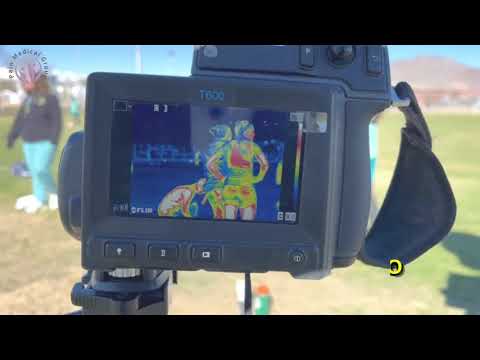






















Share this listing