


Stephen Hufnagl's Journey with Stem Cell Therapy for Dementia and Kidney Disorder in Vadodara, India by Dr. Pravin Patel
Stephen Hufnagl's journey with stem cell therapy for dementia and kidney disorder in Vadodara, India by Dr. Pravin Patel represents a monumental breakthrough in modern regenerative medicine. For years, patients facing dual diagnoses of cognitive decline and chronic renal failure have been told that their conditions are entirely irreversible. Standard medical protocols often focus solely on symptom management rather than cellular healing.
However, advanced regenerative treatments are rewriting the narrative for complex chronic illnesses. By exploring international medical tourism, patients are accessing cutting-edge therapies that offer a second chance at a vibrant life. Watch how one patient's determination led him to an innovative medical sanctuary in India, transforming his health and restoring his independence.
Video Chapters & Quick Navigation
Facing a diagnosis of dementia is universally recognized as a life-altering event. When that diagnosis is coupled with a severe, progressive kidney disorder, the medical outlook often seems incredibly bleak. Traditional Western medicine frequently offers a limited scope of treatment, focusing on slowing the decline rather than initiating meaningful cellular repair.
However, the paradigm of modern medicine is shifting rapidly. Regenerative medicine, particularly mesenchymal stem cell therapy, is providing unprecedented hope for patients globally. This advanced therapeutic approach addresses the root causes of cellular damage, targeting neuroinflammation and compromised organ tissue simultaneously.
The Dual Burden of Dementia and Kidney Disease
Dementia is not a single disease but a broad category of cognitive impairments characterized by a decline in memory, language, and problem-solving skills. The biological foundation of dementia typically involves the progressive destruction of neurons and neural pathways.
Simultaneously, chronic kidney disease (CKD) involves the gradual loss of kidney function over time. When the kidneys are damaged, they cannot filter blood efficiently, leading to a toxic buildup of waste in the body. This systemic toxicity can, in fact, exacerbate cognitive decline, creating a dangerous feedback loop between the two conditions.
The Limitations of Conventional Treatment
Standard pharmaceutical interventions for dementia generally aim to temporarily boost neurotransmitter levels. While this may provide short-term symptomatic relief, it does absolutely nothing to halt or reverse the underlying neuronal death. Patients are often left watching their cognitive abilities fade away despite strict adherence to their prescribed medications.
For kidney disorders, the conventional pathway is equally restrictive. Treatment focuses on blood pressure management, dietary restrictions, and ultimately, dialysis or a kidney transplant. Dialysis is physically exhausting and drastically reduces the patient's quality of life. Transplants come with endlessly long waiting lists and massive risks of organ rejection.
Stephen Hufnagl's Search for a Cure
Stephen Hufnagl found himself trapped in this exact medical dilemma. As detailed early in his testimonial , his health began to deteriorate rapidly. The dual onslaught of failing kidneys and aggressive cognitive decline meant he was losing his independence at an alarming rate.
Stephen and his family quickly realized that the standard medical avenues available in their home country were insufficient. They refused to accept the palliative-only approach recommended by local specialists. Instead, they began an exhaustive global search for alternative, science-backed treatments capable of genuinely altering the trajectory of his diseases.
Discovering Regenerative Medicine
During their extensive research, the Hufnagl family discovered the immense potential of stem cell therapy for neurological and renal repair. They learned how specific types of stem cells could potentially home in on damaged tissues, reduce systemic inflammation, and promote the growth of new, healthy cells.
This exhaustive research led them to the burgeoning field of medical tourism in India. Specifically, their attention was drawn to a highly specialized clinic in Vadodara, Gujarat, operated by a pioneer in regenerative medicine. The promise of customized, high-dose stem cell therapy became the beacon of hope Stephen desperately needed.
The Transformative Science of Stem Cells
To understand why this treatment is so revolutionary, one must look at the biological mechanics of stem cells. Stem cells are essentially the body's master building blocks. They are unspecialized cells that have the unique ability to develop into many different cell types, from muscle and bone to brain and kidney tissue.
Mesenchymal Stem Cells (MSCs) are the most commonly used cells in these types of regenerative therapies. They are highly valued for their potent immunomodulatory properties. When introduced into a patient's body, MSCs act like intelligent microscopic medics, seeking out areas of extreme inflammation and cellular damage.
Paracrine Signaling and Tissue Repair
One of the most powerful mechanisms of stem cells is known as the paracrine effect. Stem cells secrete a complex cocktail of growth factors, cytokines, and extracellular vesicles. These secretions instruct the patient's existing, dormant cells to wake up and begin the repair process.
This means the therapy does not merely rely on the stem cells replacing damaged tissue directly. Instead, it transforms the biological environment from one of degradation to one of active regeneration. This is particularly crucial for treating chronic, degenerative conditions like dementia and CKD.
Reversing Cognitive Decline: Stem Cells and the Brain
Treating dementia has historically been challenging due to the blood-brain barrier—a highly selective membrane that prevents many medications from entering the central nervous system. Stem cell therapy circumvents this issue through specialized administration techniques, allowing regenerative factors direct access to the brain.
Once active in the neural environment, stem cells drastically reduce neuroinflammation, which is a leading driver of Alzheimer's and other forms of dementia. They clear away toxic protein plaques and stimulate neurogenesis—the creation of new, healthy neurons and synapses.
Measurable Neurological Improvements
Patients undergoing stem cell therapy for cognitive decline often report profound changes. The improvements are not just subjective; they are clinically measurable.
- Enhanced Memory Recall: Significant improvements in both short-term retention and long-term memory access.
- Improved Motor Function: Better coordination and a reduction in tremors or physical instability.
- Mood Stabilization: A marked decrease in the anxiety, agitation, and depression commonly associated with dementia progression.
Regenerating Renal Tissue: A New Era for Kidney Disease
Simultaneous to treating his cognitive decline, the therapy Stephen received targeted his failing kidneys. The kidneys are highly vascular organs composed of millions of tiny filtering units called nephrons. Once a nephron is destroyed by disease or high blood pressure, traditional medicine considers it lost forever.
Stem cell therapy challenges this dogma. By infusing high concentrations of targeted MSCs, the therapy promotes angiogenesis—the formation of new blood vessels within the kidney. This increased blood flow delivers vital oxygen and nutrients to starving renal tissues.
Halting Renal Fibrosis
A primary cause of end-stage renal failure is fibrosis, where healthy kidney tissue is gradually replaced by useless scar tissue. Stem cells exhibit strong anti-fibrotic properties, effectively halting the scarring process. They modulate the immune system to stop attacking the kidneys and encourage the regeneration of epithelial cells.
For many patients, this targeted cellular intervention leads to a measurable increase in their Glomerular Filtration Rate (GFR). An improved GFR means the kidneys are filtering waste more effectively, allowing patients to potentially delay or entirely avoid the need for lifelong dialysis.
Why Dr. Pravin Patel in Vadodara, India?
The success of regenerative medicine is heavily dependent on the expertise of the medical team executing the protocol. Dr. Pravin Patel has established himself as a globally recognized authority in the clinical application of stem cell therapy. His facility in Vadodara is not just a clinic; it is an advanced research and treatment center.
Dr. Patel's approach is deeply personalized. He does not believe in a one-size-fits-all model. Every patient undergoes rigorous pre-treatment diagnostic testing to determine the precise cellular dosage, administration route, and supportive therapies required for their specific physiological needs.
State-of-the-Art Laboratory Facilities
The clinic in Vadodara boasts highly advanced, GMP-certified laboratory facilities. The cultivation and expansion of stem cells require an impeccably sterile and highly controlled environment to ensure cell viability and safety. Dr. Patel’s center utilizes state-of-the-art bioreactors and strict quality control protocols.
This commitment to excellence ensures that patients receive maximum cell counts with the highest possible vitality. It is this dedication to international medical standards that draws patients like Stephen Hufnagl from across the globe to the heart of Gujarat.
The Rise of Medical Tourism in India
India has rapidly evolved into a primary destination for global medical tourism. The country offers a unique intersection of highly skilled, Western-trained medical professionals and significantly lower operational costs. This combination allows for the delivery of premium, cutting-edge healthcare at a fraction of Western prices.
Cities like Vadodara are at the forefront of this movement. They offer excellent infrastructure, international airports, and specialized medical visa programs designed to facilitate smooth travel for international patients seeking life-saving treatments.
Compassionate, Patient-Centric Care
Beyond the medical technology, India is renowned for its cultural emphasis on hospitality and compassionate care. International patients frequently note that they feel deeply supported and respected during their medical journey. The nursing staff and medical coordinators go above and beyond to ensure comfort.
This holistic support is incredibly important. Healing is not just a biological process; it is deeply influenced by a patient's psychological and emotional state. The warm, attentive care provided at Dr. Patel's clinic plays a vital role in the overall success of the treatment protocols.
The Financial Advantage: Cost of Stem Cell Therapy
The financial barrier to regenerative medicine in countries like the United States, Canada, or the United Kingdom can be insurmountable for the average family. Strict regulatory environments often prevent insurance coverage for these innovative therapies, forcing patients to pay entirely out of pocket.
In contrast, receiving stem cell therapy in India offers unparalleled financial accessibility. By removing the massive overhead costs associated with Western healthcare systems, clinics in India can offer the exact same, high-quality cellular therapies at vastly reduced prices.
| Treatment/Aspect | United States / Europe | Vadodara, India |
|---|---|---|
| Comprehensive Stem Cell Protocol | $25,000 - $40,000+ | $6,000 - $12,000 |
| Wait Times | 6 to 12 Months | Immediate / 1-2 Weeks |
| Care Model | Often Outpatient, Fragmented | All-Inclusive, Highly Supervised |
This stark price difference does not indicate a drop in quality. It simply reflects the broader economic differences between the nations and the streamlined nature of specialized medical tourism facilities.
The Step-by-Step Stem Cell Treatment Process
For patients considering this journey, understanding the exact medical process helps alleviate anxiety. Stephen's treatment at Dr. Patel's clinic followed a rigorous, structured protocol designed to maximize cellular uptake and minimize any potential discomfort.
1. Comprehensive Medical Evaluation
Upon arrival in Vadodara, Stephen underwent an exhaustive battery of tests. This included advanced blood panels, cognitive assessments, and detailed imaging of his kidneys. Dr. Patel’s team used this data to map out the precise degree of tissue damage and tailor the stem cell dosage accordingly.
2. Preparation and Extraction
Depending on the specific protocol chosen, stem cells are either harvested from the patient's own body (autologous—usually from bone marrow or adipose tissue) or sourced from highly screened, ethically derived umbilical cord tissue (allogeneic). These cells are then processed and purified in the clinic's advanced laboratory.
3. Targeted Administration
The method of delivery is critical. For Stephen’s systemic kidney issues, an intravenous (IV) drip was utilized, allowing the stem cells to circulate through his bloodstream and home in on the renal inflammation. For his cognitive decline, targeted injections were administered to bypass the blood-brain barrier, ensuring direct delivery to the central nervous system.
Post-Treatment Recovery: A Transformation of Life
The most compelling part of Stephen's journey is the remarkable recovery he experienced following his treatment in India. Prior to the therapy, he was struggling with basic daily tasks, battling severe brain fog, and facing the terrifying prospect of complete renal failure.
Within months of completing his protocol with Dr. Pravin Patel, the transformation was undeniable. His family noticed a sharp return in his cognitive clarity. He was once again able to engage in complex conversations, remember recent events, and regain his sense of humor and personality.
Measurable Medical Milestones
Medically, his bloodwork reflected the physical changes happening within his body. His kidney function markers stabilized and showed measurable improvement, significantly reducing his systemic toxicity levels. He experienced higher energy levels, improved sleep patterns, and a dramatic enhancement in his overall quality of life.
Stephen Hufnagl’s story is a powerful testament to the efficacy of regenerative medicine. It proves that a devastating dual diagnosis does not necessarily dictate the end of a fulfilling life. By stepping outside the confines of traditional Western medicine and exploring the advanced treatments available through medical tourism in Vadodara, he successfully reclaimed his health and his future.
Take Control of Your Health Journey Today
Don't let chronic illness dictate your future. PlacidWay connects you with world-renowned specialists like Dr. Pravin Patel in India, offering cutting-edge stem cell therapies at accessible prices. Let us help you navigate your journey toward recovery.
GET A FREE QUOTE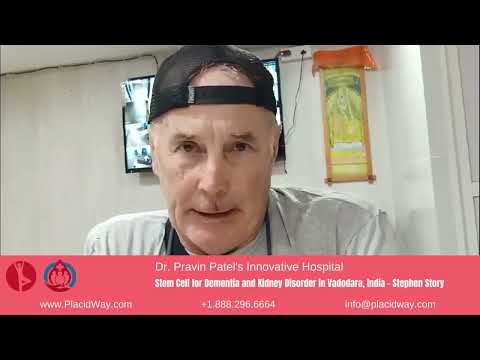


















Share this listing