


Cosmetic/Plastic Surgery in South Korea
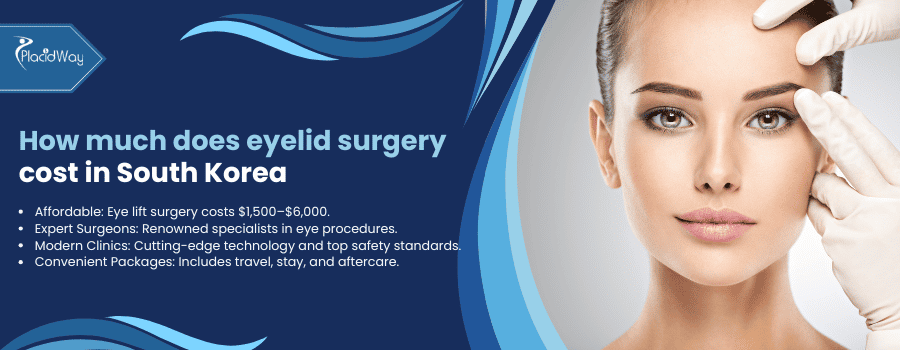
Eyelid surgery cost in South Korea typically ranges from $1,500 to $4,500. Prices vary based on the procedure type, such as double eyelid creation, ptosis correction, or upper and lower blepharoplasty, alongside anesthesia and facility fees.
Essential Takeaways: Eyelid Procedures
- Cost Effectiveness: Patients save considerably while accessing world-renowned precision and aesthetic expertise.
- Diverse Techniques: Options include non-incisional methods, full incisions, fat repositioning, and canthoplasty.
- Rapid Recovery: Advanced surgical protocols minimize bruising, allowing return to normal life within seven to ten days.
- Holistic Care: Leading facilities provide dedicated translation services and specialized deswelling treatments.
- Natural Results: The primary focus remains on creating symmetrical, bright eyes that harmonize with individual facial structures.
What factors influence the eyelid surgery cost in South Korea?
The total expense depends heavily on the specific surgical technique required, the complexity of the patient anatomy, and whether it is a primary or revision procedure.
When evaluating eyelid surgery cost in South Korea, the primary driver is the chosen surgical method. Non-incisional techniques, which rely on precise suturing to create a crease, are generally more affordable due to shorter operating times and fewer required materials. Conversely, full incisional methods, which involve removing excess skin and fat, demand higher technical skill and longer operating room usage, thereby increasing the financial investment.
Another significant factor is the distinction between a primary surgery and a revision surgery. Primary surgeries are performed on untouched tissue, making them straightforward and predictable. Revision surgeries, however, involve correcting previous unsatisfactory outcomes, navigating scar tissue, and carefully restoring functional anatomy. Due to the high level of expertise required, revision procedures command a premium price point.
Finally, additional fees often apply based on facility amenities and comprehensive care packages. High-end centers include robust pre-operative health screenings, specialized post-operative deswelling therapies, and dedicated multilingual support staff within their pricing. Understanding these variables ensures that international patients can budget accurately for their medical journey.
| Procedure Type | Estimated Cost Range (USD) |
|---|---|
| Non-Incisional Double Eyelid | $1,000 - $2,000 |
| Incisional Double Eyelid | $1,500 - $3,000 |
| Ptosis Correction | $2,000 - $3,500 |
| Lower Eyelid Fat Repositioning | $1,800 - $3,500 |
| Complex Revision Surgery | $3,500 - $6,000+ |
What are the different types of eyelid surgery available in South Korea?
Surgeons offer non-incisional, partial incision, full incision, and canthoplasty techniques. The chosen method depends entirely on eyelid thickness, fat distribution, and desired aesthetic shape.
- Non-Incisional Method: Often referred to as the burial method, this involves creating micro-punctures to weave a continuous suture that forms a natural-looking crease. It is ideal for patients with thin eyelids and minimal fat, offering the fastest recovery time.
- Full Incision Method: This technique makes a deliberate cut along the desired crease line to remove excess skin, muscle, and thick fat pads. It produces a highly defined, permanent fold and is necessary for older patients or those with severe drooping.
- Epicanthoplasty: A specialized procedure targeting the inner corner of the eye to release the epicanthal fold. This eliminates the Mongolian fold, widening the eyes horizontally and creating a more open, brighter appearance.
- Lateral Canthoplasty: This method extends the outer corner of the eye. It is highly sought after by patients looking to elongate their eye shape or correct an excessively upward slant, resulting in a softer facial expression.
- Under-Eye Fat Repositioning: Moving away from the upper lid, this surgery treats dark circles and eye bags. Instead of merely removing fat, skilled specialists redistribute it evenly across the hollow tear troughs to ensure a youthful, smooth under-eye contour.
Local specialists frequently combine epicanthoplasty with double eyelid creation in a single session. This synergistic approach ensures the newly formed upper crease flows seamlessly into the inner corner of the eye, preventing an unnatural or pinched aesthetic.
How do I prepare for an eyelid surgery clinic in South Korea?
Preparation involves comprehensive medical evaluations, halting specific medications, and setting realistic aesthetic goals. Clear communication with your surgical team ensures ultimate safety and optimal outcomes.
Successfully navigating an eyelid surgery clinic in South Korea begins weeks before your departure. Medical professionals require patients to abstain from blood-thinning medications, including aspirin, ibuprofen, and certain herbal supplements like ginseng and fish oil, for at least two weeks prior to the operation. This crucial step minimizes the risk of excessive bleeding and severe bruising during the recovery phase.
Upon arriving at your chosen facility, you will undergo rigorous pre-operative testing. This standard protocol usually includes comprehensive blood panels and electrocardiograms to verify your suitability for anesthesia. During the final in-person consultation, the specialist will use specialized tools to temporarily fold your eyelids, allowing you to visualize and agree upon the exact millimeter height and shape of the intended crease.
From a practical standpoint, international patients should pack comfortably. Bringing a wide-brimmed hat and oversized UV-protection sunglasses is highly recommended to shield your sensitive eyes from sunlight and environmental pollutants immediately following discharge. Securing a comfortable resting environment in a nearby hotel with extra pillows for head elevation will significantly aid your initial healing process.
What is the expected recovery timeline after eyelid surgery?
Most patients return to normal activities within seven to ten days post-surgery. While major swelling resolves quickly, subtle refinement of the delicate eye tissues continues over several months.
The immediate post-operative phase, spanning the first forty-eight hours, represents the peak period for swelling and localized bruising. Patients are strictly instructed to apply prescribed cooling packs continuously and sleep with their heads elevated at a forty-five-degree angle. This simple yet vital practice utilizes gravity to drain excess fluid away from the face, drastically reducing puffiness and discomfort.
By the fifth to seventh day, the critical milestone of suture removal takes place at the clinic. Once the stitches are carefully extracted, patients typically experience a profound sense of relief, and the visible swelling begins to dissipate rapidly. At this juncture, most individuals feel comfortable navigating public spaces wearing standard glasses, and clearance is often given to travel back to their home countries safely.
While the eyes will look significantly improved after two weeks, complete physiological healing is a marathon, not a sprint. The microscopic internal tissues require between three to six months to soften entirely, allowing the surgical scars to fade from a pale pink to an imperceptible skin tone. Adhering strictly to your prescribed aftercare regimen ensures this transition happens as flawlessly as possible.
Why is medical tourism in South Korea popular for eye procedures?
Patients globally flock here due to unparalleled surgical expertise, advanced technological infrastructure, and highly competitive pricing. The destination simply sets global standards for cosmetic precision.
The phenomenal rise of medical tourism in South Korea is anchored firmly in the extraordinary competence of its medical practitioners. Specialists undergo well over a decade of rigorous academic and practical training before becoming board-certified. Furthermore, because eye aesthetics hold massive cultural significance in the region, these professionals perform thousands of blepharoplasties annually, honing their skills to a level of mastery rarely found elsewhere.
Technological integration also plays a pivotal role in attracting global clientele. Operating theaters are equipped with high-definition microscopic tools that allow for exceptionally clean incisions and rapid coagulation, resulting in a virtually bloodless surgical field. This dedication to cutting-edge technology directly translates into safer procedures, shorter operating times, and substantially reduced recovery periods for international travelers.
Beyond the surgical room, the holistic patient experience is expertly curated. Healthcare providers have developed comprehensive systems designed specifically for foreigners, offering end-to-end services that include dedicated personal translators, seamless airport transfers, and luxurious recovery accommodations. This all-encompassing approach transforms a potentially stressful medical journey into a supportive, restorative vacation.
Are there risks associated with eyelid surgery and how are they managed?
Potential risks include temporary dry eyes, asymmetry, or mild infection, though they remain statistically rare. Selecting highly accredited facilities significantly mitigates these uncommon complications.
- Infection Prevention: Top-tier surgical centers utilize heavy-duty sterilization protocols and prescribe broad-spectrum antibiotics post-surgery. Patients are guided thoroughly on maintaining pristine wound hygiene to prevent bacterial buildup.
- Managing Dry Eyes: Temporary alteration of tear production is a known phenomenon post-blepharoplasty. Specialists manage this by supplying high-quality lubricating eye drops and instructing patients on specialized blinking exercises to stimulate moisture.
- Addressing Asymmetry: Perfect biological symmetry is impossible, but noticeable differences are actively prevented through meticulous pre-operative mapping. If significant asymmetry remains after full healing, ethical clinics honor warranty policies for minor adjustments.
- Minimizing Scarring: Unfavorable scarring is aggressively combated via precise surgical suturing and the diligent application of medical-grade silicone scar gels once the superficial incisions have closed securely.
- Anesthesia Safety: Continuous vital sign monitoring by a dedicated anesthesiologist guarantees utmost safety during the procedure, practically eliminating adverse reactions to sedative medications.
How long do the results of South Korean eyelid surgery last?
Results are generally permanent, though natural aging will eventually affect skin elasticity over decades. Maintaining a robust skincare routine helps preserve the youthful contour of the newly shaped eyes.
When discussing longevity, it is essential to categorize the results based on the specific method utilized. Patients opting for the full incisional method enjoy results that are effectively permanent. Because excess skin and redundant fat pads are physically removed from the facial structure, the newly established crease is deeply anchored into the underlying levator muscle, ensuring it will not unravel or vanish over time.
Conversely, those who choose the non-incisional burial method may experience subtle changes down the line. While this technique creates a beautiful, natural fold with minimal downtime, the sutures holding the crease can loosen after ten to fifteen years in a small percentage of patients. If this occurs, a minor touch-up procedure can quickly reinstate the original crispness of the eyelid fold.
It is important to remember that surgery cannot entirely halt the biological clock. Over several decades, natural aging factors such as diminishing collagen levels and gravity will cause the forehead and brow area to descend slightly. Protecting the delicate eye area with daily broad-spectrum sunscreen and utilizing premium eye creams can significantly extend the structural integrity of your aesthetic investment.
Many international visitors return for non-invasive maintenance treatments years later. Quick procedures like thread lifts or targeted Botox around the browbone can subtly lift sagging skin, instantly refreshing the appearance of previous eyelid surgeries without needing a scalpel.
Can eyelid surgery be combined with other facial procedures?
Yes, blepharoplasty is frequently combined with fat grafting, rhinoplasty, or brow lifts to achieve comprehensive facial harmony. Combining treatments drastically reduces overall downtime and cumulative anesthesia exposure.
A major advantage of pursuing treatments through medical tourism in South Korea is the ability to safely bundle multiple cosmetic enhancements into a single transformative session. One of the most common pairings is eyelid surgery alongside a subtle rhinoplasty. Because the eyes and nose represent the central anchor points of the face, adjusting both simultaneously allows the specialist to ensure perfect proportional balance and profile harmony.
Another highly popular combination targets comprehensive anti-aging. Older demographic groups frequently pair upper and lower blepharoplasty with autologous fat grafting. While the eyelid surgery removes sagging skin, injecting purified fat from the patient's own body into sunken cheeks or deep nasolabial folds restores youthful volume across the entire face, creating a vastly more rejuvenated overall aesthetic than eye surgery alone.
From a logistical perspective, combining surgeries is incredibly efficient for international travelers. It consolidates pre-operative testing, condenses the uncomfortable swelling phases into one unified recovery period, and eliminates the financial burden of paying separate facility and anesthesia fees multiple times. Medical professionals carefully evaluate your stamina to ensure bundle plans are executed with maximum safety.
Why choose PlacidWay for your eyelid surgery journey?
PlacidWay provides a secure, transparent pathway to your desired aesthetic goals by connecting you exclusively with rigorously vetted international healthcare providers and ensuring comprehensive patient advocacy.
- Comprehensive Provider Vetting: We prioritize your absolute safety by partnering solely with healthcare institutions that boast international accreditations, outstanding clinical track records, and highly experienced board-certified personnel.
- Transparent Financial Structures: We eliminate anxiety surrounding hidden costs. Our carefully curated packages outline every specific fee, ensuring you receive exceptional medical value without unexpected post-operative expenses.
- Direct Specialist Communication: Our platform facilitates preliminary online consultations, allowing you to share photographs, discuss desired outcomes, and establish a comfortable rapport with your chosen surgical team before making commitments.
- Verified Patient Insights: Access an extensive database of authentic testimonials and detailed visual portfolios from previous patients. This transparency empowers you to make highly informed decisions regarding your aesthetic journey.
- Dedicated Medical Coordination: Our patient advocacy team remains actively engaged throughout your entire experience, answering clinical questions, resolving concerns, and acting as a steadfast liaison between you and the medical facility.
Frequently Asked Questions About Eyelid Surgery Procedures
Do I need general anesthesia for eyelid surgery in South Korea?
Most eyelid procedures are performed under local anesthesia combined with light intravenous sedation. This ensures you feel absolutely no pain while allowing the surgeon to ask you to open and close your eyes during the procedure to check symmetry and muscle function. General anesthesia is rarely used unless multiple complex facial surgeries are being performed simultaneously.
Can I wear contact lenses after double eyelid surgery?
Patients are strictly advised to avoid wearing contact lenses for at least two to three weeks following the procedure. Inserting and removing lenses requires pulling on the eyelid skin, which can disrupt the healing incisions and increase the risk of infection. You should plan to wear prescription glasses during your initial recovery period.
How long should I stay in South Korea for blepharoplasty?
International patients should plan to stay for at least seven to ten days. This timeframe allows for the initial surgery, adequate rest during the peak swelling period, and the essential follow-up appointment where sutures are typically removed on the fifth or seventh day. Staying a few extra days ensures you are medically cleared before flying.
Will there be visible scars after the procedure?
Highly skilled Korean surgeons place incisions within the natural creases of the upper eyelid or just below the lash line for the lower eyelid. While a faint line may be present initially, it fades significantly over a few months. Once fully healed, the incision lines are virtually undetectable to the naked eye.
What is ptosis correction and do I need it?
Ptosis correction addresses weak eye-opening muscles that cause the upper eyelid to droop over the pupil, creating a sleepy appearance. If you frequently raise your eyebrows to open your eyes fully, you might require this functional adjustment alongside aesthetic enhancements to achieve a bright and alert look.
Is age a restricting factor for blepharoplasty?
There is no strict upper age limit for this procedure, provided the patient is in good overall health and clears pre-operative medical evaluations. Younger patients often seek double eyelid creation, while older patients generally pursue upper or lower blepharoplasty to remove sagging skin and excess fat deposits associated with aging.
Can lower eyelid surgery remove dark circles?
Lower eyelid surgery is highly effective at eliminating dark circles caused by bulging under-eye fat bags or deep tear troughs. By repositioning or removing the excess fat, the under-eye area becomes smooth and flat, which eliminates the shadows that create the illusion of severe dark circles.
What happens if my eyes look asymmetrical after surgery?
Mild asymmetry is completely normal during the first few weeks of recovery due to uneven swelling between the left and right sides. You must wait at least three to six months for the final results to settle. If true structural asymmetry persists after this period, reputable clinics offer revision policies to correct the discrepancy.
How soon can I wash my face and shower?
You must keep the surgical area completely dry until the sutures are removed, which is usually around day five to seven. You can carefully wipe your face with a damp cloth or cleansing wipes, avoiding the eye area entirely. Showers are permitted from the neck down, ensuring no water or steam reaches your healing eyelids.
Are medical records provided in English upon discharge?
Facilities catering to international patients typically provide detailed discharge summaries, post-operative care instructions, and medication prescriptions translated into English. This ensures you can seamlessly continue your aftercare routine upon returning to your home country and share accurate surgical details with your local healthcare provider if necessary.
Transform Your Vision into Reality Today
* Responses typically within 24 hours. Privacy strictly guaranteed.






.jpg)








Share this listing