


How Laser Therapy Is Tailored for Acne Scars, Pigmentation, and Anti-Aging Treatments
Laser therapy utilizes varying light wavelengths. For acne scars, it vaporizes damaged tissue to build new collagen. For pigmentation, it specifically shatters excess melanin. For anti-aging, it heats the dermis to stimulate skin tightening.
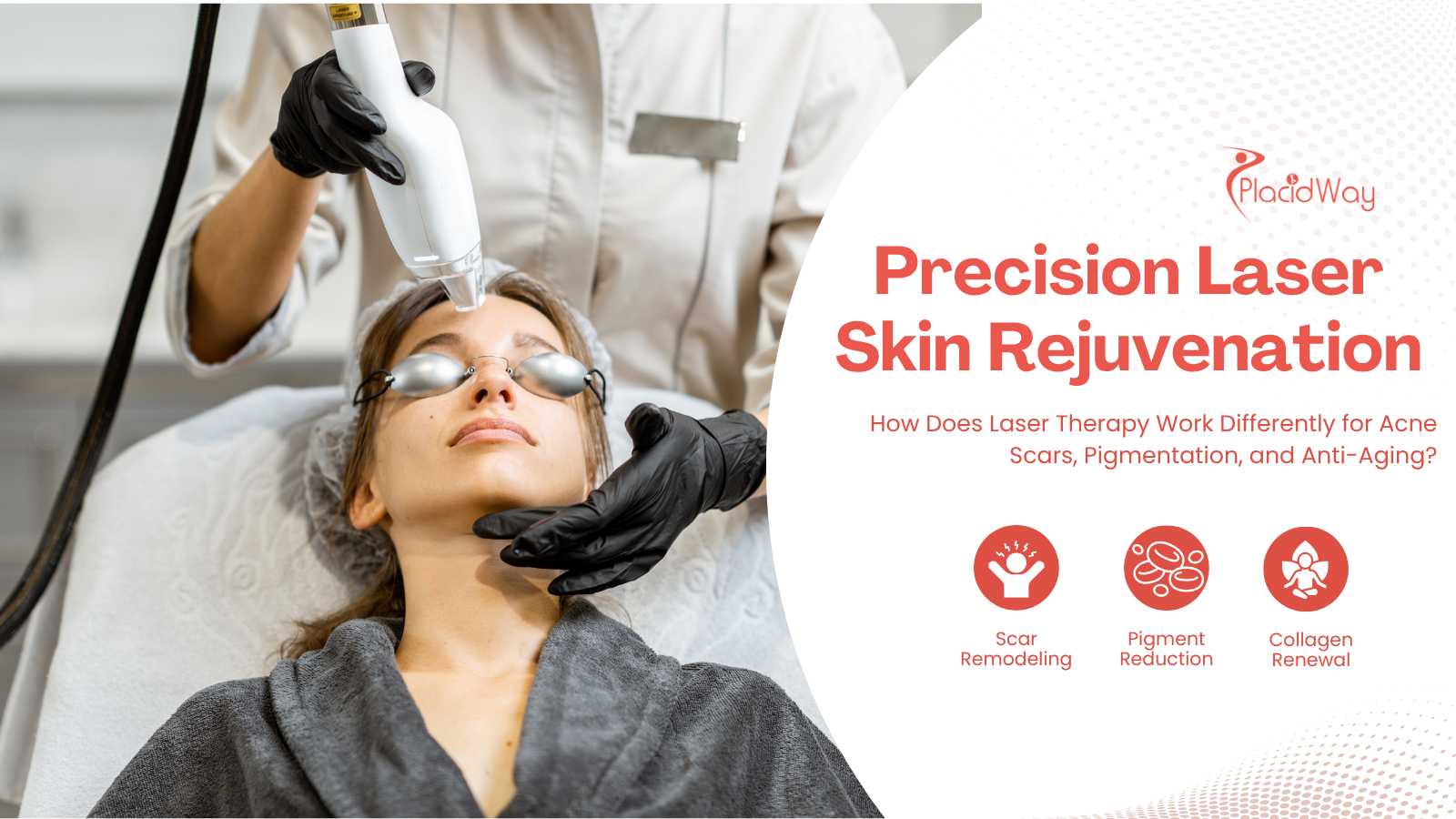
Key Takeaways: Precision Dermatological Healing
- Scar Remodeling: Ablative technologies safely vaporize rigid, disorganized scar tissue, allowing a smooth, new epidermal matrix to form organically.
- Targeted Melanin Destruction: Specific monochromatic wavelengths isolate and shatter clustered pigment cells without causing thermal damage to the surrounding skin.
- Collagen Induction: Thermal energy penetrates the deep dermis, stimulating fibroblasts to massively increase the production of structural collagen and elastin.
- Customized Modalities: Clinical treatment intensity ranges dramatically from zero-downtime non-ablative heating to aggressive, highly effective fractional resurfacing.
How do ablative and non-ablative lasers differ in treating skin concerns?
Ablative lasers physically vaporize the outermost layer of the skin to remove severe damage, requiring significant downtime. Non-ablative lasers bypass the surface, heating the underlying dermis to stimulate gradual collagen growth with minimal recovery time.
Understanding the fundamental difference between ablative and non-ablative modalities is crucial for managing clinical expectations. Ablative lasers, such as Carbon Dioxide or Erbium YAG systems, are highly aggressive tools. They utilize targeted thermal energy to completely strip away the epidermis, forcing the body to rapidly regenerate an entirely new, flawless skin surface. This makes them the ultimate gold standard for treating severe textural issues, deep wrinkles, and rigid acne scarring, but they necessitate a grueling recovery period involving severe redness and peeling.
Non-ablative lasers are vastly gentler. They are specifically calibrated to pass harmlessly through the fragile epidermis and deposit their thermal energy directly into the deeper dermal layers. This controlled internal heating triggers a mild, biological wound-healing response.
Because the surface of the skin remains entirely intact during a non-ablative session, patients can typically return to their daily routines immediately. While the results are far more subtle and require a cumulative series of treatments, they offer an excellent, low-risk solution for early-stage anti-aging, mild pigmentation, and preventative skin maintenance.
What is the specific mechanism of laser therapy for severe acne scars?
Laser therapy treats severe acne scars by penetrating deep into the fibrotic tissue, breaking apart rigid collagen bands that pull the skin downward. This controlled injury forces the body to fill the resulting microscopic gaps with fresh, organized tissue.
Acne scarring occurs when the body responds to severe follicular inflammation by laying down haphazard, rigid collagen fibers. In atrophic scars, such as rolling or boxcar scars, these fibrotic bands literally anchor the surface of the skin to the deeper subcutaneous tissue, creating highly visible depressions and uneven texture that topical creams cannot possibly resolve.
Dermatologists utilize fractional ablative lasers to combat this structural damage. These devices do not remove the entire skin surface; instead, they project a grid of microscopic light beams. These beams drill thousands of tiny, columnar holes directly through the scar tissue, physically destroying the restrictive fibrotic bands and releasing the downward tension on the skin surface.
By leaving healthy, untreated skin surrounding each microscopic hole, the healing process is drastically accelerated. The healthy cells immediately rush to repair the microscopic thermal wounds, synthesizing massive amounts of fresh, highly organized collagen. As this new matrix forms, it acts as a biological filler, gradually pushing the depressed scar upward until it becomes level with the surrounding healthy epidermis.
How do Q-switched lasers break down hyperpigmentation and melasma?
Q-switched lasers operate using an immense photoacoustic effect. They deliver ultra-short bursts of energy that violently shatter clustered melanin deposits into microscopic particles, allowing the immune system to flush them away permanently.
- Specific Wavelength Targeting: The laser emits a highly specific wavelength that is exclusively absorbed by melanin, entirely ignoring the surrounding water and hemoglobin tissues.
- Nanosecond Pulse Speed: By delivering energy in billionths of a second, the targeted pigment absorbs the light far too quickly to convert it into dangerous thermal heat.
- Acoustic Shattering: This extreme speed creates a localized shockwave. The physical force of this shockwave shatters the dense pigment cluster into thousands of tiny, dust-like fragments.
- Macrophage Clearance: Once the pigment is shattered, the body recognizes the tiny fragments as cellular debris. Specialized white blood cells called macrophages engulf the particles and carry them to the lymphatic system for elimination.
- Melasma Caution: Because melasma is incredibly sensitive to any form of heat, utilizing rapid, low-heat photoacoustic lasers prevents the severe rebound hyperpigmentation often caused by traditional thermal lasers.
Why is fractional laser technology preferred for profound anti-aging treatments?
Fractional technology is preferred because it balances massive clinical efficacy with manageable safety profiles. By creating thousands of microscopic thermal treatment zones, it forces profound skin tightening without the devastating risks of full-field ablation.
Before the invention of fractional technology, treating severe chronological aging required fully ablating the entire face. While the results were undeniably spectacular, patients faced months of agonizing recovery, a massive risk of severe bacterial infection, and dangerous, permanent pigment loss. Fractional technology completely revolutionized the field of cosmetic dermatology by solving this safety crisis.
Fractional devices split the main laser beam into thousands of microscopic micro-beams. When these strike the aging skin, they create microscopic columns of thermal destruction, leaving highly crucial bridges of entirely untouched skin between each column. Because only a fraction of the total surface area is damaged during a single session, the intact skin bridges serve as rapid biological healing reservoirs.
This precise thermal injury is the exact trigger the body needs to initiate massive neocollagenesis. As the microscopic columns heal, the surrounding tissue physically contracts, instantly pulling the skin tighter. Over the next three to six months, the newly synthesized collagen heavily plumps the dermis from within, smoothing out deep nasolabial folds, eradicating fine lines around the eyes, and restoring the dense, bouncy elasticity characteristic of youthful skin.
How does laser-induced thermal stress stimulate natural collagen production?
Laser-induced heat intentionally damages old, degraded collagen fibers. This thermal stress provokes the expression of heat shock proteins and heavily activates fibroblasts, the cellular factories strictly responsible for weaving fresh collagen networks.
Collagen is the primary structural protein of the skin, providing its necessary strength and firmness. As we age, environmental oxidative stress and chronic UV exposure cause these collagen fibers to become fragmented, brittle, and highly disorganized, resulting in sagging, wrinkled tissue. The body will not naturally replace this degraded collagen unless it receives a severe biological signal that the tissue is physically compromised.
Laser therapy artificially manufactures this precise biological emergency. When the targeted thermal energy heats the dermal layer to specific clinical temperatures, the old, weak collagen fibers instantly denature and physically shrink. The surrounding cells immediately detect this sudden thermal stress and rapidly flood the local environment with highly reactive heat shock proteins and inflammatory cytokines.
This intense chemical signaling forcefully awakens dormant fibroblasts. Once activated, these specialized cells migrate to the thermal injury site and begin aggressively synthesizing dense, highly organized type I and type III collagen. This neocollagenesis phase continues actively for months after the actual laser session, resulting in a fundamentally stronger, structurally renewed dermal matrix.
What role does wavelength play in targeting specific dermatological conditions?
Wavelengths determine the exact target of the laser. Different wavelengths are absorbed by different biological chromophores, such as water for resurfacing, melanin for dark spots, and hemoglobin for severe vascular redness.
The foundational science of laser dermatology relies entirely on the principle of selective photothermolysis. This means choosing a specific wavelength of light that perfectly matches the absorption spectrum of the target tissue, while being completely ignored by the surrounding healthy structures. The target is known as a chromophore.
For intense anti-aging resurfacing and scar removal, dermatologists select highly targeted 10,600 nm Carbon Dioxide or 2,940 nm Erbium lasers. The primary chromophore for these wavelengths is intracellular water. Because human skin cells are packed with water, the laser instantly boils the fluid, cleanly vaporizing the targeted skin cells without spreading dangerous excess heat to adjacent areas.
Conversely, when treating deep hyperpigmentation or dark tattoos, practitioners utilize 1,064 nm Nd:YAG or 755 nm Alexandrite lasers. These specific wavelengths bypass the water in the skin entirely and are absorbed almost exclusively by melanin clusters. Similarly, treating broken capillaries or severe rosacea requires a 595 nm pulsed dye laser, which is uniquely absorbed by hemoglobin, safely coagulating the damaged blood vessels while leaving the overlying skin surface completely untouched.
How does the Fitzpatrick skin scale determine laser therapy safety?
The Fitzpatrick scale categorizes how different skin tones react to light. Treating melanin-rich skin with incorrect, highly thermal wavelengths carries a massive risk of severe permanent burns and post-inflammatory hyperpigmentation.
- Melanin Density Risks: Patients with darker skin types possess highly active melanocytes. Using aggressive resurfacing lasers on these skin types can trigger an intense defensive reaction, resulting in dark, permanent scarring.
- Wavelength Selection: For darker skin, dermatologists must bypass highly superficial melanin. They utilize long-pulsed 1064 nm Nd:YAG lasers, which penetrate safely past the epidermal pigment layer to treat deep concerns without burning the surface.
- Acoustic Over Thermal: Picosecond technology is exceptionally safe for all Fitzpatrick types because it utilizes mechanical shockwaves rather than raw thermal heat, vastly minimizing the risk of accidentally cooking surrounding pigment cells.
- Intense Pulsed Light Caution: Standard IPL treatments scatter broad-spectrum light, making them extremely dangerous for melanin-rich skin, as the scattered light is easily absorbed by healthy epidermal pigment, leading to severe blistering.
- Mandatory Pre-Treatment: Clinicians often require patients with darker skin to use topical tyrosinase inhibitors for weeks before a laser session. This temporarily puts the pigment-producing cells to sleep, drastically lowering the risk of post-inflammatory hyperpigmentation.
What post-procedure dermatological care is strictly required?
Post-procedure care is absolutely critical for safe healing. It strictly demands relentless UV protection, aggressive lipid barrier hydration, and the complete avoidance of active chemical exfoliants until full epidermal recovery is achieved.
The success of any clinical laser intervention is highly dependent on the diligence of the patient during the recovery phase. Immediately following an ablative or fractional treatment, the physical skin barrier is severely compromised. It can no longer retain moisture or defend against bacterial invaders. Patients must apply thick, occlusive medical ointments constantly to create an artificial barrier, preventing catastrophic trans-epidermal water loss and dangerous secondary infections.
Sun protection becomes a strict medical necessity, not merely a cosmetic suggestion. The newly forming, fragile skin cells are completely defenseless against ultraviolet radiation. Exposing treated skin to direct sunlight will almost guarantee the development of severe post-inflammatory hyperpigmentation, effectively ruining the highly expensive clinical results. Total sun avoidance and the diligent use of physical, mineral-based sunscreens are absolutely mandatory for several months.
Finally, patients must completely overhaul their home skincare routines. Active ingredients like retinoids, alpha-hydroxy acids, and vitamin C serums must be strictly prohibited. Applying these harsh chemicals to raw, laser-treated skin will cause intense chemical burns and severe delayed healing. The focus must remain exclusively on gentle, ceramide-rich hydration until the dermatologist officially clears the patient to resume active topical treatments.
Frequently Asked Questions About Laser Dermatology
Can laser therapy completely erase deep ice pick acne scars?
While laser therapy significantly reduces the depth and visibility of deep ice pick scars, it rarely erases them completely. Dermatologists often combine fractional ablative lasers with techniques like TCA cross or punch excision for the most optimal structural correction.
How long do the anti-aging results of fractional laser treatment last?
The anti-aging results of a comprehensive fractional laser treatment can last for several years. The newly synthesized collagen physically rebuilds the dermal matrix, but natural chronological aging and continued sun exposure will eventually cause new wrinkles to form.
Is laser therapy painful without topical anesthetics?
Aggressive ablative laser therapies are highly uncomfortable and strictly require the application of medical-grade topical numbing creams prior to the procedure. Gentle non-ablative treatments are typically described as feeling like a warm rubber band snapping against the skin and are easily tolerated.
Can laser treatments worsen melasma or hyperpigmentation?
Yes, using the wrong type of laser, specifically those that generate excessive thermal heat, can trigger a severe inflammatory response that significantly darkens melasma. Patients with melasma require highly specific, low-heat protocols using picosecond or Q-switched technology.
What is the difference between intense pulsed light and true laser therapy?
Intense pulsed light utilizes a broad spectrum of light wavelengths scattered across the skin to treat superficial redness and mild pigmentation. True laser therapy uses a single, highly concentrated, monochromatic wavelength of light to target deep structural tissues precisely.
How soon after active acne breakouts can I undergo laser resurfacing?
Dermatologists generally require active, cystic acne breakouts to be fully resolved and controlled before initiating aggressive resurfacing. Treating over active bacterial infections can spread the bacteria and severely compromise the epidermal healing process.
Does repeated laser therapy thin the skin over time?
No, clinically appropriate laser therapy actually thickens the skin over time. While it temporarily vaporizes the outermost dead cells, the thermal stimulation forces the deep dermal layers to synthesize massive amounts of new collagen, resulting in structurally thicker, more resilient tissue.
Can I wear makeup immediately after a non-ablative laser session?
Most dermatologists advise waiting at least twenty-four to forty-eight hours before applying makeup, even after non-ablative procedures. The skin barrier is temporarily compromised and highly sensitive, making it highly susceptible to chemical irritation and bacterial breakouts from cosmetic products.
How do picosecond lasers differ from traditional nanosecond lasers?
Picosecond lasers deliver energy in trillionths of a second, significantly faster than the billionths of a second used by nanosecond lasers. This extreme speed relies almost entirely on physical acoustic shockwaves rather than thermal heat, vastly reducing collateral damage to surrounding tissue.
Are there any absolute medical contraindications for laser skin resurfacing?
Absolute contraindications include active cold sore virus infections in the treatment area, recent use of oral isotretinoin medications within the past six months, untreated autoimmune connective tissue diseases, and a known history of severe keloid scarring.
Understand Your Dermatological Healing Journey
* Responses typically within 24 hours. Complete privacy guaranteed.
References
- Laser Products and Instruments – U.S. Food and Drug Administration
- Laser Resurfacing Overview and Safety – Mayo Clinic
- Laser Treatment for Acne Scars – American Academy of Dermatology
- Fractional Carbon Dioxide Laser Resurfacing – National Center for Biotechnology Information
- Q-Switched Lasers in the Treatment of Melasma – PubMed
- Laser Skin Resurfacing Treatments – American Society for Dermatologic Surgery
.png)

.png)









Share this listing