
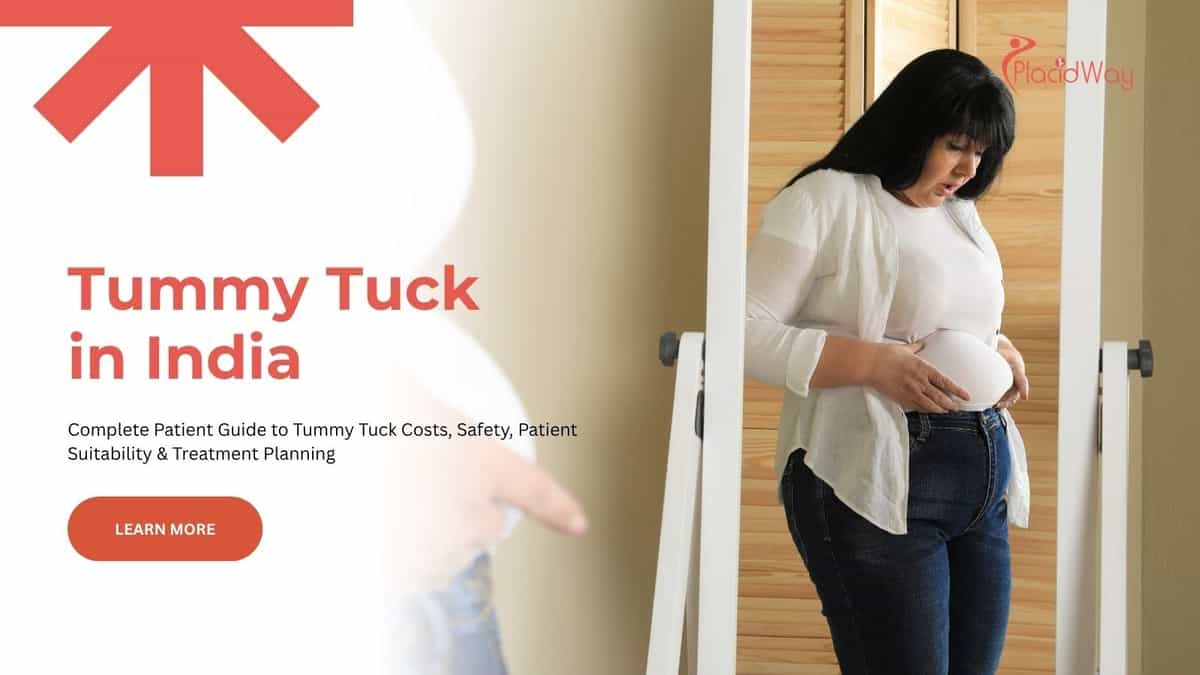
Planning a major cosmetic procedure abroad can feel challenging, especially when navigating medical standards and treatment options across borders. Many international patients look toward Indian healthcare facilities to address post-pregnancy abdominal changes or loose skin after significant weight loss, driven by the availability of highly experienced, English-speaking plastic surgeons. While the potential to reduce surgical expenses is a major factor, prioritizing your safety by verifying National Medical Commission (NMC) registrations and National Accreditation Board for Hospitals (NABH) certifications is critical. This guide provides an objective look at treatment pathways, clinical requirements, and comprehensive care standards to help you make an informed medical decision.
- Estimated Cost: Typically ranges from $2,500 to $4,500 USD, depending on procedure complexity and hospital choice.
- Safety Overview: Generally safe when performed by board-certified plastic surgeons in NABH or JCI-accredited facilities with intensive care support.
- Ideal Candidate: Non-smokers close to their ideal body weight with excess abdominal skin or weakened muscles not responding to diet and exercise.
- Recovery Time: Usually requires a 10 to 14-day stay in India for immediate post-operative monitoring before flying home.
- Why Patients Choose India: Access to globally trained specialists, comprehensive medical tourism packages, and significant savings compared to Western healthcare systems.
- Important Caution: Always verify your surgeon's registration with the National Medical Commission (NMC) and membership in recognized bodies like the Indian Association of Aesthetic Plastic Surgeons (IAAPS).
Understanding Tummy Tuck Surgery in India
A tummy tuck, clinically known as abdominoplasty, is a major surgical procedure designed to remove excess fat and skin while restoring weakened or separated muscles to create a smoother, firmer abdominal profile. Patients often explore this treatment after experiencing significant weight fluctuations, pregnancy, or aging, which can diminish skin elasticity. While diet and exercise are foundational for overall health, they cannot tighten loose skin or repair diastasis recti, a common condition where abdominal muscles separate. Many international individuals choose to undergo this procedure in Indian metropolitan centers like New Delhi, Mumbai, and Chennai. The primary motivations extend beyond simple economics. Indian medical infrastructure has expanded rapidly, with many top-tier hospitals offering dedicated cosmetic surgery wings equipped with modern surgical technology. Furthermore, the medical teams often feature professionals who have completed fellowships or advanced training in the United States, the United Kingdom, or Australia, ensuring a standard of care that aligns with international expectations. Patients traveling for medical care typically expect a seamless experience. Indian facilities frequently cater to this need by providing end-to-end medical tourism services. These programs often include airport transfers, dedicated patient coordinators, language interpreters, and integrated post-operative nursing care.
- Availability of board-certified aesthetic surgeons with high annual case volumes.
- Significant reduction in out-of-pocket expenses compared to domestic providers.
- Access to internationally accredited multi-specialty hospitals with comprehensive intensive care units.
- Consolidated medical packages that include pre-operative testing, surgery, and aftercare.
- No prolonged wait times for elective surgical scheduling.
Types of Abdominoplasty Procedures Available
Abdominoplasty is not a one-size-fits-all operation. Your surgeon will recommend a specific technique based on your anatomical needs, skin laxity, and aesthetic goals. Understanding these variations can help you ask informed questions during your initial consultation. The most common variation is the full tummy tuck. This addresses the entire abdominal wall, requiring an incision from hip to hip and another around the umbilicus (belly button). It allows the surgeon to repair the underlying muscle fascia and remove a significant amount of excess skin. Patients who have undergone multiple pregnancies often require this comprehensive approach. For individuals with excess skin limited to the area below the navel, a mini tummy tuck may be recommended. This procedure involves a shorter incision and typically does not require repositioning the belly button. Because it is less invasive, the recovery timeline is often shorter, though it provides less dramatic contouring than a full abdominoplasty.
| Procedure Type | Clinical Indication | Incision Placement | Average Surgery Time |
|---|---|---|---|
| Mini Tummy Tuck | Mild skin laxity below the navel | Short, horizontal above pubic bone | 1.5 to 2 hours |
| Full Tummy Tuck | Moderate to severe laxity, muscle separation | Hip to hip, around navel | 2.5 to 4 hours |
| Extended Tummy Tuck | Excess skin on abdomen and flanks | Extends past hips toward the lower back | 3 to 5 hours |
| Fleur-de-Lis | Massive weight loss, extreme vertical/horizontal laxity | Horizontal plus a vertical midline incision | 4 to 6 hours |
Patient Demographics and Global Travel Trends
Understanding the demographics of individuals traveling to India for cosmetic procedures provides valuable context for prospective patients. Recent public health data from 2024 to 2025 highlights specific trends in medical tourism, illustrating who travels, why they travel, and what procedures they seek. The majority of these patients are motivated by the desire for comprehensive post-bariatric body contouring or post-maternity aesthetic restoration. In 2024, clinical registries indicated that females constituted the vast majority of cross-border abdominoplasty patients in India. The age distribution reveals that individuals between 30 and 49 years old form the primary demographic. This correlates strongly with the typical life stages associated with completed family planning or reaching stabilization after major weight loss interventions. Furthermore, outbound patient data shows strong arrival numbers from the United Kingdom, Australia, Kenya, Nigeria, and the United Arab Emirates.
Medical visa issuance trends also highlight a steady increase in healthcare travel to India for cosmetic procedures following post-pandemic recovery. The steady upward trajectory indicates growing international confidence in Indian medical facilities and regulatory frameworks, particularly as hospitals enhance their digital consultation capabilities and international patient departments.
Assessing Your Suitability for Treatment
Determining your eligibility is a crucial first step before booking any medical travel. Tummy tuck surgery carries specific physiological demands, and not every patient is an ideal candidate. Medical guidelines in India strictly evaluate patient health profiles to minimize intraoperative and postoperative complications. An ideal candidate is generally in good overall health, maintains a stable weight, and does not smoke. Smoking severely restricts blood flow, which can lead to delayed wound healing and tissue necrosis. Consequently, reputable Indian surgeons require patients to cease smoking and nicotine consumption for at least four to six weeks prior to surgery. Additionally, patients should have a Body Mass Index (BMI) typically under 30. Individuals with a higher BMI may face increased risks regarding anesthesia and blood clots.
Medical Warning: A tummy tuck is not a weight-loss surgery. It is highly recommended that patients achieve their target weight and maintain it for at least six months before undergoing this procedure to ensure stable, long-lasting results.
Furthermore, women considering future pregnancies are usually advised to postpone abdominoplasty. Pregnancy can stretch the newly tightened abdominal muscles and skin, effectively reversing the benefits of the surgery. Your surgical team will thoroughly review your medical history, current medications, and future lifestyle goals during the initial evaluation.
Estimating the Financial Investment
One of the primary drivers for medical travel is the distinct difference in healthcare pricing globally. When evaluating treatment costs, it is vital to look beyond the base surgical fee and consider the comprehensive financial picture. In India, medical facilities often provide inclusive pricing packages designed specifically for international visitors. A standard all-inclusive package for a tummy tuck in India typically covers the surgeon’s fees, anesthesiologist charges, operation theater costs, nursing care, and a specified number of nights in the hospital. Some premium packages also include airport transfers, pre-operative laboratory tests, and post-operative compression garments. However, patients must always request an itemized written quote to understand exactly what is included and identify any potential out-of-pocket expenses, such as extended hospital stays or specific emergency medications.
| Country | Estimated Cost Range (USD) |
|---|---|
| United States | $8,000 - $15,000 |
| United Kingdom | $7,500 - $12,000 |
| Australia | $9,000 - $14,000 |
| India | $2,500 - $4,500 |
While the financial savings are evident, patients must factor in the cost of travel, medical visas, accommodation for the recovery period outside the hospital, and travel health insurance. Avoid selecting a clinic solely based on the lowest price; unusually low prices may indicate compromised safety protocols or inexperienced medical staff.
Selecting a Qualified Hospital in India
The Indian healthcare ecosystem is vast, comprising government hospitals, private clinics, and large corporate hospital networks. For international patients seeking elective plastic surgery, private multi-specialty corporate hospitals are generally the safest choice. These institutions possess the infrastructure required to manage complex surgeries and unforeseen medical emergencies. When vetting a hospital, the most important credential to verify is accreditation from the National Accreditation Board for Hospitals & Healthcare Providers (NABH). NABH is a constituent board of the Quality Council of India and ensures strict adherence to patient safety, hygiene, and clinical protocols. Hospitals holding this accreditation are regularly audited and must maintain high standards of operational excellence.
Vetting Tip: While Joint Commission International (JCI) accreditation is a strong indicator of global standards, NABH accreditation is the primary national benchmark in India. A hospital possessing both signifies an exceptional commitment to clinical quality.
In addition to accreditation, patients should inquire about the facility's specific infrastructure. Confirm that the hospital features modular operation theaters with laminar airflow to reduce infection risks. Access to an on-site Intensive Care Unit (ICU) and an internal blood bank are critical safety requirements for major surgeries like a full abdominoplasty.
Verifying Surgeon Credentials and Expertise
The skill and experience of your plastic surgeon are the most significant factors determining the safety and aesthetic outcome of your procedure. Indian medical regulations require doctors to be registered with appropriate governing bodies, and patients must verify these credentials before committing to surgery. First, ensure the surgeon holds a valid registration with the National Medical Commission (NMC) or the respective State Medical Council. For plastic surgery, the specialist should possess an M.Ch. (Master of Chirurgiae) or DNB (Diplomate of National Board) in Plastic Surgery. These are the highest national board certifications for surgical super-specialties in India. Additionally, membership in professional organizations demonstrates a surgeon's commitment to continuing education and ethical practice. Look for surgeons who are active members of the Indian Association of Aesthetic Plastic Surgeons (IAAPS) or the Association of Plastic Surgeons of India (APSI). International memberships, such as the International Society of Aesthetic Plastic Surgery (ISAPS), also serve as strong trust signals. Ask your prospective surgeon about their annual case volume for abdominoplasty and their personal protocol for managing complications.
Planning Your Medical Travel and Visa
Traveling to India for surgery requires careful logistical planning. The Indian government offers a specific Medical Visa (Med Visa) and an e-Medical Visa for international patients seeking healthcare services. Unlike a standard tourist visa, the medical visa allows for multiple entries and extensions if prolonged clinical care is necessary. To apply for a medical visa, you will need an official visa invitation letter from a recognized Indian hospital. The hospital issues this document after preliminary consultations and reviewing your medical reports. It is advisable to initiate the visa application process at least three to four weeks before your intended travel date. Your travel itinerary should allow ample time for recovery. Most surgeons recommend staying in India for at least 10 to 14 days post-surgery. This timeframe ensures you are medically cleared for air travel, as flying too soon after abdominal surgery increases the risk of Deep Vein Thrombosis (DVT). Pack loose, comfortable clothing that opens from the front, as raising your arms or pulling clothes over your head will be difficult in the days following surgery.
Navigating the Consultation Process
The patient journey typically begins long before arriving in India through a virtual consultation. During this initial video call, you will discuss your medical history, aesthetic goals, and any concerns you may have. The surgeon will likely request clear photographs of your abdomen from multiple angles to assess skin laxity and determine the appropriate surgical approach. Once you arrive in India, an in-person clinical evaluation takes place. This consultation is far more comprehensive. The surgical team will conduct a physical examination, check the extent of muscle separation, and mark the proposed incision lines on your body. This is a collaborative process where the surgeon sets realistic expectations regarding scarring and final contours. Before receiving medical clearance for surgery, you will undergo a battery of preoperative diagnostic tests. These standard safety protocols typically include comprehensive blood panels, an electrocardiogram (ECG), a chest X-ray, and sometimes an abdominal ultrasound to check for hernias. Only when the anesthesiologist and the surgical team review and approve these results will the surgery proceed.
The Surgical Experience Step-by-Step
Understanding the intraoperative process can significantly reduce pre-surgery anxiety. A tummy tuck is performed under general anesthesia, ensuring you are completely asleep and pain-free throughout the duration of the procedure. An experienced anesthesiologist will monitor your vital signs continuously. The surgery begins with the primary incision, strategically placed low on the abdomen to allow for concealment beneath standard underwear or swimwear. If you are undergoing a full abdominoplasty, the surgeon will make a secondary incision around the umbilicus. The abdominal skin is then elevated to expose the underlying rectus abdominis muscles. Using specialized sutures, the surgeon tightens and repairs these weakened or separated muscles, creating a firmer abdominal wall and a narrower waistline. The elevated skin is then pulled downward, and the excess is carefully excised. A new opening is created for the belly button, which is sutured into its new position. Finally, the incisions are closed using layered sutures, skin adhesives, or surgical tape. Small temporary drainage tubes may be inserted under the skin to prevent fluid accumulation before applying sterile dressings.
Post-Operative Care and Recovery Timeline
Recovery from an abdominoplasty is a gradual process requiring patience and adherence to your surgeon's aftercare instructions. The initial days following surgery involve significant rest and restricted mobility. Indian hospitals typically keep tummy tuck patients admitted for two to three days to administer intravenous pain management and antibiotics. During the first week, you will need to walk slightly bent forward at the waist to avoid placing tension on your healing incisions. A compression garment, often provided by the hospital, must be worn continuously. This garment minimizes swelling, supports the repaired muscles, and helps the skin conform to your new abdominal contours.
| Recovery Phase | Expected Clinical Process | Patient Activity Level |
|---|---|---|
| Days 1 - 3 | Hospital stay, IV medications, drain management. | Strict bed rest with short, assisted walks. |
| Days 4 - 7 | Discharge to hotel, transition to oral medication. | Light walking in the room, resting in an elevated position. |
| Weeks 2 - 3 | Drain removal (if applicable), initial suture check. | Clearance for flight home. Gentle, unassisted daily activities. |
| Weeks 4 - 6 | Significant reduction in swelling, incisions maturing. | Return to desk work. Avoid heavy lifting. |
| Months 3 - 6 | Deep tissue healing, fading of scars. | Resumption of all exercise, including core workouts. |
It is crucial to attend all scheduled follow-up appointments before flying home. Your surgical team will assess wound healing, remove drains when fluid output is sufficiently low, and provide clearance for international travel.
Understanding Risks and Complication Management
All surgical procedures carry inherent risks, and a tummy tuck is no exception. A responsible medical guide must highlight these possibilities so patients can prepare adequately. Indian hospitals mitigate these risks through rigorous preoperative screening, strict intraoperative sterilization, and structured postoperative monitoring. Common surgical risks include infection, delayed wound healing, and unfavorable scarring. Seromas (fluid accumulation beneath the skin) and hematomas (blood collection) are also potential complications that may require drainage. Due to the nature of the surgery, patients may experience temporary or permanent changes in skin sensation around the incision site or the navel.
Safety Precaution: Deep Vein Thrombosis (DVT), a condition where blood clots form in the legs, is a serious risk associated with major abdominal surgery and long flights. Surgeons combat this by encouraging early mobilization, utilizing pneumatic compression devices during surgery, and occasionally prescribing blood thinners.
When selecting a provider, discuss their revision policy and emergency protocols. Find out what provisions exist if a complication arises after you have returned to your hotel or home country. Reputable clinics often maintain communication via telemedicine to monitor your long-term recovery.
Combining Procedures: The Mommy Makeover
Many international patients traveling to India opt to combine their tummy tuck with other aesthetic procedures, a strategy often referred to as a "Mommy Makeover." This approach allows patients to address multiple areas of concern in a single surgical session, reducing overall recovery time and travel expenses compared to undergoing separate surgeries. The most common procedure paired with a tummy tuck is liposuction. While a tummy tuck removes excess skin and tightens muscles, liposuction is highly effective at removing localized fat deposits in the flanks, back, and hips, providing a more comprehensive contouring result. Breast surgeries, such as lifts, augmentations, or reductions, are also frequently performed alongside abdominoplasty to restore pre-pregnancy proportions. However, combining surgeries increases the total time under anesthesia and places greater physiological stress on the body. Your surgeon will carefully evaluate your health status to determine if multiple procedures can be performed safely. If the combined surgical time exceeds safety thresholds, the medical team may advise staging the procedures over multiple trips.
Frequently Asked Questions
Is it safe to get a tummy tuck in India?
Yes, it is generally safe when performed by board-certified plastic surgeons in accredited facilities. Ensuring the hospital holds NABH accreditation and the surgeon is registered with the National Medical Commission significantly minimizes surgical risks.
How long should I stay in India after an abdominoplasty?
Patients are typically advised to remain in India for 10 to 14 days post-surgery. This timeframe allows the medical team to monitor the initial healing phase, remove surgical drains, and safely clear the patient for long-haul air travel.
What are the hidden costs of medical tourism in India?
While surgical packages cover core expenses, patients should budget for flights, medical visa fees, hotel accommodations during the recovery phase, prescribed medications after discharge, and travel insurance that covers medical complications.
Can I lose weight with a tummy tuck?
No, a tummy tuck is a body contouring procedure, not a weight-loss surgery. It removes localized excess skin and repairs muscles. Patients should be at or near their ideal body weight before undergoing this treatment.
What happens if I experience complications after returning home?
Reputable Indian clinics offer post-operative telemedicine follow-ups. However, in the event of an acute emergency, you must seek immediate care at a local hospital. Purchasing specialized medical tourism insurance prior to your trip is highly recommended.
Do Indian hospitals provide English-speaking staff?
Yes, English is widely spoken in Indian corporate hospitals. Medical records, consultations, and care instructions are routinely provided in English, and many top surgeons have trained in English-speaking nations.
How visible will my tummy tuck scar be?
The scar runs horizontally across the lower abdomen, designed to be hidden beneath most underwear or bikini bottoms. While the scar is permanent, it typically fades significantly over 12 to 18 months with proper wound care.
What is the difference between NABH and JCI accreditation?
NABH is India's leading national healthcare accreditation system ensuring strict domestic quality standards. JCI is an international accreditation standard. Both signify high levels of patient safety and clinical excellence.
Can I fly immediately after my surgery?
No, flying immediately after abdominal surgery severely increases the risk of deep vein thrombosis (DVT). Surgeons require a strict observation period of roughly two weeks before granting medical clearance to fly.
What type of anesthesia is used for this procedure?
A tummy tuck requires general anesthesia, meaning you will be entirely unconscious and carefully monitored by an anesthesiologist throughout the entire surgical process.
Ready to Explore Your Options?
Navigating international healthcare choices requires careful planning. PlacidWay can help you compare certified providers in India, understand treatment costs, review doctor credentials, and request detailed medical quotes.
Request InformationDisclaimer: This information is for educational purposes only and does not replace professional medical advice. Always consult a qualified healthcare provider before making medical decisions.
References
- ISAPS International Survey on Aesthetic/Cosmetic Procedures – International Society of Aesthetic Plastic Surgery
- Medical Value Travel Guidelines – Ministry of Health and Family Welfare, Government of India
- Standards for Hospital Accreditation – National Accreditation Board for Hospitals & Healthcare Providers (NABH)
- Registered Medical Practitioner Guidelines – National Medical Commission (NMC) India
- Patient Safety and Healthcare Facilities – World Health Organization (WHO)
- Complications and Management Strategies in Abdominoplasty – National Center for Biotechnology Information (NCBI)

























Share this listing