

If you are experiencing heavy, drooping eyelids or persistent under-eye bags, you may be comparing local surgical costs with options across the border. Many international patients travel south to seek cosmetic or functional eye improvements, driven by the significant price difference—often saving thousands of dollars compared to US clinics. Before booking a consultation, it is critical to understand the expected costs, how to verify a surgeon's CMCPER board certification, and what clinical safety standards to look for to ensure your procedure is handled by qualified specialists.
Quick Answer Summary: Eyelid Surgery in Tijuana
- Estimated Cost: Typically ranges from $2,000 to $4,500 USD, depending on whether you require upper, lower, or both lids treated.
- Ideal Candidate: Healthy adults with non-smoker status who have realistic expectations regarding the removal of excess eyelid skin or fat.
- Recovery Time: Most patients return to light activities and work within 7 to 10 days, though residual swelling can last several weeks.
- Why Patients Choose Tijuana, Mexico: Proximity to the US border (San Diego), highly specialized plastic surgeons, and comprehensive care packages at a fraction of North American prices.
- Required Certifications: Always verify that your chosen surgeon is certified by the Mexican Council of Plastic, Aesthetic and Reconstructive Surgery (CMCPER) and that the clinic holds a valid COFEPRIS license.
- Safety Overview: When performed by board-certified specialists in licensed facilities, the procedure carries a high safety profile, though standard surgical risks like infection and dry eye must be discussed.
Understanding Eyelid Surgery in Tijuana, Mexico
Blepharoplasty, commonly known as eyelid surgery, addresses aesthetic and functional concerns around the eyes. As skin ages, it gradually loses elasticity. Combined with gravity, this causes excess skin to collect on the upper and lower eyelids. In the upper eyelids, this can lead to an extra fold of skin that may hang over the eyelashes and obstruct vision. In the lower eyelids, weakening tissue can allow orbital fat to bulge forward, creating the appearance of persistent bags or dark circles.
Patients living in the United States and Canada frequently face substantial out-of-pocket expenses for this procedure, as medical insurance typically only covers blepharoplasty if a physician formally diagnoses severe vision impairment. For those seeking purely cosmetic improvements or those who do not meet strict insurance criteria, the financial burden can be prohibitive. This economic reality drives many to research cross-border healthcare.
Tijuana has positioned itself as a major hub for medical travel due to its strategic location just miles from San Diego, California. The city hosts numerous modern clinics catering specifically to international patients. However, selecting a medical destination requires careful evaluation beyond just comparing prices. Patients must rigorously assess surgeon qualifications, clinic infrastructure, and the specific surgical approach required for their facial anatomy.
Primary Reasons Patients Travel for Eyelid Surgery
- Significant reduction in out-of-pocket surgical fees compared to domestic healthcare providers.
- Access to highly experienced, board-certified plastic and reconstructive surgeons.
- Shorter wait times for elective and cosmetic procedures.
- Availability of all-inclusive medical packages that coordinate transportation and recovery accommodations.
- The ability to combine eyelid surgery with other facial rejuvenation procedures during a single trip.
Types of Eyelid Surgery Offered in Tijuana Clinics
Because every patient presents with unique facial anatomy and specific goals, eyelid surgery is not a one-size-fits-all procedure. During your initial consultation, a qualified plastic surgeon will evaluate your skin laxity, muscle tone, and fat distribution to recommend a customized surgical plan. There are several primary techniques utilized in modern blepharoplasty.
Upper eyelid surgery focuses on removing excess skin and muscle that creates a hooded appearance. In some cases, a small amount of fat is also repositioned or removed. The incision is carefully placed within the natural crease of the upper eyelid, allowing the resulting scar to remain largely hidden once healed. This approach can dramatically open the eye area, providing a more rested appearance and improving the upper field of vision if hooding is severe.
Lower eyelid surgery primarily targets under-eye bags and puffiness. Depending on your needs, the surgeon may use a transconjunctival approach, where the incision is made inside the lower eyelid. This technique is often used when fat removal or repositioning is the primary goal, and no skin needs to be removed. If excess skin is present, a subciliary incision is made just below the lower lash line. Both methods require precise surgical skill to avoid complications such as the eyelid pulling downward during healing.
Transconjunctival Approach
Performed from inside the lower eyelid. Ideal for younger patients with good skin elasticity who only need fat pad reduction. Leaves no visible external scar.
Subciliary Approach
Performed via an incision just below the lower lashes. Better suited for patients who require the removal of both excess fat and sagging skin.
Patient Demographics: Who Travels to Mexico for Facial Aesthetics?
Understanding who travels for facial cosmetic procedures can help validate your own decision-making process. Recent data from the International Society of Aesthetic Plastic Surgery (ISAPS) and regional medical tourism registries indicate a steady increase in cross-border patient volume for aesthetic treatments throughout 2024. The demographic profile of these patients provides insight into why certain age groups seek specific surgical interventions abroad.
The majority of international patients seeking blepharoplasty in Baja California are between the ages of 40 and 65. This aligns with the natural aging process, as skin elasticity diminishes most noticeably during these decades. While female patients historically made up the vast majority of medical tourists for cosmetic surgery, recent 2024 data highlights a significant increase in male patients traveling for eyelid surgery, driven by the desire to maintain a youthful, energetic appearance in competitive professional environments.
2024 Demographic Distribution: Aesthetic Surgery Patients in Baja California
Source: Based on 2024 regional cross-border aesthetic surgery patient demographic reports.
Most patients traveling from the United States originate from California, Arizona, Nevada, and Texas due to geographic convenience. However, an increasing number of patients are booking flights from Canada and the East Coast of the US, as the potential financial savings on the surgery outweigh the costs of airfare and hotel accommodations.
Cost of Eyelid Surgery in Tijuana Compared to the US and Canada
The primary driver for cross-border medical travel is cost efficiency. Patients frequently wonder why the same surgical procedure can cost significantly less just a few miles south of the border. The disparity is not due to a lower quality of medical materials or surgical skill, but rather structural economic differences. Mexico has a lower cost of living, lower administrative overhead for clinics, and substantially different medical malpractice insurance structures. These savings are passed directly to the patient.
When requesting quotes, it is crucial to understand exactly what is included. Some clinics provide a base price for the surgical fee alone, while others offer comprehensive medical tourism packages. An all-inclusive package generally covers the surgeon's fee, anesthesiologist fee, operating room costs, pre-operative blood work, local ground transportation between the border and the clinic, and hotel accommodations for your recovery days.
You should also budget for unexpected expenses. These may include prescription medications (antibiotics and pain relief) purchased after the surgery, specialized eye drops or ointments, travel insurance, and meals during your stay. Always request an itemized, written quote before making a financial commitment to ensure transparency.
| Procedure Scope | Estimated Cost in US/Canada | Estimated Cost in Tijuana, Mexico |
|---|---|---|
| Upper Blepharoplasty Only | $3,500 - $6,000 USD | $1,800 - $2,500 USD |
| Lower Blepharoplasty Only | $4,000 - $7,000 USD | $2,000 - $2,800 USD |
| Combined (Upper & Lower) | $7,000 - $12,000+ USD | $3,500 - $4,500 USD |
How to Verify Surgeon Credentials in Mexico
The success of your eyelid surgery depends almost entirely on the skill and experience of the plastic surgeon. Because the eyelids are complex anatomical structures that protect the eyes, precision is non-negotiable. When evaluating doctors in Mexico, you must look for specific national credentials that prove they have undergone rigorous specialized training.
In Mexico, a general medical degree is not sufficient to perform plastic surgery. A surgeon must complete a general surgery residency followed by a specialized residency in plastic, aesthetic, and reconstructive surgery. The most critical credential to verify is certification by the Mexican Council of Plastic, Aesthetic and Reconstructive Surgery (Consejo Mexicano de Cirugía Plástica, Estética y Reconstructiva, or CMCPER). This is the only board officially recognized by the Mexican government for this specialty.
Additionally, reputable surgeons are typically active members of the Mexican Association of Plastic, Aesthetic and Reconstructive Surgery (Asociación Mexicana de Cirugía Plástica, Estética y Reconstructiva, or AMCPER). Many top surgeons in Tijuana also hold international memberships, such as with the American Society of Plastic Surgeons (ASPS) or the International Society of Aesthetic Plastic Surgery (ISAPS), which further demonstrates their commitment to ongoing global medical education.
Surgeon Verification Checklist
- Verify their unique CMCPER certification number on the official council website.
- Check for active membership in AMCPER.
- Ask how many blepharoplasty procedures they perform annually.
- Request to see before-and-after portfolios of patients with similar eyelid anatomy to yours.
- Confirm who will be administering the anesthesia (it should be a board-certified anesthesiologist).
Evaluating Clinic and Hospital Safety in Tijuana
Just as you must verify the surgeon, you must also ensure the facility where your surgery will take place meets stringent safety standards. Not all clinics in medical tourism destinations maintain the same level of infrastructure, and outpatient surgical centers must be properly equipped to handle medical emergencies.
The primary regulatory body for healthcare facilities in Mexico is the Federal Commission for the Protection against Sanitary Risk (COFEPRIS). Any clinic or hospital operating legally must hold a current COFEPRIS license. This certification indicates that the facility has passed governmental inspections regarding hygiene, equipment maintenance, and emergency protocols.
Beyond basic licensing, larger hospitals in Tijuana may hold accreditation from the Consejo de Salubridad General (CSG), which is the Mexican equivalent of the Joint Commission in the United States. While smaller boutique plastic surgery clinics may not seek CSG accreditation, they should still operate with modern, sterile operating rooms. Always ask if the clinic has a continuous power supply (backup generators), hospital transfer protocols in case of a rare emergency, and proper sterilization tracking for surgical instruments.
Cross-Border Medical Travel Trends: Post-Pandemic Stability
When planning healthcare abroad, evaluating destination stability and provider volume offers insight into the maturity of the medical tourism ecosystem. Following the global disruptions of previous years, cross-border patient volume in Northern Mexico has stabilized into predictable, steady growth patterns by 2024 and 2025.
This steady influx of patients encourages continuous investment in medical infrastructure in Tijuana. Clinics are increasingly adopting specialized concierge services, English-speaking medical coordinators, and advanced patient follow-up software to cater to the sustained demand from North America.
2024-2025 Quarterly Patient Volume Trends: Facial Aesthetics in Tijuana
Source: Aggregated 2024-2025 clinic reporting data for cross-border aesthetic consultations.
Patient Eligibility: Are You a Candidate for Eyelid Surgery?
Not everyone experiencing drooping eyelids is an immediate candidate for blepharoplasty. A thorough medical evaluation is required to ensure the procedure is both safe and effective for your specific anatomical presentation. Plastic surgeons in Mexico will evaluate your complete medical history before clearing you for surgery.
The ideal candidate is a healthy adult without life-threatening illnesses or medical conditions that impair healing. You must be a non-smoker, or willing to stop smoking for several weeks before and after the procedure, as nicotine severely restricts blood flow and increases the risk of necrosis and heavy scarring. Furthermore, candidates must have realistic expectations regarding the outcome; blepharoplasty cannot eliminate dark circles caused by pigmentation, nor does it lift sagging eyebrows (which requires a brow lift).
Patients with serious eye conditions, such as glaucoma, detached retina, or severe dry eye syndrome, require clearance from an ophthalmologist before proceeding. Eyelid surgery can temporarily exacerbate dry eyes, so existing severe cases may be a contraindication. Your surgeon may also evaluate thyroid disorders like Graves' disease, which can cause tissue swelling around the eyes and complicate surgical outcomes.
Preparing for Blepharoplasty in Tijuana
Proper preparation is critical to minimizing surgical risks and ensuring a smooth recovery process. Once you have selected a surgeon and scheduled your date, you will receive a set of pre-operative instructions. Following these guidelines meticulously is vital for your safety.
You will likely be instructed to undergo routine blood tests and an electrocardiogram (EKG) if you are over a certain age. These results must be sent to your Mexican clinic for review prior to your travel date. Medication management is also a critical step. You must stop taking aspirin, ibuprofen, naproxen, and certain herbal supplements (such as Ginkgo Biloba, Ginseng, and Vitamin E) at least two weeks before surgery, as these act as blood thinners and increase the risk of heavy bleeding and hematoma.
From a travel perspective, organize your required documentation early. A valid passport is required to cross the border back into the United States. Many clinics assist patients by providing a medical pass (FastPass) which grants access to a dedicated lane at the San Ysidro border crossing, significantly reducing wait times on your journey home.
Important Pre-Surgical Warning
Do not conceal any part of your medical history from your surgical team in Mexico. Failure to disclose current medications, recreational drug use, or past medical conditions can lead to severe, life-threatening complications during anesthesia.
The Surgical Procedure: Step-by-Step
Understanding the steps involved in eyelid surgery can help alleviate pre-operative anxiety. On the day of your surgery, you will arrive at the clinic where you will meet with your surgeon one final time to review the surgical plan. The surgeon will use a surgical marker to carefully map out the incision lines on your eyelids while you are sitting upright, as gravity changes the position of the skin when lying down.
The procedure is typically performed under local anesthesia combined with intravenous sedation, allowing you to remain comfortable and relaxed without the deeper risks associated with general anesthesia. If you are undergoing both upper and lower eyelid surgery, the process generally takes between one and a half to two hours.
For the upper eyelids, the surgeon creates an incision along the natural crease. They remove the predetermined amount of excess skin and muscle, and in some cases, reshape the fat pads to restore a youthful contour. The incisions are then meticulously closed with fine sutures. For the lower eyelids, depending on the chosen technique (transconjunctival or subciliary), the surgeon accesses the fat pads to remove or reposition the tissue, addressing the under-eye bags before closing the incision.
Recovery Timeline Following Blepharoplasty in Mexico
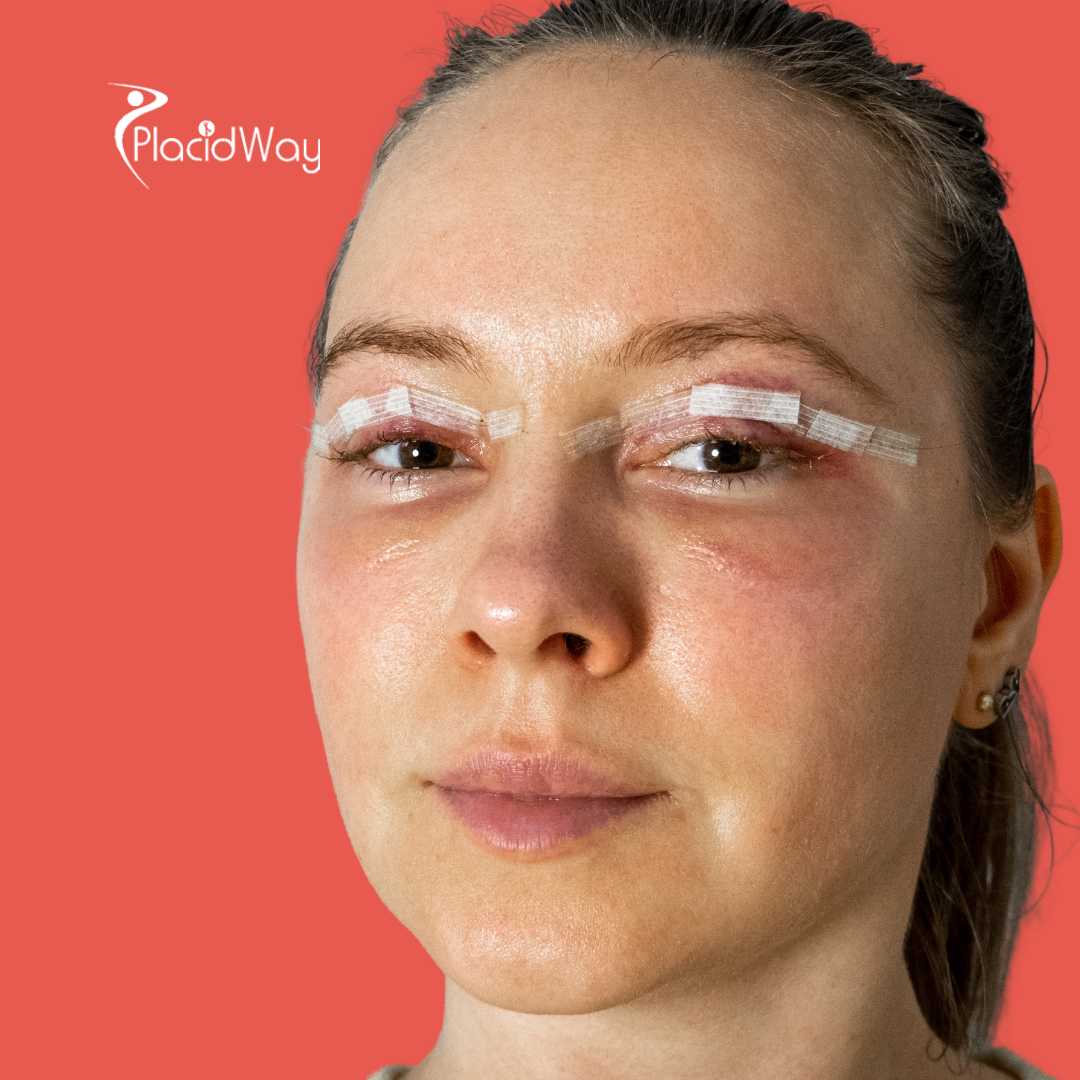
The immediate post-operative period is crucial for achieving optimal aesthetic results. Because the skin around the eyes is exceptionally thin and sensitive, swelling and bruising are inevitable. Patients should plan to stay in Tijuana for a few days after the surgery so the surgeon can monitor the early stages of healing and safely remove sutures if non-dissolvable threads were used.
During the first 48 hours, keeping your head elevated and applying cold compresses diligently will significantly reduce swelling. Your vision may be temporarily blurry due to the antibiotic ointment applied to your eyes to prevent drying and infection. It is entirely normal for your eyelids to feel tight, heavy, and sore, though acute pain is rare and usually managed well with prescribed oral pain medication.
By the end of the first week, most bruising begins to fade, shifting from deep purple to a yellowish hue. At this stage, many patients feel comfortable returning to remote work or light daily activities, provided they wear dark sunglasses to protect their eyes from sun exposure and wind. You must avoid strenuous exercise, heavy lifting, or bending over for at least two to three weeks, as these activities raise blood pressure and can cause bleeding at the surgical sites.
| Timeframe | Clinical Process & Sensation | Action Required |
|---|---|---|
| Days 1-3 | Maximum swelling and bruising. Vision may be blurry from ointment. Eyes feel tight. | Rest with head elevated 45 degrees. Apply cold compresses. Take prescribed meds. |
| Days 4-7 | Swelling begins to subside. Bruising turns yellow/green. Sutures may be removed. | Continue gentle eye care. Avoid screens to prevent eye strain. Wear sunglasses outside. |
| Weeks 2-3 | Majority of visible bruising resolves. Scars appear slightly pink but can be concealed. | May resume light exercise. Continue to protect scars from direct sunlight. |
| Months 3-6 | Residual micro-swelling resolves. Scars fade into the natural eyelid creases. | Evaluate final aesthetic outcome. Maintain good skin hygiene and sun protection. |
Potential Risks and Complications of Blepharoplasty
While eyelid surgery is widely performed and generally safe when executed by a board-certified professional, no surgical procedure is entirely free of risk. It is important to approach your decision with a clear understanding of potential complications, both mild and severe, so you can recognize warning signs during your recovery period.
Common, manageable risks include temporary dry eye syndrome, minor wound infection, and noticeable scarring. Some patients experience a temporary inability to completely close their eyes (lagophthalmos) due to post-operative swelling, which usually resolves as the tissues heal. Your surgeon will prescribe lubricating eye drops to protect your cornea during this phase.
More severe complications are rare but require immediate medical intervention. These include retrobulbar hematoma (bleeding behind the eye), which can exert pressure on the optic nerve and potentially threaten vision if not drained quickly. Ectropion is another complication where the lower eyelid is pulled downward, exposing the inner conjunctiva; this may occur if too much skin was removed and often requires corrective revision surgery. Ensure your chosen clinic in Tijuana has clear protocols for managing emergencies and provides after-hours contact information.
Combining Eyelid Surgery with Other Procedures
Many medical tourists traveling to Tijuana take advantage of the clinical setting to undergo multiple procedures simultaneously. Combining surgeries can be more cost-effective and consolidates the recovery time into a single period, rather than requiring multiple trips and separate healing phases.
Eyelid surgery pairs exceptionally well with a brow lift (forehead lift). Because sagging eyebrows can contribute to the appearance of heavy upper eyelids, addressing both areas at once yields a more harmonious and comprehensive facial rejuvenation. A facelift or neck lift is also frequently performed alongside blepharoplasty for older patients seeking full facial contouring.
Non-surgical treatments, such as Botox injections, dermal fillers, or laser skin resurfacing, can also be administered during the same visit to enhance the final results. However, safety must dictate the extent of combined procedures. Prolonged time under anesthesia increases medical risks. A responsible, board-certified plastic surgeon will evaluate your health status to determine a safe maximum duration for your combined surgical plan.
Travel Logistics: Arriving in Tijuana for Treatment
Planning the logistical aspects of your medical trip is just as important as the clinical preparation. Tijuana is unique among international medical tourism destinations because it is immediately adjacent to a major US city. Patients have multiple options for reaching their chosen clinic securely and comfortably.
Many patients choose to fly into San Diego International Airport (SAN). From there, it is a short 30-minute drive to the San Ysidro border crossing. Most reputable medical clinics in Tijuana provide dedicated shuttle services that will pick you up directly from the airport, drive you across the border, and take you to your hotel or clinic. This concierge approach eliminates the stress of navigating a foreign city or dealing with taxis.
Alternatively, patients can fly directly into Tijuana International Airport (TIJ). If you are flying into San Diego but wish to cross the border on foot, you can utilize the Cross Border Xpress (CBX), an enclosed pedestrian bridge that connects a terminal in San Diego directly to the Tijuana airport. Regardless of your entry method, always communicate your travel itinerary clearly with your clinic’s medical coordinator so they can assist with seamless transfers.
Ready to Explore Eyelid Surgery Options?
Navigating international healthcare can feel complex. PlacidWay can help you compare board-certified surgeons in Tijuana, understand transparent pricing, and review comprehensive medical packages tailored to your needs.
Request Free Information TodayFrequently Asked Questions About Eyelid Surgery in Mexico
How long do the results of eyelid surgery last?
The results of blepharoplasty are long-lasting. Upper eyelid surgery typically lasts 5 to 7 years, while lower eyelid surgery rarely needs to be repeated. However, surgery does not stop the natural aging process, and skin laxity may slowly return over the following decades.
Is eyelid surgery painful?
The procedure itself is performed under anesthesia and is painless. Post-operative discomfort is generally described as a feeling of tightness or mild soreness rather than acute pain, which is effectively managed with standard oral pain medication.
Will there be visible scars after blepharoplasty?
Surgeons strategically place incisions in natural eyelid creases (for upper lids) or just below the lash line or inside the lid (for lower lids). Over several months, these thin incision lines typically fade to the point where they are nearly imperceptible.
Can I wear my contact lenses after surgery in Tijuana?
You must avoid wearing contact lenses for at least two weeks following the procedure to prevent pulling on the healing eyelids and to minimize the risk of introducing bacteria to the incision sites. Plan to bring prescription eyeglasses for your recovery period.
When is it safe to fly home after eyelid surgery?
Most surgeons recommend waiting at least 3 to 5 days before flying. Changes in cabin pressure can cause discomfort and exacerbate swelling. Driving or taking a ground shuttle back across the border is often preferred by patients in the immediate days following surgery.
Do Tijuana clinics offer medical complications insurance?
Many reputable clinics offer or require the purchase of medical tourism insurance through third-party providers. This insurance covers unexpected complications and extended stays, providing peace of mind during your cross-border treatment.
How do I communicate with the medical staff if I don't speak Spanish?
Leading plastic surgery centers in Tijuana that cater to international patients employ bilingual staff and board-certified surgeons who are fluent in English. They also assign dedicated patient coordinators to assist with all communication and logistics.
Does eyelid surgery fix crow’s feet?
No, blepharoplasty specifically addresses excess skin and fat on the eyelids. It does not eliminate the fine lines at the outer corners of the eyes known as crow’s feet. These are typically treated with neuromodulators like Botox or skin resurfacing treatments.
Is it safe to have surgery in Mexico?
Yes, it can be highly safe if you carefully select your provider. Safety depends on choosing a clinic licensed by COFEPRIS and a surgeon board-certified by CMCPER. Verifying these credentials mitigates the risks associated with traveling abroad for healthcare.
What happens during the initial consultation?
During the consultation, the surgeon will review your medical history, perform a physical examination of your eyelids and facial structure, test your tear production, discuss your aesthetic goals, and propose a customized surgical plan.
Disclaimer
Disclaimer: This information is for educational purposes only and does not replace professional medical advice. Always consult a qualified healthcare provider before making medical decisions.
References
- Global Survey on Aesthetic/Cosmetic Procedures (2024 Trends) – International Society of Aesthetic Plastic Surgery (ISAPS)
- Official Directory of Board-Certified Plastic Surgeons – Consejo Mexicano de Cirugía Plástica, Estética y Reconstructiva (CMCPER)
- Sanitary Licensing and Healthcare Regulations in Mexico – Federal Commission for the Protection against Sanitary Risk (COFEPRIS)
- Eyelid Surgery Safety and Risks – American Society of Plastic Surgeons (ASPS)
- What Is Blepharoplasty? Patient Education – American Academy of Ophthalmology
- Medical Tourism Safety Guidelines and Travel Health – Centers for Disease Control and Prevention (CDC)
























Share this listing