
Which European Countries Offer Stem Cell Therapy for Cerebral Palsy?
Slovakia is one of the European destinations that international families may explore when researching regenerative medicine and investigational approaches to cerebral palsy. For parents and caregivers considering Stem Cell Therapy for Cerebral Palsy in Europe, understanding the available treatment options requires careful evaluation of clinical evidence, pediatric neurology expertise, rehabilitation services, and the regulatory status of the proposed procedure. Before selecting a medical center, families should verify whether a specific treatment is authorized for cerebral palsy or offered exclusively within an approved clinical trial or another legally permitted setting. They should also ask about eligibility criteria, potential risks, expected costs, treatment timelines, and follow-up arrangements after returning home.
Quick Summary
- Investigational Status: Stem cell interventions for cerebral palsy remain experimental in many clinical settings; scientific consensus does not classify them as an established cure or a guaranteed reversal of brain injury.
- Diverse Presentations: Cerebral palsy impacts movement, posture, and muscle tone differently across spastic, dyskinetic, ataxic, and mixed types. Treatment suitability varies significantly by individual diagnosis.
- Cell Approaches Studied: Clinical research focuses on umbilical cord blood-derived cells, umbilical cord tissue mesenchymal stromal cells (MSCs), and bone marrow cell populations. Each has distinct processing protocols.
- Role of Rehabilitation: Physical, occupational, and speech therapies remain the cornerstone of cerebral palsy management and are essential before, during, and after any experimental intervention.
- Provider Verification: International families must verify institutional accreditations, trial registration status, physician credentials, and itemized USD financial breakdowns rather than relying on commercial testimonials.
Featured Clinical Center in Europe
Understanding the Search for Cerebral Palsy Treatment Abroad
Cerebral palsy represents a group of permanent neurological conditions affecting movement, posture, muscle coordination, and motor skills. Caused by non-progressive damage or disruption to the developing brain—often before, during, or shortly after birth—it influences daily function and physical development throughout a individual's life.
When standard local therapies reach a plateau or when families seek access to clinical trials and advanced physical medicine, many investigate medical travel. Families exploring Stem Cell Therapy for Cerebral Palsy in Europe frequently confront complex questions regarding scientific validity, legal regulatory frameworks across European jurisdictions, specialist qualifications, and realistic therapeutic targets.
The objective of this guide is to provide international patients with an objective, evidence-based roadmap. By examining cell-based research, clinical evidence limitations, institutional checks, and total USD budgeting requirements, families can make safe and informed decisions.
Cerebral Palsy Is Different for Every Patient
No two individuals experience cerebral palsy identically. Functional presentation varies from mild motor asymmetry to severe motor impairments requiring extensive daily assistance. Clinical care plans must be tailored to the specific anatomical type, functional level, and age of the patient.
Spastic Presentation
Characterized by hypertonia and stiff, contracted muscle groups. It represents the most common form of cerebral palsy.
Dyskinetic Presentation
Involves involuntary, uncontrolled movements (athetoid or choreiform) due to basal ganglia involvement.
Ataxic Presentation
Primarily affects balance, depth perception, and fine motor coordination secondary to cerebellar dysfunction.
To objectively categorize gross motor function, clinical teams utilize standardized metrics such as the Gross Motor Function Classification System (GMFCS), which ranges from Level I (walks without restrictions) to Level V (transported in a manual wheelchair). Interventions evaluated for a child at GMFCS Level II may have entirely different safety and functional goals compared to a child at Level V.
What Are Families Hoping Stem Cell Therapy Might Achieve?
When families research investigational cellular procedures, they often hope to address specific functional challenges. Medical evaluations must approach these questions with strict objectivity:
- Gross Motor Function: Could an investigational procedure modulate spasticity or facilitate motor control improvements measured on the Gross Motor Function Measure (GMFM-88)?
- Coordination and Balance: What do early phase trials indicate regarding trunk stability, head control, and reduced involuntary movement?
- Associated Conditions: Are there measurable impacts on communication, swallowing, sleep patterns, or attentional focus?
- Everyday Independence: How do clinical trial designs track changes in activities of daily living (ADLs) using objective parent-reported and clinician-observed scoring systems?
Essential Biological Reality: Cerebral palsy stems from an early structural disturbance or ischemic/hypoxic injury to the developing brain. Stem cell therapy has not been established as a cure, nor has it been proven to reliably replace damaged neural circuits or reverse underlying brain lesions.
The Science Behind Stem Cell Research for Cerebral Palsy
Unlike mature somatic cells (such as muscle or skin cells), stem cells possess unspecialized characteristics, self-renewal capacity, and varying levels of differentiation potential. In neuro-developmental research, researchers investigate several proposed mechanisms:
Immunomodulation
Dampening chronic neuro-inflammatory cascades within injured cerebral tissue via anti-inflammatory cytokine release.
Trophic Support
Secreting neurotrophic growth factors (such as BDNF and VEGF) that stimulate endogenous microvascular repair and neuroplasticity.
Paracrine Signaling
Encouraging local oligodendrocyte survival and myelination surrounding damaged axonal tracts without cell replacement.
Demonstrating paracrine signaling in laboratory assays does not mean that transplanted cells integrate into established cortical pathways or re-establish severed spinal nerve tracts. Controlled clinical studies with placebos or active rehabilitation comparisons are necessary to validate laboratory models.
Which Cell-Based Approaches Are Being Investigated?
Umbilical Cord Blood-Based Interventions
Autologous or allogeneic umbilical cord blood (UCB) contains hematopoietic stem cells, progenitor cells, and immune-modulating populations. Clinical trials evaluate intravenous or intrathecal UCB infusions in pediatric populations. Results vary based on cell dose (total nucleated cell counts), HLA matching, and recipient age.
Umbilical Cord Tissue-Derived Cells
Mesenchymal stromal cells (MSCs) harvested from Wharton's jelly in umbilical cord tissue differ from cord blood products. They demonstrate low immunogenicity and produce potent anti-inflammatory paracrine signals. Laboratory culturing, passage expansion, and sterility standards vary by facility.
Bone Marrow-Derived Cell Approaches
Bone marrow aspirate concentrates (BMAC) or isolated bone marrow MSCs represent an autologous source. Obtaining bone marrow requires a minor surgical procedure under pediatric sedation. While eliminating donor-rejection concerns, processing steps and cell yield depend heavily on the patient's age and health status.
Other Experimental Cell-Based Interventions
Other experimental models include neural progenitor populations or induced pluripotent stem cells (iPSCs). These remain largely restricted to preclinical phase studies due to safety, differentiation control, and lineage verification requirements.
What Does Current Clinical Evidence Tell Us?
Systematic reviews and meta-analyses of randomized controlled trials (RCTs) indicate small, statistically significant improvements in GMFM scores in specific sub-groups receiving cell infusions combined with intensive rehabilitation. However, trial heterogeneity—varying cell sources, delivery routes, dosing, and follow-up periods—limits definitive broad conclusions.
It is essential to distinguish between a statistically significant score change on an academic rating scale and a clinically meaningful functional improvement (such as transitioning from non-ambulatory to independent walking).
Global Registered Clinical Trials for Cell Therapy in Pediatric Neuro-conditions (Indicative 2020-2025)
Source: Aggregate ClinicalTrials.gov and EU Clinical Trials Register public database tracking (2020-2025).
How to Explore Treatment and Research Opportunities Across Europe
Navigating European health systems requires differentiating between routine pediatric care, authorized hospital exemption protocols, and formal clinical research trials under the European Medicines Agency (EMA) framework.
- Hospital Exemption & ATMP Regulations: In the European Union, cell therapies are regulated as Advanced Therapy Medicinal Products (ATMPs). Specific countries permit controlled hospital exemption provisions for non-routine preparation under medical supervision.
- Trial Registries: Families should verify whether a proposed intervention is listed on the EU Clinical Trials Register or WHO International Clinical Trials Registry Platform (ICTRP).
- Institutional Accreditation: Prioritize medical centers operating in connection with established pediatric neurology departments, intensive rehabilitation units, and licensed laboratory infrastructure.
Comparing European Treatment Options Without Assuming Every Country Is the Same
Rather than applying generalized country rankings, international families should evaluate individual clinical centers using objective operational criteria:
| Evaluation Criteria | What Families Should Verify? | Clinical Quality Indicator |
|---|---|---|
| Medical Specialization | Presence of board-certified pediatric neurologists and rehabilitation physicians. | Direct clinical experience with cerebral palsy GMFCS scoring. |
| Cell Product Origin | Specific lineage: Cord blood, cord tissue MSCs, or autologous bone marrow. | Certificate of analysis detailing cell count, viability, and sterility. |
| Regulatory Clearance | National Ministry of Health authorization and EMA ATMP compliance. | Verifiable institutional license and clinical trial registration. |
| Rehabilitation Integration | Structured daily physical, occupational, and speech therapy inclusion. | Multi-week post-infusion neuro-rehabilitation protocols. |
| Financial Transparency | Itemized written quotation detailing included and excluded clinical services. | Clear USD pricing breakdown with formal refund/cancellation policies. |
Planning the Patient's Journey From Initial Inquiry to Clinical Review
To ensure patient safety and avoid unnecessary travel, families should follow a structured step-by-step pathway:
- Define Functional Goals: Identify specific developmental priorities (e.g., improved trunk control, reduced spasticity) in consultation with your local healthcare team.
- Compile Complete Medical History: Gather comprehensive birth records, brain MRI imaging, EEG reports, orthopedic assessments, and recent GMFCS status reports.
- Request Remote Specialist Review: Submit records for formal evaluation by the destination center's pediatric neurology team prior to travel booking.
- Clarify Regulatory & Research Status: Confirm whether the proposed procedure is part of an approved trial, hospital exemption, or commercial service.
- Review Eligibility & Safety Screening: Ensure the child meets inclusion criteria and has no contraindications (e.g., active severe seizure disorders or acute infections).
- Discuss Conventional Alternatives: Compare the proposal with conventional interventions such as selective dorsal rhizotomy (SDR), intrathecal baclofen pumps, or specialized orthotics.
- Plan Travel & Post-Care Logistics: Secure a written USD care plan, flexible flight arrangements, and home-country follow-up coordination before departure.
The Role of Rehabilitation Before and After Any Investigational Intervention
Cellular procedures cannot replace functional physical training. Brain plasticity and motor skill acquisition require active sensory-motor engagement. Rehabilitation forms the backbone of all cerebral palsy management:
Physiotherapy
Focuses on muscle lengthening, gait training, strength development, and posture retention.
Occupational Therapy
Enhances fine motor control, hand-eye coordination, and adaptive daily task independence.
Speech & Language Therapy
Addresses bulbar muscle function, speech articulation, swallowing safety, and communication tools.
Because intensive rehabilitation programs can independently drive motor improvements, attributing functional gains solely to a cell infusion is clinically complex. Families should maintain established rehabilitation programs regardless of experimental care.
How Much Does Stem Cell Therapy for Cerebral Palsy Cost in Slovakia?
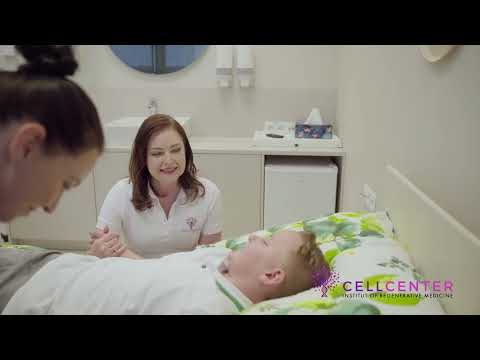
The listed starting price for stem cell treatment for cerebral palsy at CellCenter in Bratislava and Malacky, Slovakia, is $5,400 USD. The final amount depends on the proposed protocol, medical assessments, services included, and the patient's individual needs. Families should request an itemized quotation to determine whether rehabilitation, diagnostic tests, accommodation, and travel expenses are included. Stem cell therapy for cerebral palsy remains investigational in many settings and should not be considered an established cure.
| Budget Component | Estimated Price (USD) | What to Confirm |
|---|---|---|
| Stem Cell Treatment Package | Starting from $5,400 | Confirm the cell product, administration method, number of procedures, physician fees, and services included in the listed package. |
| Diagnostic Assessment | Separate quote required | Ask whether neurological examinations, blood tests, medical record reviews, MRI scans, or other assessments are included. |
| Rehabilitation Services | Separate quote required | Confirm whether physical therapy, occupational therapy, specialist consultations, and additional rehabilitation sessions are included. |
| Flights and Local Transportation | Depends on travel arrangements | Budget for return flights, airport transfers, local transportation, and accessibility requirements for the patient and accompanying caregiver. |
| Accommodation and Meals | Depends on length of stay | Ask about recommended accommodation, accessible facilities, meals, caregiver lodging, and possible extensions to the stay. |
| Follow-Up Care | Confirm with the provider | Check whether post-treatment consultations are included and budget for follow-up appointments, rehabilitation, and ongoing care at home. |
Important: The $5,400 USD figure is a published starting price, not a guaranteed final cost or a complete medical travel budget. Prices and package inclusions may change, so obtain written confirmation directly from the provider before booking.
Families should also discuss the potential benefits, uncertainties, and risks of any proposed cell therapy with an independent pediatric neurologist. Verify the treatment's regulatory status and do not discontinue established cerebral palsy care or rehabilitation.
How to Recognize Credible Providers and Question Unsupported Claims
Indicators of Credible Institutions
- Transparent disclosure of cell processing and sterility protocols.
- Clear affiliation with established pediatric hospitals or academic centers.
- Open discussion of research limitations and uncertain outcomes.
- Emphasis on continued conventional rehabilitation care.
- Structured long-term safety and outcome follow-up processes.
Red Flags to Avoid
- Promising a "cure," "guaranteed walking," or specific motor outcomes.
- Using promotional promotional videos or testimonials as sole evidence.
- Refusing to provide cell lab details or physician license numbers.
- Advising families to stop conventional medications or therapies.
- High-pressure sales tactics requiring immediate upfront deposits.
Safety, Consent, and Ethical Considerations for Children
Pediatric procedures require strict ethical and safety controls. Potential procedural risks include infection, localized pain, allergic/fever reactions to cell infusions, sedation risks, and unquantified long-term cellular effects.
Informed consent processes must clearly articulate that the procedure is investigational. Independent medical advice from a pediatric neurologist unconnected to the commercial provider is strongly recommended before proceeding.
Preparing for Follow-Up After Returning Home
Prior to discharge from the international clinic, families should secure complete documentation, including an itemized medical summary, cell analysis certificates, exact dosage records, and post-procedure monitoring guidelines.
Coordinate directly with your home country's pediatric neurologist and physical therapy team to track standardized GMFM metrics at 3, 6, and 12-month post-treatment intervals.
Frequently Asked Questions
1. Is stem cell therapy an established cure for cerebral palsy?
No. Stem cell procedures for cerebral palsy are classified as investigational treatments. They do not reverse underlying brain injuries or cure the condition.
2. How does umbilical cord blood differ from cord tissue MSCs?
Cord blood contains hematopoietic stem cells and immune cells, whereas cord tissue yields mesenchymal stromal cells (MSCs) focused on paracrine signaling and immunomodulation.
3. Are autologous bone marrow cells safer than donor cells?
Autologous cells eliminate immune rejection risks, but require bone marrow collection under pediatric sedation. Safety depends on laboratory handling and sterility standards regardless of source.
4. What role does physical therapy play alongside cell therapy?
Physical and occupational therapy are essential. Motor skill development requires active neuromuscular stimulation, and rehabilitation drives neuroplasticity.
5. What regulatory oversight applies to cell therapies in Europe?
In the European Union, cell products are regulated as Advanced Therapy Medicinal Products (ATMPs) by the EMA or under national hospital exemption frameworks.
6. How is motor function objectively evaluated in clinical studies?
Researchers evaluate functional motor abilities using standardized clinical tools such as the Gross Motor Function Measure (GMFM-88) and GMFCS classification levels.
7. Are there potential medical risks associated with pediatric cell therapy?
Yes. Potential risks include infection, fever or allergic reactions during infusion, sedation risks, and unquantified long-term biological effects.
8. Why do individual patient experiences differ so significantly?
Differences in cerebral palsy type, baseline GMFCS level, age, cell dosage, and post-treatment rehabilitation intensity lead to variable individual outcomes.
9. How should international families budget for treatment abroad?
Budgets calculated in USD should incorporate diagnostic assessments, cell procedures, daily rehabilitation hours, travel, accommodation, and caregiver costs.
10. What documentation is necessary before returning home?
Families should obtain a complete written medical summary, cell product certificates of analysis, exact dosage records, and follow-up evaluation protocols.
Explore Medical Consultation Options With PlacidWay
PlacidWay connects international families with accredited medical centers, specialist reviews, and transparent pricing information across global destinations. Request a personalized consultation for Stem Cell Treatment for Cerebral Palsy in Europe, review physician credentials, and obtain written treatment breakdowns before making travel decisions.
Request Medical InformationDisclaimer: This article is for educational and informational purposes only and does not constitute formal medical advice, diagnosis, or treatment recommendations. Decisions regarding cerebral palsy management and investigational cell therapies must be made in consultation with qualified pediatric neurologists and independent healthcare specialists. PlacidWay does not endorse specific experimental medical procedures or guarantee clinical treatment outcomes.
Trusted References
- European Medicines Agency (EMA) — Advanced Therapy Medicinal Products (ATMP) Oversight
- World Health Organization (WHO) — International Clinical Trials Registry Platform
- Centers for Disease Control and Prevention (CDC) — Cerebral Palsy Information and Resources
- National Institutes of Health (NIH) — National Institute of Neurological Disorders and Stroke
- International Society for Stem Cell Research (ISSCR) — Patient Guidelines and Ethics
- European Academy of Childhood Disability (EACD) — Pediatric Neuro-rehabilitation Standards
- U.S. Food and Drug Administration (FDA) — Cellular & Gene Therapy Regulations




















Share this listing