
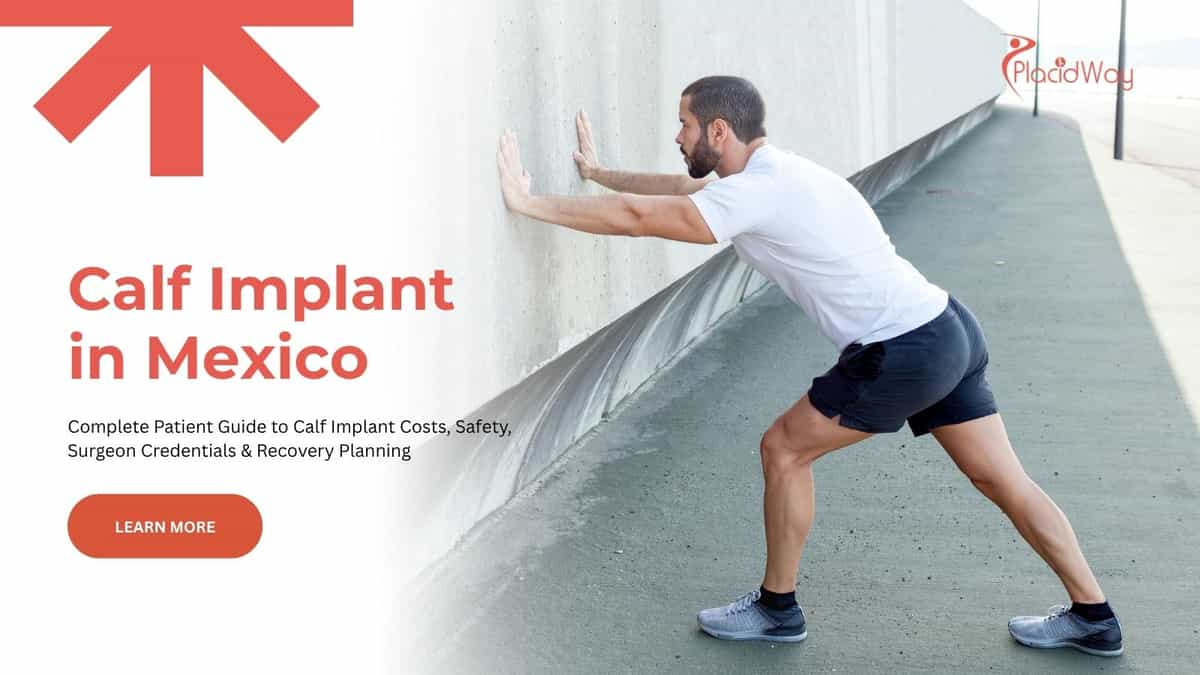
Struggling with lower leg asymmetry or a lack of muscle definition that targeted exercise simply cannot fix? Traveling for calf implants in Mexico offers a secure path to achieving balanced, sculpted legs without the restrictive pricing typically found in the United States or Canada. By thoroughly verifying local safety credentials—such as clinics accredited by the General Health Council (CSG) and surgeons certified by the Mexican Council of Plastic Surgery (CMCPER)—you can protect your health while reducing your overall treatment costs.
Quick Answer Summary
- Estimated Cost: Typically ranges from $3,500 to $5,500 USD, depending on the clinic location and surgical complexity.
- Safety Overview: Generally safe when performed in a regulated facility by a specialist, but carries risks like infection, implant shifting, or capsular contracture.
- Ideal Candidate: Healthy adults seeking to correct genetic lower leg thinness, muscle asymmetry, or congenital conditions like clubfoot or polio sequelae.
- Recovery Time: Initial healing takes 1 to 2 weeks; full resumption of strenuous leg exercises typically requires 6 to 8 weeks.
- Main Reason to Choose Mexico: Access to highly experienced, internationally trained plastic surgeons at a fraction of North American prices.
- Required Certifications to Look For: Verify the surgeon is certified by CMCPER (Consejo Mexicano de Cirugía Plástica) and the facility is regulated by COFEPRIS or accredited by CSG (Consejo de Salubridad General).
- Important Caution: Never prioritize low cost over safety credentials. Always confirm your surgeon’s specific experience with calf augmentation, as it requires highly specialized anatomical knowledge.
Understanding Calf Implants and Lower Leg Contouring
Calf augmentation, medically known as calf implantation, is a specialized surgical procedure designed to enhance the size, shape, and proportion of the lower legs. For many patients, the gastrocnemius muscles in the calves do not respond to rigorous strength training due to genetic predispositions. In other cases, medical conditions or previous injuries leave one leg noticeably smaller than the other.
During this procedure, a plastic surgeon carefully places custom-fitted, solid silicone elastomer implants into the calf area. Unlike breast implants, calf implants are made from solid, semi-flexible silicone. This material mimics the firm feel of flexed muscle and completely eliminates the risk of silicone leakage or rupture.
Your surgeon typically places the implant either subfascially (just beneath the fibrous fascia covering the muscle) or submuscularly (within the muscle tissue itself). The choice of placement depends on your existing anatomy, skin thickness, and aesthetic goals. Because the lower leg is a highly functional and sensitive area, understanding this anatomy is critical for achieving a natural look and ensuring proper muscle function post-surgery.
Why Do Patients Choose Mexico for Calf Augmentation?
Making the decision to travel across borders for a cosmetic procedure requires careful thought. Medical tourists frequently look to Mexico for lower leg contouring because the country has established a robust infrastructure for international plastic surgery patients. When you explore this option, you will find a combination of specialized medical expertise and patient-centered hospitality.
Patients from the United States, Canada, and Europe travel to Mexico for this specific procedure for several documented reasons:
- Significant Financial Savings: The total cost of surgery, including facility fees and anesthesia, is often 40% to 60% less than in North American clinics.
- Specialized Expertise: Many Mexican plastic surgeons perform a high volume of body contouring procedures, bringing advanced technical skill to niche surgeries like calf implants.
- Comprehensive Care Packages: Top-tier clinics frequently bundle ground transportation, translation services, and recovery hotel stays into a single itinerary.
- Shorter Wait Times: Private healthcare facilities in Mexico typically offer faster scheduling for elective procedures compared to the heavily booked systems in Canada and the UK.
- Geographic Proximity: Short flight times from major US hubs make travel easier, which is especially important during the postoperative period when sitting for long stretches can be uncomfortable.
- Advanced Medical Facilities: Major medical tourism hubs like Tijuana, Cancun, and Guadalajara feature purpose-built private hospitals equipped with modern technology.
The Ideal Candidate for Calf Implants
Determining your eligibility for calf augmentation requires a comprehensive medical evaluation. Not everyone who desires larger calves is suited for surgical implants. Your surgeon will review your medical history, current vascular health, and tissue elasticity before recommending the procedure.
You may be considered an excellent candidate if you have realistic expectations and are in good overall health. Good candidates typically struggle with genetic "chicken legs" or have asymmetrical muscle development. Conditions such as spina bifida, clubfoot, or previous severe trauma can also leave the lower legs uneven, making implants a highly effective reconstructive solution.
Patient Suitability Checklist
- You are physically healthy with no active infections.
- You do not have a history of severe peripheral arterial disease (PAD) or deep vein thrombosis (DVT).
- You have adequate skin elasticity to accommodate the implant without causing undue tension on the incision.
- You can commit to a strict postoperative resting period, avoiding heavy leg exertion for several weeks.
- You have ceased smoking, as nicotine severely restricts blood flow and increases the risk of delayed healing and tissue necrosis.
Cost of Calf Implants in Mexico vs. US and Canada
Cost research is often the first step in planning medical travel. In Mexico, the affordability of aesthetic procedures stems from a lower cost of living, reduced administrative overhead, and different malpractice insurance structures, rather than a compromise in medical quality.
When reviewing quotes, you must differentiate between the base surgeon fee and an all-inclusive medical package. A transparent written quote should explicitly state what is covered. Common inclusions are the surgeon's fee, anesthesiologist fee, operating room costs, the implants themselves, and standard post-operative garments. Always ask your clinic coordinator if pre-operative blood work, cardiology clearances, or prescription medications are billed separately.
| Country | Estimated Total Cost (USD) | Common Inclusions |
|---|---|---|
| United States | $8,000 - $12,500 | Surgeon fee, facility, standard implants. |
| Canada | $9,000 - $14,000 | Surgeon fee, facility, taxes, standard implants. |
| Mexico | $3,500 - $5,500 | Surgeon, anesthesiologist, facility, implants, basic meds. |
Hidden costs can catch unprepared travelers off guard. Be sure to budget for your flights, travel insurance with medical complication coverage, required medical visas (if applicable), and extended hotel stays in case your surgeon recommends delaying your flight home for safety reasons.
Patient Demographics and Healthcare Travel Trends
Understanding who travels for calf augmentation provides helpful context for your own journey. Recent global data from 2024 highlights that body contouring continues to drive cross-border healthcare. Patients seeking lower leg enhancements typically fall into specific age brackets and demographics, often motivated by lifelong struggles with body image or reconstructive needs following trauma.
The visualizations below reflect documented 2024 healthcare travel patterns and clinical registries for cosmetic contouring procedures in Latin America, illustrating the primary origin of patients and the age distribution of those receiving body implants.
Origin of Inbound Aesthetic Patients to Mexico (2024)
Source: ISAPS Global Survey Estimates & Cross-Border Patient Data (2024)
Age Distribution of Calf Implant Patients (2024 Clinical Data)
Source: Aesthetic Surgery Registries & Cross-Border Patient Age Trends (2024)
How to Select a Board-Certified Plastic Surgeon in Mexico
Your safety and surgical outcome depend almost entirely on the skill and training of your operating physician. In Mexico, medical specialties are strictly regulated by national boards. Any doctor can legally call themselves a "cosmetic surgeon" after taking weekend courses, but a true plastic surgeon has completed years of specialized reconstructive and aesthetic residency training.
To ensure you are in the hands of an expert, you must verify that the doctor is board-certified. A board-certified plastic surgeon in Mexico possesses the necessary anatomical knowledge to navigate the complex nerves and blood vessels in the lower leg, minimizing the risk of devastating complications like compartment syndrome.
Critical Surgeon Verification Checklist
- CMCPER Certification: Verify the surgeon is certified by the Consejo Mexicano de Cirugía Plástica, Estética y Reconstructiva. This is the only plastic surgery board officially recognized by the Mexican government.
- AMCPER Membership: Ensure they are an active member of the Asociación Mexicana de Cirugía Plástica, Estética y Reconstructiva.
- Cedula Profesional: Ask for their professional license number (Cédula Profesional de Especialidad) and verify it through the official Mexican government education portal (SEP).
- Procedure Volume: Ask how many calf implant procedures they perform annually. This is a niche surgery, and high volume translates to higher expertise.
Choosing the Right Hospital or Clinic in Mexico
A highly skilled surgeon must operate in a fully equipped, heavily regulated surgical facility. Even the best surgeon cannot prevent severe complications if the operating room lacks sterilization protocols or emergency equipment. Medical tourism hubs in Mexico range from ultra-modern, hospital-grade surgical centers to smaller, private outpatient clinics.
When comparing treatment facilities, look for local and national healthcare accreditations. International accreditations like JCI (Joint Commission International) are excellent trust signals, but they are not the only indicator of a safe clinic. Many top-tier private surgical centers in Mexico operate flawlessly under national regulatory standards.
Ensure the clinic holds a current operating license from COFEPRIS (Federal Commission for the Protection against Sanitary Risk). This government agency inspects facilities for hygiene, equipment safety, and medication protocols. Furthermore, hospitals accredited by the CSG (Consejo de Salubridad General) meet Mexico's highest national standards for healthcare quality and patient safety, paralleling international benchmarks.
Step-by-Step: The Calf Augmentation Procedure
Understanding the clinical mechanics of calf augmentation can alleviate pre-surgery anxiety. The entire process takes approximately one to two hours and is performed under general anesthesia or regional anesthesia (epidural) with heavy sedation. The goal is to insert the implant without damaging the surrounding fascia, nerves, or vascular networks.
- Anesthesia Administration: You will be sedated so that you feel no pain during the procedure. Your vitals are continuously monitored by a certified anesthesiologist.
- Incision Placement: The surgeon makes a small, strategic incision in the natural crease behind your knee (the popliteal crease). Placing the incision here helps hide the resulting scar.
- Pocket Creation: A precise surgical pocket is created. Depending on your body type, the surgeon dissects a space either above the gastrocnemius muscle (subfascial) or within the muscle (submuscular).
- Implant Insertion: The solid, sterile silicone elastomer implant is gently guided into the pocket. The surgeon meticulously positions it to mimic natural muscle bulk and checks for optimal symmetry.
- Closure and Bandaging: The incisions are closed with multiple layers of sutures to ensure strength. Your legs are then wrapped in specialized compression garments to reduce swelling and support the implants.
Calf Implant Recovery Timeline and Physiology
The rehabilitation phase for lower leg surgery is notoriously uncomfortable because your legs bear the full weight of your body. When you stand up, blood rushes downward, and the stretched fascia over the new implant can cause significant tightness and aching. Committing to a structured recovery protocol is vital for proper tissue healing and preventing the implants from shifting.
Your doctor will likely recommend keeping your legs elevated above your heart whenever you are resting to reduce gravitational swelling. You may also need to wear shoes with a slight heel (like wedges) or use crutches for the first week to relieve tension on your calf muscles when walking.
| Timeframe | Biological Process | Patient Sensation | Required Action |
|---|---|---|---|
| Days 1 to 3 | Acute tissue inflammation and fluid accumulation. Incision sealing begins. | Severe tightness, throbbing pain, difficulty standing flat-footed. | Strict bed rest, keep legs elevated, take prescribed painkillers. |
| Days 4 to 10 | Fascia stretches to accommodate implant. Swelling peaks and begins to subside. | Moderate aching. Walking feels stiff. Bruising appears. | Walk short distances with elevated heels/crutches to prevent DVT. |
| Weeks 2 to 4 | Connective tissue forms a capsule around the implant, securing it in place. | Tightness decreases significantly. Incisions heal over. | Transition to normal shoes cautiously. Avoid any heavy lifting. |
| Weeks 6 to 8 | Deep tissue healing solidifies. Residual internal swelling dissipates. | Calves feel natural and integrated with the body. | Gradually resume rigorous exercises (running, cycling) if cleared by surgeon. |
Medical Safety and Potential Complications
No surgical intervention is entirely free of risk. While calf augmentation is generally safe in the hands of an experienced, CMCPER-certified professional, you must be educated on potential adverse events. By understanding these risks, you can monitor your body post-surgery and seek immediate medical help if warning signs arise.
Common, manageable side effects include temporary numbness around the incision and moderate bruising. However, severe complications require prompt medical intervention. Implant shifting or asymmetry can occur if the surgical pocket is made too large or if you resume strenuous activity too quickly. Infection is rare but can necessitate the temporary removal of the implant until the tissue heals.
A rare but critical surgical emergency is compartment syndrome. This occurs when excessive swelling within the tight fascial compartment cuts off blood supply to the muscle tissue. Symptoms include extreme, unmanageable pain out of proportion to standard surgical recovery, numbness, and pale, cold skin on the foot. If you experience these symptoms, you must immediately contact your surgeon or visit the nearest emergency room.
Comparing Calf Implants to Fat Grafting
Before committing to implants, many patients explore alternative treatments. The most common alternative is autologous fat grafting (fat transfer). During this procedure, liposuction is used to harvest fat from your abdomen or thighs, which is then purified and injected into the calves.
Fat transfer avoids foreign objects in the body and utilizes smaller incisions. However, it requires you to have sufficient excess body fat available for harvesting. Additionally, fat survival rates vary; your body may absorb up to 40% of the injected fat within the first few months, potentially requiring multiple sessions to achieve the desired volume. In contrast, solid silicone implants provide predictable, immediate, and lasting volume enhancement, making them the preferred choice for patients lacking sufficient body fat or those needing significant structural correction.
Planning Your Medical Trip to Mexico
Proper logistical planning ensures you can focus entirely on your physical recovery rather than travel-related stress. When traveling for lower leg surgery, mobility constraints must dictate your itinerary. Walking through large airports will be physically taxing immediately after surgery.
Before leaving your home country, secure a valid passport. While many medical hubs in Mexico are close to the border, flying often requires passing through customs and immigration, which can involve standing in lines. Request wheelchair assistance at the airport in advance through your airline. Your surgeon will typically require you to remain in the Mexican city for 7 to 10 days post-operation. This mandatory waiting period allows the doctor to monitor your initial healing, remove sutures, and ensure you are medically cleared to fly, as flying too soon increases the risk of deep vein thrombosis (DVT).
Frequently Asked Questions
Below are detailed answers to common clinical and practical questions patients have when evaluating lower leg contouring abroad.
Are calf implants permanent?
Calf implants are designed for long-term use and do not have a set expiration date. Because they are made from solid silicone elastomer, they cannot rupture or leak like traditional gel breast implants. However, they may need to be removed or replaced in the future if a complication occurs, such as an infection, severe capsular contracture, or if they shift out of place.
Can I exercise normally after getting calf implants in Mexico?
Yes, once you are fully healed. Most patients can return to light cardiovascular exercise after 4 weeks and resume heavy weightlifting, running, or contact sports after 8 to 12 weeks, depending on your surgeon's specific clearance. The solid implants are highly durable and can withstand the pressure of rigorous athletic activity once the internal capsule has fully formed around them.
Will the implant look or feel unnatural?
When placed correctly beneath the fascia or muscle by a board-certified specialist, solid silicone implants closely mimic the density of a flexed human muscle. While you may be able to feel the edges if you press deeply, to the casual observer and under normal physical contact, the augmented calves look and feel like well-developed natural muscle.
Is it safe to fly back home immediately after surgery?
No. Flying immediately after lower extremity surgery significantly increases your risk of developing deep vein thrombosis (DVT), a dangerous blood clot. Board-certified surgeons generally require international patients to remain in Mexico for at least 7 to 10 days post-surgery before attempting a flight or a long car ride home.
How prominent is the scar from calf augmentation?
The incision is typically made in the popliteal crease, which is the natural fold of skin behind your knee. This strategic placement allows the resulting scar to blend into your natural anatomical lines. Over time, usually 12 to 18 months, the scar fades significantly, though individual scarring genetics play a role in the final appearance.
What is capsular contracture?
Capsular contracture occurs when the body’s immune system forms a hard, restrictive wall of scar tissue around the implant. This can cause the calf to feel unnaturally hard, look distorted, or become painful. While less common in calves than in breasts, it remains a risk that may require surgical revision to correct.
Can I fix one leg that is smaller due to clubfoot?
Yes. Correcting severe asymmetry caused by conditions like clubfoot, polio, or traumatic injury is a primary medical indication for calf augmentation. A skilled reconstructive plastic surgeon can use differently sized custom implants to match the smaller leg as closely as possible to the healthy one.
Do I need medical complications insurance?
While not legally required, purchasing medical tourism insurance that covers surgical complications is highly recommended. Standard health insurance in the US or Canada typically denies coverage for complications arising from elective cosmetic surgery performed abroad. Specialized insurance offers peace of mind in the rare event that corrective intervention is needed.
How do I verify a clinic's COFEPRIS license?
You can ask the clinic to provide their COFEPRIS sanitary registration number directly. Legitimate medical facilities prominently display this documentation on-site and are happy to email copies to prospective international patients. You can cross-reference this information on the official government registry if you have concerns.
What happens during the initial consultation?
Because you are traveling internationally, your initial consultation is usually conducted via video call. The surgeon will review your medical history, discuss your goals, and examine photos of your legs to determine preliminary eligibility. A final, in-person clinical assessment and physical measurement for the implants will occur once you arrive at the clinic in Mexico.
Ready to Explore Your Treatment Options?
Navigating international healthcare requires careful planning. PlacidWay can help you compare top-rated, board-certified surgeons, review transparent cost estimates, and understand your medical travel options in Mexico. Take the next step toward making an informed, confident decision.
Request Clinic InformationDisclaimer: This information is for educational purposes only and does not replace professional medical advice. Always consult a qualified healthcare provider before making medical decisions.
References
- ISAPS Global Survey 2023-2024: Cross-Border Aesthetic Surgery Statistics – International Society of Aesthetic Plastic Surgery
- Official Registry of Certified Plastic Surgeons – Consejo Mexicano de Cirugía Plástica, Estética y Reconstructiva (CMCPER)
- National Sanitary Registry and Clinic Regulations – Comisión Federal para la Protección contra Riesgos Sanitarios (COFEPRIS)
- Calf Augmentation Safety and Risks – American Society of Plastic Surgeons
- Complications and Outcomes in Calf Augmentation: Clinical Review – National Center for Biotechnology Information
- Patient Safety and Hospital Certification Standards in Mexico – Consejo de Salubridad General (CSG)




















Share this listing