

Experiencing hair thinning can deeply impact your confidence, and choosing to undergo a medical procedure abroad often brings a mix of hope and anxiety. Many international patients travel for an FUE Hair Transplant in Mexico City to find a balance between highly experienced specialists and accessible treatment costs. Before booking your flight, you must understand how to navigate the local healthcare system, particularly by checking for COFEPRIS facility licenses and national board certifications. This guide provides comprehensive, medically accurate information regarding the procedure, realistic expenses, and the critical safety credentials you need to verify so you can make a secure healthcare decision.
Quick Answer Summary
- Estimated Cost: Procedures generally range from $2,500 to $4,500 USD, depending on the clinic, package inclusions, and the total number of grafts required.
- Safety Overview: Treatment is generally safe when performed in a clinic licensed by COFEPRIS (the Mexican health regulatory agency) and by a surgeon registered with CONACEM.
- Ideal Candidate: Adult men and women with sufficient healthy donor hair on the back of the scalp and realistic expectations for their final density.
- Recovery Time: Most patients return to light daily activities within three to five days, while the transplanted follicles securely anchor within ten to fourteen days.
- Primary Reason for Travel: Patients typically choose Mexico City for the significant cost savings compared to the US and Canada, combined with access to highly skilled specialists.
- Important Caution: Always request a written, itemized quote to avoid hidden fees and confirm that the clinic has protocols in place for medical complications.
Understanding the FUE Hair Transplant Procedure in Mexico City
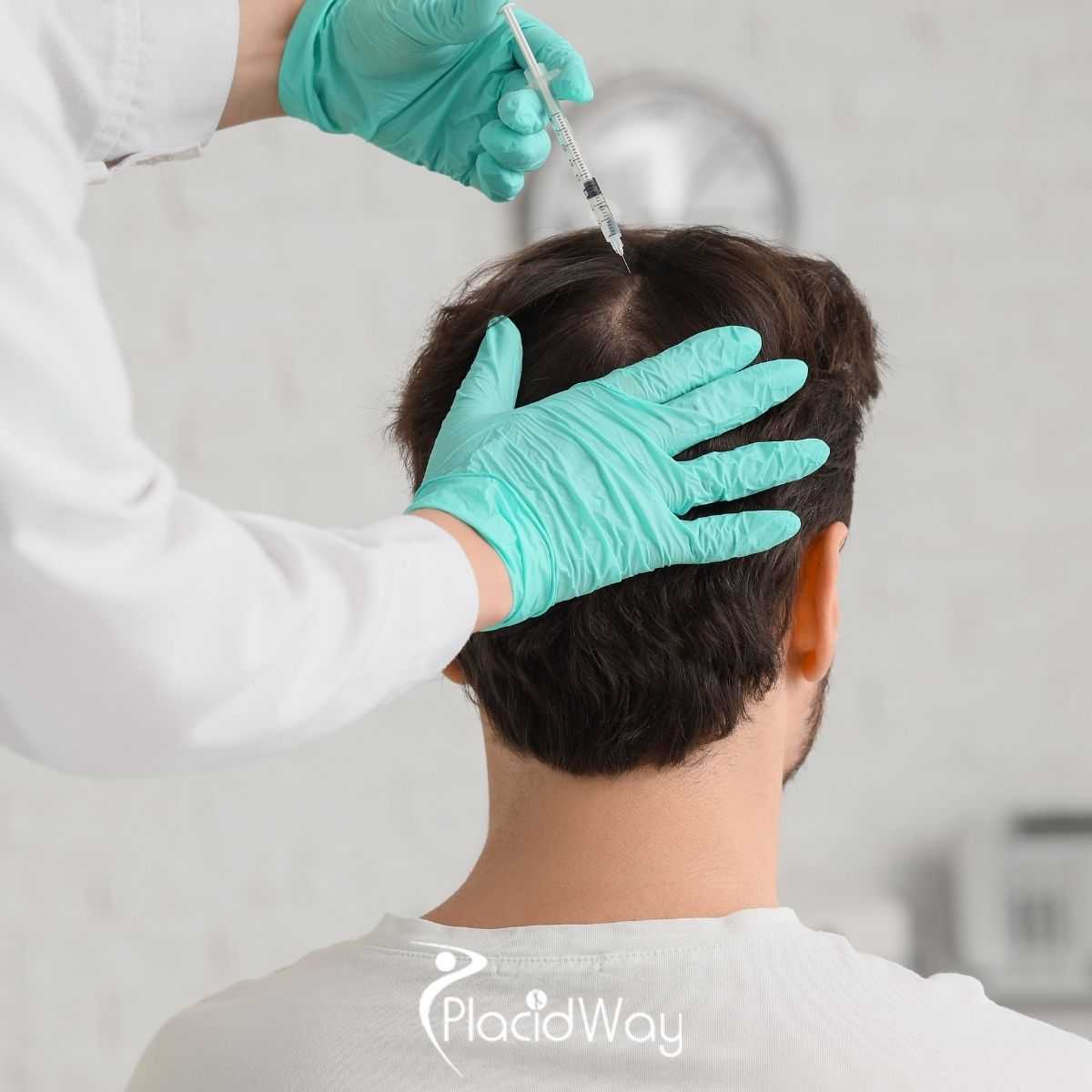
Follicular Unit Excision is an advanced surgical hair restoration technique designed to address pattern baldness and localized hair thinning. During this procedure, a specialized surgeon extracts individual hair follicles directly from a donor area, typically the back or sides of your scalp. These areas are genetically resistant to the hormones that cause hair loss. Once extracted, the surgeon carefully implants these follicles into the thinning or balding areas.
This method differs significantly from older techniques because it does not involve removing a large strip of skin. As a result, the procedure leaves only tiny, dot-like micro-scars that are easily concealed by short hair. Because the extraction is precise, the survival rate of the transplanted grafts relies heavily on the surgical team's skill, the preservation solution used, and the speed at which the grafts are re-implanted.
Clinical Tip
The success of your treatment depends heavily on the angle, depth, and direction of the implanted follicles. Ask your prospective clinic how they ensure a natural-looking hairline design before the surgery begins.
Why Patients Choose Mexico City for Hair Restoration
Mexico City has developed into a major hub for medical travel, drawing thousands of international patients annually for specialized treatments. The primary motivator is often financial, as patients can undergo extensive hair restoration procedures for a fraction of what they would pay in North America or Western Europe. However, cost is not the only factor driving this decision.
The city is home to modern medical facilities and specialized clinics that focus exclusively on hair restoration. Many top specialists in the region have trained internationally and maintain active memberships in global professional societies. Additionally, the proximity to the United States and Canada makes travel logistics relatively straightforward, with numerous direct daily flights available.
Primary Motivators
- Significant cost savings
- Highly specialized medical teams
- Short travel distances from North America
Convenience Factors
- All-inclusive medical packages
- Bilingual medical coordinators
- Modern hospital infrastructure
Comparing FUE and FUT Hair Transplant Methods
When researching hair restoration, you will generally encounter two primary surgical methods utilized worldwide. Follicular Unit Excision involves extracting individual grafts one by one using a micro-punch tool. Follicular Unit Transplantation involves surgically removing a linear strip of scalp from the donor area, which is then dissected into individual grafts under a microscope.
Your surgeon will recommend the best approach based on your scalp laxity, the number of grafts required, and how you prefer to wear your hair. While the individual extraction method has become increasingly popular due to the lack of a linear scar, the strip method remains a viable and highly effective option for patients requiring massive graft counts who do not mind wearing their hair slightly longer.
| Feature | Follicular Unit Excision | Follicular Unit Transplantation |
|---|---|---|
| Extraction Method | Individual follicles punched and removed | Surgical strip removed from the scalp |
| Scarring | Tiny, scattered dot-like micro-scars | A single linear scar across the back of the head |
| Surgical Time | Typically longer due to individual extraction | Typically faster extraction phase |
| Recovery Discomfort | Generally milder, faster return to normal | More tension on the scalp, slightly longer healing |
| Hairstyle Flexibility | Allows for very short haircuts | Requires longer hair to conceal the linear scar |
Are You a Good Candidate for FUE Hair Transplant
Not everyone experiencing hair thinning is immediately suitable for surgical intervention. An ideal candidate must have a stabilized pattern of hair loss. If you undergo surgery while your natural hair is still actively shedding at a rapid pace, you may develop unnatural gaps behind the transplanted hairline in the future.
Furthermore, you must have adequate donor hair density. The procedure does not create new hair; it simply relocates existing follicles. If your donor area is too weak or sparse, the surgeon will not be able to harvest enough grafts to provide adequate coverage without visibly depleting the back of your head.
Medical Caution
Patients with certain medical conditions, such as uncontrolled diabetes, active scalp infections, or autoimmune disorders causing alopecia, may not be eligible for surgery. Always disclose your complete medical history during your consultation.
Understanding the Patient Demographics for Hair Transplants
Recent data indicates a noticeable shift in the demographics of patients traveling for hair restoration. Based on clinical registries from 2024 to 2025, men between the ages of 30 and 49 represent the largest segment of patients undergoing this procedure. This age group typically experiences stabilized hair loss patterns, making them optimal candidates for surgical intervention.
Patients traveling to Mexico City predominantly originate from the United States, Canada, and parts of Western Europe. The primary clinical motivation remains androgenetic alopecia (male pattern baldness), though there is a growing percentage of patients seeking hairline lowering or corrective procedures from previously unsuccessful surgeries.
Age Distribution of Male Hair Transplant Patients (2024 Clinical Data)
Cross-border patient volumes have also demonstrated a consistent upward trajectory. Verified documentation from global healthcare travel associations between 2024 and 2026 highlights that destinations offering specialized aesthetic procedures have seen robust recovery and expansion. This is largely driven by patients seeking specialized expertise that may be subject to long waiting lists or prohibitive fees in their home countries.
International Patient Volume Index for Aesthetic Procedures (2024-2026 Trend)
Estimated Cost of FUE Hair Transplant in Mexico City
One of the most critical factors in patient decision-making is understanding the financial commitment. In Mexico City, clinics generally price procedures based on the number of grafts required or offer an all-inclusive package up to a maximum graft count. It is vital to clarify what is included in these packages.
A comprehensive quote should cover surgeon fees, facility fees, local anesthesia, post-operative medications, and follow-up consultations. Many medical tourism packages also incorporate airport transfers and hotel accommodations. However, blood tests, specialized aftercare serums, and flights are usually the patient's responsibility.
| Treatment Component | Estimated Cost in USD |
|---|---|
| Standard Procedure (up to 2,000 grafts) | $2,500 - $3,500 |
| Extensive Procedure (2,000 to 4,000 grafts) | $3,500 - $4,500 |
| Post-Operative Care Kit and Medications | Often included, or $100 - $200 |
| Consultation and Scalp Analysis | Often free with booking, or $50 - $100 |
Comparing Hair Transplant Costs Between Mexico City and the United States
Patients often want to know exactly how much they are saving by traveling abroad. In the United States, clinical overhead, malpractice insurance, and general living expenses significantly drive up the cost of elective cosmetic procedures. Hair restoration is rarely covered by domestic health insurance because it is considered an aesthetic treatment.
While the initial price tag in Mexico is lower, you must factor in the cost of your round-trip flights, travel insurance, and daily expenses while in the city. Even with these travel elements added, the total expenditure typically remains substantially lower than domestic options.
| Location | Average Cost per Graft (USD) | Estimated Total for 3,000 Grafts (USD) |
|---|---|---|
| Mexico City, Mexico | $1.00 - $1.50 | $3,000 - $4,500 |
| United States | $4.00 - $8.00 | $12,000 - $24,000 |
| Canada | $3.50 - $7.00 | $10,500 - $21,000 |
How to Choose a Safe Hair Transplant Clinic in Mexico City
Your safety and the aesthetic outcome of your procedure depend entirely on the facility you select. Do not base your decision solely on the lowest price. The most critical indicator of a clinic's legitimacy in Mexico is its adherence to national healthcare regulations. You must verify that the clinic holds a current operating license.
In Mexico, the Federal Committee for Protection from Sanitary Risks (COFEPRIS) is the government body responsible for inspecting and licensing medical facilities. A reputable clinic will readily provide its COFEPRIS registration number. Additionally, check if the clinic adheres to strict sterilization protocols and has an emergency response plan in the rare event of an adverse reaction to local anesthesia.
Facility Vetting Checklist
- Verify the active COFEPRIS license number.
- Ask who performs the extraction: a doctor or an unlicensed technician.
- Request a transparent, itemized written quote.
- Review the clinic's policy on surgical revisions.
Verifying Your Hair Transplant Surgeon Credentials in Mexico
Beyond the clinic's facility license, the individual credentials of your operating physician are paramount. In many parts of the world, a lack of strict regulation allows technicians, rather than qualified doctors, to perform complex steps of the surgery. You must ensure a licensed medical professional leads your treatment.
In Mexico, doctors should have their professional medical license (Cédula Profesional). Furthermore, look for specialists who hold board certification recognized by the National Committee for Medical Specialties (CONACEM). While memberships in international organizations like the International Society of Hair Restoration Surgery denote a commitment to ongoing education, domestic medical licenses are the legal baseline for practice.
Key Takeaway
Always ask the clinic to explicitly state in writing which parts of the procedure will be performed by the lead surgeon and which parts will be handled by nursing staff or technicians.
How the Mexican Healthcare System Regulates Hair Restoration
Understanding the local healthcare framework can alleviate many anxieties about traveling for surgery. The Mexican healthcare system comprises both robust public institutions and a highly modernized private sector. Medical tourism almost exclusively takes place within the private sector, which caters to international standards of care.
The Ministry of Health (Secretaría de Salud) oversees all medical practices. Elective aesthetic surgeries are regulated strictly under federal law, requiring specialized training for providers. When you choose a clinic in Mexico City, verify that it operates within this regulated private network, ensuring accountability and adherence to national safety standards.
Regulatory Bodies
- Ministry of Health (Secretaría de Salud)
- COFEPRIS (Facility Licensing)
- CONACEM (Specialist Certification)
What to Expect During Your Clinic Consultation
Before any surgery begins, you will undergo a comprehensive medical consultation. This in-person evaluation is critical for confirming your preliminary treatment plan. The doctor will assess the density of your donor area, map out your hairline using specialized measuring tools, and determine the precise number of grafts required.
During this time, the medical team will also review your blood test results to rule out any underlying conditions that could complicate the surgery or impair healing. This is your final opportunity to ask questions regarding the hairline design and agree on realistic expectations for the final density.
| Consultation Step | Clinical Purpose |
|---|---|
| Scalp Examination | Evaluates donor hair density and follicle health using a trichoscope. |
| Hairline Design | Maps the placement area considering facial symmetry and age-appropriate aesthetics. |
| Medical History Review | Ensures no contraindications exist, checking bloodwork and medication history. |
| Consent and Strategy | Finalizes the graft count, surgical approach, and provides the consent forms. |
How to Prepare for Your Medical Trip to Mexico City
Thorough preparation minimizes stress and reduces the risk of surgical complications. In the weeks leading up to your departure, your clinic will provide specific guidelines regarding your diet, medications, and lifestyle habits. Adhering to these rules is vital for preventing excessive bleeding during surgery and promoting healthy graft survival.
You will typically be advised to avoid alcohol, smoking, and blood-thinning medications for at least ten to fourteen days before the procedure. Additionally, arranging your travel logistics carefully ensures you have a calm environment in which to recover immediately following the surgery.
Pre-Travel Timeline
- 3 Weeks Prior: Finalize flights and confirm airport transfer arrangements.
- 2 Weeks Prior: Cease smoking, alcohol consumption, and unapproved supplements.
- 1 Week Prior: Pack comfortable, button-down shirts to avoid pulling clothing over your head after surgery.
The FUE Hair Transplant Recovery Timeline
The post-operative healing phase requires strict adherence to your surgeon's aftercare instructions. The scalp will be sensitive, and the newly implanted grafts are incredibly fragile during the first few days. Dislodging a graft early in the recovery process means that specific hair follicle is permanently lost.
Most patients experience mild swelling, redness, and scabbing in both the donor and recipient areas. You will be given detailed instructions on how to sleep (usually elevated on your back) and how to carefully wash your scalp using a specialized foam or gentle shampoo.
| Timeframe | Biological Process | Patient Sensation | Action Required |
|---|---|---|---|
| Days 1-3 | Follicles begin to anchor; initial wound healing. | Tightness, mild soreness, possible forehead swelling. | Sleep elevated; spray saline as directed; do not touch grafts. |
| Days 4-7 | Scabs form over grafts; donor area begins healing. | Itching in donor and recipient zones. | Begin gentle cup-washing method; strictly avoid scratching. |
| Days 8-14 | Grafts securely root; scabs begin to detach. | Reduced tightness; scabs falling off during washes. | Gently massage during washing to encourage scab removal. |
| Weeks 3-8 | Transplanted hairs shed (shock loss phase). | Scalp looks similar to pre-surgery appearance. | Remain patient; this is a normal part of the hair growth cycle. |
Understanding Potential Risks and Complications
While considered minimally invasive, any surgical procedure carries inherent risks. Understanding these complications helps you identify warning signs early and seek prompt medical advice. Serious complications are rare when the procedure is performed by qualified professionals in a sterile clinical environment.
Common, temporary side effects include swelling of the forehead and eyes, mild localized pain, and temporary numbness of the scalp. More severe risks, though uncommon, include localized infection, poor graft survival, or noticeable scarring if the extraction was performed too aggressively.
Warning Signs to Report
Contact your clinic immediately if you experience severe, worsening pain, excessive bleeding that does not stop with light pressure, or signs of infection such as thick pus and localized heat around the scalp.
Long Term Aftercare Following Your Hair Transplant
Achieving a natural and dense result is a long-term commitment. After the initial recovery phase and the normal shedding of the transplanted hairs, the new follicles will rest before producing visible hair shafts. Patience is essential, as significant growth may not be visible until month six, with final results taking twelve to eighteen months.
Your doctor may recommend ongoing medical therapy to protect your native hair from further thinning. While the transplanted hairs are resistant to hair loss hormones, the surrounding natural hairs are still vulnerable. Maintaining a comprehensive hair care regimen is vital for long-term aesthetic harmony.
Long-Term Recommendations
- Follow medical therapies if prescribed by your doctor.
- Protect the scalp from direct, intense sun exposure.
- Attend virtual follow-up appointments with your clinic.
Planning Your Travel and Accommodation in Mexico City
Mexico City is a sprawling metropolis with diverse neighborhoods. When planning your trip, select accommodations close to your clinic to minimize travel time on the day of your surgery and for follow-up appointments. Neighborhoods like Polanco, Condesa, and Roma are popular among international visitors for their safety, amenities, and proximity to major medical centers.
Most clinics recommend staying in the city for at least three to four days post-surgery. This allows the medical team to conduct the first crucial scalp wash and ensure the grafts are stabilizing correctly before you board a pressurized airplane cabin.
Travel Tip
Use registered taxis or reputable ride-sharing apps to navigate the city safely. Ensure your hotel room has air conditioning to keep your scalp cool and comfortable during the initial days of recovery.
Frequently Asked Questions About FUE in Mexico City
Is it safe to get a hair transplant in Mexico City?
Yes, it can be safe when you choose a clinic licensed by COFEPRIS and a surgeon credentialed by the national medical council. Researching the facility's hygiene protocols and the doctor's experience is critical for ensuring a safe procedure.
How much does a hair transplant cost in Mexico City?
The estimated cost generally ranges from $2,500 to $4,500 USD. Prices vary based on the number of grafts needed, the clinic's reputation, and whether the package includes hotel stays and transportation.
Do doctors in Mexico speak English?
Many specialized medical providers catering to international patients are fully bilingual. Reputable clinics often employ dedicated medical coordinators who speak fluent English to assist with translation and logistics.
How many days should I stay in Mexico City for the procedure?
Patients are typically advised to stay for 4 to 5 days. This allows for the pre-operative consultation, the surgery day, and the critical first follow-up appointment where the clinic staff washes your scalp.
Will the results of my hair transplant look natural?
When performed by an experienced surgeon, the results can look highly natural. The key is proper hairline design and implanting the grafts at the correct angle and direction to match your native hair growth.
What happens if I experience complications after returning home?
Reputable clinics provide extensive virtual follow-up care and have protocols for remote complication management. Always discuss the clinic's specific policy on post-operative emergencies before booking.
Can women get an FUE hair transplant in Mexico City?
Yes, women experiencing specific types of hair thinning can be candidates. A thorough medical evaluation is necessary, as female pattern hair loss often differs biologically from male pattern baldness.
Does the extraction process leave noticeable scars?
The extraction leaves tiny micro-scars that appear as small dots. When the surrounding hair grows out even slightly, these micro-scars are generally well concealed and not easily visible to the naked eye.
Is the hair transplant procedure painful?
The procedure is performed under local anesthesia, so you should not feel pain during the surgery. You may experience some discomfort during the initial anesthetic injections and mild soreness during recovery.
When can I wear a hat after my surgery?
Most surgeons advise waiting at least 10 to 14 days before wearing a standard, tight-fitting hat. Your clinic may provide a specific, loose-fitting medical cap to protect your scalp from the sun immediately after surgery.
Ready to Start Your Hair Restoration Journey
Finding the right specialist abroad doesn't have to be overwhelming. PlacidWay can help you compare highly rated clinics, understand transparent treatment costs, and request information from certified surgeons in Mexico City.
Request Free Information TodayDisclaimer: This information is for educational purposes only and does not replace professional medical advice. Always consult a qualified healthcare provider before making medical decisions.
References
- Follicular Unit Excision (FUE) Overview – International Society of Hair Restoration Surgery
- Federal Committee for Protection from Sanitary Risks (COFEPRIS) – Government of Mexico
- National Committee for Medical Specialties – CONACEM
- Complications in Hair Transplantation – National Center for Biotechnology Information
- 2024 Practice Census Results and Patient Demographics – International Society of Hair Restoration Surgery
- Travel Health Information for Mexico – Centers for Disease Control and Prevention
- Medical Tourism Statistics and Patient Trends (2024-2025) – Patients Beyond Borders



























Share this listing