
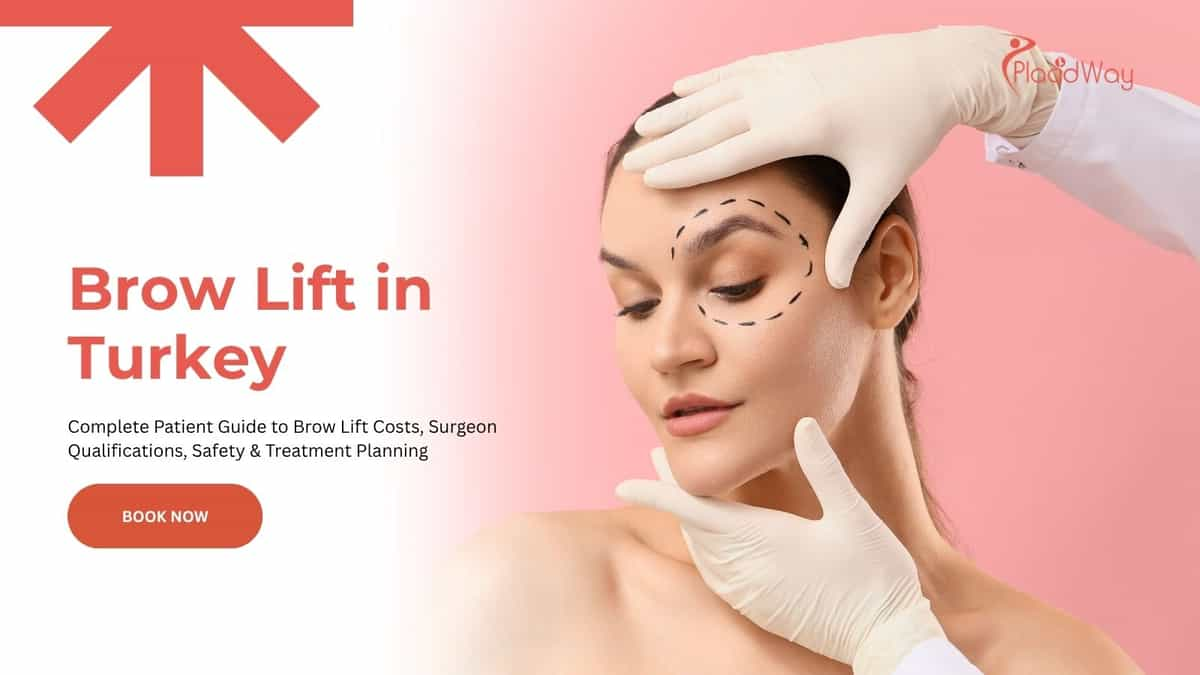
- Estimated Cost: Typically ranges from $1,500 to $3,500 USD, depending on the surgical technique, surgeon experience, and whether the procedure is part of an all-inclusive travel package.
- Safety Overview: Generally safe when performed by a specialist in a regulated facility, but risks include nerve injury, scarring, and anesthesia complications. Always verify clinical credentials.
- Ideal Candidate: Healthy non-smokers bothered by drooping eyebrows, deep forehead wrinkles, or hooding over the upper eyelids that impairs vision or aesthetic appearance.
- Recovery Time: Most patients return to non-strenuous work within 10 to 14 days, with initial swelling and bruising subsiding over the first three weeks.
- Why Patients Choose Turkey: Access to highly experienced facial plastic surgeons, comprehensive medical care packages, and specialized surgical facilities operating under stringent national oversight.
- Important Caution: Always verify that your chosen surgeon is registered with the Turkish Medical Association (TTB) and holds board certification from the Turkish Society of Plastic Reconstructive and Aesthetic Surgeons (TSPRAS). Ensure the clinic holds a Ministry of Health International Health Tourism Authorization Certificate.
Understanding the Brow Lift Procedure for International Patients
A brow lift, medically known as a forehead lift, is a surgical procedure designed to elevate drooping eyebrows and smooth deep creases across the forehead. As we age, the skin and underlying soft tissues lose their elasticity. The continuous action of facial muscles, specifically the frontalis muscle and the corrugator supercilii, leads to deep horizontal lines and vertical frown lines between the eyes. For many individuals, this tissue descent pushes the brow downwards, creating a heavy appearance that can sometimes crowd the upper eyelids. The primary clinical goal of this surgery is to reposition the underlying muscles and tissues, remove excess skin if necessary, and anchor the brow in a more youthful, natural position. It is not designed to alter the fundamental structure of your face but rather to restore the anatomical position your brows held in previous years. Understanding the clinical reality of this surgery is critical before traveling abroad. It is a precise surgical intervention requiring general anesthesia or deep intravenous sedation. The success of the procedure depends heavily on the anatomical knowledge of the surgeon to avoid damaging the delicate facial nerves that control your expressions.Why International Patients Travel to Turkey for Brow Lift Surgery
Turkey has developed a vast, highly specialized healthcare ecosystem specifically tailored to international patients seeking aesthetic and reconstructive procedures. When researching a brow lift in Turkey, patients are typically motivated by a combination of clinical quality, surgical experience, and organized care infrastructure. Facial plastic surgeons in Turkey often perform a high volume of these specific procedures annually. High case volumes can contribute to surgical proficiency, as doctors refine their techniques for various facial anatomies and skin types. Many leading surgeons in major cities like Istanbul, Ankara, and Izmir pursue continuous medical education, frequently presenting at European and global aesthetic surgery conferences. The structured approach to patient care is another significant factor. Licensed healthcare providers in Turkey frequently utilize a comprehensive care model. This means that a patient’s treatment plan often encompasses airport transfers, pre-operative laboratory testing, hospital stays, post-operative medications, and scheduled follow-up appointments with specialized nursing staff. This integrated system alleviates much of the logistical stress associated with navigating healthcare in a foreign country.Estimated Cost of Brow Lift Procedures in Turkey vs Global Averages
Cost transparency is one of the most common reasons patients begin researching cross-border healthcare. The cost of a brow lift in Turkey is generally lower than in North America or Western Europe. This difference is not due to a lack of quality, but rather reflects the local cost of living, lower operational overheads for clinics, and favorable currency exchange rates for international visitors. It is critical to differentiate between the cost of the surgery alone and the cost of an all-inclusive package. A standard surgical fee typically covers the surgeon’s time, the operating room facility fee, and anesthesia. Medical tourism packages usually bundle these medical fees with accommodation, local transfers, and translation services. Patients must also account for variable factors that influence the final quote. The specific surgical technique utilized—such as an endoscopic lift requiring specialized camera equipment versus a temporal lift—will alter the price. Additionally, the reputation and demand for a specific board-certified surgeon can significantly increase the required investment. Always request an itemized, written quotation prior to making any financial commitments or booking flights.| Country | Estimated Procedure Cost (USD) | Package Inclusions Typically Offered |
|---|---|---|
| United States | $4,500 - $8,000+ | Procedure, facility fee, anesthesia (travel/hotel excluded) |
| United Kingdom | $5,000 - $7,500+ | Procedure, facility fee, anesthesia (travel/hotel excluded) |
| Turkey | $1,500 - $3,500 | Procedure, facility fee, anesthesia, hotel, local transfers |
| Mexico | $2,500 - $4,500 | Procedure, facility fee, anesthesia, some local transfers |
Medical Tourism Demographics for Facial Rejuvenation in Turkey
Understanding who travels for facial aesthetic surgery can provide helpful context for your own decision-making process. According to published data and national healthcare reports tracking international patient volume between 2024 and 2025, Turkey continues to see a diverse demographic of patients seeking facial rejuvenation procedures, including forehead lifts. The data indicates that the majority of patients traveling for this specific surgical intervention fall within the 45 to 54 age bracket. This aligns with biological aging patterns, as this is typically the decade when tissue laxity in the upper third of the face becomes significantly pronounced. However, there is also a documented presence of younger patients (35 to 44) seeking preventative adjustments or addressing genetic predispositions to heavy brows. The clinical motivations for travel typically encompass a desire for advanced endoscopic techniques which offer smaller incisions. Patients predominantly originate from the United Kingdom, Germany, the United States, and the Middle East, drawn by the convergence of experienced surgical teams and regulated medical infrastructure.Surgical Techniques Used for Brow Lifts in Turkish Clinics
During your initial consultation, your surgeon will recommend a specific surgical technique based on your facial anatomy, hairline position, skin elasticity, and aesthetic goals. Clinics in Turkey utilize the same modern surgical protocols found in leading global healthcare institutions. The Endoscopic Brow Lift is currently the most commonly performed technique. The surgeon makes several tiny incisions hidden just behind the hairline. A thin tube equipped with a camera (an endoscope) is inserted, allowing the surgeon to view the underlying muscles and tissues on a monitor. Specialized instruments are then used to release and elevate the tissue before securing it with tiny sutures or dissolvable fixation devices. This method is highly favored because it minimizes scarring and typically results in a faster recovery period with less scalp numbness. The Temporal Brow Lift, or lateral brow lift, targets only the outer portions of the eyebrows. Through small incisions in the temple region, the surgeon lifts the outer tail of the brow. This is often recommended for patients who have minimal central forehead wrinkling but suffer from hooding at the outer corners of their eyes. The Classic or Coronal Brow Lift is an older, more traditional technique. It involves a continuous incision from ear to ear, running across the top of the head within or just behind the hairline. The surgeon lifts the entire forehead skin, removing a strip of tissue before closing the incision. While this provides the most dramatic lift, it carries a higher risk of long-term scalp numbness and can alter the hairline. Your doctor may only recommend this if you have extensive tissue redundancy that endoscopic methods cannot adequately address.| Technique | Incision Type | Best Suited For | Scarring Potential |
|---|---|---|---|
| Endoscopic | Small, hidden in hairline | Mild to moderate drooping, deep wrinkles | Minimal, easily concealed |
| Temporal | Small, at the temples | Outer brow drooping (lateral hooding) | Minimal, hidden in temporal hair |
| Coronal | Ear-to-ear across the scalp | Severe drooping, very heavy forehead skin | Longer scar, potential hairline alteration |
Evaluating Your Suitability for Forehead Rejuvenation
Not every patient experiencing signs of facial aging is an ideal candidate for a forehead lift. A thorough clinical assessment is required to determine your suitability and to ensure your physical health can withstand surgery and anesthesia. Your doctor will evaluate the anatomical position of your eyebrows relative to your orbital bone (eye socket). If your brows sit below this bony ridge, you may benefit clinically from the lift. The surgeon will also assess your skin thickness, underlying bone structure, and the presence of asymmetry. It is important to have realistic expectations; the surgery cannot stop the aging process, nor can it correct vision issues unrelated to sagging skin. Medical suitability is equally critical. You must be in good general health. Patients with unmanaged hypertension, bleeding disorders, or severe cardiovascular issues are typically contraindicated for elective cosmetic surgery. Furthermore, nicotine use severely restricts blood vessels, impeding healing and significantly increasing the risk of skin necrosis and wide scarring. Most responsible surgeons require patients to cease smoking completely for at least four to six weeks before and after the procedure.- Are you physically healthy without uncontrolled chronic medical conditions?
- Are you a non-smoker, or willing to quit weeks before surgery?
- Is your primary concern a heavy, descending brow rather than solely eyelid skin?
- Do you have a realistic understanding of potential surgical risks and recovery times?
Verifying Hospital Safety and Ministry of Health Licenses in Turkey
When seeking medical care in a foreign country, your safety depends on the regulatory standards of the facility where the surgery takes place. Turkey has a rigorous centralized healthcare regulation system overseen by the Ministry of Health (Sa?l?k Bakanl???). It is vital to understand that not all facilities are legally permitted to treat international patients. A clinic or hospital must hold a specific "International Health Tourism Authorization Certificate" (Uluslararas? Sa?l?k Turizmi Yetki Belgesi) issued by the Ministry of Health. This certificate indicates that the facility meets national standards for patient safety, hygiene, equipment, and possesses the necessary infrastructure to support foreign patients, including translation services and emergency transfer protocols. While some large private hospitals in Turkey hold international accreditations like Joint Commission International (JCI), this should not be your only metric of quality. Many excellent, specialized boutique clinics operate safely and legally under strict national Ministry of Health regulations without paying for international accreditation badges. When choosing a facility, ask explicitly about their emergency infrastructure. Cosmetic surgery is generally safe, but complications can arise. Verify whether the clinic operates within a full-service hospital with an on-site Intensive Care Unit (ICU) or if it is a standalone surgical center. If it is a standalone center, inquire about their formal emergency transfer protocols and proximity to a major hospital.How to Verify Surgeon Board Certification in Turkey
The expertise of the person holding the scalpel is the single most important factor in your surgical outcome. In Turkey, medical professionals are highly regulated, and you have the ability to verify their credentials before committing to treatment. First, confirm that your prospective doctor is legally registered with the Turkish Medical Association (Türk Tabipleri Birli?i - TTB). This is the mandatory national medical council. Second, ensure the surgeon has specialized in the correct field. They should hold the title of Specialist in Plastic, Reconstructive and Aesthetic Surgery. The premier professional body representing these specialists is the Turkish Society of Plastic Reconstructive and Aesthetic Surgeons (Türk Plastik Rekonstrüktif ve Estetik Cerrahi Derne?i - TSPRAS). Membership in TSPRAS demonstrates that the surgeon has completed the rigorous national residency requirements and board examinations. Some surgeons also hold certification from the European Board of Plastic Reconstructive and Aesthetic Surgery (EBOPRAS). While not legally required to practice in Turkey, EBOPRAS certification is an excellent indicator of a surgeon's commitment to maintaining international standards of surgical excellence. During your consultation, ask the surgeon about their specific experience with brow lifts. A doctor who excels at body contouring may not necessarily specialize in the intricate nerve anatomy of the upper face. Request to see a diverse portfolio of before-and-after cases that specifically match your age range and anatomical concerns.Preparing for Your Medical Travel to Turkey
Thorough preparation is vital for ensuring a smooth medical journey and optimal surgical outcomes. Preparation begins weeks before you board your flight. Your surgeon will provide specific pre-operative guidelines. You will typically be instructed to pause medications and supplements that can increase bleeding risks, such as aspirin, ibuprofen, Vitamin E, and herbal remedies like ginkgo biloba. If you take prescription medications, you must discuss these with your surgeon and your primary care physician at home to safely manage them during your travel and surgery. Logistically, you must ensure your passport is valid for at least six months from your date of entry and check the electronic visa (e-Visa) requirements for your specific nationality. Pack clothing that fastens at the front; pulling shirts over your head after facial surgery can disturb incisions and cause pain. Plan for your recovery environment in Turkey. If your medical package includes hotel accommodation, verify that the hotel is accustomed to hosting surgical patients. You will need a quiet, comfortable space where you can rest with your head elevated.The Day of Your Brow Lift Surgery in Turkey
On the day of your surgery, you will typically be transported from your hotel to the hospital by your clinic’s designated transfer team. Upon arrival, you will complete the formal admission process, which includes signing medical consent forms. If you do not speak Turkish, a patient coordinator or medical translator should be present to ensure you fully understand every document. You will undergo comprehensive pre-operative testing. This usually includes blood tests, an electrocardiogram (ECG) to check your heart function, and a consultation with the anesthesiologist. This is a critical safety step to confirm your fitness for surgery on the day. Your surgeon will then conduct a final in-person consultation. They will review the surgical plan, answer any last-minute questions, and make surgical markings on your forehead and scalp while you are sitting upright. Once cleared, you will be taken to the operating theater. The procedure typically lasts between one to two hours, depending on the technique and complexity. Following the surgery, you will be moved to a recovery room where medical staff will monitor your vital signs as you wake up from the anesthesia. In most cases, patients are required to stay in the hospital overnight for close monitoring before being discharged to their hotel.Comprehensive Brow Lift Recovery Timeline
Recovery from a forehead lift requires patience. Your body needs time to heal the internal tissues, and the visible signs of surgery will take several weeks to resolve. Immediately following the procedure, your forehead may be wrapped lightly to minimize swelling, and a small tube may be temporarily placed under the skin to drain any excess blood or fluid. Pain is generally described as a mild to moderate tightness or aching, which can be managed with prescribed oral pain medication. It is absolutely crucial to keep your head elevated at all times, even while sleeping, for the first one to two weeks. This significantly reduces swelling and bruising. Bruising may not be limited to your forehead; gravity often causes bruising to migrate downwards, pooling around your eyes and cheeks. This is a normal part of the healing process. You may also experience numbness or itching at the incision sites as the sensory nerves regenerate.| Timeframe | Biological Process | Patient Sensation | Action Required |
|---|---|---|---|
| Days 1-3 | Acute inflammatory phase. Tissue trauma responds with peak swelling. | Tightness, mild pain, potential nausea from anesthesia. | Strict bed rest with head elevated. Take prescribed medications. |
| Days 4-7 | Fluid begins to reabsorb. Bruising may shift downwards to the eyes. | Itching at incisions, lessening pain, tight forehead. | Light walking. Attend follow-up clinic visit for drain/suture removal. |
| Weeks 2-3 | Incision sealing completes. Deeper tissue remodeling begins. | Numbness at hairline. Bruising fades to yellow/green. | Can usually fly home. Resume light, non-strenuous daily activities. |
| Months 3-6 | Nerve regeneration occurs. Scar tissue matures and softens. | Occasional tingling. Sensation slowly returns to scalp. | Protect scars from UV exposure. Final aesthetic results become visible. |
Medical Risks and Complication Management in Turkey
As with any surgical intervention, a brow lift carries inherent medical risks. It is imperative that you discuss these transparently with your healthcare provider. General surgical risks include adverse reactions to anesthesia, infection at the incision site, and excessive bleeding or hematoma formation. Specific to this procedure, there is a risk of injury to the branches of the facial nerve. Damage to the temporal branch can result in an inability to raise the eyebrows or wrinkle the forehead. While this nerve injury is typically temporary due to bruising or stretching during surgery, in rare cases, it can be permanent. Other potential complications include hair loss around the incision sites (alopecia), visible scarring, asymmetry where one brow sits higher than the other, and prolonged changes in skin sensation. Before committing to a provider in Turkey, you must understand their complication management policy. Ask your surgeon: What happens if a revision is necessary? Does the clinic cover the cost of corrective surgery? Who pays for extended hotel stays or re-booked flights if a medical complication delays your departure? Having these policies detailed in writing protects you financially and medically.Combining a Brow Lift with Other Procedures in Turkey
Many international patients choose to combine their forehead rejuvenation with other facial procedures. Combining surgeries can be more cost-effective and consolidates the recovery period into a single timeframe, rather than requiring multiple trips abroad. The most frequent combination is a brow lift with Blepharoplasty (eyelid surgery). Often, patients mistake heavy, drooping eyelids as solely an eyelid issue, when in fact, a descended brow is pushing the eyelid tissue down. By elevating the brow first, the surgeon can accurately determine how much, if any, excess eyelid skin actually needs to be removed. Facelifts or neck lifts are also commonly performed alongside a brow lift to provide comprehensive facial rejuvenation. When combining procedures, it is important to recognize that the surgery time will increase, which prolongs your time under anesthesia. This requires a robust evaluation of your physical stamina and a longer anticipated recovery period in Turkey before you are medically cleared to fly home. Your surgeon may advise against combining too many procedures if they assess the physiological stress on your body to be too high.Frequently Asked Questions About Brow Lifts in Turkey
How long do I need to stay in Turkey for a brow lift?
Most surgeons recommend staying in Turkey for a minimum of 7 to 10 days. This allows for the initial overnight hospital stay, sufficient immediate recovery time, and follow-up appointments to remove sutures and ensure you are fit for air travel.
Is the endoscopic brow lift better than the coronal technique?
The endoscopic approach is often preferred because it requires smaller incisions, results in less scarring, and typically has a faster recovery. However, a coronal lift may be medically necessary if you have a significant amount of excess skin that minimally invasive techniques cannot address.
Will the surgery change the shape of my eyes?
A brow lift alters the tissue above the eyes. While it does not change the anatomical shape of your eye itself, elevating a heavy brow can make your eyes appear more open, alert, and prominent by reducing the hooding effect.
Are the results of a forehead lift permanent?
The results are long-lasting, typically enduring for 10 to 15 years. However, no surgical procedure stops the natural aging process. Over time, gravity and loss of skin elasticity will cause gradual tissue descent again.
What happens if I experience a medical emergency at the hotel?
Reputable clinics provide patients with a 24/7 direct emergency contact number for a medical coordinator. Ensure your chosen provider operates with clear hospital transfer protocols before you agree to the procedure.
How can I verify a Turkish clinic is legally registered?
You should ask the clinic for their Turkish Ministry of Health International Health Tourism Authorization Certificate number. You can also independently verify the surgeon's credentials through the Turkish Medical Association (TTB).
Is it safe to fly after facial cosmetic surgery?
Flying is generally safe once you are medically cleared by your surgeon, usually after 7 to 10 days. Cabin pressure can briefly exacerbate swelling. It is crucial to stay hydrated and move around the cabin to prevent blood clots.
Will there be visible scars after the procedure?
In endoscopic and temporal lifts, incisions are small and typically hidden within or just behind the hairline, making scars virtually undetectable once healed. Coronal lifts leave a longer scar, but it is also positioned to be concealed by hair.
Do Turkish clinics provide translators for international patients?
Yes, clinics legally authorized to treat international patients must provide translation services. Most medical tourism packages include an English-speaking patient coordinator who accompanies you to all medical consultations.
Can I wear makeup during the recovery period?
You must avoid applying makeup near the incision sites until they are fully closed and cleared by your doctor, which usually takes about two weeks. Applying cosmetics to open incisions drastically increases the risk of severe infection.
Need Help Finding a Qualified Surgeon in Turkey?
Navigating international healthcare options can feel complex. PlacidWay can help you compare licensed providers, understand transparent treatment costs, review doctor credentials, and request information from specialized clinics to support your decision-making process.
Request Clinic Information
Disclaimer: This information is for educational purposes only and does not replace professional medical advice. Always consult a qualified healthcare provider before making medical decisions.
References
- Forehead and Brow Lift Techniques and Anatomy – National Center for Biotechnology Information (NCBI)
- Brow Lift Safety and Risks – American Society of Plastic Surgeons (ASPS)
- International Health Tourism Authorization Regulations – Ministry of Health, Republic of Turkey
- International Survey on Aesthetic/Cosmetic Procedures – International Society of Aesthetic Plastic Surgery (ISAPS)
- Brow Lift Procedure Details and Recovery – Mayo Clinic
- National Medical Registry Guidelines – Turkish Medical Association (TTB)
- Board Certification Standards – Turkish Society of Plastic Reconstructive and Aesthetic Surgeons (TSPRAS)

















Share this listing