
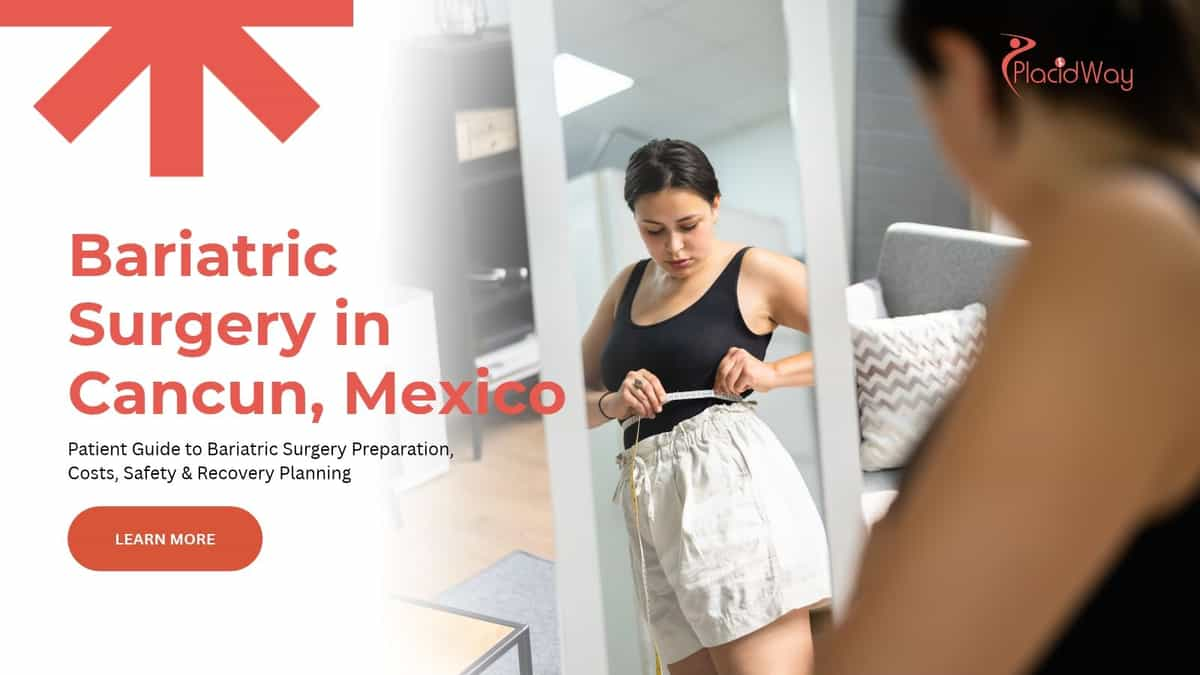
If you are struggling with severe weight challenges and facing long waitlists or unaffordable healthcare procedures at home you might be exploring medical travel options. Many international patients travel to the Mexican Caribbean to access affordable weight loss procedures without compromising on medical standards. This guide helps you understand the genuine costs involved while highlighting critical safety credentials like COFEPRIS licenses and Mexican College of Bariatric and Metabolic Surgery certifications you must verify before choosing a clinic.
- Estimated Cost: Typically ranges between $4,000 and $7,500 USD depending on the specific procedure and package inclusions.
- Safety Overview: Generally safe when performed by board-certified surgeons in properly accredited hospital facilities with intensive care units.
- Ideal Candidate: Adults with a BMI over 35 or a BMI over 30 combined with obesity-related health conditions like type 2 diabetes.
- Recovery Time: Usually requires a 2 to 3-day hospital stay followed by 2 to 4 days of hotel recovery before flying home.
- Main Reason to Travel: Significant cost savings compared to the US and Canada combined with specialized surgical expertise in a relaxing environment.
- Important Caution: Always verify that your chosen surgeon is certified by the Mexican College of Bariatric and Metabolic Surgery (CMCOEM) and operates in a COFEPRIS-licensed facility.
Why Patients Choose Cancun Mexico for Weight Loss Procedures
Making the decision to undergo a life-changing metabolic procedure requires careful thought and research. Many patients living in the United States and Canada find themselves priced out of local healthcare networks or stalled on seemingly endless waitlists. You might feel stuck knowing a medical intervention could improve your health but unable to access it locally. Cancun has emerged as a preferred destination because it bridges the gap between top-tier medical expertise and accessible pricing.
When you choose this coastal destination you are not just traveling for a cheaper procedure. You are accessing a mature medical tourism infrastructure built specifically around the needs of cross-border patients. Clinics here routinely cater to English-speaking travelers offering comprehensive assistance that covers everything from airport transfers to postoperative hotel care.
Primary Motivations for Travel
- Uninsured or underinsured status for bariatric care in home countries
- Desire to avoid local waitlists exceeding 12 to 18 months
- Access to comprehensive all-inclusive recovery packages
- Availability of highly specialized high-volume bariatric surgeons
Patient Origin Context
- US patients frequently travel due to strict insurance denial rates
- Canadian patients often travel to bypass long public healthcare queues
- European travelers sometimes seek specific revision procedures
Understanding the Types of Weight Loss Procedures Available
Your journey begins with selecting the right surgical intervention for your specific anatomical needs and metabolic goals. Bariatric operations fall into two main categories which are restrictive and malabsorptive. Restrictive procedures reduce the physical size of your stomach so you feel full much faster. Malabsorptive procedures reroute your digestive tract so your body absorbs fewer calories and nutrients.
Your doctor will recommend the most appropriate option based on your current body mass index your medical history and any existing metabolic conditions you might have. You should discuss your eating habits and long-term compliance capabilities openly during your consultation to ensure the chosen method aligns with your lifestyle.
| Procedure Name | Primary Mechanism | Typical Hospital Stay |
|---|---|---|
| Gastric Sleeve | Restrictive removing about 80 percent of the stomach | 2 nights |
| Roux-en-Y Gastric Bypass | Restrictive and malabsorptive rerouting the intestine | 2 to 3 nights |
| Mini Gastric Bypass | Malabsorptive creating a loop to bypass part of the intestine | 2 nights |
| Revision Surgery | Corrective altering a previous bariatric procedure | 2 to 3 nights |
Patient Demographics and Travel Trends for Cancun Clinics
The demographic profile of individuals seeking metabolic procedures across borders has evolved significantly over the past few years. Current 2024 and 2025 clinical registries indicate a rising number of younger patients opting for preventive surgical interventions before obesity-related comorbidities become severe. Women continue to make up the majority of medical travelers seeking these treatments although male participation is steadily increasing.
Analyzing recent cross-border patient volume highlights a consistent upward trend. Many individuals from North America prefer shorter flight times making the Mexican Caribbean an ideal logistical choice. The data visualizes how patient volumes and age distributions are mapping out in recent years emphasizing the mainstream acceptance of international bariatric care.
Cross Border Bariatric Patient Volume Growth 2024 to 2026
Bariatric Patient Age Distribution Profile 2025
Estimating Your Treatment Cost and Destination Comparison
Understanding the true financial commitment requires looking beyond the initial advertised quote. In medical tourism clinics usually present pricing in complete packages. These packages generally include the surgical fee anesthesia hospital stay preoperative lab work medications and local transportation. It is crucial to request an itemized list in USD from your chosen facility to see exactly what is covered and what might incur extra fees.
When comparing prices you will quickly notice the massive difference between North American hospital bills and Mexican healthcare quotes. This difference primarily stems from lower administrative overhead reduced malpractice insurance premiums and a lower cost of living not a reduction in medical quality. However you must budget for hidden costs like travel insurance flights and personal expenses.
| Procedure | US Canada Estimated Cost | Cancun Estimated Cost |
|---|---|---|
| Gastric Sleeve | $15,000 to $25,000 | $4,000 to $5,500 |
| Gastric Bypass | $20,000 to $35,000 | $5,500 to $7,000 |
| Mini Bypass | $18,000 to $30,000 | $5,000 to $6,500 |
| Revision Surgery | $22,000 to $40,000 | $6,000 to $7,500 |
Identifying the Right Candidates for Weight Loss Operations
Surgical intervention is not a quick fix or a cosmetic solution for minor weight loss. It is a serious medical procedure designed for individuals who face significant health risks due to clinical obesity. You must undergo a thorough medical evaluation to determine if your body can safely handle the stress of surgery and the rapid metabolic changes that follow.
Physicians generally follow established international guidelines to determine eligibility. These guidelines look at your body mass index previous attempts at supervised weight loss and the presence of comorbid conditions. Psychological readiness is equally vital because you must commit to strict lifelong dietary changes to maintain your results safely.
Patient Suitability Checklist
- Your BMI is 40 or higher.
- Your BMI is 35 or higher and you have conditions like hypertension or sleep apnea.
- You have tried and failed to maintain weight loss through diet and exercise.
- You do not have untreated severe psychiatric disorders.
- You are fully prepared to take daily vitamin supplements for life.
How to Evaluate Bariatric Clinics and Hospital Credentials
Selecting the right facility is the most critical decision you will make regarding your safety. You must look past glossy marketing photos of hospital rooms and focus entirely on verifiable credentials. In Mexico healthcare facilities are regulated by government bodies that enforce strict sanitary and operational standards.
The primary regulatory body you need to know is COFEPRIS which is the Federal Committee for Protection from Sanitary Risks. A clinic must hold a current COFEPRIS license to operate an operating room legally. Additionally you should look for hospitals certified by the General Health Council (CSG) which represents the highest national accreditation standard in the country.
Warning Sign to Avoid
Never book a procedure at a clinic that refuses to provide its COFEPRIS registration number or tries to perform major metabolic surgery in a standalone outpatient surgical suite that lacks an onsite intensive care unit (ICU).
Verifying Your Bariatric Surgeon Qualifications and Experience
A beautiful hospital means very little if the surgeon performing your operation lacks specific metabolic surgical training. General surgery board certification is the baseline but bariatric operations require highly specialized fellowship training. You need to ensure your doctor is specifically trained and recognized to perform the exact procedure you are booking.
In Mexico the most important professional body for this specialty is the Mexican College of Bariatric and Metabolic Surgery (CMCOEM). Surgeons who hold active certification from CMCOEM have passed rigorous peer reviews and proven their ongoing surgical competence. Many top surgeons also hold international memberships such as with the American Society for Metabolic and Bariatric Surgery (ASMBS) or the International Federation for the Surgery of Obesity (IFSO).
Questions to Ask Your Surgeon
- Are you currently certified by CMCOEM?
- How many times have you performed this specific procedure?
- What is your personal complication rate for this surgery?
- Who handles my care if a surgical complication arises after I return to my hotel?
Preparing for Your Trip to the Mexican Caribbean
Successful surgery starts weeks before you board your flight. Once you select your clinic your medical team will place you on a strict preoperative diet. This diet usually consists of high protein and low carbohydrate intake designed to shrink your liver. A smaller liver makes the surgical procedure much safer and technically easier for your doctor to perform.
Simultaneously you must organize your travel logistics carefully. You should secure a valid passport arrange for a travel companion if possible and purchase specialized medical tourism insurance. Standard travel insurance rarely covers complications arising from planned elective surgeries abroad so specialized coverage is highly recommended.
3 to 4 Weeks Before: Begin the prescribed liver-shrinking diet and stop taking blood-thinning medications as directed by your surgeon.
2 Weeks Before: Finalize flights confirm hotel reservations for the recovery period and secure medical travel insurance.
2 Days Before: Switch to clear liquids only as instructed and pack comfortable loose-fitting clothing for your hospital stay.
The Initial Consultation and Preoperative Testing Phase
When you arrive at the clinic you will not go straight into the operating room. Your first day is entirely dedicated to preoperative assessments to ensure you are physically fit for anesthesia. You will meet with your surgical team the anesthesiologist and sometimes a clinical nutritionist to review your medical history one final time.
The hospital staff will draw blood for extensive laboratory work and perform an electrocardiogram (EKG) to check your heart function. In some cases your doctor may order a chest X-ray or an endoscopy to evaluate the physical condition of your stomach lining. If any test results show unexpected risks the surgical team may delay or cancel the procedure for your safety.
- Complete blood count and metabolic panel
- Coagulation profile to ensure normal blood clotting
- Electrocardiogram for cardiovascular clearance
- Anesthesia risk assessment interview
Step by Step Guide to the Surgical Procedure Day
On the morning of your surgery you will be admitted to your hospital room and prepped for the operating theater. The nursing staff will start an intravenous line to provide hydration and administer preoperative medications. You will then be taken to the surgical suite where the anesthesiologist will administer general anesthesia putting you completely to sleep.
Most bariatric operations today are performed laparoscopically. This minimally invasive technique involves making several small incisions in your abdomen rather than one large cut. The surgeon inserts a tiny camera and specialized instruments to perform the stomach reduction or bypass. The laparoscopic approach significantly reduces postoperative pain lowers the risk of infection and shortens your overall recovery time.
- You are placed under general anesthesia by a certified anesthesiologist.
- The surgeon inflates your abdomen with harmless carbon dioxide gas to create working space.
- Small keyhole incisions are made to insert the laparoscope and surgical tools.
- The specific stomach alteration or intestinal rerouting is performed and secured.
- The instruments are removed and the small incisions are closed with sutures or surgical tape.
Immediate Recovery and Hospital Stay Expectations
Waking up in the recovery room you will feel groggy and likely experience some abdominal discomfort. It is completely normal to feel a sensation of tightness or nausea as the anesthesia wears off. Your nursing team will monitor your vital signs closely and administer pain medications and anti-nausea drugs through your IV.
You can expect to spend two to three nights in the hospital facility depending on the complexity of your operation. Within hours of waking up nurses will encourage you to stand up and take short walks around the ward. Early walking is crucial because it helps dissipate the carbon dioxide gas used during surgery and dramatically lowers the risk of developing blood clots in your legs.
| Recovery Day | Clinical Process | Action Required |
|---|---|---|
| Day 1 | Anesthesia recovery and pain management | Rest short assisted walks around the room |
| Day 2 | Leak testing and removal of surgical drains | Sip small amounts of water walk the hallways |
| Day 3 | Hospital discharge preparation | Transition to clear liquid diet prepare for hotel |
Transitioning to Your Hotel and Postoperative Care
Once your surgeon clears you for hospital discharge you will move to a local hotel to continue your recovery. Medical tourism packages usually include stays in hotels accustomed to hosting post-surgical patients offering appropriate amenities like clear broths and easy access to medical shuttles. During this phase rest is your primary responsibility.
You must stay in the destination city for a few additional days before flying home. This buffer period allows your surgical team to handle any immediate postoperative concerns remove bandages if necessary and provide a final fit-to-fly clearance. You should strictly follow the medication schedule provided to manage pain and prevent infection.
Postoperative Hotel Tip
Stay hydrated by taking tiny sips of water constantly throughout the day. Do not gulp liquids as your newly formed stomach pouch is swollen and cannot hold large volumes without causing severe pain or vomiting.
Dietary Stages and Long Term Nutritional Requirements
Your relationship with food will change permanently after surgery. Your digestive tract needs weeks to heal properly which requires a strict phased approach to eating. You cannot rush this process without risking severe complications like stomach leaks or painful blockages. The dietary progression slowly reintroduces different textures back into your system.
Because your body will absorb fewer nutrients and your food intake will be drastically smaller daily supplementation is non-negotiable. You will need to take specialized bariatric multivitamins calcium citrate iron and B12 supplements for the rest of your life. Failing to maintain this regimen can lead to severe nutritional deficiencies hair loss and bone density issues down the line.
| Dietary Stage | Timeline | Allowed Consistency |
|---|---|---|
| Stage 1 | Weeks 1 and 2 | Clear liquids broth sugar-free gelatin water |
| Stage 2 | Weeks 3 and 4 | Full liquids protein shakes very thin soups |
| Stage 3 | Weeks 5 and 6 | Pureed foods blended lean proteins scrambled eggs |
| Stage 4 | Week 7 onward | Gradual reintroduction of soft solid foods |
Navigating Potential Risks and Complication Management
Every major surgical intervention carries inherent risks and bariatric operations are no exception. While complication rates are generally low when performed by experienced surgeons you must be aware of what could go wrong. Immediate surgical risks include bleeding adverse reactions to anesthesia or infections at the incision sites.
The most severe specific risk is a staple line leak where stomach fluids escape into the abdominal cavity requiring emergency intervention. Long-term risks include strictures where the stomach opening narrows too much or dumping syndrome where food moves too rapidly into the small intestine causing nausea and dizziness. Understanding these risks helps you recognize warning signs early.
| Potential Risk | Warning Signs | Prevention Strategy |
|---|---|---|
| Staple Line Leak | Sudden severe abdominal pain fever rapid heart rate | Strictly follow the liquid diet to avoid stomach stretching |
| Deep Vein Thrombosis | Swelling or sharp pain in the calf or leg | Walk frequently immediately after surgery use compression socks |
| Dumping Syndrome | Nausea sweating dizziness immediately after eating | Avoid sugary foods and do not drink liquids while eating solid meals |
Tracking Expected Weight Loss and Health Improvements
Patients typically experience the most rapid weight loss during the first six to twelve months following surgery. Depending on the specific procedure and your starting weight you might lose between 50 and 70 percent of your excess body weight within the first year. However the surgery is simply a powerful tool and long-term success heavily depends on your commitment to behavioral and dietary changes.
Beyond the numbers on the scale the metabolic improvements are often life-changing. Many patients experience a rapid remission of type 2 diabetes sometimes resolving before they even leave the hospital. Sleep apnea hypertension and joint pain generally improve significantly as the excess physical burden is lifted from the body.
Realistic Expectations
Weight loss stalls are normal and expected parts of the journey. Your body will periodically pause to adjust to its new metabolic state. Do not panic if the scale stops moving for a week simply stick to your protein goals and hydration schedule.
Arranging Your Safe Flight Home After Surgery
Flying shortly after abdominal surgery requires specific precautions to ensure your safety in the air. The changes in cabin pressure can cause mild abdominal discomfort due to the gas used during the laparoscopic procedure. Your surgeon must provide a written fit-to-fly certificate before you head to the airport.
The biggest risk during air travel is deep vein thrombosis (DVT) caused by sitting still for extended periods. You must actively manage this risk during your flight. Plan ahead by requesting an aisle seat so you can get up easily without disturbing other passengers.
- Wear prescribed compression stockings throughout the entire journey.
- Stand up and walk down the airplane aisle every 45 to 60 minutes.
- Perform seated ankle rotations and calf flexes regularly.
- Carry all necessary pain medications and anti-nausea drugs in your carry-on luggage.
Frequently Asked Questions
Is it safe to get bariatric surgery in Cancun Mexico?
Yes it is generally safe when you choose a fully accredited hospital and a board-certified bariatric surgeon. You must verify that the facility holds a valid COFEPRIS license and that the surgeon is recognized by the Mexican College of Bariatric and Metabolic Surgery. Following all preoperative and postoperative guidelines also greatly enhances your safety.
How much money can I save by traveling for this procedure?
Patients typically save between 50 and 70 percent compared to paying out of pocket in the United States or Canada. While a gastric sleeve might cost upwards of $20,000 in the US comprehensive packages in the Mexican Caribbean often range from $4,000 to $5,500.
What is included in an all inclusive weight loss surgical package?
Most reputable packages cover the surgical team fees anesthesia operating room costs 2 to 3 nights in the hospital preoperative blood tests ground transportation between the airport and clinic and necessary medications during your stay. Always ask for a written itemized list to confirm exact inclusions.
How long do I need to stay in Mexico after my operation?
You should plan to stay for approximately 5 to 7 days in total. This timeline includes one preoperative day 2 to 3 nights recovering in the hospital and 2 to 3 nights recovering at a local hotel before your surgeon clears you to fly home.
Will I have loose skin after losing a massive amount of weight?
Yes rapid and significant weight loss often results in excess loose skin especially around the abdomen arms and thighs. The amount of loose skin depends on your age genetics and total weight lost. Many patients opt for body contouring cosmetic surgeries a year or two later once their weight has stabilized.
What happens if I experience a medical complication after returning home?
You must establish a relationship with a local primary care physician or a local bariatric specialist before traveling. If a complication arises you will need local emergency care. Purchasing specialized medical tourism complications insurance before your trip can help cover unexpected medical expenses back home.
Do Mexican bariatric surgeons speak English?
The vast majority of bariatric surgeons catering to international patients in major medical tourism hubs are highly fluent in English. Additionally top-tier clinics employ bilingual patient coordinators to ensure clear communication throughout your entire medical journey.
Can I undergo this procedure if my BMI is only 32?
Guidelines vary but a BMI of 32 may qualify you if you also suffer from severe obesity-related conditions like type 2 diabetes sleep apnea or uncontrolled hypertension. Your surgeon will evaluate your full medical profile during the consultation to determine if the benefits outweigh the surgical risks.
How soon can I return to work after getting a gastric sleeve?
If you work a sedentary desk job you may feel ready to return to work within 2 to 3 weeks after surgery. However if your job requires heavy lifting or physical labor you will typically need 4 to 6 weeks of recovery before safely resuming full duties.
Why do I have to follow a strict liquid diet before the operation?
The preoperative liquid diet is crucial for shrinking your liver. A fatty enlarged liver covers the upper part of your stomach making the surgical procedure technically difficult and more dangerous. Shrinking the liver provides the surgeon with better visibility and a safer operating field.
Ready to take the next step in your weight loss journey? PlacidWay can help you compare certified clinics understand package costs and connect directly with top specialists.
Request Free Information and Pricing TodayDisclaimer: This information is for educational purposes only and does not replace professional medical advice. Always consult a qualified healthcare provider before making medical decisions.
References
- Bariatric Surgery Procedures – American Society for Metabolic and Bariatric Surgery (ASMBS)
- Patient Guidelines and Safety – International Federation for the Surgery of Obesity (IFSO)
- Travelers' Health Mexico – Centers for Disease Control and Prevention (CDC)
- Surgeon Certification Standards – Mexican College of Bariatric and Metabolic Surgery (CMCOEM)
- Healthcare Facility Licensing and Regulation – Federal Committee for Protection from Sanitary Risks (COFEPRIS)
- Obesity and Overweight Fact Sheet – World Health Organization (WHO)
- Long-Term Outcomes of Bariatric Surgery in Medical Tourism – National Library of Medicine (PubMed)

























Share this listing