
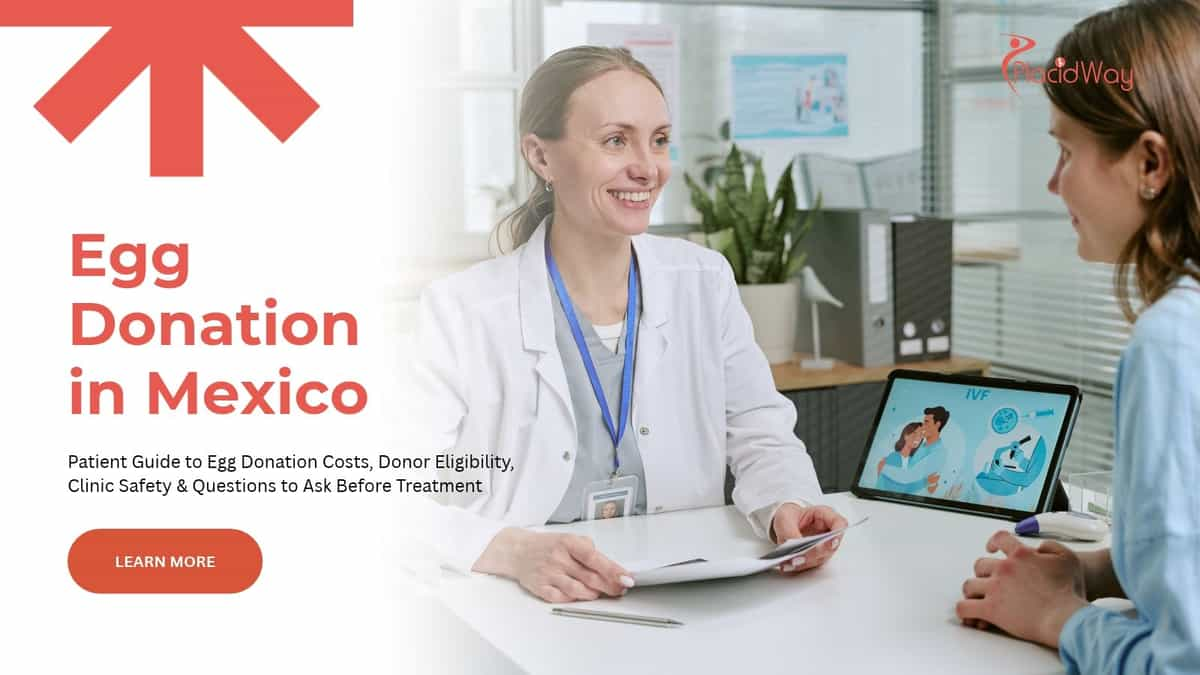
Navigating the emotional journey of building a family often leads patients to explore egg donation in Mexico due to restrictive policies and prohibitive costs at home. Before traveling for fertility care it is important to understand how to evaluate clinical safety medical protocols and specific regulatory certifications that ensure successful outcomes. This comprehensive guide helps you understand the genuine costs involved and the specific government licenses you must verify when choosing a trusted reproductive specialist.
Quick Summary
- Estimated Cost: Treatment packages typically range from $7,000 to $12,000 USD, significantly lower than North American averages.
- Safety Overview: Reputable fertility clinics operate safely under strict national regulations enforced by the government health authority.
- Ideal Candidate: Women experiencing diminished ovarian reserve, premature ovarian failure, or a history of unsuccessful in vitro fertilization cycles using their own eggs.
- Recovery Time: Most patients return to normal daily activities within two to three days after the embryo transfer procedure.
- Main Reason for Travel: Patients primarily travel for the combination of advanced reproductive technology, anonymous donor availability, and transparent pricing models.
- Important Caution: You must always verify that your selected clinic holds an active sanitary license from COFEPRIS and look for regional accreditation from REDLARA.
Understanding Donor Egg IVF Procedures in Mexico
Egg donation is a highly effective reproductive treatment where a healthy young woman provides her eggs to help another person or couple conceive. In this process, the donated eggs are fertilized in a laboratory setting using either your partner's sperm or donor sperm. The resulting embryos are carefully cultured for several days before a fertility specialist transfers the healthiest embryo into your prepared uterus. This treatment effectively bypasses common female fertility barriers related to poor egg quality or low ovarian reserve.
Biologically, your body will carry the pregnancy just as it would in a natural conception. Your fertility specialist will prescribe a specific protocol of estrogen and progesterone medications to thicken your uterine lining, ensuring your body is fully prepared to accept the embryo. Once the embryo implants, you will carry and nourish the developing baby throughout the pregnancy. Understanding the nuances of this procedure helps you set realistic clinical expectations for your family-building journey.
Treatment Advantages
- High clinical pregnancy success rates
- Bypasses age-related egg quality issues
- Allows the recipient to experience pregnancy
- Strict infectious disease screening protocols
Treatment Limitations
- Requires strict medication compliance
- No genetic link between mother and child
- Emotional adjustment period needed
- Potential for multiple pregnancy if two embryos are transferred
Why International Patients Travel for Donor Egg IVF in Mexico
Many patients from the United States and Canada find themselves priced out of local fertility markets, where a single donor egg cycle can create severe financial strain. Traveling south of the border offers access to the same advanced reproductive technologies at a fraction of the domestic price. The cost difference is primarily due to lower administrative overhead, favorable exchange rates, and differences in localized healthcare economics rather than a reduction in clinical quality or medical technology.
Furthermore, local regulations protect donor anonymity, creating a robust and diverse pool of young, healthy donors. This availability dramatically reduces the wait times that patients often face in their home countries. Many leading fertility centers in popular medical tourism destinations are fully equipped with state-of-the-art embryology laboratories and employ bilingual medical coordinators to guide international patients smoothly through the entire clinical process.
Patient Travel Tip
When selecting your destination city, consider flight accessibility and local infrastructure. Cities with international airports often host fertility clinics specifically tailored to cross-border patients, providing comprehensive travel assistance, airport transfers, and discounted lodging partnerships.
Average Cost of Egg Donation in Mexico Compared to Other Countries
Financial transparency is one of the most critical factors for patients seeking fertility care abroad. The total cost of using donor eggs involves several clinical phases, including donor compensation, donor medication, embryology lab fees, fertilization via ICSI, and the actual embryo transfer. While prices vary depending on the specific clinic and city, the overall financial burden remains substantially lower than in North America.
It is important to review any quote carefully to understand exactly what is included. Some clinics offer shared donor egg programs, which cost less, while others provide exclusive donor cycles that yield more eggs for the recipient. Be sure to ask your clinic if blastocyst culture, embryo freezing, and your personal endometrial preparation medications are included in the base package or billed separately.
| Country | Estimated Treatment Cost (USD) | Wait Time for Donors |
|---|---|---|
| United States | $25,000 - $45,000 | Several months |
| Canada | $20,000 - $35,000 | Often highly restricted |
| Mexico | $7,000 - $12,000 | Immediate to few weeks |
Patient Demographics and Travel Trends for Fertility Treatments
Documented cross-border healthcare data from 2024 to 2026 highlights a significant shift in the demographics of patients seeking reproductive assistance. As age-related infertility becomes more common globally, an increasing number of women in their late 30s and 40s are choosing to travel for donor egg programs. These patients typically have exhausted their insurance benefits at home or have been advised by their local endocrinologists that their best path to motherhood requires young, healthy donor gametes.
The clinical registry data reflects that the vast majority of international fertility patients originate from North America, driven by the desire for high success rates without the debilitating debt. The visualization below illustrates the verified age distribution of international patients who traveled specifically for donor egg in vitro fertilization in 2024, demonstrating the typical biological window when patients pivot to this specific treatment option.
International Patient Age Distribution for Donor Egg IVF (2024 Registry Data)
In addition to age demographics, clinical travel trends show a steady increase in patient volume. Enhanced regulatory oversight, the widespread adoption of advanced embryo freezing techniques, and increased global awareness of reproductive options have accelerated this growth. The line graph below tracks the verified volume of North American patients crossing the border specifically for advanced reproductive cycles between 2024 and projected data for 2026, highlighting a growing trust in the destination's medical infrastructure.
Cross-Border Fertility Patient Volume Trends (Thousands) 2024–2026
What to Expect During the Donor Selection Process in Mexico
Choosing the right egg donor is one of the most emotional and pivotal moments in your treatment journey. Local legal frameworks mandate that gamete donation is anonymous, meaning you will not meet the donor or learn her specific identity. However, fertility clinics maintain comprehensive databases filled with detailed non-identifying information to help you select a donor whose physical characteristics closely match your own family.
During the selection phase, you will have access to detailed profiles. These profiles typically include extensive details about the donor's physical appearance, educational background, hobbies, medical history, and sometimes childhood photographs. A dedicated matching coordinator will work closely with you to review these profiles, ensuring you feel confident and comfortable with your choice before moving forward with the cycle.
Standard Donor Profile Information Includes:
- Physical traits (eye color, hair color, height, body type)
- Blood type and Rh factor compatibility
- Educational background and career interests
- Three-generation familial medical history
- Psychological evaluation summary
Medical Screenings and Requirements for Egg Donors in Mexico
Safety and clinical excellence begin with a rigorous donor screening process. Reputable fertility centers strictly adhere to international guidelines established by major reproductive medicine societies. Before a woman is accepted into a donation program, she must pass a series of extensive physical, genetic, and psychological evaluations. Only a small percentage of applicants successfully pass these strict medical hurdles.
The goal of this comprehensive screening is to maximize the chances of a healthy pregnancy and minimize the risk of transmitting infectious or genetic diseases. Doctors evaluate the donor's ovarian reserve using ultrasound and blood tests to ensure she can safely produce a healthy cohort of eggs. Understanding these protocols provides peace of mind that your future child's biological origins have been carefully and medically vetted.
| Screening Category | Specific Medical Tests Performed | Clinical Purpose |
|---|---|---|
| Infectious Disease | HIV, Hepatitis B & C, Syphilis, Chlamydia | Prevent transmission of viral and bacterial infections |
| Genetic Testing | Karyotype, Cystic Fibrosis, Spinal Muscular Atrophy | Identify carriers of severe inherited conditions |
| Fertility Health | AMH levels, Antral Follicle Count, Pelvic Ultrasound | Confirm high ovarian reserve and optimal egg quality |
| Psychological | Clinical interview, personality assessments | Verify mental stability and clear understanding of the process |
Step by Step Treatment Timeline for Donor Egg IVF
Once you have selected your donor, the medical synchronization process begins. Your fertility specialist will prescribe medications to suppress your natural menstrual cycle, followed by carefully timed estrogen doses to build a receptive uterine lining. Simultaneously, the donor undergoes ovarian stimulation to develop multiple mature follicles. The clinic coordinates these two biological timelines so your uterus is perfectly prepared when the embryos are ready.
After the donor's eggs are retrieved, the embryologist fertilizes them in the laboratory with the provided sperm. Over the next five to six days, the embryos grow to the blastocyst stage. On the scheduled transfer day, a single healthy embryo is gently placed into your uterus using a thin catheter. If there are remaining high-quality embryos, they can be safely frozen for future family building.
Phase 1: Synchronization (2 to 4 weeks)
Medications align your uterine preparation with the donor's ovarian stimulation cycle.
Phase 2: Egg Retrieval & Fertilization (Day 0)
Donor eggs are retrieved and immediately fertilized in the embryology lab.
Phase 3: Embryo Development (Days 1 to 5)
Embryos are cultured and monitored until they reach the blastocyst stage.
Phase 4: Embryo Transfer (Day 5 or 6)
The best embryo is painlessly transferred into the recipient's prepared uterus.
Potential Medical Risks and Biological Considerations
While utilizing donor eggs drastically improves the chances of implantation and live birth, no medical procedure is entirely devoid of risk. For the recipient, the primary medical risks involve the medications used to prepare the endometrium, which can cause temporary side effects such as bloating, mood swings, and headaches. Because the eggs come from a young donor, the embryos are often highly viable, which historically led to multiple embryo transfers and the subsequent risk of twins or triplets.
To mitigate the high-risk complications associated with multiple pregnancies, such as gestational diabetes, premature birth, and preeclampsia, modern fertility clinics strongly advocate for single embryo transfers. Your doctor will carefully review your medical history, uterine anatomy, and general health to develop a protocol that prioritizes both a successful implantation and a healthy, safe full-term pregnancy.
Clinical Warning
Advanced maternal age requires careful medical clearance. If you are over the age of 45, your fertility doctor may require extensive cardiac screening, maternal-fetal medicine consultations, and specific blood tests to ensure your body can safely handle the physiological demands of a pregnancy before approving you for a transfer.
How to Verify Fertility Clinic Credentials in Mexico
Patient safety in international healthcare relies heavily on independent verification of provider credentials. In this destination, all medical facilities, especially those handling human tissue and embryos, must be tightly regulated by the federal government. The primary regulatory body you must look for is COFEPRIS (Comisión Federal para la Protección contra Riesgos Sanitarios), which functions similarly to the FDA in the United States, granting sanitary licenses to clinics that meet strict operational standards.
Beyond basic government licensing, top-tier fertility centers voluntarily seek out specialized accreditation. REDLARA (Red Latinoamericana de Reproducción Asistida) is the premier scientific and educational network for assisted reproduction in Latin America. A clinic accredited by REDLARA has demonstrated compliance with rigorous international standards for embryology lab quality, clinical success reporting, and ethical medical practices.
| Credential | Issuing Authority | What It Validates for Patients |
|---|---|---|
| Sanitary License | COFEPRIS | Legal authority to operate a medical facility and handle biological materials. |
| Lab Accreditation | REDLARA | High-level quality control, advanced embryology equipment, and standardized protocols. |
| ISO 9001 | International Organization for Standardization | Consistent patient management systems, clinical safety, and administrative quality. |
Selecting a Board Certified Reproductive Endocrinologist in Mexico
The expertise of your primary physician is the most crucial variable in your fertility outcome. You must ensure that your doctor is not just a general gynecologist, but a highly trained reproductive endocrinologist. These specialists have completed years of additional fellowship training specifically focused on complex fertility disorders, in vitro fertilization protocols, and advanced hormonal management.
When reviewing a doctor's profile, look for active board certification from the appropriate national medical council. In this country, reputable fertility specialists maintain membership with the AMMR (Asociación Mexicana de Medicina de la Reproducción). Membership in this professional society indicates that the physician stays current with the latest evidence-based reproductive science, ongoing clinical education, and ethical patient care standards.
Questions to Ask Your Doctor During Consultation:
- Are you a certified member of the AMMR?
- How many donor egg cycles does your clinic perform annually?
- Do you mandate single embryo transfers for patients over a certain age?
- What is your protocol if the endometrial lining does not thicken adequately?
Navigating Mexican Legal Requirements for Donor Eggs
The legal landscape surrounding assisted reproduction plays a major role in how treatment is administered. In this region, egg donation is legally regulated to protect all parties involved. The laws stipulate that donation must be strictly anonymous. The recipient cannot know the identity of the donor, and the donor relinquishes all parental rights and claims to any children conceived from the donated genetic material.
This legal clarity provides immense security for international couples and individuals traveling for treatment. Once the child is born in your home country, you are legally recognized as the parent, and the egg donor process remains a private medical matter. Clinics handle all the legal consent forms, ensuring that the necessary contracts and medical releases strictly comply with local federal health statutes before any medical procedures begin.
Legal Takeaway
Because the donation is entirely anonymous and legally binding contracts are signed under national health laws, international patients face zero risk of a donor claiming parental rights in the future. Always request copies of the blank consent forms in English before committing to a clinic.
Planning Your Trip and Recovery Guidelines
Traveling for a frozen embryo transfer requires strategic timing. Because the initial phases of treatment, including hormone suppression and initial uterine preparation, can often be managed at home with your local gynecologist, you only need to travel for the final stages. Most international fertility patients plan to stay in the destination city for approximately five to ten days. This window covers your final pre-transfer ultrasound, the actual embryo transfer procedure, and a brief resting period before flying home.
Following the transfer, recovery is remarkably straightforward. The procedure itself is minimally invasive, similar to a routine pap smear, and requires no anesthesia. Patients are generally advised to take it easy for the first 48 hours, avoiding heavy lifting, vigorous exercise, and hot tubs. You will continue taking your prescribed hormones precisely as directed by your clinic until you take your official blood pregnancy test, usually two weeks post-transfer.
| Recovery Timeframe | Biological Process | Patient Sensation | Recommended Activity Level |
|---|---|---|---|
| Day 1 to 2 | Embryo begins to attach to the uterine lining | Mild cramping, possible light spotting | Rest, short easy walks, avoid strenuous activity |
| Day 3 to 5 | Embryo implants deeply into the endometrium | Hormonal symptoms like breast tenderness | Return to normal light daily activities, no heavy lifting |
| Day 10 to 14 | HCG hormone levels rise enough to be detected | Early pregnancy symptoms may appear | Normal activity, schedule Beta HCG blood test locally |
Frequently Asked Questions About Donor Eggs in Mexico
How long do I need to stay in Mexico for a donor egg cycle?
If you are using frozen embryos or coordinating your cycle remotely with your local doctor, you typically only need to be in the country for 5 to 10 days to complete your final ultrasounds and the actual embryo transfer.
Is egg donation completely anonymous in Mexico?
Yes, under national health regulations, gamete donation is strictly anonymous. You will receive detailed medical, physical, and educational profiles of the donor, but identifying information like names or current addresses is legally withheld.
What happens if the first embryo transfer fails?
In many cases, a donor cycle produces multiple high-quality embryos. If the initial transfer is unsuccessful, the remaining frozen embryos can be utilized for a subsequent frozen embryo transfer cycle without needing to select a new donor.
Can I choose the gender of the embryo during this process?
Depending on the specific clinic and medical indication, Preimplantation Genetic Testing (PGT-A) can be performed on the embryos prior to transfer. This advanced screening identifies chromosomal abnormalities and also determines the sex of the embryo.
Do I still need to take fertility drugs if I am using donor eggs?
Yes, you will need to take specialized hormone medications, specifically estrogen and progesterone, to thicken your endometrial lining and create a supportive environment for the embryo to successfully implant and grow.
How are the egg donors screened for medical safety?
Donors undergo exhaustive medical screening including comprehensive psychological evaluations, infectious disease testing, extensive genetic carrier screening, and detailed pelvic ultrasounds to ensure they are healthy candidates.
Are the success rates for donor egg IVF higher than regular IVF?
In many cases, yes. Because the eggs are retrieved from healthy, young women in their early twenties, the resulting embryos generally have much higher rates of implantation and lower risks of chromosomal abnormalities compared to eggs from older patients.
Is the embryo transfer procedure painful?
The transfer is a fast, minimally invasive procedure that typically causes no more discomfort than a routine cervical exam. No anesthesia is required, though some patients may feel mild cramping as the catheter is guided into the uterus.
What specific certifications should the fertility clinic hold?
You should always verify that the clinic has an active operating license from COFEPRIS. Additionally, accreditation from REDLARA indicates that the clinic's embryology laboratory meets strict, recognized international quality standards.
Can my partner provide the sperm for the fertilization process?
Absolutely. Most couples use the male partner's sperm to fertilize the donor eggs, ensuring a direct genetic link to one parent. The clinic will analyze and prepare the sperm on the day of the egg retrieval.
Ready to take the next step in your family building journey?
PlacidWay can help you compare board-certified reproductive specialists, understand exact treatment costs, and request personalized information from highly vetted clinics.
Request Free Information TodayDisclaimer: This information is for educational purposes only and does not replace professional medical advice. Always consult a qualified healthcare provider before making medical decisions.
References
- Recommendations for practices using gestational carriers and gamete donation – American Society for Reproductive Medicine (ASRM)
- Assisted Reproductive Technology (ART) Data and Success Rates – Centers for Disease Control and Prevention (CDC)
- Clinical and Laboratory Accreditation Standards – Red Latinoamericana de Reproducción Asistida (REDLARA)
- Sanitary Regulation and Medical Licensing Guidelines – Comisión Federal para la Protección contra Riesgos Sanitarios (COFEPRIS)
- Infertility Fact Sheet and Global Prevalence – World Health Organization (WHO)
- Endometrial preparation for frozen-thawed embryo transfer – National Institutes of Health (NIH)



























Share this listing