
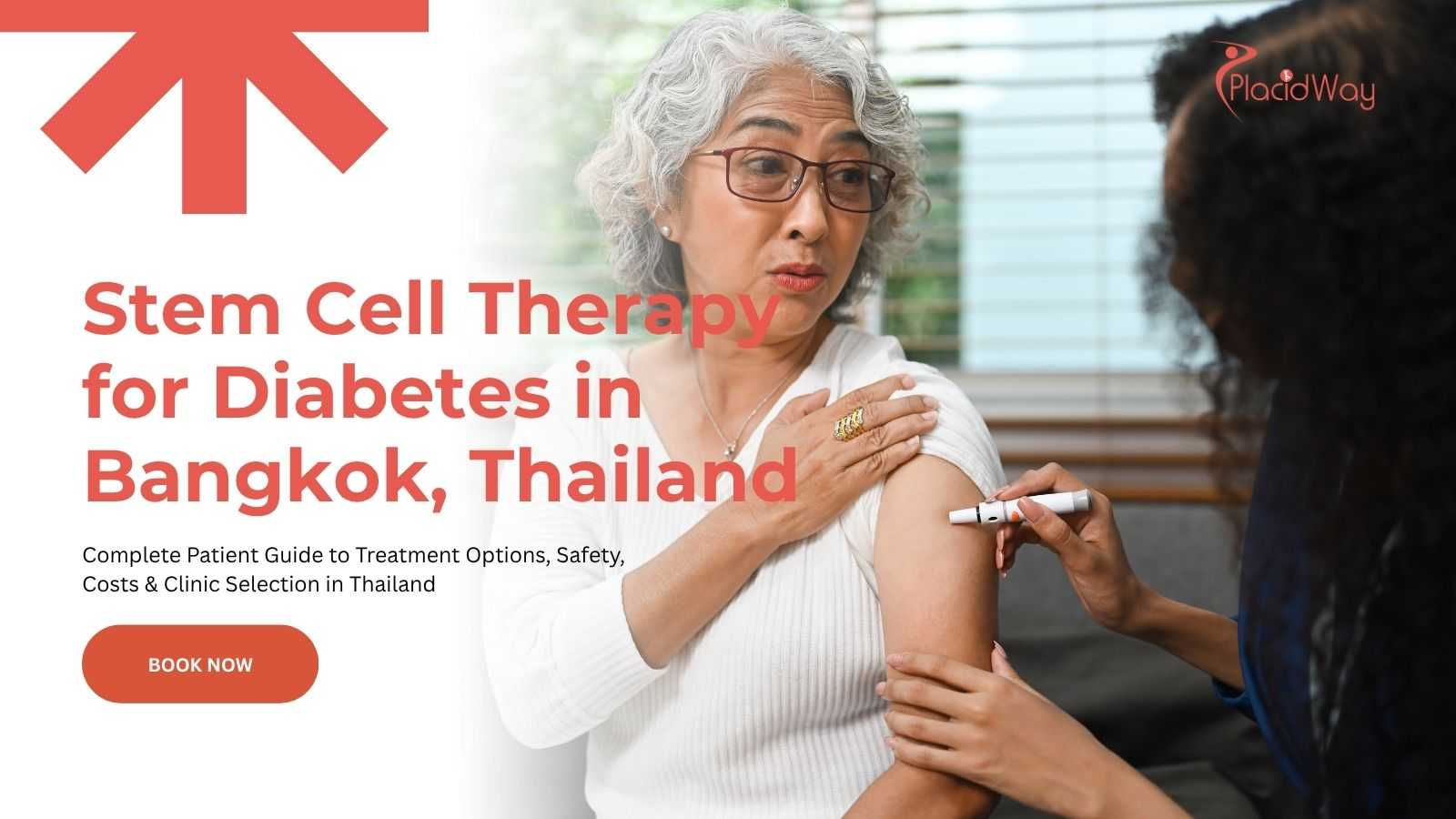
Living with diabetes often means managing a daily cycle of blood sugar monitoring, insulin administration, and worrying about long-term complications. If you are exploring regenerative medicine to help manage your condition, you might be researching international options to find advanced care. Many patients travel for stem cell therapy for diabetes in Bangkok, Thailand, seeking high-quality medical facilities and more manageable treatment costs. However, before planning your medical trip, it is vital to understand realistic outcomes, carefully evaluate the total costs, and know exactly which Thai Ministry of Public Health licenses and hospital accreditations to look for.
Quick Answer Summary
- Estimated Cost: Typically ranges between $12,000 and $25,000 USD, depending on the number of stem cells, cell source, and clinic protocols.
- Safety Overview: Generally considered safe when performed by certified specialists, but it is an emerging therapy. Risks include localized infection or mild immune reactions.
- Ideal Candidate: Patients looking for complementary therapies to improve glycemic control or manage complications, not those seeking an absolute "cure."
- Recovery Time: The procedure itself requires just a few hours, but patients usually stay in Bangkok for 7 to 10 days for preparation, infusion, and medical monitoring.
- Why Patients Choose Bangkok: Access to dedicated regenerative medicine centers, highly trained specialists, transparent pricing, and world-renowned hospitality.
- Important Credentials: Always look for facilities licensed by the Thai Ministry of Public Health (MOPH) and doctors registered with the Medical Council of Thailand.
Understanding Stem Cell Therapy for Diabetes in Bangkok, Thailand
For decades, standard diabetes care has focused on symptom management through medication, diet, and insulin replacement. Regenerative medicine introduces a different approach, aiming to address the underlying cellular damage. When conventional treatments leave you feeling fatigued or struggling with neuropathy, looking abroad for advanced therapeutic options becomes a logical step.
Patients worldwide are increasingly viewing Thailand as a hub for specialized healthcare. The country has invested heavily in biotechnology, medical research, and modern infrastructure. Medical tourists frequently cite several core reasons for seeking regenerative care in this Southeast Asian capital.
- Cost-to-Quality Ratio: Medical costs are significantly lower than in North America or Europe, without compromising facility standards.
- Advanced Technology: Leading clinics utilize state-of-the-art cell expansion laboratories and strict quality control measures.
- Experienced Specialists: Many endocrinologists and stem cell researchers in Thailand have trained internationally.
- Regulatory Oversight: The Thai government actively monitors and regulates private hospitals catering to international patients.
- Comprehensive Packages: Clinics often bundle airport transfers, accommodation, and translator services into the treatment plan.
How Regenerative Medicine Targets Diabetic Conditions
Diabetes occurs when the pancreas fails to produce enough insulin or when the body cannot effectively use the insulin it produces. Stem cells are unique because they have the potential to differentiate into various cell types and secrete powerful healing factors. In the context of diabetes, therapies primarily focus on immunomodulation and tissue repair.
When stem cells are introduced into the body, they release cytokines and growth factors. These substances help reduce systemic inflammation, which is a significant driver of insulin resistance in Type 2 diabetes. Furthermore, stem cells may help protect remaining pancreatic beta cells from further immune system attacks.
It is crucial to understand that stem cell therapy is not a definitive cure. Instead, it serves as a management tool. Many patients report improvements in energy levels, a reduction in neuropathic pain, and better blood sugar stability, which may allow their primary doctor to adjust their medication requirements over time.
Types of Stem Cells Used for Diabetes Treatments
Not all stem cells are the same. Clinics in Bangkok, Thailand typically utilize specific types of cells based on safety profiles and clinical efficacy. Understanding the differences can help you ask your medical provider the right questions.
Mesenchymal Stem Cells (MSCs) are the most commonly used cells for treating diabetes globally. These cells can be harvested from your own body (autologous) or a carefully screened donor (allogeneic). They are highly valued for their ability to regulate the immune system and promote blood vessel growth.
Clinic Consultation Tip
Always ask your chosen clinic about their cell expansion protocols. You should know exactly where the cells come from, how many million cells will be infused, and whether their laboratory follows Good Manufacturing Practice (GMP) standards.
Type 1 vs. Type 2 Diabetes Patient Suitability
Your specific diagnosis greatly influences how you might respond to regenerative treatments. The underlying biological causes of Type 1 and Type 2 diabetes are different, meaning the therapeutic goals of stem cell therapy also vary.
Type 1 diabetes is an autoimmune condition where the body actively destroys its own insulin-producing beta cells. Therapy for Type 1 focuses heavily on halting this autoimmune attack (immunomodulation) to preserve any remaining beta cell function. Type 2 diabetes is primarily characterized by insulin resistance and metabolic dysfunction. For Type 2 patients, the goal is to reduce systemic inflammation and improve the body's sensitivity to existing insulin.
| Condition | Primary Biological Issue | Goal of Stem Cell Therapy |
|---|---|---|
| Type 1 Diabetes | Autoimmune destruction of beta cells | Modulate immune response, preserve remaining beta cells |
| Type 2 Diabetes | Insulin resistance and systemic inflammation | Reduce tissue inflammation, improve insulin sensitivity |
| Diabetic Neuropathy | Nerve damage from prolonged high blood sugar | Promote new blood vessel growth (angiogenesis), repair nerve tissue |
Patient Demographics for Regenerative Medicine
Bangkok continues to attract a diverse global patient base for complex medical procedures. Recent 2024 medical tourism reports highlight a growing trend of international travelers seeking alternative therapies for chronic conditions, moving beyond traditional elective surgeries.
Data from recent regional healthcare travel surveys indicate that patients seeking stem cell therapy in Thailand predominantly arrive from nations with high healthcare costs or long waiting times for advanced treatments. A significant portion of these patients are aged between 45 and 65, primarily managing Type 2 diabetes or related neuropathic complications.
International Patient Origins for Regenerative Medicine in Bangkok (2024 Data)
Data represents estimated outbound patient traffic for regenerative therapies into Thailand (2024 market analysis projections).
Clinical Outcomes and Expectations
Managing patient expectations is a critical part of ethical regenerative medicine. While some patients hope for an immediate reversal of their condition, the biological reality of stem cell therapy is gradual. The cells require time to engraft, reduce inflammation, and stimulate cellular repair.
Clinical observations from 2024 peer-reviewed studies on Mesenchymal Stem Cells indicate that patients often notice changes in energy levels and reduced neuropathic tingling within the first three months. For Type 2 diabetes patients, improvements in glycemic control, often measured by HbA1c levels, typically become apparent between three to six months post-infusion.
Average HbA1c Reduction Post-Treatment (2024 Observational Data)
Graph illustrates typical HbA1c stabilization trends observed in recent (2024) clinical evaluations of MSC therapies for Type 2 Diabetes.
The Treatment Process in Bangkok
Traveling for a complex medical procedure requires careful planning. Reputable clinics in Thailand follow strict, multi-day protocols to ensure patient safety and maximize the viability of the treatment.
Upon arrival, your first day is usually dedicated to comprehensive blood panels, physical evaluations, and consultations with your endocrinologist and stem cell specialist. The actual administration of stem cells is typically done via intravenous (IV) infusion, which is minimally invasive and takes only a few hours.
| Day | Activity Level | Medical Action Required |
|---|---|---|
| Day 1-2 | Light | In-clinic medical evaluation, blood tests, and specialist consultation. |
| Day 3 | Resting | Stem cell infusion (usually IV). Patient monitored in clinic for a few hours. |
| Day 4-6 | Moderate | Follow-up checkups, observation for any mild immune responses or fever. |
| Day 7+ | Normal | Final medical clearance and approval for international air travel. |
Estimated Cost of Stem Cell Therapy for Diabetes in Bangkok
Financial transparency is one of the primary reasons patients choose Southeast Asia for medical care. However, regenerative therapies are highly customized, meaning costs will vary based on your specific medical needs, the type of cells used, and the clinic's facilities.
Generally, patients can expect to pay between $12,000 and $25,000 USD for a complete stem cell protocol for diabetes in Bangkok, Thailand. This price typically includes the cellular products, laboratory fees, medical team fees, and immediate post-procedure monitoring. It is essential to ask clinics for a fully itemized written quote before traveling.
| Expense Category | Estimated Cost Range (USD) |
|---|---|
| Initial Consultations & Lab Tests | $500 - $1,200 |
| Stem Cell Culturing & Preparation | $8,000 - $16,000 |
| Infusion Procedure & Facility Fees | $2,000 - $4,500 |
| Post-Procedure Monitoring & Meds | $500 - $1,500 |
Cost Comparison for Regenerative Medicine
When researching treatments, comparing destinations helps contextualize the value offered by Thai clinics. Regulatory environments, laboratory labor costs, and general healthcare economics heavily influence the final price tag of regenerative therapies worldwide.
In countries like the United States, strict FDA regulations limit certain cell expansion techniques, and the available therapies often come with premium price tags due to high administrative costs. Bangkok offers a more specialized medical tourism infrastructure, allowing clinics to lower overhead costs while maintaining stringent laboratory standards.
| Country | Estimated Treatment Cost (USD) | Primary Appeal |
|---|---|---|
| United States | $20,000 - $40,000+ | Domestic convenience, highly regulated trials |
| United Kingdom | $18,000 - $35,000 | Private clinical access |
| Mexico | $10,000 - $22,000 | Proximity to North American patients |
| Bangkok, Thailand | $12,000 - $25,000 | Advanced biotech labs, comprehensive medical tourism packages |
Choosing the Right Hospital for Regenerative Medicine in Bangkok
Safety should always be your top priority when evaluating healthcare facilities abroad. The quality of a stem cell treatment depends entirely on the clinic's laboratory standards and clinical oversight. You must look beyond marketing materials and verify the facility's legal standing.
In Thailand, every legal medical facility must be registered with the national government. Additionally, top-tier hospitals pursue voluntary accreditations to prove their commitment to patient safety and continuous improvement.
- Ministry of Public Health (MOPH): The fundamental government body that licenses hospitals and clinics in Thailand. Ensure your chosen clinic holds a valid MOPH license.
- Healthcare Accreditation Institute (HA Thailand): A rigorous national standard that evaluates hospital safety, clinical protocols, and patient care quality.
- Good Manufacturing Practice (GMP): The laboratory cultivating the stem cells must adhere to GMP standards to prevent contamination and ensure cell viability.
- JCI Accreditation: While not mandatory, Joint Commission International accreditation is a strong indicator that a hospital meets global healthcare safety standards.
How to Verify Stem Cell Specialists in Bangkok
The technology behind stem cell therapy is only as effective as the doctor administering it. Because regenerative medicine intersects with endocrinology, immunology, and hematology, you need a specialist with verified, relevant credentials.
When reviewing a doctor's profile, check their active registration with the Medical Council of Thailand. This national medical board ensures that the physician is legally authorized to practice. Furthermore, look for board certifications in internal medicine or endocrinology, and ask about their specific experience regarding annual case volume for diabetic stem cell treatments.
Safety Warning
Never proceed with treatment if a clinic refuses to provide the full name and medical license number of your attending physician. Legitimate doctors in Thailand proudly display their Medical Council of Thailand registration.
Important Safety Considerations and Potential Risks
Stem cell therapy is generally well-tolerated, especially when autologous (your own) or highly screened allogeneic (donor) cells are used. However, no medical procedure is entirely free of risk. Understanding potential complications allows you to make an informed, cautious decision.
Because the treatment involves intravenous infusion, patients may experience minor reactions at the injection site. More importantly, introducing foreign biological material (if using donor cells) carries a slight risk of immune response, even with stringent matching protocols. This is why immediate post-procedure monitoring is critical.
Common/Mild Risks
- Low-grade fever post-infusion
- Fatigue for 24-48 hours
- Bruising at the IV site
- Mild headache
Rare Complications
- Allergic reaction to cell preservation agents
- Localized or systemic infection
- Unintended cell differentiation (very rare with mature MSCs)
Thai Healthcare Regulations for International Patients
Thailand actively promotes medical tourism, but it also strictly regulates emerging therapies to protect patients. The Medical Council of Thailand routinely updates its guidelines regarding the ethical application of stem cell treatments, specifically distinguishing between proven therapies (like bone marrow transplants for leukemia) and experimental or regenerative therapies for chronic conditions like diabetes.
Clinics offering stem cell therapy for diabetes in Bangkok, Thailand must operate within these clinical research guidelines. As an international patient, you have the right to request informed consent documents in your native language. These documents should clearly state the investigational nature of the treatment, the exact protocol, and the clinic's complication management policy.
Preparing for Travel and Recovery in Southeast Asia
Traveling across time zones for medical care requires logistical preparation. Bangkok is a highly accessible city with two major international airports (Suvarnabhumi and Don Mueang). Many top hospitals offer dedicated international patient departments that assist with airport transfers and visa extension letters if prolonged medical observation is required.
Recovery from the infusion itself is minimal, but you should avoid strenuous physical activity for at least a week. Bangkok's tropical climate means you should stay well-hydrated and avoid exhausting sightseeing tours immediately following your procedure. Prioritize rest in a comfortable, air-conditioned hotel close to your clinic.
Pre-Travel Checklist
- Obtain a comprehensive copy of your medical records and recent HbA1c lab results.
- Confirm that your primary doctor at home is aware of your travel and treatment plans.
- Secure travel medical insurance (check if complications from planned medical procedures are covered).
- Pack sufficient quantities of your current diabetes medications and insulin.
Frequently Asked Questions
Is stem cell therapy a guaranteed cure for diabetes?
No. There is currently no guaranteed cure for diabetes. Stem cell therapy is used as a management tool to potentially improve glycemic control, reduce inflammation, and help repair damaged tissues, but it does not completely eliminate the disease.
Will I be able to stop taking insulin after treatment in Bangkok?
You should never stop taking insulin without direct guidance from your endocrinologist. While some patients report reduced insulin requirements over time following therapy, completely stopping medication is rare and depends highly on individual biological responses.
How long do I need to stay in Thailand for the procedure?
Most medical providers recommend staying in Bangkok for 7 to 10 days. This timeframe allows for pre-treatment testing, the infusion day, and several days of essential medical monitoring before you are cleared to fly home.
Are clinics in Thailand regulated by the government?
Yes, legal hospitals and clinics are heavily regulated by the Thai Ministry of Public Health. Medical professionals must also be registered and licensed by the Medical Council of Thailand to practice legally.
What is the main difference between Type 1 and Type 2 treatments?
Type 1 treatments focus on halting the autoimmune attack on the pancreas to preserve remaining beta cells. Type 2 treatments aim to reduce systemic inflammation and improve the body's sensitivity to existing insulin.
Can stem cells help with diabetic neuropathy?
In many cases, yes. Mesenchymal stem cells are known to promote angiogenesis (the formation of new blood vessels), which can improve blood flow to damaged nerves in the extremities, potentially reducing neuropathic pain.
Are donor stem cells safe to use?
When cultured in a certified GMP laboratory, allogeneic (donor) mesenchymal stem cells are generally safe. They lack certain surface markers, making them "immune-privileged," which significantly lowers the risk of rejection.
Why is the treatment cheaper in Bangkok than in the US?
The cost difference is driven by lower administrative overhead, favorable exchange rates, and the government's support of medical tourism infrastructure, rather than a reduction in clinical quality or laboratory standards.
Is the infusion painful?
The procedure is usually performed via standard intravenous (IV) drip. Aside from the initial needle pinch, the infusion itself is typically painless and takes just a few hours in a comfortable clinical setting.
What should I look for when choosing a doctor in Thailand?
Prioritize doctors with board certification in endocrinology or internal medicine. Ensure they hold an active license with the Medical Council of Thailand and ask about their specific experience managing international diabetes patients.
Ready to Explore Your Options?
Navigating international healthcare can feel overwhelming, but you do not have to do it alone. PlacidWay can help you compare certified providers, understand treatment costs, and request detailed medical information from top clinics in Bangkok.
Request Free Information TodayDisclaimer: This information is for educational purposes only and does not replace professional medical advice. Always consult a qualified healthcare provider before making medical decisions.
References
- Diabetes Fact Sheet – World Health Organization (WHO)
- Medical Profession Regulation – Medical Council of Thailand
- Healthcare Facility Standards – Ministry of Public Health (MOPH) Thailand
- Mesenchymal Stem Cell Therapy for Type 2 Diabetes (2024 Study) – National Institutes of Health (NIH)
- Clinical Guidelines and Research in Diabetic Care – American Diabetes Association
- National Hospital Accreditation Guidelines – Healthcare Accreditation Institute (Thailand)
- Patient Guide to Stem Cell Treatments – International Society for Stem Cell Research (ISSCR)

























Share this listing