
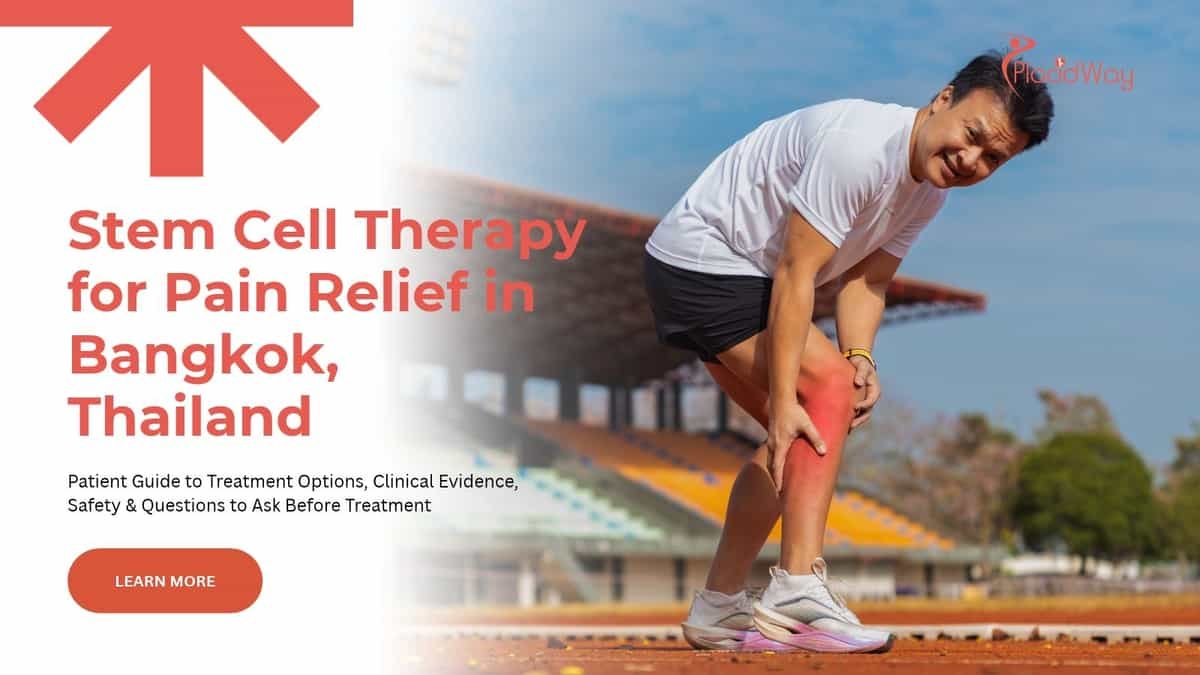
The quote is only the start. Here’s what to ask, what to check, and how to tell whether it makes sense for someone in your situation.
Margaret is 62, lives in Brisbane, and has had the same conversation with her knee every morning for three years. Stairs first thing are the worst. Her surgeon says the joint “isn’t bad enough yet” for a replacement. Her last cortisone injection bought her about six weeks.
So, like a lot of people in her position, she started reading about stem cell injections, and before long she had two quotes from clinics in Bangkok sitting in her inbox. One was nearly half the price of the other.
It took her a week, and a call with her daughter, to notice why. The cheaper quote never said where the cells came from, who would review her MRI, or what happened if she arrived and turned out not to be a good candidate.
That’s the real decision here. It’s rarely “Is stem cell therapy good?” It’s “Is this treatment, from this clinic, right for my knee — and what am I actually signing up for?” These are the nine questions that tend to separate a confident decision from an expensive guess.
Before you read: the honest picture
- What it is: an injection of processed cells (usually from your own bone marrow or fat, sometimes donated umbilical cord tissue) into a painful joint or tendon.
- Who usually asks about it: people with mild to moderate osteoarthritis or chronic tendon pain who want to put off surgery.
- What it isn’t: a guaranteed fix. Results vary a lot from person to person, and it’s unlikely to help much with severe, bone-on-bone damage.
- Typical procedure estimate in Bangkok: about US$4,100–$9,250 before travel,. This varies by clinic, cell source and case.
1. Is this an approved treatment for my condition in Thailand, or part of a study?
This is the question most people never think to ask, and it matters most. Thailand’s Medical Council has historically limited stem cell treatment outside a small number of established uses, with other uses expected to run under approved research protocols. The rules have changed over time, so don’t rely on an article (including this one) to tell you where things stand today.
2. Whose cells are these, and which lab processes them?
This was Margaret’s turning point. “Stem cell therapy” covers very different things. Autologous treatment uses cells taken from your own bone marrow or fat on the day, which avoids rejection but adds a harvesting step. Allogeneic treatment uses donated material, often umbilical cord tissue, which depends entirely on how carefully it was screened and processed. Two quotes can look alike and describe completely different procedures.
3. Who actually looked at my MRI and said I’m a candidate?
A fast “yes” feels reassuring, but it shouldn’t. Whether this is worth trying depends on how much cartilage you have left, where the damage is, your age and your overall health. A clinic that says yes before a specialist has reviewed recent imaging is telling you something about its process.
4. Who does the injection, and how do they guide the needle?
The injection is where precision matters. Ask whether an orthopaedic or sports-medicine specialist performs it themselves, and whether they use ultrasound or fluoroscopy to place it accurately.
5. What does the quote leave out?
Margaret’s cheaper quote was a procedure price. Her trip had a price too. Compare the whole journey, not the headline number.
For comparison
| Where | Typical procedure quote |
|---|---|
| Bangkok | About US$4,100–$9,250 before travel |
| Australia | Roughly US$7,500–$18,000 |
| United States | Often more than in Australia |
Estimates vary by clinic, cell source and case.
The gap is real, but it’s smaller than it first looks once flights, a week away and a companion are added. And it means nothing if the treatment isn’t right for your knee.
6. How many days should I stay before I fly home?
The injection itself is usually an outpatient procedure, so it’s tempting to book a quick trip. But the first few days usually mean rest and keeping weight off the joint. If cells are harvested from your hip or abdomen, that site will be sore too. A long-haul flight on a freshly treated knee is something to plan with your doctor, not around a cheap fare.
What the weeks after often look like
Days 1–3 (usually still in Bangkok): soreness and swelling at the injection site, rest, minimal weight-bearing. Clinics often advise avoiding anti-inflammatory painkillers, so ask what you can take.
Weeks 1–2: stiffness usually eases, with light walking and gentle stretching as advised.
Weeks 3–6: supervised physiotherapy gradually builds up activity.
Months 3–6: this is usually when people get a sense of whether it’s helping. Some notice a meaningful change, some a modest one, some none.
7. If my knee flares up after I get home, who do I call?
This is the question that matters most once you’re 7,000 kilometres away. Most injections settle without trouble. But a post-injection flare, or the rare sign of infection (a hot, red, increasingly painful joint, or fever), needs a fast answer. Picture it in advance: it’s 9 p.m. at home, your knee is swelling, and the clinic is in another time zone. Who answers?
8. What does “improvement” actually mean, and how will I know if it hasn’t worked?
The current thinking is that injected cells don’t simply turn into new cartilage. They release signals that may calm inflammation and support repair, a bit like a site manager directing the work rather than laying bricks. That’s also why results are slow and uneven. The research on knee osteoarthritis is still developing, and the treatment is not a cure for advanced joint damage.
9. What happens to my money if I arrive and I’m not a candidate?
Sometimes the in-person examination or new imaging changes the plan. That’s a sign of a careful clinic, not a failed trip. But you should know before you fly what you’d pay if treatment doesn’t go ahead, and what gets refunded.
The risks to weigh honestly
- Infection: rare, but any injection into a joint carries this risk. Strict sterile technique is essential.
- Post-injection flare: temporary swelling and pain for a few days.
- Harvest-site pain or bruising if your own cells are used.
- No meaningful benefit: a real possibility, especially with advanced damage.
- Uncertainty about donated or processed products when lab standards aren’t documented.
This treatment is generally not appropriate if you have an active infection, active cancer or a significant bleeding disorder. Tell the clinic about every medication and supplement you take.
So, does it make sense for you?
There isn’t a universal answer, and anyone who gives you one is selling something. For most people, the decision comes down to a few things: what your imaging shows, how clear the clinic is about the treatment’s status and cell source, the realistic total cost, and whether your after-care at home is properly arranged.
It may be worth exploring when…
- a specialist has reviewed recent imaging and says you have mild to moderate damage
- physiotherapy and other standard options haven’t given lasting relief
- the clinic is open about the treatment’s status, cell source and lab standards
- you can afford the whole trip, including the chance it won’t help.
It may not be the right step when…
- your joint is already bone-on-bone and a replacement is the realistic option
- a clinic promises results, or won’t put its answers in writing
- nobody at home is ready to support your follow-up care
- the money would leave you without a buffer if you still needed surgery.
Margaret didn’t book either quote straight away. She sent her nine questions to both clinics. One answered every question in writing, including the uncomfortable ones. The other replied with a discount. That told her most of what she needed to know.
Copy these into your email to any clinic
- Is this standard care or a research protocol for my condition in Thailand?
- What is the cell source, and which lab processes it?
- Which doctor reviewed my MRI, and what did they conclude?
- Who performs the injection, and is it image-guided?
- What exactly does the quote include and exclude?
- How many days should I stay before flying?
- Who is my after-care contact once I’m home?
- What would count as success for me, and when would we know?
- What are your refund terms if treatment doesn’t go ahead?
Not sure how to compare your quotes?
A PlacidWay patient coordinator can help you put these questions to licensed clinics and line up the answers side by side. There’s no cost and no obligation.
Talk to a Patient CoordinatorPlease note: Margaret is fictional, created to show situations patients commonly face. She is not real, and her story is not a testimonial. This guide is general information, not medical advice. Please talk to your own doctor before deciding on treatment or travel.
References
- Mayo Clinic — Stem cells: What they are and what they do
- International Society for Cell & Gene Therapy — Patient resources on unproven cell therapies
- Medical Council of Thailand
- Department of Health Service Support, Ministry of Public Health (Thailand) — Healthcare facility licence search
- U.S. Centers for Disease Control and Prevention — Medical Tourism
- U.S. Centers for Disease Control and Prevention — Health information for travelers to Thailand




























Share this listing