

Five entries · One treatment plan · More than one trip
All-on-4 in Los Algodones, Mexico: a patient diary
I’m the patient in this story, but I’m not one identifiable person. This is a composite diary built around the decisions a U.S. patient with extensive tooth loss might face. No interview, personal quotation, clinic visit, or treatment outcome was supplied for this page. My “then” is what I might have felt at each stage. My “now” is what I would want written down before making the trip.
I live in the Southwest. My dental coverage would not make a full-arch implant bill at home feel manageable. Los Algodones is close enough to reach through Yuma, Arizona, but close is not the same as simple. I would need a surgeon and restorative dentist I trust, a price that names the final teeth, and a workable plan for healing on both sides of the border.
The Decision
Then · The number on my screen
I had already learned that another patchwork repair would not settle the larger problem. Some teeth were missing, others were failing, and eating had become a series of small calculations. I was interested in fixed teeth, not because I expected a perfect result overnight, but because I wanted to ask whether my remaining teeth and bone could support a more stable plan.
The U.S. self-pay estimates I saw for implant-supported full-arch treatment were about $20,000–$35,000 per arch. My first reaction to a Los Algodones estimate of about $7,500–$13,500 per arch was relief. My second was suspicion. What, exactly, would I be paying for? If the first bridge was temporary, what would the permanent one cost? I could manage a planned expense better than a surprise halfway through treatment.
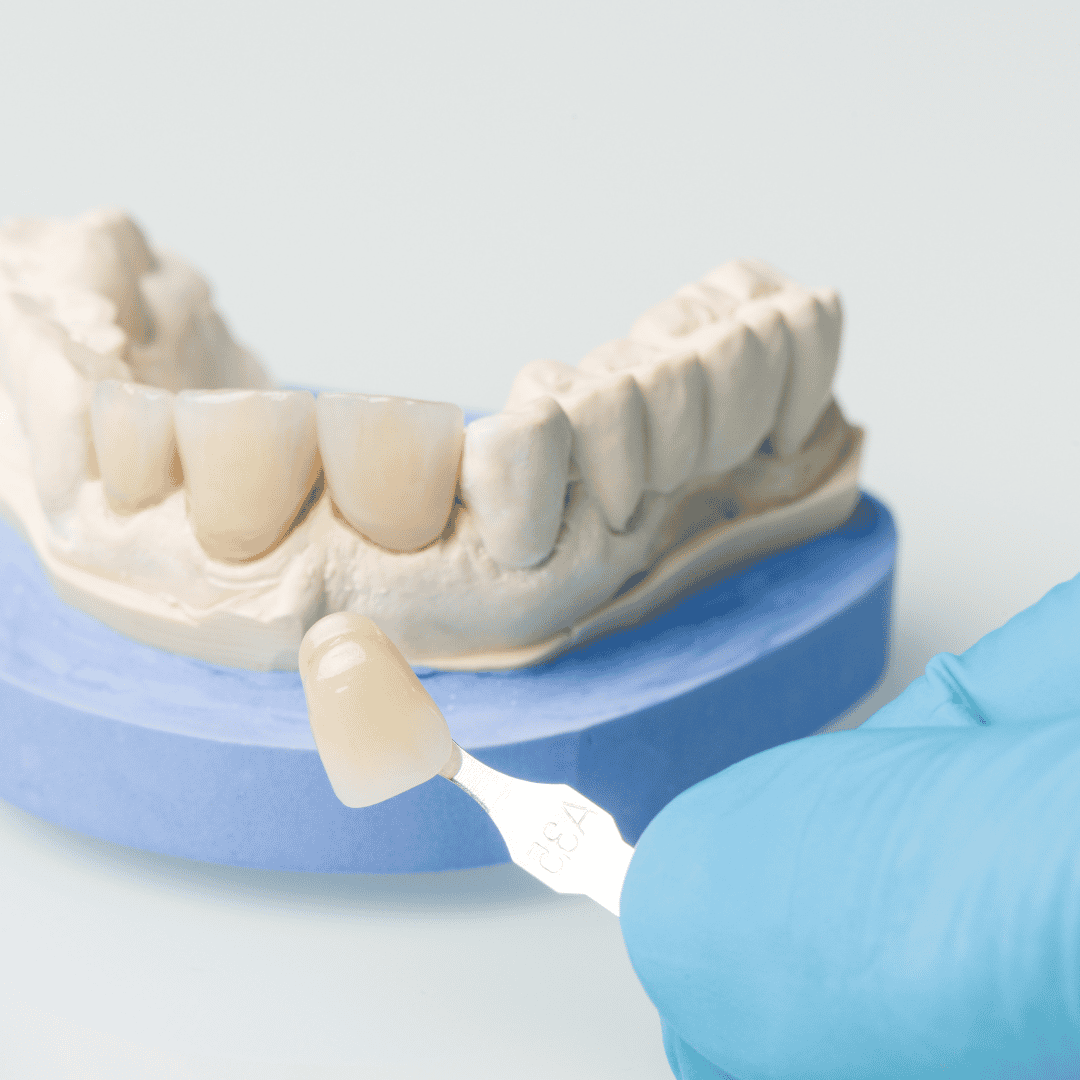
I also had to stop treating “All-on-4” as a shopping label. Four implants can support a fixed full-arch bridge for some patients, often with a temporary bridge during healing. That does not mean four implants are right for every jaw, that every patient leaves with fixed teeth immediately, or that the temporary and final bridges are the same thing.
Now · The questions I would send first
Before paying a deposit, I would request a consultation based on recent dental records and ask who would make the diagnosis, place the implants, and design and fit both bridges. I would ask for each clinician’s full name, professional license details, and training relevant to implant surgery or full-arch prosthodontics. In Mexico, I would ask how to verify a clinician’s cédula profesional. A clinic badge or a photograph of equipment would not answer those questions.
My next request would be an itemized, written estimate for one arch, with a separate figure if I needed both. It should say which implant system is proposed, how many implants are planned, what the temporary bridge is made of, what the definitive bridge is made of, and when each is expected. Extractions, bone grafting, imaging, sedation, medication, repairs, and additional visits should be identified as included, excluded, or dependent on the in-person examination.
I would keep my U.S. dentist in the conversation too. They could help me understand my records and tell me what follow-up they could realistically provide. I would not assume they were obligated to service a bridge or implant system chosen elsewhere.
Arrival
Then · A route that looked easy on a map
From Arizona, I would likely drive toward Yuma and use the Andrade crossing to enter Los Algodones. Someone coming from California might do much the same, while a traveler farther away might fly into the region and arrange a ride. I liked the idea of staying near the clinic. I also pictured myself walking back across the border right after surgery, carrying a bag and trying to remember medication instructions. That picture changed my travel plan.
I would leave room for a longer first visit than the procedure appointment alone. The clinic would still need to examine me, review imaging, confirm the plan, and explain any change in price. Border wait times and hours can change, and I would check them shortly before traveling rather than planning my departure around an old online estimate.
Now · Comfort is part of logistics
I would confirm who picks me up, where I sleep, and how I get back to the clinic if an adjustment is needed the next morning. If sedation is planned, I would ask the team what escort and supervision they require and arrange not to drive afterward. Even with local anesthesia alone, I would avoid a tight schedule that forces a long drive immediately after treatment.
For a U.S. citizen returning by land, an accepted travel document may include a passport book or passport card. Air travel has different document requirements, so I would check current U.S. Customs and Border Protection guidance for my route and citizenship. I would also confirm how to carry any prescribed medication and keep my clinic contact information available offline.
My bag would be ordinary: identification, records, a phone charger, comfortable clothes, and food options that fit the clinician’s instructions. The useful reservation is not necessarily the fanciest room. It is one that lets me rest, reach the clinic easily, and avoid an unnecessary rush through the border crossing.
Procedure Day
Then · My moment of doubt
The doubt would hit when the treatment plan became specific. Suppose new imaging showed that an extraction or graft might be needed, or that the surgeon could not promise a fixed temporary bridge on the surgery day. I would hear the change and think, Was the original quote only the easy version?
I would not want to agree to a different operation just because I had already crossed the border. This is where I would ask the clinician to slow down. Show me the imaging. Explain the available options, why the plan changed, what each option costs, and what happens if I wait. If the discussion were unclear, I would postpone a decision. Having room to pause is a form of control, not a failed trip.
My doubt would resolve only if the clinical explanation and revised written estimate made sense to me, and I had time to ask questions before signing consent. It would not be resolved by a promise that everything would be fine.
Now · What I would check before treatment begins
The clinical team should review my health history, medication list, allergies, smoking or nicotine use, and conditions that may affect healing. I would specifically disclose blood thinners, diabetes, medicines that affect bone, and any previous problems with anesthesia. I would not stop or change a medication on my own. That decision belongs with my prescribing clinician and the treating team.
I would ask how they use examination findings and appropriate imaging to assess bone, nerves, sinuses, remaining teeth, and bite. I would ask who performs the surgery, what infection-control practices are followed, what anesthesia or sedation is proposed, and how urgent concerns are handled after hours. Relevant training matters more to me than an impressive-sounding title alone.
If the plan went ahead, extractions and implant placement could be followed by a temporary fixed bridge when the implants have enough initial stability and the clinician judges it appropriate. Sometimes the temporary plan must change. I would want the team to explain what I am actually leaving with, how to clean it, and whom to call if it feels loose or my bite feels wrong.
Recovery
Then · Dinner required a new plan
I would expect some swelling, soreness, and tiredness after surgery, with the details depending on what was done and my health. I would also expect the first meals to be less interesting than the brochures suggest. A fixed temporary bridge would not mean I could test it with crunchy food. The implants need time to heal, and the provisional bridge needs protection while the team monitors my bite.
I would make the return trip only after the clinic had given me written instructions, medications if prescribed, an emergency contact, and a clear answer about the first check-up. If I had sedation, my escort plan would still matter. I would avoid making a long drive the measure of how well I was recovering.
Home
Then · The trip was over, not the treatment
Back in the United States, I would be relieved to sleep in my own bed. I might also find that the real test of a package is how well the next stage is organized. A temporary bridge can look and feel very different from the definitive bridge. Implant healing and the timing of the final restoration vary, often taking months. I would need to know who decides the implants are ready and how many return visits the final bridge requires.
That final stage may involve impressions or scans, a trial fitting, bite adjustments, and delivery of the definitive prosthesis. Zirconia, acrylic-based options, and other designs have different costs and maintenance considerations. Material alone does not tell me whether a bridge suits my bite or whether I can clean under it.
If a screw loosened or something chipped after I returned home, I would want a practical answer. Could my local dentist assess it? Would the Los Algodones clinic provide the implant-system details and speak with that dentist? Which repairs would require another border trip?
Now · The records I would bring back
Before leaving the clinic, I would ask for copies of my treatment and follow-up records in a format I can actually share. A verbal “call us if anything happens” is reassuring, but it cannot tell another dentist which component is in my mouth.
- The final treatment plan, consent forms, invoice, and an itemized record of what I paid.
- Implant brand, model, sizes, positions, and compatible prosthetic components.
- Relevant images, procedure notes, medication instructions, and the planned review schedule.
- The temporary and definitive bridge specifications, plus written warranty and repair terms.
- A named contact and a process for urgent questions from me or my U.S. dentist.
I would ask both teams what each can provide. A warranty may cover a particular component but not travel, routine maintenance, damage, or work performed by another dentist. I would read its conditions before counting it as part of the value.
The page behind my diary
What the quoted price would have to explain
I would compare prices only after putting the same treatment stages side by side. These are approximate advertised and self-pay ranges per arch, not offers from specific clinics or predictions of my bill. Clinical findings, implant systems, prosthesis materials, and the services included can change the total. I would confirm every figure directly with providers in a written quote.
| Location | Approximate price per arch | First inclusion to verify |
|---|---|---|
| Los Algodones, Mexico | $7,500–$13,500 | Often four implants, abutments, surgery, and a fixed temporary bridge. Is the definitive bridge included? |
| Tijuana, Mexico | $8,000–$14,000 | Check the final bridge, sedation, extractions, and grafting. |
| Cancún, Mexico | $9,000–$15,000 | Some packages include both bridges. Check accommodation and surgical extras. |
| Mexico City, Mexico | $9,000–$16,000 | Confirm bridge material and whether both treatment stages are priced. |
| San José, Costa Rica | $10,000–$16,000 | Check the final bridge and travel-related services. |
| United States | $20,000–$35,000 | A self-pay baseline. Imaging, extractions, grafting, sedation, and materials may add cost. |
My comparison would include the whole course of care: consultation and scans, treatment of failing teeth, surgery, temporary bridge, healing checks, definitive bridge, adjustments, and any likely return travel. For two arches, I would ask for a two-arch estimate rather than simply doubling the advertised one-arch figure. I would also ask about deposit and refund terms, payment timing, and the cost of a change discovered at the in-person examination.
Dental insurance may pay little or nothing toward implants, but I would still check my own policy for diagnostic, extraction, or other eligible benefits and ask what documentation an out-of-country claim requires. I would not subtract a possible reimbursement from my budget until the insurer confirmed it.
A note to myself before booking
A short drive is useful. A complete plan matters more.
If I compared Los Algodones with Tijuana, Cancún, Mexico City, or San José, I would not call the lowest number the winner. I would give the most attention to clinician qualifications and relevant accreditation, then to safety, diagnostics, and the treatment plan. I would put aftercare close behind. Total cost and price clarity, access from the United States, and package and warranty details would complete the picture.
For me, that order fits the stakes. A drive from Yuma can make a follow-up easier than a flight, but it cannot replace a clinician who answers questions clearly. Accreditation, where relevant, is worth verifying with its issuing body. It does not by itself establish that a particular surgeon or restorative dentist is experienced with my case.
I would ask how many visits are expected, which ones cannot be handled remotely, and what happens if healing takes longer. If I need both arches treated, I would ask whether staging the work changes my ability to eat and travel comfortably. Those answers would shape my time off, companion arrangements, and budget as much as the procedure price.
About this diary
This is a composite, not a record of one person’s treatment or a testimonial. It describes decisions and possibilities rather than promising an outcome. Prices are approximate. Only a qualified treating clinician can advise whether All-on-4 is suitable for you, what care you need, and when a definitive bridge may be fitted.















Share this listing