
Traveling across the border for an affordable Brazilian Butt Lift in Tijuana Mexico requires careful planning, especially when your body confidence and health are on the line. While lower treatment costs naturally draw many international patients, finding a clinic that genuinely prioritizes your safety means looking far beyond the price tag. You need to know exactly which local credentials matter, such as verifying COFEPRIS facility licenses and ensuring your plastic surgeon holds active CMCPER board certification.
- Estimated Cost: Typically ranges between $4,000 and $6,500 USD, depending on the extent of liposuction required.
- Safety Overview: Generally safe when performed by a board-certified surgeon using mandatory ultrasound-guided subcutaneous injection techniques.
- Ideal Candidate: Healthy individuals near their target weight with sufficient donor fat in the abdomen, flanks, or back.
- Recovery Time: About 2 to 3 weeks before returning to light activities, and 6 to 8 weeks before you can sit directly on your buttocks.
- Why Patients Choose Tijuana, Mexico: Easy access from the US border, significant financial savings, and a high concentration of specialized aesthetic surgeons.
- Important Credentials to Verify: Always confirm the surgeon is certified by the Mexican Council of Plastic, Aesthetic and Reconstructive Surgery (CMCPER) and the clinic holds a current COFEPRIS license.
Motivations for Pursuing Gluteal Enhancement Across the Border
Many individuals seek this procedure abroad because they desire body contouring improvements but find local healthcare pricing restrictive. When you consider surgical enhancements, balancing your aesthetic goals with practical financial realities often leads you to research international medical hubs. A Brazilian Butt Lift reshapes your body by removing unwanted fat from specific areas and transferring it to your gluteal region to enhance volume and projection.
Patients actively choose to travel southward for aesthetic contouring rather than undergoing surgery in their home countries for several highly specific reasons. Understanding these motivations can help you clarify your own decision-making process.
- Geographic Convenience: Patients from California, Arizona, and Nevada can simply drive across the border or take a short flight into San Diego.
- Surgical Specialization: The region hosts numerous plastic surgeons who perform a high volume of body contouring cases annually.
- Comprehensive Care Packages: Many clinics offer all-inclusive bundles that manage transportation, hotel stays, and aftercare nursing.
- Favorable Exchange Rates: The economic difference between USD and MXN allows patients to access premium facilities at a fraction of domestic costs.
- Advanced Safety Technologies: Top-tier clinics have rapidly adopted ultrasound-guided fat transfer to maximize patient safety.
Understanding the Surgical Process of Gluteal Fat Grafting
A Brazilian Butt Lift is a two-part surgical procedure that requires meticulous precision and anatomical knowledge. First, your surgeon performs liposuction to harvest excess fat from donor sites such as your abdomen, waist, back, or thighs. This step not only collects the necessary material but also sculpts your silhouette, making your new gluteal shape appear more pronounced.
After extraction, the fat undergoes a specialized purification process to isolate healthy, viable fat cells. Finally, the surgeon carefully injects these purified cells into the subcutaneous layers of your buttocks. Modern safety standards require this injection to remain above the gluteal muscle to prevent serious vascular complications.
Estimating the Cost of Treatment in Mexico
The total investment for your body contouring procedure depends heavily on your unique anatomy, the number of liposuction areas required, and the credentials of your chosen facility. While you can expect significant savings compared to North American pricing, it is critical to understand exactly what your surgical quote includes. Some clinics provide an itemized list, while others offer a comprehensive package.
When reviewing financial options, always ask your patient coordinator about hidden fees. You need to know if compression garments, lymphatic drainage massages, prescription medications, and overnight hospital stays are included in the upfront price.
| Country / Region | Estimated Average Cost (USD) | Typical Inclusions |
|---|---|---|
| Tijuana, Mexico | $4,000 - $6,500 | Surgeon fee, anesthesia, facility fee, 1-2 nights hotel |
| United States (Average) | $9,000 - $15,000 | Surgeon fee, anesthesia, facility fee only |
| Canada (Average) | $10,000 - $16,000 | Surgeon fee, anesthesia, facility fee only |
Never select a provider based solely on the lowest advertised price. Extreme discounts often indicate a lack of board certification, unaccredited operating rooms, or a high-volume "mill" approach that compromises patient safety. Always prioritize surgical credentials over budget.
Analyzing Patient Demographics for Cross-Border Aesthetic Care
Recent data indicates a steady demographic profile of individuals seeking body contouring procedures internationally. The majority of inbound patients arrive from the United States, specifically from states with higher living costs. Understanding who travels for these procedures can provide context for the clinical infrastructure that has developed in border cities.
Aesthetic surgery registries and recent academic studies from 2024 highlight that the typical patient is female, between the ages of 25 and 45, and motivated primarily by the combination of surgical expertise and accessible care. Below is a representation of recent age demographics for international patients pursuing aesthetic fat grafting.
Beyond age demographics, clinical motivations play a massive role in destination selection. Patients rank specialized surgical expertise and rapid access to care as their primary reasons for traveling. The following chart illustrates the weighted importance of clinical factors reported by patients in 2024.
Choosing Licensed Hospitals and Surgical Facilities
Selecting a safe environment for your surgery is just as vital as choosing the right surgeon. In Mexico, medical facilities are heavily regulated by the government, and international patients must know how to verify these regulations. You should never agree to surgery in a clinic that operates without official federal oversight.
The primary regulatory body you must look for is COFEPRIS (Comisión Federal para la Protección contra Riesgos Sanitarios). This acts as the Mexican equivalent of the FDA and Department of Health combined. A COFEPRIS license guarantees the clinic meets strict sterilization, emergency protocol, and structural requirements.
Facility Vetting Checklist
- Verify the physical display of the active COFEPRIS operating license in the clinic lobby.
- Check if the facility holds accreditation from the CSG (Consejo de Salubridad General), which marks national hospital excellence.
- Ensure the surgical center has an on-site Intensive Care Unit (ICU) or a documented rapid-transfer agreement with a nearby major hospital.
- Confirm that the facility uses FDA-approved or internationally recognized sterilization equipment.
- Ask if they provide a dedicated 24/7 medical response team for postoperative patients staying in recovery houses.
How to Verify Your Plastic Surgeon's Credentials
To protect your health, you must confirm that the person operating on you is a specialized plastic surgeon, not merely a doctor offering cosmetic procedures. Many complications in medical tourism arise when patients unknowingly book surgeries with underqualified practitioners. The credentialing system in Mexico is highly structured and easy to verify if you know the right acronyms.
Your surgeon must be board-certified by the CMCPER (Consejo Mexicano de Cirugía Plástica, Estética y Reconstructiva). This is the only board recognized by the Mexican government for plastic surgery. Furthermore, active membership in AMCPER (Asociación Mexicana de Cirugía Plástica, Estética y Reconstructiva) demonstrates an ongoing commitment to ethical practices and continuing medical education.
Do not accept certificates for "aesthetic medicine" or "cosmetic surgery" as equivalents to plastic surgery board certification. In Mexico, only CMCPER certification ensures the surgeon has completed the rigorous multi-year reconstructive and aesthetic residency required to perform complex body contouring safely.
Safety Protocols and Ultrasound-Guided Techniques
Safety protocols for gluteal fat grafting have evolved dramatically in recent years to mitigate severe risks. The most significant advancement in patient safety is the mandatory implementation of ultrasound-guided fat transfer. When researching clinics, you must specifically ask if they utilize real-time ultrasound during the injection phase.
Ultrasound technology allows the surgeon to visualize your anatomy beneath the skin. By seeing exactly where the cannula is placed, the surgeon ensures the fat is deposited safely into the subcutaneous tissue layer, far away from the deep gluteal veins. Injecting fat into or below the muscle carries a high risk of fat embolism, making ultrasound guidance an essential, non-negotiable safety standard for this procedure.
Surgeons rely entirely on physical feel to determine cannula depth. This older method carries a much higher risk of accidental intramuscular injection and vascular injury.
Surgeons use a live monitor to track the cannula tip. This modern standard drastically reduces the risk of fat entering the bloodstream, maximizing patient survival and safety.
Assessing Your Eligibility for Gluteal Fat Transfer
Not every patient seeking a larger gluteal profile is a suitable candidate for fat grafting. Your eligibility depends heavily on your overall health, your Body Mass Index (BMI), and the amount of harvestable fat available on your body. During your initial online or in-person consultation, your surgeon will evaluate your medical history to ensure you can safely undergo prolonged general anesthesia.
Ideal candidates generally have a BMI between 22 and 30. If your BMI is too low, you may not have enough donor fat to achieve a significant augmentation, and your doctor may recommend gluteal implants instead. Conversely, if your BMI exceeds 30 or 32, many accredited clinics will decline the surgery due to increased anesthesia and recovery risks.
| Suitability Factor | Favorable Indicators | Contraindications |
|---|---|---|
| Body Mass Index | Stable BMI between 22 and 30 | BMI below 20 or above 32 |
| Lifestyle Habits | Non-smoker, active lifestyle | Active nicotine use, sedentary |
| Medical History | No bleeding disorders or cardiac issues | Unmanaged diabetes, severe anemia |
Preparing for Your Surgery Across the Border
Proper preparation minimizes stress and dramatically improves your surgical outcome. Once you select a verified clinic in Tijuana, your focus should shift to logistical and medical preparation. Your surgeon will require routine preoperative blood work, an EKG, and potentially medical clearance from your primary care physician back home.
Traveling requires coordination. Most patients choose to fly into San Diego International Airport (SAN). From there, reputable clinics provide a medical shuttle service that drives you directly across the border via the designated medical lane, bypassing the long tourist traffic lines. You must bring your valid passport and arrange for a support person to assist you during the initial days of recovery.
30 Days Before Surgery
Stop taking all blood-thinning medications, ibuprofen, aspirin, and specific herbal supplements. Completely cease smoking and nicotine use, as nicotine severely restricts blood flow and can cause the transferred fat cells to die.
7 Days Before Surgery
Confirm your travel arrangements, pack loose-fitting clothing, purchase any required postoperative supplies (like a specialized BBL pillow), and ensure your preoperative lab results have been securely sent to your surgical team.
Detailed Recovery Timeline and Expectations
Healing from a body contouring procedure is a gradual process that demands patience and strict adherence to your surgeon's aftercare instructions. The survival of your transferred fat cells depends entirely on how you treat your body during the first six weeks. Blood supply must connect to the newly grafted fat, and any direct pressure can crush these delicate cells.
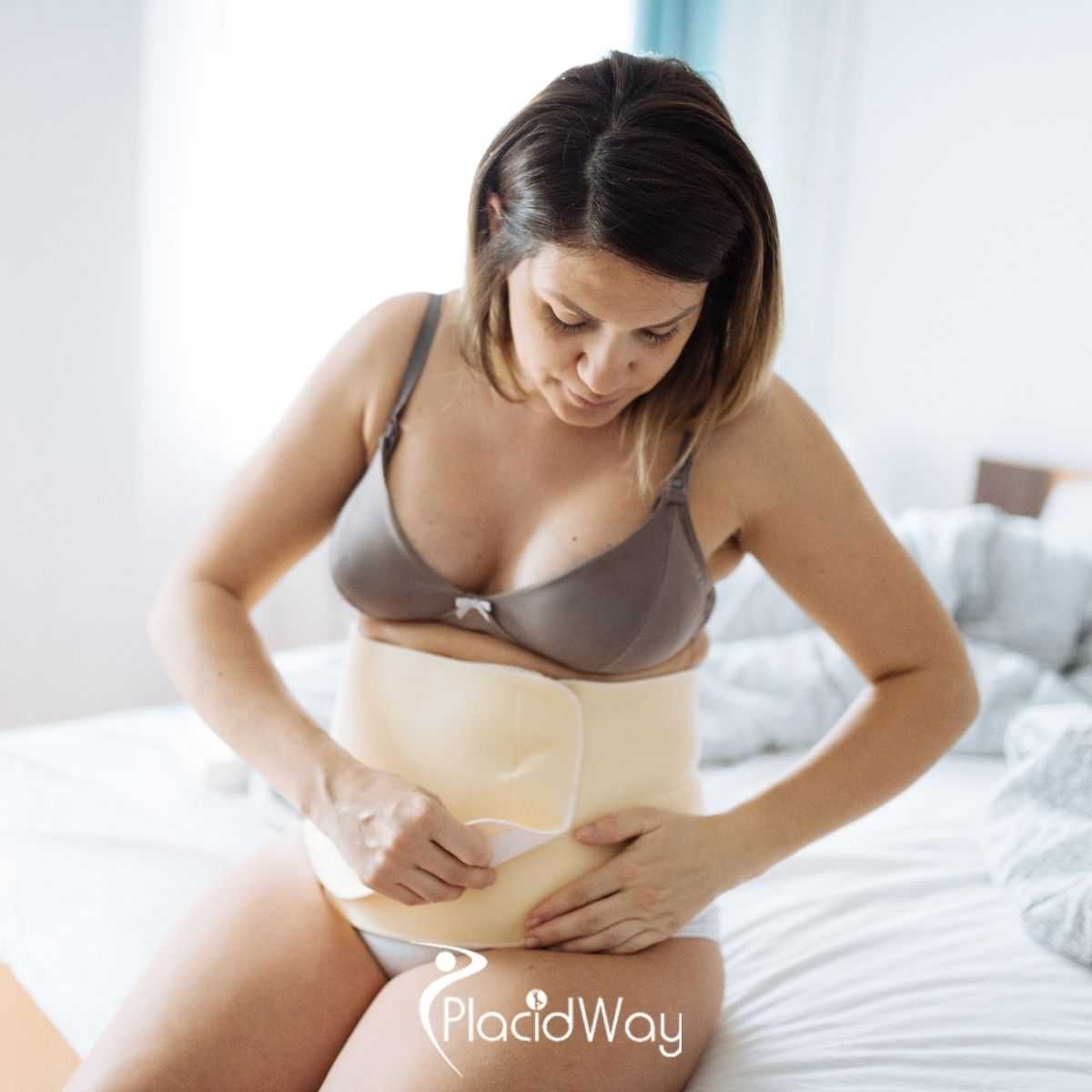
You will experience swelling, bruising, and soreness in both the liposuction donor areas and your gluteal region. You will be required to wear a specialized compression garment (faja) around the clock to minimize swelling and help your skin retract smoothly over your new contours.
| Timeframe | Biological Process | Action Required |
|---|---|---|
| Days 1-3 | Acute inflammation and fluid drainage. | Rest entirely. Sleep on your stomach. Manage drains if placed. |
| Weeks 1-2 | Initial blood supply forms around fat cells. | No direct sitting. Begin light, short walks to prevent blood clots. |
| Weeks 3-6 | Swelling subsides; fat graft stabilizes. | Use a specialized pillow for brief sitting. Continue wearing compression garment. |
| Months 3-6 | Final retention rate is established (typically 60-80%). | Resume all normal activities and heavy lifting as cleared by your doctor. |
Managing Risks and Potential Complications
No surgical procedure is devoid of risk, and international patients must be prepared for the possibility of medical complications. While choosing a board-certified CMCPER surgeon greatly mitigates danger, you still need to understand what can happen and how it is managed. Open communication with your surgical team is vital for early intervention.
Common, manageable issues include fluid buildup (seromas), minor asymmetry, and partial fat necrosis where some injected fat does not survive. More severe risks include infection, deep vein thrombosis (DVT), and the highly dangerous fat embolism. Ensure your clinic provides you with a clear, written protocol detailing how they handle emergencies and whether they cover the cost of revision surgeries.
Protect yourself by securing medical complications insurance before you travel. Many standard health insurance policies in the US and Canada explicitly deny coverage for complications arising from elective cosmetic surgery performed abroad.
Long-Term Results and Aftercare Maintenance
Achieving your aesthetic goals requires a long-term commitment to your health. The fat cells that survive the transfer process will behave exactly like normal fat tissue. This means your surgical results are heavily influenced by your future lifestyle choices and weight fluctuations.
To preserve your new body contours, you must maintain a stable weight. Significant weight gain can cause the transferred fat cells to expand unevenly, while dramatic weight loss can shrink the gluteal volume, diminishing the surgical enhancement. Committing to a balanced diet and a consistent fitness routine—incorporating lower-body strength training once medically cleared—will help you sustain your results for years to come.
Frequently Asked Questions
How much does a Brazilian Butt Lift cost in Tijuana, Mexico?
The estimated cost typically ranges from $4,000 to $6,500 USD. This price usually includes the surgeon's fee, anesthesia, facility costs, and often a short hotel stay. However, prices vary based on the patient's anatomy and the clinic's credentials.
Is it safe to get a gluteal fat transfer in Mexico?
It can be safe if you select a facility licensed by COFEPRIS and a surgeon board-certified by CMCPER. You must also ensure the surgeon uses ultrasound-guided injection techniques to prevent severe vascular complications.
What is the required BMI for this procedure?
Most board-certified surgeons require patients to have a stable Body Mass Index (BMI) between 22 and 30. A BMI outside this range may increase surgical risks or result in inadequate donor fat for a noticeable enhancement.
How soon can I sit down after the surgery?
You must avoid sitting directly on your buttocks for at least 6 to 8 weeks. When sitting is absolutely necessary, you must use a specialized support pillow that shifts pressure to your thighs.
What is CMCPER certification?
CMCPER stands for the Mexican Council of Plastic, Aesthetic and Reconstructive Surgery. It is the only official government-recognized board ensuring a doctor has completed specialized plastic surgery training.
Will I have visible scars after the liposuction?
Surgeons use very small cannulas, resulting in minor incisions that typically fade over time. These small scars are strategically placed in natural body creases or easily concealable areas.
How much of the transferred fat survives?
Typically, between 60% and 80% of the injected fat will survive and permanently integrate into the tissue. Following strict postoperative guidelines maximizes this retention rate.
Do clinics in Tijuana provide airport transportation?
Yes, many reputable medical tourism clinics provide private, medically equipped shuttles that pick patients up from San Diego International Airport and utilize expedited medical border lanes.
Why is ultrasound guidance necessary for fat transfer?
Ultrasound allows the surgeon to see the cannula tip in real-time, ensuring fat is injected only into the safe subcutaneous space and not into the gluteal muscle, which prevents fatal fat embolisms.
Can I lose the results if I lose weight?
Yes. The grafted fat cells function like normal body fat. Significant weight loss will cause these cells to shrink, which can alter and diminish your enhanced gluteal contour.
Ready to Explore Your Options Safely?
PlacidWay can help you compare certified providers, understand transparent treatment costs, and request essential credential information directly from top-rated clinics in Tijuana.
Request Free Information
Disclaimer: This information is for educational purposes only and does not replace professional medical advice. Always consult a qualified healthcare provider before making medical decisions.
References
- Urgent Safety Warning on Gluteal Fat Grafting – American Society of Plastic Surgeons (ASPS)
- Official Board Certified Surgeon Directory – Consejo Mexicano de Cirugía Plástica, Estética y Reconstructiva (CMCPER)
- National Health Regulation Guidelines – Comisión Federal para la Protección contra Riesgos Sanitarios (COFEPRIS)
- Ultrasound-Assisted Gluteal Fat Grafting Safety Protocols (2024) – Aesthetic Surgery Journal
- Global Survey on Aesthetic/Cosmetic Procedures – International Society of Aesthetic Plastic Surgery (ISAPS)
- Medical Tourism Patient Guidance – Centers for Disease Control and Prevention (CDC)
- Analysis of Cross-Border Aesthetic Surgery Demographics and Patient Motivations (2024) – National Library of Medicine (PubMed)




















Share this listing