


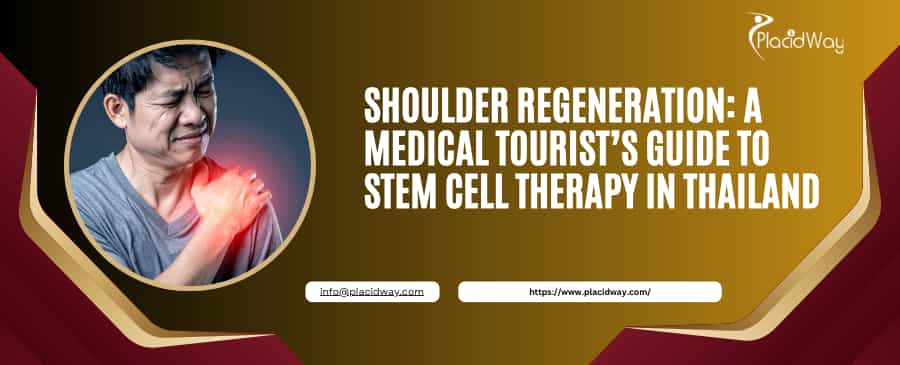
Shoulder pain stemming from chronic conditions like osteoarthritis or injuries such as rotator cuff tears can drastically limit quality of life. For patients worldwide seeking effective, non-surgical alternatives to traditional joint replacement or extensive arthroscopy, Shoulder Regeneration Stem Cell Therapy in Thailand has emerged as a globally recognized solution. Known for its world-class, JCI-accredited hospitals and significant cost savings, cities like Bangkok and Phuket are at the forefront of regenerative medicine. This guide provides an in-depth look at what to expect, from procedures and recovery to costs and safety.
Key Takeaways
-
Thailand offers a compelling combination of high-standard medical care, cutting-edge regenerative protocols (using autologous MSCs), and substantial cost savings for international patients.
-
Stem cell therapy for shoulder injuries is a minimally invasive procedure that aims to regenerate damaged tissue, reduce chronic inflammation, and restore natural function, often providing an effective alternative to invasive surgery.
-
Patients seeking shoulder stem cell treatment in Bangkok or Phuket can expect packages that include consultation, cell harvesting/processing, and the injection procedure, with total costs ranging significantly lower than in Western nations.
|
Procedure (Orthopedic Regeneration) |
Average Cost in Thailand (USD) |
Potential Savings vs. US/EU |
|---|---|---|
|
Single Shoulder Stem Cell Injection |
$3,000 – $6,500 |
50% – 70% |
|
Comprehensive Multi-Session Protocol |
$8,000 – $12,000+ |
Up to 60% |
|
Stem Cell Therapy (Korea) |
$8,500 – $15,000 |
30% – 50% |
|
Stem Cell Therapy (Mexico) |
$5,000 – $11,000 |
40% – 65% |
The Promise of Regenerative Medicine for Shoulder Injuries
Regenerative therapy uses your body’s own healing mechanisms to repair and rebuild damaged tissue in the shoulder joint, offering a non-surgical solution for conditions like partial rotator cuff tears and osteoarthritis.
Stem cell therapy for the shoulder is a revolutionary approach in regenerative medicine. Instead of masking pain with medication or mechanically repairing damage through surgery, this treatment focuses on initiating the body’s own natural healing cascade. By harvesting potent mesenchymal stem cells (MSCs)—typically from the patient’s own bone marrow (BMA) or adipose (fat) tissue—and injecting them directly into the injured area, doctors aim to accelerate tissue repair and regeneration.
This treatment is increasingly popular for patients suffering from:
-
Rotator Cuff Tendinopathy and Partial Tears: Stimulating the tendon to heal and integrate more robustly.
-
Shoulder Osteoarthritis: Helping to regenerate cartilage and reduce the painful bone-on-bone friction.
-
Labral Tears and Ligament Sprains: Accelerating the healing of soft tissue structures that contribute to shoulder stability.
-
Chronic Shoulder Pain: Addressing underlying inflammation and promoting the long-term health of the joint structure.
The core benefit is the potential for tissue regeneration, which offers a long-term structural solution rather than just temporary symptom relief.
Did You Know?
The shoulder joint, or glenohumeral joint, is the body’s most mobile joint, making it highly susceptible to wear and tear. This high mobility is why traditional surgical repairs often face complex challenges in achieving full, long-lasting functional restoration—a gap regenerative treatments are designed to fill.
Candidacy and Diagnosis for Stem Cell Treatment
The ideal candidates for regenerative shoulder treatment are those with mild to moderate joint damage, partial rotator cuff tears, or chronic pain who wish to avoid invasive surgical procedures.
Determining if you are a suitable candidate is the critical first step in your medical tourism Thailand journey. While stem cell therapy is not a miracle cure for all conditions, it proves highly effective for a specific patient profile.
Ideal Patient Profile
Stem cell protocols are most effective for:
-
Individuals with mild to moderate degenerative joint disease (osteoarthritis).
-
Patients with partial rotator cuff tears (full, massive tears often still require surgical intervention).
-
Those who have failed to find relief with conservative treatments such as physical therapy, anti-inflammatory medications, or corticosteroid injections.
-
Active individuals seeking a minimal downtime solution to quickly return to sports or an active lifestyle.
Diagnostic Requirements
Before committing to travel and treatment at an advanced clinic in Bangkok or Phuket, your medical profile must be thoroughly reviewed. PlacidWay facilitates this entire process. Key diagnostic requirements include:
-
Recent MRI or Ultrasound: Essential for visualizing the extent of soft tissue damage (tendons, ligaments, labrum) and cartilage loss.
-
X-rays: To assess bone structure, joint spacing, and the severity of shoulder arthritis.
-
Blood Work: To confirm the patient’s overall health and rule out any infectious or autoimmune conditions that might complicate the procedure.
Expert Insight: Thai regenerative specialists often prefer autologous mesenchymal stem cells (MSCs) harvested from the patient's own body (bone marrow or fat). This practice virtually eliminates the risk of immune rejection, making the procedure significantly safer and more personalized.
The Stem Cell Therapy Process in Thailand
The process is typically completed in 1-3 days and involves three core steps: cell harvesting, laboratory processing/concentration, and the precise, image-guided injection into the affected shoulder joint.
The procedure is highly specialized and is performed by expert orthopedic surgeons or regenerative medicine physicians in state-of-the-art facilities across Thailand, particularly in medical hubs like Bangkok and Chiang Mai.
Preparation and Consultation
Your medical journey begins with a detailed, in-person consultation at the chosen Thai clinic, such as the Regeneration Center Bangkok. The specialist will confirm the diagnosis, outline the exact treatment protocol (e.g., adipose-derived stem cells (ADSC) or bone marrow aspirate concentrate (BMAC)), and discuss expected outcomes.
Cell Harvesting (The Aspiration)
This is the first major step and is performed under local anesthesia to ensure patient comfort.
-
Bone Marrow Aspirate (BMA): The cells are usually harvested from the posterior iliac crest (hip bone). This site is rich in both hematopoietic and mesenchymal stem cells.
-
Adipose Tissue: Cells are harvested from a small amount of fat, typically from the abdomen or flank, via a mini-liposuction procedure.
Laboratory Processing and Concentration
The harvested tissue is transported to an on-site, certified laboratory (often Good Manufacturing Practice or GMP-certified). Using advanced centrifugation and processing techniques, the stem cells and growth factors are isolated, concentrated, and activated. This concentrated solution, often involving several million viable stem cells, is the potent healing agent.
Precision Injection (The Regeneration)
This is the final, crucial step. The highly concentrated cell solution is injected directly into the damaged area—whether it is a torn rotator cuff tendon, the glenoid labrum, or the arthritic joint space.
-
Image Guidance: To ensure pin-point accuracy, the injection is almost always performed under continuous ultrasound guidance or fluoroscopy. This precision is essential for maximizing the therapy's effectiveness.
-
Minimal Downtime: The entire injection procedure itself is minimally invasive and requires no general anesthesia, allowing the patient to walk out shortly after treatment.
Recovery and Long-Term Results
Initial recovery is rapid, with most patients returning to light daily activities within 24-48 hours, though the biological process of tissue repair and pain reduction takes 6 to 12 weeks to show significant results.
One of the greatest advantages of regenerative therapy over surgery is the significantly shorter and easier recovery period. Patients traveling for shoulder stem cell treatment in Thailand appreciate the ability to enjoy their trip soon after the procedure.
Immediate Aftercare and Initial Healing (0-2 Weeks)
-
Rest: The patient is advised to limit vigorous use of the treated shoulder for the first few days.
-
Soreness: Mild swelling, stiffness, or soreness at both the injection site and the harvest site (hip/abdomen) is common and temporary.
-
Activity: Light walking and non-strenuous activities are generally encouraged. Avoid heavy lifting and intense exercise.
Tissue Regeneration Phase (2-12 Weeks)
This is when the implanted stem cells begin their work, reducing chronic inflammation and differentiating into the needed cell types (e.g., cartilage, tendon, or ligament cells).
-
Pain Reduction: Most patients start reporting noticeable pain relief and improved range of motion within 4 to 8 weeks.
-
Physical Therapy: A personalized, gentle physical therapy regimen is often recommended to support the healing tissue and safely rebuild strength. Many clinics in Phuket and Pattaya offer integrated rehab services.
Longevity of Results
While results vary based on the initial severity of the condition and the patient’s adherence to the recovery plan, the regenerative effects are generally long-lasting.
-
Duration: Many studies suggest that the pain relief and functional improvement can last between 18 months to 2 years or more after a single session.
-
Sustained Benefit: Younger, healthier patients with less severe damage tend to experience longer-lasting results. Follow-up treatments may be necessary for patients with severe, advanced shoulder joint degeneration.
Cost Analysis and Packages for Stem Cell Therapy in Thailand (H2)
The cost of a single-session shoulder stem cell protocol in Thailand typically ranges from $3,000 to $6,500, representing savings of 50-70% compared to equivalent procedures in the United States, which often exceed $15,000.
Thailand’s medical tourism infrastructure allows world-class orthopedic regenerative treatments to be offered at highly competitive prices. The lower operational costs do not reflect a lower quality of care but rather an efficient, competitive healthcare market. For those seeking affordable shoulder joint repair Bangkok, Thailand is the prime choice.
Factors Influencing the Final Cost
-
Type of Stem Cell Protocol: BMAC (Bone Marrow) is often priced differently than ADSC (Adipose). Allogeneic treatments (less common for orthopedics) may also vary.
-
Severity of Condition: More severe damage may require a higher concentration of cells or a multi-session protocol, increasing the overall expense.
-
Clinic Location and Reputation: Premier, JCI-accredited hospitals in Bangkok, such as Bumrungrad or Samitivej, often charge a premium compared to specialized clinics in Chiang Mai or Pattaya, though quality remains high across the board.
-
Package Inclusions: Does the quoted price include post-procedure medication, follow-up consultations, physical therapy sessions, and translator services?
Detailed Cost Comparison Table: Stem Cell Shoulder Regeneration
|
Component / Location |
Thailand (Bangkok/Phuket) Price (USD) |
Turkey (Istanbul/Izmir) Price (USD) |
USA (Average, Uninsured) Price (USD) |
|---|---|---|---|
|
Stem Cell Therapy (Single Shoulder) |
$3,000 – $6,500 |
$4,500 – $9,000 |
$15,000 – $25,000+ |
|
Consultation & Diagnostics |
$200 – $400 (often included) |
$300 – $600 |
$500 – $1,500 |
|
Cell Harvesting & Processing |
Included in main price |
Included in main price |
$5,000 – $10,000 (separate) |
|
Ultrasound/Fluoroscopy Guidance |
Included in main price |
Included in main price |
$1,000 – $3,000 |
|
Total Estimated Savings |
50% to 70% |
40% to 60% |
N/A |
Safety, Risks, and Thai Regulation (H2)
Stem cell therapy for shoulder injuries is generally considered safe, particularly when utilizing autologous (the patient’s own) mesenchymal stem cells which minimizes risks like immune rejection or disease transmission.
While highly effective, it is vital to understand the safety profile and potential, albeit rare, risks associated with regenerative medicine. Thailand's leading clinics adhere to strict international standards to minimize complications.
Common and Minor Side Effects
Since the procedure is minimally invasive, using your own cells, the most common adverse events are temporary and localized:
-
Injection Site Pain: Mild pain, bruising, or swelling at the injection site (the shoulder).
-
Harvest Site Discomfort: Temporary soreness or discomfort where the bone marrow or fat tissue was aspirated.
-
Fatigue or Low Fever: Rare, transient systemic symptoms resolving within 24-48 hours.
Minimizing Serious Risks
Serious risks like infection, bleeding, or nerve damage are exceedingly rare when the procedure is performed by a qualified physician using image guidance in a sterile hospital or clinic environment.
It is crucial for medical tourists to choose reputable facilities that strictly adhere to ethical regenerative protocols. The lowest price should never outweigh the need for JCI accreditation, board-certified specialists, and transparent reporting on cell processing and viability. The use of highly manipulated, non-autologous cells, which carries higher risks of complications including tumor formation, is generally avoided by top Thai regenerative clinics for orthopedic applications.
Why Choose PlacidWay for Your Shoulder Regeneration Journey (H2)
PlacidWay simplifies your medical journey by connecting you with rigorously vetted, JCI-accredited clinics in Thailand, ensuring transparency in pricing, personalized treatment plans, and seamless travel logistics.
Choosing to travel abroad for a complex medical procedure requires trust and expert coordination. PlacidWay acts as your dedicated partner, establishing a unique value proposition that goes far beyond simply comparing prices. We focus on delivering a safe, successful, and stress-free treatment experience.
Our Unique Value Proposition
-
Vetted Thai Specialists: We partner exclusively with leading orthopedic and regenerative experts in Thailand, ensuring your treatment is supervised by physicians with extensive experience in joint regeneration.
-
Transparent Price Comparison: Unlike competitors, PlacidWay provides clear, upfront pricing for shoulder stem cell Bangkok packages, allowing you to easily compare the value against other global destinations like Turkey or Mexico.
-
Seamless Travel Logistics: From arranging initial virtual consultations to coordinating airport transfers, accommodation, and interpreter services in cities like Phuket, we manage the complexity of medical tourism so you can focus entirely on your recovery.
-
Case Management: Your dedicated PlacidWay case manager handles all communication between you and the Thai clinic, ensuring no critical medical details are lost in translation or time zone differences.
Frequently Asked Questions (FAQ)
Is stem cell therapy a guaranteed cure for my rotator cuff tear or arthritis?
Stem cell therapy is not a guaranteed cure, but it is a highly effective regenerative treatment. It significantly reduces pain and inflammation and promotes the repair of damaged tissue in cases of partial rotator cuff tears or mild to moderate osteoarthritis. Success rates are generally high for appropriate candidates, but they depend on the severity of the injury and the patient’s overall health.
How long is the entire process and how many days should I stay in Thailand?
The actual procedure (harvesting and injection) typically takes less than a day. However, it is highly recommended to plan for a 3- to 5-day stay in Bangkok or Phuket. This allows time for the initial consultation, diagnostics, the procedure itself, and a crucial post-procedure follow-up to ensure initial healing is on track before traveling home.
What is the difference between PRP and stem cell therapy for shoulder pain?
Platelet-Rich Plasma (PRP) uses concentrated platelets, which are rich in growth factors to signal and accelerate healing. Stem Cell Therapy (using MSCs) goes further by providing the actual building blocks—undifferentiated cells—that can differentiate into new tissue (like cartilage or tendon cells), making it generally preferred for more significant structural damage.
Is it safe to use umbilical cord stem cells (UC-MSCs) for shoulder regeneration in Thailand?
Many top Thai stem cell clinics utilize Umbilical Cord Mesenchymal Stem Cells (UC-MSCs) because they are highly potent and readily available. When sourced from ethically screened, certified labs and administered under strict protocols, UC-MSCs are considered safe. However, most orthopedic experts prefer the patient's own autologous cells (BMAC or ADSC) for orthopedic procedures to eliminate any risk of immune reaction.
Can stem cell therapy help me avoid major shoulder surgery?
A: Yes, for many patients with chronic tendonitis, ligament sprains, or partial tears, stem cell therapy offers a definitive non-surgical path that can prevent the need for future invasive surgeries like total joint replacement or complex rotator cuff repair. Consultation with a specialist is required to confirm if your condition qualifies for surgical avoidance.
Will my health insurance cover the cost of stem cell therapy in Thailand?
In most cases, stem cell therapy for orthopedic conditions is considered elective or experimental by US and European insurance companies, and therefore is not covered. This lack of coverage is why seeking high-quality, cost-effective stem cell treatment in Thailand is often the most financially viable option for international patients.
Ready to Regain Shoulder Mobility and Live Pain-Free?
Don't let chronic shoulder pain hold you back. Begin your journey toward regenerative healing with a trusted partner.
Contact PlacidWay today to receive a personalized, no-obligation quote and a detailed treatment plan from our network of pre-vetted, top-tier Shoulder Regeneration Stem Cell Clinics in Thailand.

.png)





.png)

-Patients-Are-Traveling-to-Bangkok-for-UC-MSC-Autoimmune-Stem-Cell-Therapy.png)









Share this listing