


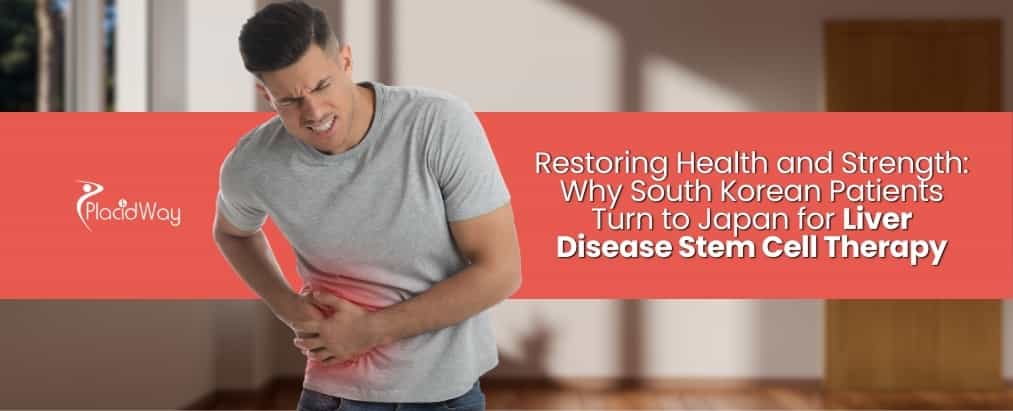
For South Korean patients seeking advanced options to manage chronic liver conditions, liver disease stem cell therapy in Japan has become an increasingly appealing choice. Japan’s regenerative centers use highly refined stem cell protocols designed to reduce liver inflammation, support the repair of damaged tissue, and enhance overall liver function.
With strict medical regulations, state-of-the-art technology, and specialists experienced in treating complex liver disorders, Japan offers a level of precision and reliability that motivates many Korean patients to travel abroad for care.
Key Takeaways
-
Regulatory Distinction: While South Korea (K-FDA) is a leader in stem cell commercialization, Japan's Act on the Safety of Regenerative Medicine (ASRM) provides a highly structured, government-vetted pathway for ex-vivo expansion (culturing) of cells for complex systemic diseases like liver cirrhosis.
-
Cost Efficiency: Japan offers superior value for high-dose, regulated therapy. Packages range from $12,500 – $25,000 USD (approx. ?16.5M – ?33M KRW), which can be more competitive than equivalent protocols in major South Korean private hospitals ($18,000 – $33,000+ USD).
-
Treatment Focus: The therapy targets chronic liver conditions (Cirrhosis, NASH) by promoting anti-fibrotic action, reducing inflammation, and encouraging hepatocyte (liver cell) regeneration.
-
Logistics: The short 2–3 hour direct flight from Seoul (ICN) to Tokyo (NRT/HND) makes the typically two-visit protocol simple and stress-free for Korean patients.
Why Japan? The ASRM and Cell Culture Advantage
Japan's legal framework allows for the production of highly potent, high-dose stem cell products that are often restricted for commercial use in other advanced markets.
South Korea and Japan are fierce competitors in biotech, but their regulatory approaches differ. For non-hematological conditions like liver failure, Japan's ASRM is designed to accelerate safe patient access to high-potency treatments.
The Superiority of Cultured Cells
The core difference lies in cell dosage. For complex organ damage characterized by widespread scarring (fibrosis), a high number of active Mesenchymal Stem Cells (MSCs) are needed to signal repair effectively.
|
Feature |
Japan (ASRM) |
South Korea (K-FDA/MFDS) |
|---|---|---|
|
Cell Expansion |
Legally permitted under MHLW inspection (Cell Processing Centers - CPCs). |
Highly regulated; more restricted for commercial off-label use. |
|
Typical Dosage |
High (100 million – 300 million MSCs). |
Varies; often lower cell counts or investigational. |
|
Regulatory Oversight |
Government-vetted treatment protocols. |
Varies widely depending on the cell product's classification. |
Targeted Liver Conditions and Protocols
Stem cell therapy is utilized to stabilize liver function and delay the need for life-saving, but complex, liver transplantation.
1. Liver Cirrhosis (???)
Cirrhosis is the advanced stage of liver disease characterized by irreversible scarring (fibrosis).
-
Goal: MSCs release factors that actively degrade scar tissue and promote the regeneration of healthy liver cells (hepatocytes).
2. Chronic Hepatitis & NASH (Non-Alcoholic Steatohepatitis)
-
Goal: Reduce chronic inflammation and fibrosis stemming from viral (Hepatitis B/C) or lifestyle-related (NASH) damage, preventing progression to cirrhosis.
Administration Methods
Due to the critical nature of the organ, Japanese protocols utilize precise delivery methods:
-
Intravenous (IV) Infusion: The most common systemic route, allowing MSCs to home to inflamed areas of the liver.
-
Intra-Arterial/Intrahepatic: (More specialized) Cells are infused directly into the hepatic artery or portal vein, offering localized delivery to maximize concentration within the liver tissue.
The Treatment Protocol: Two Visits from Seoul
Because the stem cells must be grown to high numbers, the procedure requires two short trips to Japan.
Visit 1: Harvesting and Screening (2 Days)
-
Consultation: A specialist reviews the patient's liver health status, usually based on recent Korean imaging and lab results (FibroScan, MELD score, platelet count).
-
Cell Collection: A minimally invasive mini-liposuction procedure is performed under local anesthesia to collect Adipose-Derived MSCs (or Bone Marrow).
-
Culturing (4–6 Weeks): The patient returns to Seoul while the cells are expanded to therapeutic numbers in the Japanese CPC.
Visit 2: Infusion and Post-Care (2–3 Days)
-
Return to Japan: The patient travels back for the infusion.
-
Procedure: High-dose MSCs are administered via IV or direct arterial route.
-
Observation: Short post-procedure monitoring. Patients are provided with a comprehensive follow-up plan to continue working with their Korean hepatologist.
Cost Comparison: Japan vs. South Korea (KRW)
While South Korea has high-tech medical centers, Japanese clinics often offer better prices for the specialized cell expansion required for liver treatments.
Understanding the cost of liver disease stem cell therapy in Japan is an important part of planning treatment for South Korean patients considering care abroad.
|
Destination |
Procedure (Systemic Liver Protocol) |
Est. Cost (USD) |
Est. Cost (KRW) |
Note |
|---|---|---|---|---|
|
Japan (Tokyo/Osaka) |
Cultured MSC Infusion |
$12,500 – $25,000 |
?16.5M – ?33M |
High-dose, MHLW-regulated cells. |
|
South Korea (Seoul) |
Advanced Regenerative Protocol |
$18,000 – $33,000 |
?24M – ?44M |
High cost, often integrated with complex hospital care. |
|
Turkey (Istanbul) |
MSC Infusion Package |
$10,000 – $20,000 |
?13.5M – ?26M |
More cost-effective, but longer travel time. |
Logistics for South Korean Patients
1. Flights
-
Direct Routes: Direct flights are frequent and fast from Incheon (ICN) or Gimpo (GMP) to Tokyo (NRT/HND) or Osaka (KIX).
-
Duration: Approximately 2–3 hours.
2. Visa Requirements
-
Visa-Free: South Korean citizens do not require a visa for short-term medical stays in Japan (up to 90 days), simplifying the two-visit travel plan.
3. Communication
-
Linguistic Support: Many Japanese clinics for liver disease stem cell therapy catering to international patients offer Korean-speaking coordinators or medical staff due to the high volume of traffic between the two nations.
Frequently Asked Questions (FAQ)
Is this treatment a cure for liver cirrhosis? No. Stem cell therapy is currently a regenerative therapy aimed at improving liver function, stabilizing lab results (bilirubin/albumin/PT time), and slowing the progression of fibrosis, potentially moving the patient down the Child-Pugh or MELD scoring systems.
Is it safe to fly so soon after the procedure? Yes. The infusion is minimally invasive. However, patients with severe cirrhosis must be cleared for travel by both their Korean hepatologist and the Japanese specialist.
Does South Korean National Health Insurance (????) cover the cost? No. Stem cell therapy for liver cirrhosis is classified as an elective, investigational treatment and is not covered by the Korean National Health Insurance Service (NHIS) or most private insurers. It is an out-of-pocket expense.
Can I use stem cells if I have liver cancer (HCC)? No. The presence of active hepatocellular carcinoma (HCC) is typically an exclusion criterion for regenerative stem cell therapy due to the risk that growth factors may inadvertently stimulate tumor growth.
Ready to Explore Advanced Liver Regeneration?
PlacidWay specializes in connecting South Korean patients with ASRM-approved Japanese clinics specializing in liver disease. We provide clear cost transparency and logistical support for your healing journey.
We assist with:
-
Medical Record Review: Ensuring your recent Korean lab tests and imaging are accurately assessed by a Japanese hepatologist.
-
Coordination: Managing the logistics of the two-visit cell expansion protocol.
-
Korean Support: Ensuring seamless communication throughout your stay in Japan.




.png)













Share this listing