


If chemotherapy side effects are affecting your quality of life, searching for lung cancer treatment in Tijuana without conventional chemotherapy can feel understandable. However, the phrase “non-toxic cancer treatment” needs careful interpretation. No effective lung cancer treatment is completely free of risks or side effects. What modern oncology can sometimes offer is a treatment plan that reduces or avoids cytotoxic chemotherapy when your cancer stage, molecular profile and overall health make another evidence-based option appropriate.
For selected non-small cell lung cancers, molecularly targeted medicines, immunotherapy, surgery or precision radiation may sometimes be used without traditional chemotherapy. Other patients still benefit substantially from chemotherapy or combinations that include it. Before traveling to Tijuana, confirm your exact lung cancer subtype, stage, biomarker results, PD-L1 status and whether each proposed medicine has appropriate regulatory authorization in Mexico.
Quick Summary of Lung Cancer Treatment in Tijuana
- “Non-toxic” does not mean side-effect free: Targeted therapy, immunotherapy, radiation and surgery can all cause potentially serious complications.
- Chemo-free treatment is possible for some patients: Certain molecularly defined non-small cell lung cancers can be treated with targeted medicines instead of conventional first-line chemotherapy.
- Biomarker testing matters: Advanced NSCLC should be evaluated for clinically relevant molecular alterations and PD-L1 expression before selecting systemic treatment.
- Immunotherapy: Selected patients may receive immune checkpoint inhibitors without chemotherapy, depending on tumor characteristics and the specific clinical setting.
- Early-stage disease: Surgery can potentially treat localized lung cancer without chemotherapy in selected patients, while stereotactic radiation may be considered for some people unable to undergo surgery.
- Small cell lung cancer: A chemotherapy-free approach is generally not equivalent to current standard first-line treatment, where chemotherapy remains an important component.
- Mexico verification: Check hospital licensing, oncology credentials, COFEPRIS medication registration and applicable radiotherapy or research authorization.
- Cost: There is no authoritative standardized USD price for chemotherapy-free lung cancer treatment in Tijuana because treatment depends on biomarkers, medicines, imaging, radiation, surgery and follow-up.,
What Does “Non-Toxic Lung Cancer Treatment” in Tijuana Really Mean?
In evidence-based oncology, “non-toxic” is not an accurate medical description of cancer treatment. Every therapy capable of changing cancer biology can also affect healthy organs or tissues. The more useful question is whether your cancer can be treated effectively with an approach that avoids some of the toxicities associated with conventional cytotoxic chemotherapy.
For certain patients, the answer may be yes. Modern lung cancer treatment increasingly uses tumor genetics, protein expression and stage to identify therapies that attack a specific molecular pathway or stimulate an immune response against cancer.
| Treatment Approach | Can It Avoid Conventional Chemotherapy? | Important Limitation |
|---|---|---|
| Targeted therapy | Yes, in selected tumors with actionable molecular alterations. | Only works when an appropriate target is present and resistance can develop. |
| Immunotherapy alone | Sometimes, depending on PD-L1, tumor biology and treatment setting. | Immune-related complications can affect the lungs, liver, bowel, thyroid, heart and other organs. |
| Surgery | Potentially, for selected localized tumors. | Some stages still benefit from perioperative or postoperative systemic treatment. |
| Precision radiation | Can treat some localized tumors without chemotherapy. | Radiation has its own pulmonary and nearby-organ risks. |
| Integrative supportive care | Can support symptom control and quality of life. | It does not replace tumor-directed treatment proven to control lung cancer. |
Why Lung Cancer Type and Stage Matter Before Treatment in Tijuana
Lung cancer treatment should start with distinguishing non-small cell lung cancer from small cell lung cancer. These diseases behave differently and have different evidence-based treatment pathways.
Non-small cell lung cancer, or NSCLC, includes adenocarcinoma, squamous cell carcinoma and other less common histologies. Small cell lung cancer, or SCLC, tends to grow and spread rapidly and is usually approached differently.
| Clinical Situation | Possible Treatment Categories | Chemo-Free Possibility |
|---|---|---|
| Early localized NSCLC | Surgery, stereotactic radiation and stage-specific systemic therapy | Possible for some patients, depending on pathological risk. |
| Locally advanced NSCLC | Multimodality treatment involving systemic therapy, radiation and sometimes surgery | Depends heavily on stage and fitness; chemotherapy frequently remains important. |
| Metastatic NSCLC with actionable driver | Molecularly matched targeted treatment | Often possible as first systemic treatment for several genomic subgroups. |
| Metastatic NSCLC without actionable driver | Immunotherapy alone or immunotherapy plus chemotherapy depending on PD-L1 and other factors | Possible for carefully selected patients. |
| Small cell lung cancer | Chemotherapy, immunotherapy and radiation according to disease extent | Routine first-line chemo-free treatment is not currently equivalent to established care. |
How Can Targeted Therapy Reduce Chemotherapy Use in Lung Cancer?
Targeted therapy is one of the most important reasons some patients with advanced NSCLC can begin treatment without cytotoxic chemotherapy. These medicines act on specific proteins or signaling pathways that help particular cancer cells grow.
The approach only works when testing identifies a relevant molecular alteration. Treatment should therefore follow comprehensive pathological and biomarker assessment rather than being offered to every lung cancer patient.
| Biomarker or Molecular Alteration | Why Testing May Matter |
|---|---|
| EGFR | Certain activating variants can make tumors sensitive to EGFR-directed tyrosine kinase inhibitors. |
| ALK | ALK rearrangements can be treated with molecularly targeted inhibitors. |
| ROS1 | ROS1 rearrangements can create a target for approved kinase inhibitors. |
| BRAF V600E | Selected tumors may respond to combined pathway-targeted treatment. |
| MET exon 14 skipping | Can identify patients for MET-directed treatment. |
| RET fusion | RET inhibitors are available for molecularly appropriate tumors in some jurisdictions. |
| NTRK fusion | Rare fusions can be treated with tumor-agnostic targeted medicines. |
| KRAS G12C | Targeted drugs are available in defined clinical settings. |
| HER2 alteration | Some HER2-mutated lung cancers may qualify for HER2-directed treatment. |
Are Targeted Lung Cancer Drugs Less Toxic Than Chemotherapy?
Targeted therapies may avoid several side effects commonly associated with traditional chemotherapy, but describing them as non-toxic would be inaccurate. The National Cancer Institute notes that researchers initially expected targeted medicines to be less toxic and later learned that these drugs can also produce serious adverse effects.
Possible complications vary by drug and may include diarrhea, liver problems, skin reactions, fatigue, blood-pressure changes, heart effects, lung inflammation or other organ-specific problems.
Potential Advantage
Treatment can be biologically matched to the tumor rather than broadly attacking rapidly dividing cells.
Important Limitation
Cancer can develop resistance, requiring another targeted drug, chemotherapy or a different treatment strategy.
Safety Requirement
Patients still need blood tests, imaging, side-effect monitoring and medication-specific follow-up.
When Can Immunotherapy Replace Chemotherapy for Lung Cancer?
Immune checkpoint inhibitors can sometimes be used without chemotherapy in selected patients with advanced NSCLC. Selection commonly depends on tumor PD-L1 expression, molecular findings, cancer histology, disease burden, previous therapy and overall health.
For example, NCI treatment evidence includes pembrolizumab monotherapy for appropriately selected PD-L1-positive advanced NSCLC. Other patients achieve better outcomes from immunotherapy combined with chemotherapy rather than immunotherapy alone.
Questions Before Immunotherapy in Tijuana
- What is my PD-L1 tumor proportion score?
- Has comprehensive genomic testing been completed?
- Is immunotherapy alone appropriate for my stage and tumor biology?
- Why is chemotherapy being omitted?
- Which checkpoint inhibitor is recommended?
- Is the medicine currently registered in Mexico for the proposed indication?
- How will treatment response be monitored?
- Who manages immune-related adverse effects?
Can Radiation or Surgery Treat Lung Cancer Without Chemotherapy?
Some localized lung cancers can be treated primarily with local therapy. Surgery is an established option for many operable early-stage NSCLCs, while stereotactic body radiation therapy can be considered for selected localized tumors when surgery is unsuitable.
Whether chemotherapy is still recommended depends on tumor size, lymph-node involvement, pathological findings and molecular characteristics. Avoid assuming that a technically successful local treatment automatically removes the need for systemic therapy.
| Local Treatment | Potential Role | Main Considerations |
|---|---|---|
| Surgical resection | Potentially curative treatment for selected localized NSCLC. | Lung function, cardiac fitness, stage and lymph nodes must be assessed. |
| Stereotactic radiation | Highly focused radiation for selected localized tumors. | Tumor size and location affect candidacy and toxicity. |
| Conventional radiation | Used in locally advanced disease or for symptom control. | May be combined with chemotherapy or immunotherapy depending on stage. |
| Palliative radiation | Can reduce pain, bleeding, airway obstruction or symptoms from metastases. | Treatment goal is symptom control rather than replacing systemic treatment. |
Why Is a Chemo-Free Approach Different for Small Cell Lung Cancer?
Small cell lung cancer should not be treated as though it follows the same biomarker-driven pathways as common NSCLC. Standard treatment for extensive-stage SCLC includes platinum-based chemotherapy combined with an immune checkpoint inhibitor for many patients.
NCI evidence shows that adding atezolizumab or durvalumab to platinum-etoposide improved survival compared with chemotherapy alone. This means that replacing established treatment with a purely “non-toxic” alternative is not supported simply because a patient wishes to avoid chemotherapy toxicity.
Can Integrative Care Help Lung Cancer Patients in Tijuana?
Supportive and integrative oncology can be valuable when it is used to help manage symptoms, nutrition, physical function, anxiety and treatment side effects without replacing medically necessary cancer treatment.
People with lung cancer may struggle with breathlessness, fatigue, poor appetite, pain, sleep problems and reduced physical capacity. Addressing these concerns can improve day-to-day wellbeing even when it does not directly shrink the cancer.
Helps address weight loss, reduced appetite and treatment-related nutritional problems.
Breathing exercises, rehabilitation and symptom management may support function in selected patients.
Palliative care can be introduced alongside tumor-directed therapy rather than waiting until late-stage disease.
Counseling can help patients and families manage anxiety, uncertainty and treatment-related distress.
What Side Effects Can Non-Chemotherapy Lung Cancer Treatments Cause?
Avoiding chemotherapy changes the expected toxicity profile rather than eliminating treatment risk. Some complications can be serious and require immediate medical attention.
| Treatment | Possible Problems | Why Monitoring Matters |
|---|---|---|
| Targeted therapy | Diarrhea, liver abnormalities, skin reactions, fatigue and drug-specific organ toxicity | Blood tests and symptom monitoring can identify complications. |
| Immunotherapy | Pneumonitis, colitis, hepatitis, thyroid problems, kidney inflammation and rare cardiac or neurological events | Immune toxicity can occur during treatment or after treatment stops. |
| Radiation | Fatigue, esophageal irritation, lung inflammation and tissue effects depending on treatment area | Dose planning and follow-up help manage risk. |
| Surgery | Bleeding, infection, blood clots, pneumonia, pain and reduced respiratory reserve | Preoperative lung and cardiovascular assessment are important. |
What Do Recent Lung Cancer Statistics in Mexico Show?
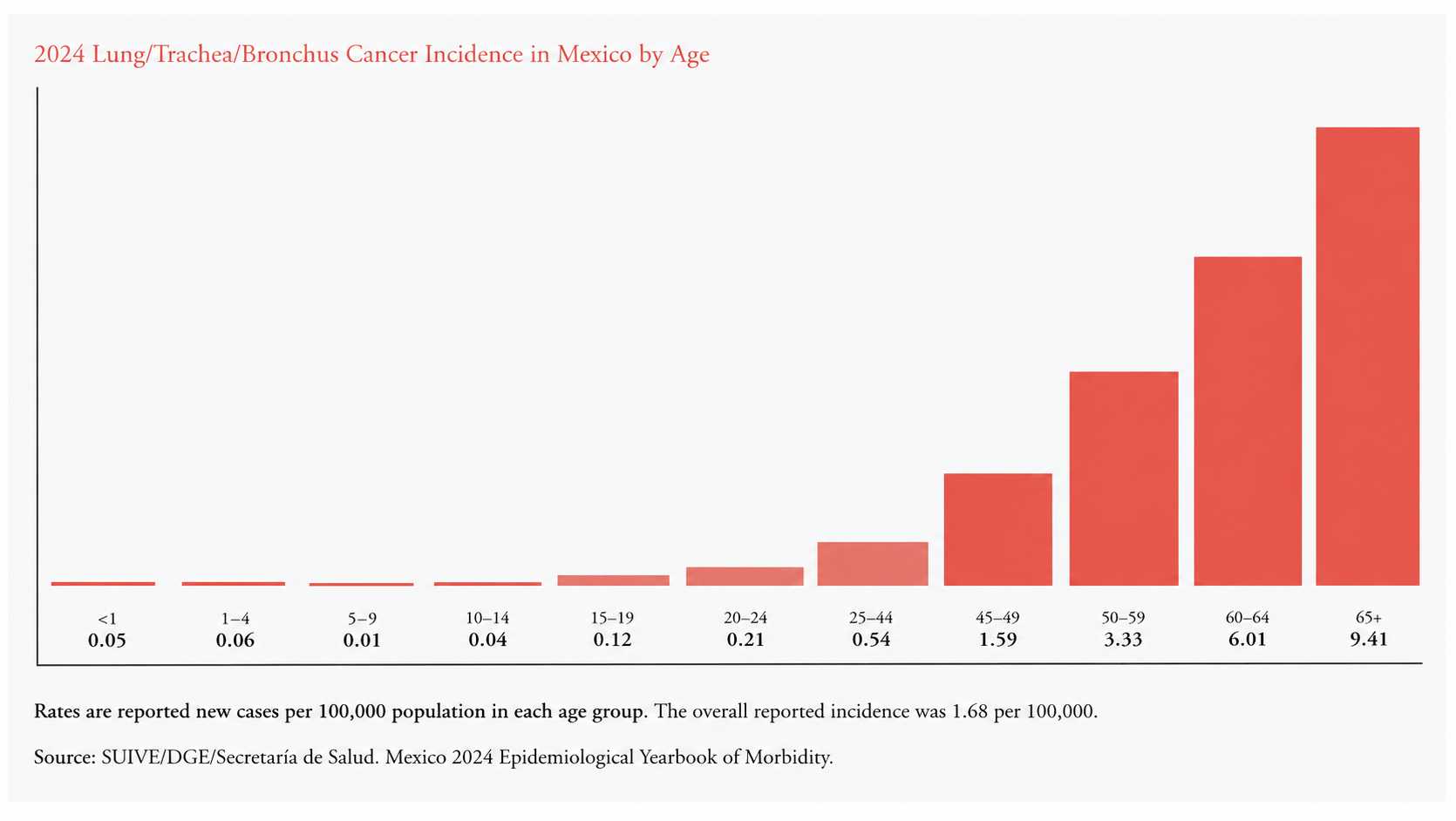
Mexico's national epidemiological surveillance data reported 2,226 new cases of malignant tumors of the trachea, bronchi and lung under ICD-10 codes C33–C34 during 2024. The reported national incidence in this surveillance dataset was 1.68 cases per 100,000 population.
The figures should not be interpreted as a complete national cancer registry count. They represent cases captured through Mexico's SUIVE/DGE surveillance system and combine tracheal, bronchial and lung malignancies within the specified coding category.
Reported New Lung/Trachea/Bronchus Cancer Cases in Mexico by Month, 2024
Total reported cases: 2,226. Monthly values were January 223, February 191, March 169, April 212, May 224, June 213, July 209, August 143, September 149, October 182, November 168 and December 143. Source: SUIVE/DGE/Secretaría de Salud, national 2024 epidemiological yearbook.
Who Travels to Baja California for Cancer and Medical Care?
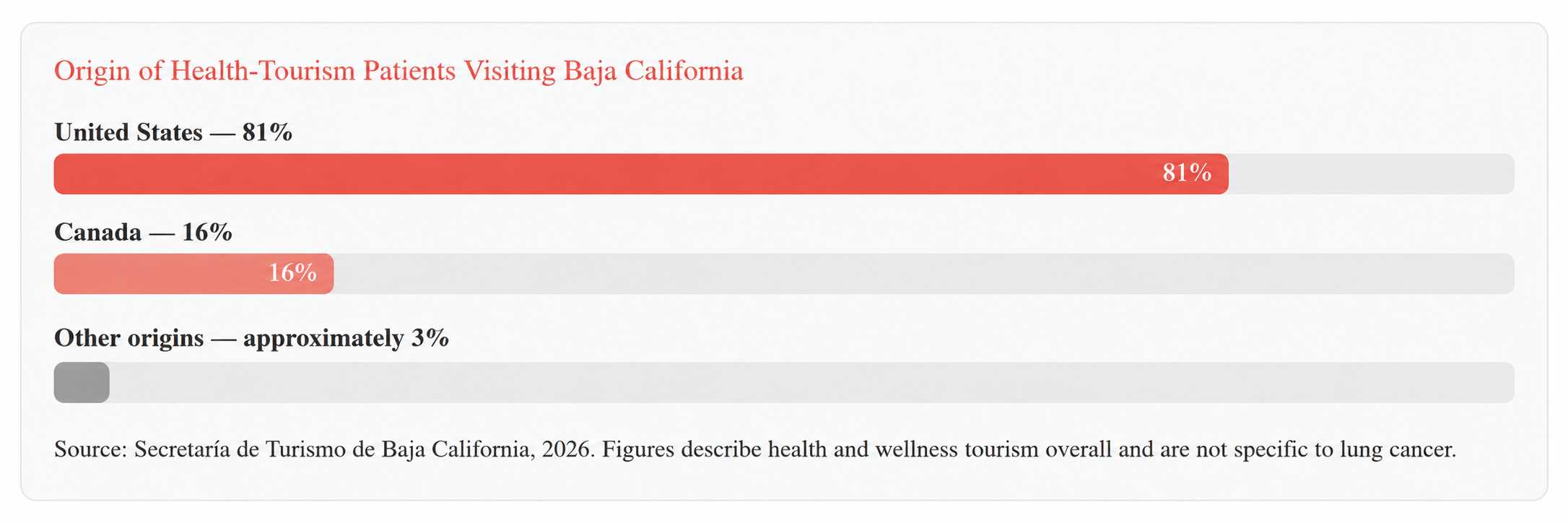
Tijuana's location directly across the U.S.-Mexico border makes it geographically accessible for many North American patients. Official Baja California tourism data published in 2026 report approximately 2.8 million annual health and wellness visitors across specialties that include oncology.
The same state source reports that 81% of health-tourism patients come from the United States, particularly California, Arizona and Nevada, and 16% come from Canada. These percentages represent health tourism overall rather than lung cancer treatment specifically.
How Is Lung Cancer Treatment Regulated in Tijuana, Mexico?
COFEPRIS is Mexico's federal health-risk regulator and oversees relevant medicines, medical devices and healthcare establishments. The exact authorization required depends on the treatment being performed.
For example, COFEPRIS identifies separate licensing requirements for facilities performing surgery and for establishments using radiation for therapeutic purposes. In 2026, the agency also introduced a public medicine-registration viewer containing information that can help patients verify whether medications hold current Mexican registration.
| What to Verify in Tijuana | What to Request |
|---|---|
| Hospital or surgical facility | Applicable sanitary license for surgical healthcare services. |
| Radiotherapy facility | Applicable COFEPRIS authorization for medical radiotherapy. |
| Targeted or immunotherapy medicine | Exact generic name, therapeutic indication and current Mexican registration status. |
| Experimental therapy | Clinical research protocol and regulatory/ethics authorization when applicable. |
| Treating physician | Mexican professional license and relevant oncology specialty credentials. |
How Should You Choose a Lung Cancer Oncologist in Tijuana?
A suitable treatment team should be able to explain your diagnosis in molecular as well as anatomical terms. The decision should not begin with a clinic's preferred treatment package and then attempt to fit your cancer into it.
Lung Cancer Provider Verification Checklist
- Confirm the doctor's Mexican professional license.
- Verify relevant medical oncology or thoracic specialist training.
- Check applicable specialty-board certification where relevant.
- Ask how frequently the team treats NSCLC and SCLC.
- Confirm access to thoracic pathology review.
- Ask whether comprehensive molecular profiling is routinely used.
- Confirm PD-L1 testing capability.
- Ask who reviews chest CT, PET/CT and brain imaging.
- Confirm access to pulmonology and bronchoscopy when required.
- Verify radiation oncology capability if radiation is proposed.
- Ask how pneumonitis and other treatment emergencies are managed.
- Request a written follow-up plan before traveling home.
How Much Does Chemo-Free Lung Cancer Treatment Cost in Tijuana?
There is no medically reliable single price for chemotherapy-free lung cancer treatment in Tijuana. A targeted medicine taken for months or years has a completely different cost structure from stereotactic radiation, surgery or periodic immunotherapy infusions.
Authoritative Mexican sources do not provide a standardized national USD package price for these individualized lung cancer pathways. For that reason, exact comparative prices should come from patient-specific written quotations rather than estimates presented as universal costs.
| Cost Component | Tijuana / Mexico | United States | Canada |
|---|---|---|---|
| Molecular testing | Patient-specific USD quote required | Varies by laboratory and insurance coverage | Depends on provincial eligibility and testing pathway |
| Targeted medication | Depends on exact medicine and treatment duration | Highly dependent on drug and insurance arrangements | Depends on provincial formulary and eligibility |
| Immunotherapy | Patient-specific USD quote required | Institution and coverage dependent | Eligibility and provincial funding dependent |
| Radiation treatment | Depends on technique, fractions and planning | Hospital and insurance dependent | Public pathway or private availability varies |
| Surgery and hospitalization | Requires individual surgical quotation | Varies substantially by hospital and coverage | Primarily determined by provincial healthcare pathway |
What Should International Patients Plan Before Lung Cancer Treatment in Tijuana?
Patients with lung cancer may already have reduced respiratory reserve, blood-clot risk or symptoms from metastatic disease. Your travel plan should therefore be based on medical fitness rather than simply distance from the border.
Before Traveling to Tijuana
- Send the complete pathology report.
- Provide molecular and PD-L1 results.
- Send CT, PET/CT and brain-imaging files.
- Document previous chemotherapy and radiation.
- Provide surgical records if applicable.
- Confirm current oxygen requirements.
- Review blood-clot and travel risks.
- Verify every proposed medication.
- Request an itemized USD quotation.
Before Returning Home
- Obtain exact medicine names and treatment dates.
- Request updated imaging and laboratory results.
- Obtain radiation or operative reports.
- Record all adverse events.
- Clarify emergency symptoms.
- Confirm the next scan date.
- Arrange follow-up with your home oncologist.
- Clarify who handles treatment-related complications.
- Obtain medical travel clearance when appropriate.
Frequently Asked Questions About Lung Cancer Treatment in Tijuana
Can lung cancer be treated without chemotherapy?
Some patients can receive treatment plans that do not include conventional cytotoxic drugs. Examples include molecularly targeted medicine, immune checkpoint therapy, surgery or focused radiation. Suitability depends on lung cancer subtype, stage, biomarkers and overall health.
Is there a truly non-toxic treatment for lung cancer?
No cancer treatment should be assumed to be completely free of toxicity. Modern approaches can sometimes avoid particular chemotherapy-related effects, but targeted drugs, immunotherapy, surgery and radiation each have their own potentially significant risks.
Who can receive targeted therapy instead of chemotherapy?
The tumor must contain a molecular alteration that can be matched to an appropriate medicine in the relevant treatment setting. Comprehensive biomarker testing is therefore essential before deciding whether a targeted drug can replace conventional systemic therapy.
Can immunotherapy be given without chemotherapy?
Yes, in selected NSCLC situations. Doctors review PD-L1 expression, genomic findings, histology, disease burden and other clinical factors before deciding whether checkpoint inhibition alone or a combination regimen is more appropriate.
Is immunotherapy easier on the body than chemotherapy?
The side-effect profiles are different rather than universally milder. Checkpoint inhibitors may cause immune inflammation affecting organs including the lungs, liver, bowel, kidneys, endocrine glands, heart or nervous system and occasionally require urgent treatment.
Can early-stage lung cancer be treated without systemic drugs?
Selected localized tumors may be managed primarily with surgery or stereotactic radiation. Pathological stage and recurrence risk still determine whether additional systemic therapy offers meaningful benefit after local treatment.
Can small cell lung cancer be treated without chemotherapy?
Established first-line management commonly relies on platinum-based chemotherapy, often combined with immunotherapy in extensive-stage disease. A completely chemotherapy-free alternative should not be assumed to provide equivalent cancer control without supporting clinical evidence.
What biomarker tests should be reviewed before treatment abroad?
Testing depends on histology and stage but may include EGFR, ALK, ROS1, BRAF, MET, RET, NTRK, KRAS and HER2 alterations together with PD-L1 expression. Your oncologist should determine the appropriate panel for your diagnosis.
How do I verify lung cancer medication offered in Mexico?
Request the generic drug name, manufacturer and Mexican registration information. COFEPRIS now provides a public medicines registration viewer that can help patients check current registrations and therapeutic information.
How much does chemotherapy-free lung cancer treatment cost in Tijuana?
There is no universal price because targeted drugs, checkpoint inhibitors, surgery and radiation have very different treatment schedules. Ask for an itemized USD quotation based on your pathology, biomarker results and proposed duration of care.
Should I stop chemotherapy before traveling to Tijuana?
Changes to an active oncology regimen should be made with the medical team responsible for your cancer. Interrupting an effective treatment without a clinically supported replacement plan may allow disease progression.
Should I get a second opinion before choosing a chemo-free treatment?
An independent thoracic oncology review can confirm whether avoiding chemotherapy is medically reasonable. Provide pathology, staging scans, molecular testing, PD-L1 results and previous treatment records so the recommendation reflects your actual disease.
Compare Lung Cancer Treatment Options in Tijuana With PlacidWay
If you are exploring ways to reduce chemotherapy exposure, PlacidWay can help you request information from healthcare providers, compare proposed lung cancer treatment plans, understand estimated costs and organize questions about biomarkers, drug registration and specialist credentials.
Before changing an established cancer treatment, discuss the proposed alternative with a qualified thoracic oncologist who has reviewed your pathology, stage, molecular profile and previous therapy.
Medical Disclaimer for Lung Cancer Treatment Information
Disclaimer: This information is for educational purposes only and does not replace professional medical advice. Always consult a qualified healthcare provider before making medical decisions.
References for Lung Cancer Treatment in Tijuana
- Non-Small Cell Lung Cancer Treatment (PDQ) – National Cancer Institute
- Small Cell Lung Cancer Treatment (PDQ) – National Cancer Institute
- Targeted Therapy for Cancer and Treatment Side Effects – National Cancer Institute
- Side Effects of Cancer Immunotherapy – National Cancer Institute
- Healthcare Facility Sanitary Licensing – COFEPRIS, 2026
- Medicines Registration Viewer – COFEPRIS, 2026









.png)
.png)
















Share this listing