
If you are looking at brain cancer treatment in Tijuana because a tumor has returned, standard therapy has stopped working, or you have been told that drug delivery to the brain is difficult, the blood-brain barrier deserves careful explanation. It can limit the amount of many medicines reaching brain tissue, particularly infiltrating tumor cells beyond the visibly abnormal area on MRI. However, simply calling a treatment “blood-brain barrier penetrating” does not prove that it improves survival.
Established treatment for aggressive primary brain cancers such as glioblastoma still centers on accurate pathology and molecular diagnosis, maximal safe surgery when feasible, radiation therapy and appropriate systemic treatment such as temozolomide. Focused ultrasound, convection-enhanced delivery, osmotic barrier disruption and other drug-delivery strategies are being studied internationally, but their regulatory and clinical status must be verified before assuming they are routinely available in Tijuana.
Quick Summary of Brain Cancer Treatment in Tijuana
- Blood-brain barrier: The BBB protects the brain but can also restrict delivery of many systemic medicines to tumor cells.
- Standard glioblastoma care: For appropriate newly diagnosed patients, treatment generally includes maximal safe surgery followed by radiation with temozolomide and subsequent temozolomide.
- Temozolomide: This established chemotherapy can cross the blood-brain barrier and is used in standard glioblastoma treatment.
- Focused ultrasound: Ultrasound with microbubbles can temporarily increase BBB permeability in clinical research, but clinical effectiveness remains under investigation.
- Convection-enhanced delivery: CED places therapeutic agents directly into brain tissue through catheters, bypassing the need for systemic BBB penetration, but it remains investigational.
- Intra-arterial treatment: Delivering chemotherapy into an artery is not automatically the same as crossing the BBB. Additional disruption techniques may be required, and this approach is not routine standard glioblastoma care.
- Tijuana verification: Ask for the exact procedure, medicine, device, clinical evidence, COFEPRIS status, neurosurgeon credentials and hospital emergency capabilities.
- Cost: No authoritative standardized price for BBB-opening brain cancer treatment in Tijuana is available. Request a patient-specific written quote rather than relying on a generalized package price.
Why Does the Blood-Brain Barrier Matter in Brain Cancer Treatment?
The blood-brain barrier is formed by tightly regulated cells surrounding blood vessels in the central nervous system. Its normal role is protective: it limits toxins, pathogens and many circulating substances from freely entering brain tissue.
This same protection creates a problem for neuro-oncology. Some anticancer drugs do not reach sufficient concentrations in the brain, while others penetrate more effectively. Glioblastoma creates an additional challenge because malignant cells can infiltrate apparently normal brain beyond the main tumor mass.
The BBB regulates movement of molecules from blood into the central nervous system.
Many anticancer agents cannot achieve useful concentrations throughout protected brain tissue.
The barrier may be disrupted in part of a tumor while remaining more intact around infiltrating cancer cells.
Researchers are testing drugs and delivery technologies that penetrate, open or physically bypass the barrier.
What Is Standard Treatment for Glioblastoma Before BBB-Opening Therapy?
Before considering an experimental drug-delivery strategy, patients should understand which evidence-based treatments apply to their diagnosis. For newly diagnosed glioblastoma, the National Cancer Institute describes surgery followed by radiation therapy with concurrent temozolomide and subsequent temozolomide as standard treatment for appropriate patients.
Temozolomide is an important example because it already penetrates the central nervous system. The fact that glioblastoma frequently returns despite temozolomide demonstrates that BBB penetration is only one component of treatment resistance.
| Treatment Component | Purpose | Evidence Status |
|---|---|---|
| Maximal safe surgery | Remove as much tumor as safely possible and obtain tissue for diagnosis. | Established when medically feasible. |
| Radiation therapy | Treat tumor cells remaining in and around the surgical region. | Established component of glioblastoma therapy. |
| Temozolomide | Systemic chemotherapy capable of reaching the central nervous system. | Established in appropriate newly diagnosed glioblastoma care. |
| Tumor Treating Fields | Alternating electrical fields interfere with division of tumor cells. | Established in some jurisdictions and treatment pathways; local availability should be verified. |
| Experimental BBB strategies | Increase drug entry or deliver drugs directly into brain tissue. | Clinical research rather than universal standard care. |
Molecular information also matters. For gliomas, pathology now incorporates molecular features, and MGMT promoter methylation can provide clinically relevant information when temozolomide treatment is considered. Your medical team may also evaluate IDH status and other molecular findings depending on the tumor diagnosis.
Which Treatments Are Being Studied to Cross or Bypass the Blood-Brain Barrier?
Researchers are pursuing several different strategies rather than one universal technique for “opening” the BBB. Some temporarily increase vascular permeability, while others physically bypass blood vessels and place treatment directly into brain tissue.
| BBB Strategy | How It Works | Current Evidence Position |
|---|---|---|
| Focused ultrasound with microbubbles | Ultrasound energy acts on circulating microbubbles to temporarily increase BBB permeability in a targeted region. | Clinical feasibility demonstrated; therapeutic effectiveness remains under investigation. |
| Implantable ultrasound systems | An implanted ultrasound device repeatedly opens the BBB around a treated region. | Investigational; active clinical trials continue. |
| Convection-enhanced delivery | Catheters deliver treatment directly into brain tissue using controlled pressure. | Bypasses the BBB but remains investigational for glioblastoma. |
| Intra-arterial osmotic disruption | Hyperosmolar agents such as mannitol can temporarily alter BBB permeability before arterial drug delivery. | Studied clinically but carries procedural risks and is not routine standard glioblastoma care. |
| Laser interstitial thermal therapy | Thermal ablation targets tumor tissue and may temporarily alter the surrounding barrier. | Used for selected lesions; BBB modulation combined with systemic therapy remains an active research area. |
| Nanoparticle or carrier-based delivery | Engineered carriers aim to improve transport or controlled release of therapeutic agents. | Many approaches remain translational or investigational. |
What Does 2026 Research Say About Focused Ultrasound for Glioblastoma?
Focused ultrasound is one of the most actively researched ways to temporarily increase BBB permeability. The approach commonly combines precisely targeted ultrasound with intravenously administered microbubbles.
A 2026 systematic review examining focused-ultrasound BBB opening with temozolomide identified six preclinical studies and three human clinical studies. The authors concluded that BBB opening was feasible and generally well tolerated in the early clinical evidence, while survival and pharmacokinetic outcomes remained preliminary.
That distinction is essential. Showing that ultrasound can open the BBB and increase drug delivery does not automatically prove that the treatment extends survival compared with current standard care.
Targeted and temporary BBB opening has been demonstrated in human research.
Researchers have observed increased delivery of selected medicines into treated brain regions.
A definitive survival advantage for routine glioblastoma treatment has not yet been established.
Is Intra-Arterial Chemotherapy the Same as Crossing the Blood-Brain Barrier?
No. Intra-arterial chemotherapy delivers a drug into an artery supplying the brain, which can increase local drug exposure, but the medication may still encounter the blood-brain or blood-tumor barrier.
Some experimental programs have therefore combined intra-arterial administration with osmotic BBB disruption. Mannitol is the most extensively studied osmotic agent for this purpose, but current systematic reviews continue to identify neurological toxicity and limited high-quality comparative evidence.
Questions to Ask About Intra-Arterial Treatment in Tijuana
- What chemotherapy or biologic drug will be infused?
- Why is intra-arterial delivery expected to help with my specific tumor?
- Is BBB disruption also performed?
- If mannitol is used, what is the clinical protocol?
- Who performs the cerebral catheterization?
- Is the physician trained in interventional neuroradiology or an appropriate specialty?
- What are the risks of stroke, seizure, bleeding or vessel injury?
- Is ICU and neurological emergency care immediately available?
- What peer-reviewed human evidence supports the exact treatment?
- What COFEPRIS authorization applies to the drug, device and facility?
What Are the Main Risks of Blood-Brain Barrier Disruption?
The BBB exists to protect sensitive brain tissue. Temporarily increasing its permeability may improve drug access, but it can also expose the brain to substances normally kept outside the central nervous system.
The risk profile differs substantially by technique. Focused ultrasound has shown encouraging feasibility in early trials, whereas invasive catheter-based and osmotic methods introduce additional neurological and vascular considerations.
| Potential Risk | Why It May Occur | Patient Consideration |
|---|---|---|
| Seizure | Brain tumors and some BBB interventions can increase neurological irritation. | Emergency neurological management should be available. |
| Brain swelling | Tumor, treatment or vascular permeability changes may contribute to edema. | Patients may need imaging and medical management. |
| Bleeding | Invasive procedures and vascular interventions can create hemorrhagic risk. | Coagulation and imaging assessment may be required. |
| Stroke or vascular injury | Relevant particularly to catheter-based arterial procedures. | Experienced neurovascular specialists and emergency support are important. |
| Infection | Implanted devices or intracranial catheters create procedural infection risk. | Sterile technique and follow-up are essential. |
| Drug toxicity | Increasing brain exposure can potentially increase neurological exposure to the drug. | Higher delivery does not always mean a better safety profile. |
What Do Recent Brain and CNS Cancer Data in Mexico Show?
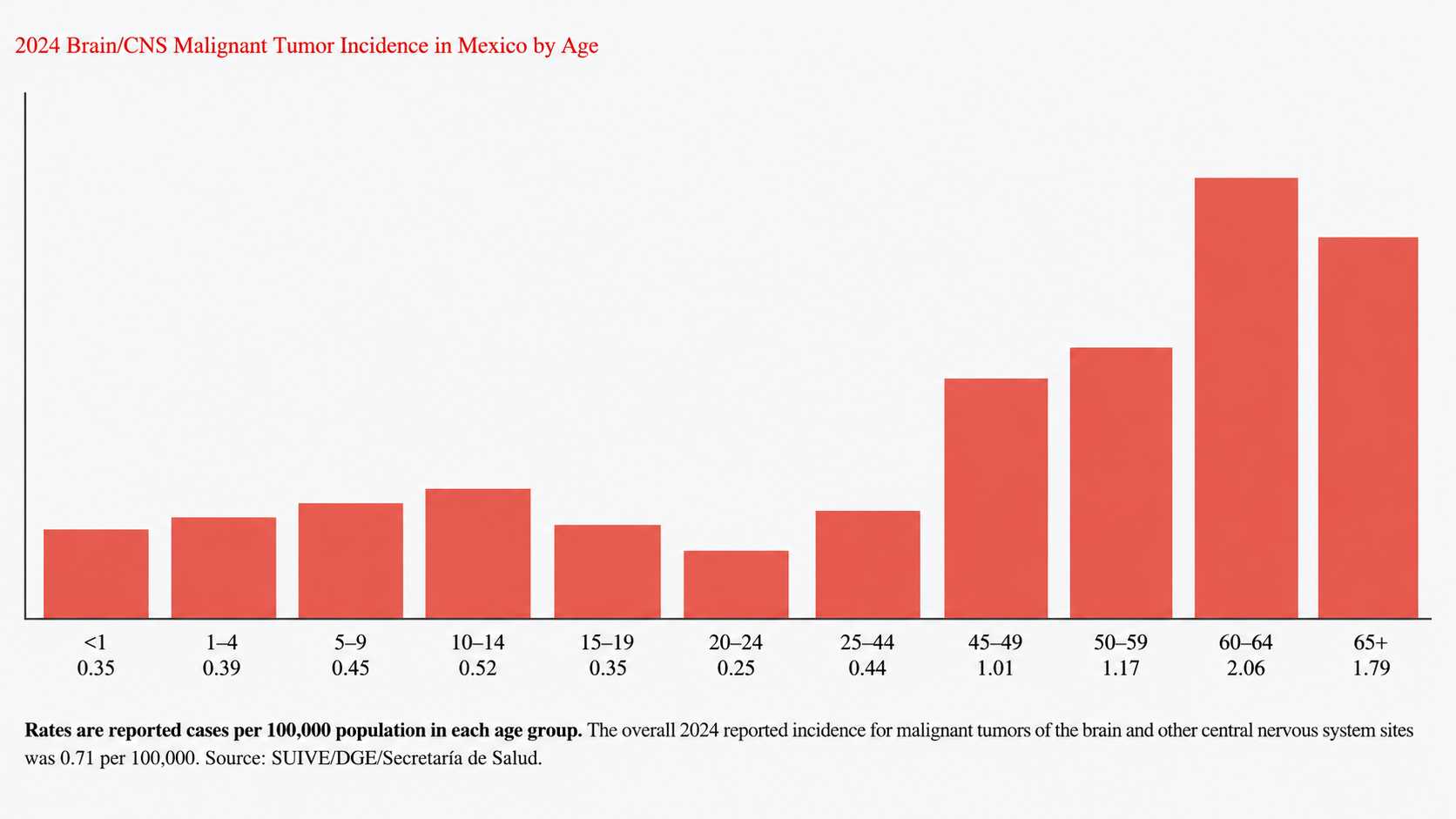
Mexico's official SUIVE/Dirección General de Epidemiología data recorded 940 reported new cases of malignant tumors of the brain and other parts of the central nervous system under ICD-10 codes C70–C72 during 2024. The reported national incidence was 0.71 per 100,000 inhabitants within this surveillance dataset.
These numbers should be interpreted as surveillance data rather than a complete count of every brain tumor diagnosed in Mexico. They include malignant tumors across C70–C72 and are not limited to glioblastoma.
Reported New Malignant Brain/CNS Cases in Mexico by Month, 2024
Total reported cases: 940. Monthly values were January 92, February 65, March 75, April 79, May 95, June 85, July 87, August 57, September 78, October 93, November 71 and December 63. Source: SUIVE/DGE/Secretaría de Salud, Mexico 2024 data published in the national epidemiological yearbook.
Why Do International Patients Consider Brain Cancer Treatment in Tijuana?
Tijuana's geographic proximity to Southern California makes Baja California one of Mexico's largest cross-border healthcare destinations. Patients may consider the region for private consultations, second opinions, oncology treatment or access to approaches not readily offered in their home system.
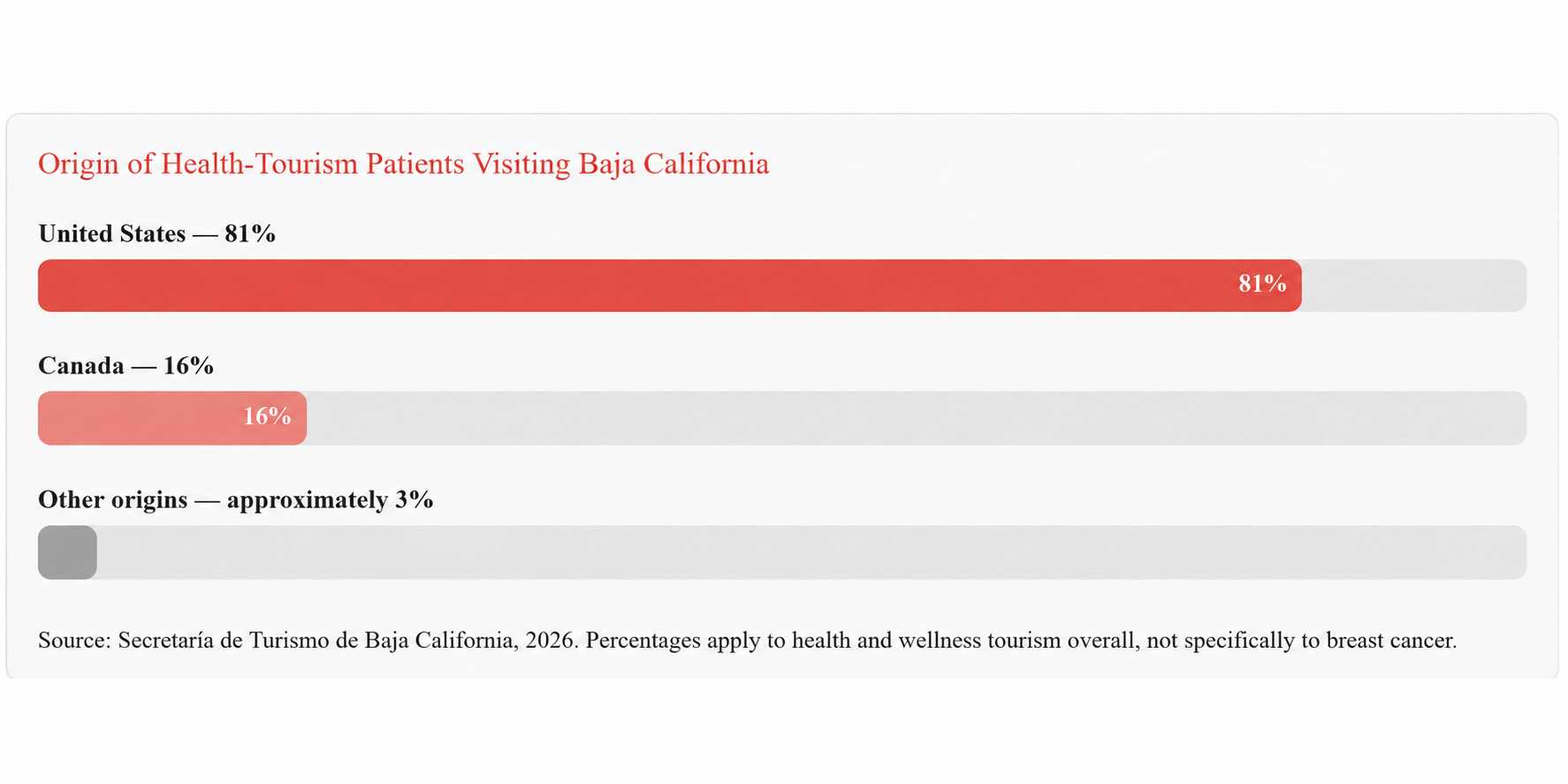
Baja California's Secretaría de Turismo reported in 2026 that the state receives approximately 2.8 million health and wellness visitors annually across many specialties, including oncology. It reported that 81% come from the United States and 16% from Canada.
These statistics describe all health tourism, not brain cancer patients. There is no authoritative current dataset showing how many international patients travel specifically to Tijuana for glioblastoma or BBB-opening treatment.
How Is Advanced Brain Cancer Treatment Regulated in Tijuana?
COFEPRIS is Mexico's federal authority responsible for sanitary regulation of relevant medicines, medical devices and healthcare establishments. Facilities performing surgical procedures require the applicable sanitary authorization before operating.
Facilities using medical radiation for diagnostic or therapeutic purposes also fall under specific licensing requirements. An advanced brain cancer program may therefore involve several separate regulatory issues depending on whether it performs surgery, radiation, investigational treatment or invasive drug delivery.
| What to Verify | Documentation to Request |
|---|---|
| Hospital or surgical facility | Applicable COFEPRIS sanitary authorization for surgical services. |
| Radiotherapy | Applicable authorization for facilities using radiation for medical treatment. |
| Medical device | Exact device model and applicable Mexican registration. |
| Investigational treatment | Clinical research protocol, ethics approval and regulatory authorization where required. |
| Physician | Mexican professional license and appropriate specialty credentials. |
| Health-tourism registration | Baja California tourism registration or excellence-catalog status when applicable; this is supplementary and does not replace medical licensing. |
How Should You Choose a Brain Cancer Hospital and Specialist in Tijuana?
Brain cancer treatment should involve neuro-oncology expertise rather than a general cancer program alone. Depending on the tumor, an appropriate multidisciplinary team may include a neurosurgeon, radiation oncologist, medical or neuro-oncologist, neuropathologist, neuroradiologist and rehabilitation specialists.
Verify the Tijuana Hospital
- Current sanitary authorization
- Operating-room capability
- ICU or immediate hospital transfer capability
- 24/7 neurological emergency support
- MRI access
- Radiation capability if included
- Neuropathology access
- Infection-control procedures
- Written complication-management protocol
Verify the Brain Cancer Specialist
- Professional license in Mexico
- Neurosurgery, oncology or relevant specialist training
- Current specialty certification where applicable
- Experience with your exact tumor type
- Experience with recurrent glioblastoma if relevant
- Experience with the proposed BBB procedure
- Documented follow-up protocol
- Communication with your home oncology team
How Much Does Advanced Brain Cancer Treatment Cost in Tijuana?
There is no authoritative standardized price for BBB-opening brain cancer treatment in Tijuana. The term can describe completely different interventions, ranging from an oncology consultation to cerebral angiography, an implanted ultrasound device, intracranial catheter treatment or an investigational protocol.
Comparing a single Tijuana package price with a U.S. or Canadian hospital bill can therefore be misleading unless both quotes include the same diagnostic testing, treatment, hospitalization and follow-up.
| Potential Cost Component | Why It May Apply | Pricing Guidance |
|---|---|---|
| Neuro-oncology consultation | Diagnosis and treatment review | Provider-specific |
| Neuropathology review | Tumor classification and molecular confirmation | Varies |
| MRI and advanced imaging | Tumor mapping and response assessment | Varies by imaging protocol |
| Neurosurgery | Biopsy, resection or device/catheter placement | Patient-specific quotation required |
| BBB-opening procedure | Focused ultrasound, osmotic disruption or another specific method | No universal Tijuana price available |
| Chemotherapy or biologic agent | Drug administered with the procedure | Depends on product and treatment schedule |
| Hospitalization or ICU | Monitoring or complication treatment | May substantially alter final cost |
| Follow-up MRI and oncology visits | Assessment of progression and toxicity | May continue for months after treatment |
What Should International Patients Plan Before Brain Cancer Treatment in Tijuana?
Patients with brain tumors may experience seizures, weakness, cognitive changes or rapid neurological deterioration. Travel planning therefore needs to include medical stability, caregiver support and an emergency plan rather than focusing only on transportation and accommodation.
Before Traveling to Tijuana
- Send recent MRI images and reports.
- Provide pathology and molecular results.
- Provide operative and radiation records.
- Document chemotherapy and recurrence history.
- Obtain an independent neuro-oncology opinion.
- Confirm medical fitness to travel.
- Verify the proposed treatment's regulatory status.
- Arrange a caregiver when recommended.
- Know where emergency neurosurgical care is available.
Before Returning Home
- Obtain procedure and operative reports.
- Record every medication received.
- Obtain device information if one was used.
- Request post-treatment MRI files.
- Obtain updated neurological examination findings.
- Clarify seizure and steroid management instructions.
- Confirm the next MRI date.
- Arrange follow-up with your home oncology team.
- Know how to reach the Tijuana team urgently.
Frequently Asked Questions About Brain Cancer Treatment in Tijuana
Can brain cancer treatment cross the blood-brain barrier?
Certain medicines, including temozolomide, can reach the central nervous system. Researchers are also studying focused ultrasound, osmotic disruption, nanoparticles and direct intracranial delivery to improve how therapeutic agents reach brain tumors.
Does chemotherapy normally reach glioblastoma?
Some chemotherapy drugs penetrate brain tissue better than others. Temozolomide is commonly used because it reaches the central nervous system, although glioblastoma can still resist treatment through several biological mechanisms.
Is focused ultrasound approved as standard glioblastoma treatment?
This technology remains investigational for glioblastoma. Early human studies show that temporary barrier opening is technically feasible, but stronger evidence is still needed to establish long-term clinical benefit.
Is focused-ultrasound BBB treatment available in Tijuana?
Routine availability has not been established through authoritative sources. Patients should request the exact device name, treatment protocol, regulatory documentation and published clinical evidence from any provider offering this approach.
Does intra-arterial chemotherapy bypass the blood-brain barrier?
Delivering medication into an artery can increase local drug exposure, but it does not automatically overcome the barrier. Some research protocols combine arterial infusion with separate techniques intended to increase permeability.
What is convection-enhanced delivery for brain tumors?
This technique uses small catheters placed directly into brain or tumor tissue. Controlled pressure distributes therapeutic agents locally, allowing delivery without depending entirely on movement from the bloodstream into the brain.
Can DMSO carry chemotherapy through the blood-brain barrier?
DMSO has been studied for various pharmaceutical properties, but current evidence does not establish it as a reliable method for improving glioblastoma outcomes through enhanced chemotherapy delivery.
Can a ketogenic diet treat glioblastoma?
Metabolic approaches are being researched, but dietary therapy has not replaced surgery, radiation or systemic oncology treatment. Nutrition changes should be planned with the medical team to avoid weight loss or treatment-related nutritional problems.
Is hyperbaric oxygen a proven brain cancer treatment?
Hyperbaric oxygen has recognized medical uses, but it is not an established standalone therapy for glioblastoma. Any oncology protocol using it should be evaluated according to the specific clinical evidence supporting that approach.
How much does advanced brain cancer treatment cost in Tijuana?
There is no single standardized price because treatment may involve imaging, neurosurgery, radiation, medications, experimental delivery techniques, hospitalization and follow-up. Patients should request a detailed written quotation covering each component.
How can I verify a brain cancer clinic in Tijuana?
Check the facility's applicable sanitary authorization, physician credentials, specialist certification, device or medicine registration and research approval when relevant. Emergency neurosurgical and intensive-care capabilities should also be confirmed.
Should I get a second opinion before experimental brain cancer treatment in Mexico?
An independent neuro-oncology review can help confirm the diagnosis, molecular findings, treatment alternatives and evidence supporting the proposed therapy before you commit to an investigational treatment abroad.
Compare Brain Cancer Treatment Options in Tijuana With PlacidWay
If you are researching brain cancer treatment in Tijuana, PlacidWay can help you request information from healthcare providers, compare proposed treatment plans, understand estimated costs and organize questions about neuro-oncology experience, regulatory status and blood-brain-barrier delivery methods.
Before proceeding with a nonstandard BBB-opening approach, review the proposed plan with a qualified neuro-oncologist who understands your pathology, molecular findings, prior treatment and current neurological condition.
Medical Disclaimer for Brain Cancer Treatment Information
Disclaimer: This information is for educational purposes only and does not replace professional medical advice. Always consult a qualified healthcare provider before making medical decisions.
References for Brain Cancer and Blood-Brain Barrier Treatment
- Central Nervous System Tumors Treatment (PDQ) – National Cancer Institute
- Glioblastoma Therapeutics Network and Blood-Brain Barrier Research – National Cancer Institute
- Focused Ultrasound-Mediated BBB Opening and Temozolomide Delivery in Glioblastoma – Neurosurgical Review, 2026
- Therapeutic Modulation of the Blood-Brain Barrier in Brain Tumors – Systematic Review, 2026
- Healthcare Facility Sanitary Licensing Requirements – COFEPRIS, 2026







.png)


.png)



.jpg)











Share this listing