


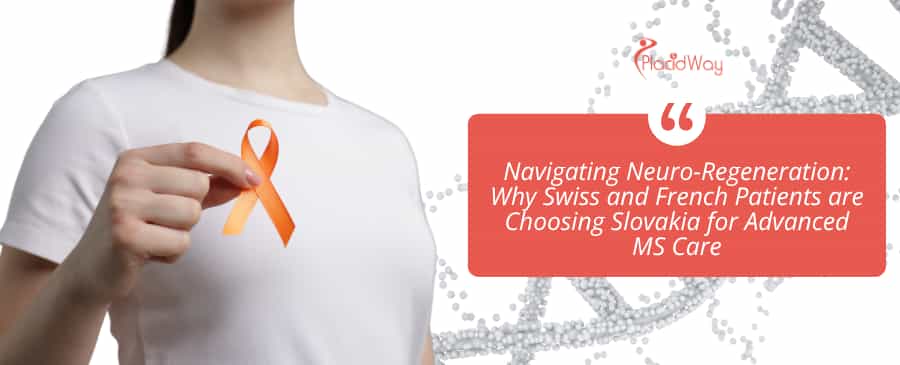
Living with Multiple Sclerosis presents a unique set of challenges, often involving a search for therapies that go beyond standard disease-modifying drugs. For many patients in Western Europe, particularly from France and Switzerland, Stem Cell Therapy for MS in Slovakia has emerged as a beacon of hope, combining high-level EU medical standards with innovative regenerative approaches.
Slovakia’s medical infrastructure has modernized rapidly, positioning itself as a central hub for neurological research and cell-based treatments. This growth is driven by a commitment to clinical excellence and a regulatory environment that supports the application of Mesenchymal Stem Cells for autoimmune conditions under rigorous safety protocols.
Why Swiss and French Patients Prefer Medical Tourism in Slovakia
For Swiss and French nationals, the proximity of Bratislava and other Slovak medical centers offers a convenient alternative to the long waiting lists or high costs associated with private healthcare in their home countries. Medical tourism in Slovakia provides a seamless transition for those accustomed to the high standards of the French or Swiss healthcare systems.
The cultural and geographical closeness makes the journey less stressful, which is a critical factor for patients managing chronic fatigue or mobility issues. Furthermore, the high-quality neurological care in Slovakia is delivered by specialists who often have extensive training in top-tier European universities, ensuring a high level of patient-doctor communication.
Understanding the Regenerative Mechanism for MS Treatment
The primary goal of Stem Cell Therapy for MS is to reset or modulate the immune system to stop the attack on the myelin sheath. In most protocols, Mesenchymal Stem Cells (MSCs) are utilized because of their unique ability to secrete anti-inflammatory factors and potentially stimulate the body's own repair mechanisms in the Central Nervous System.
Patients typically undergo a process where their own cells are harvested, concentrated, and then reintroduced into the body. This autologous stem cell transplantation approach is generally considered safer than using donor cells, as it significantly reduces the likelihood of immune rejection or adverse reactions often seen in more aggressive treatments like HSCT.
Affordable Stem Cell Therapy for MS in Slovakia Cost Analysis
One of the most compelling reasons for choosing affordable Stem Cell Therapy for MS in Slovakia is the significant cost-to-quality ratio. While a similar treatment in a private Swiss clinic might be financially out of reach for many, Slovakia offers world-class facilities at a fraction of the price, making advanced medicine accessible to a wider demographic.
The following table provides an estimated comparison of the MS treatment cost in Slovakia versus traditional patient-origin countries. These figures generally include the medical procedure, lab work, and initial follow-up, though ancillary costs like extended rehabilitation may vary.
| Procedure Name | Average Cost in Slovakia | Cost in Switzerland/France |
|---|---|---|
| Adipose-Derived MSC Therapy | €9,500 – €12,000 | €25,000 – €40,000 |
| Bone Marrow MSC Therapy | €11,000 – €15,000 | €30,000 – €45,000 |
| Comprehensive Neuro-Rehab Package | €3,000 – €5,000 | €8,000 – €12,000 |
Safety Protocols and Regulatory Standards for Cells
Patients often worry about the "wild west" of stem cell clinics; however, medical facilities in Slovakia operate under strict European Medicines Agency (EMA) guidelines. This ensures that every cell culture is tested for viability, sterility, and appropriate markers before it is ever administered to a patient.
The regulatory safety for MS treatment in Slovakia is robust. Clinics must maintain specific certifications for handling biological materials, and medical staff are required to participate in ongoing international training to stay abreast of the latest developments in cellular biology and neurology.
Always verify that the clinic uses autologous cells or certified donor lines. Avoid any facility that cannot provide detailed lab reports on cell count and viability.
The Patient Journey: From Consultation to Recovery
Embarking on Stem Cell Therapy for MS in Slovakia begins with a detailed remote evaluation. Most patients submit their recent MRI scans and neurological reports for a preliminary review. Once cleared, the journey involves a visit to a modern clinic where a personalized treatment plan is finalized.
Post-procedure, the recovery from MS treatment is typically mild, with most patients requiring only a few days of observation. However, the true "recovery" phase—where cellular changes occur—can take several months. Patients are generally encouraged to pair their treatment with specialized physical therapy to maximize functional gains.
Efficacy and Realistic Expectations for MS Patients
It is vital to maintain realistic expectations for MS therapy. While some individuals report significant improvements in energy levels, bladder control, and gait, others may only experience a stabilization of their condition. Most patients experience a gradual shift rather than an overnight "cure."
Clinical data typically suggests that patients in the earlier stages of Relapsing-Remitting MS (RRMS) may see more pronounced results compared to those with long-standing Primary Progressive MS (PPMS). Regardless of the subtype, the primary objective is often slowing the progression of Multiple Sclerosis and enhancing the quality of daily life.
Top-Tier Stem Cell Clinics in Slovakia Infrastructure
The best MS clinics in Slovakia are characterized by their integration of diagnostic imaging and laboratory science. These centers are often located in peaceful environments, away from the hustle of industrial zones, providing a tranquil atmosphere conducive to healing and neurological rest.
Infrastructure in Slovakia now rivals many Western European nations, with advanced medical technology for MS including high-tesla MRI machines and dedicated infusion suites. Many clinics specifically cater to international patients, offering multi-lingual staff and detailed digital follow-up systems to ensure continuity of care.
Candidate Selection and Contraindications for Therapy
Not everyone is a suitable candidate for Stem Cell Therapy for MS. A thorough screening process is necessary to identify potential risks. Generally, patients must be in a stable enough condition to undergo the cell harvesting process and should not have active systemic infections or certain malignancies.
Strict contraindications typically include severe cardiac issues, advanced organ failure, or current pregnancy. A neurological assessment in Slovakia will focus on your Expanded Disability Status Scale (EDSS) score and current medication regimen to ensure that the therapy does not interfere with essential treatments.
Patient Case Summaries: Voices from the Journey
Hearing from those who have walked this path provides invaluable perspective. While every biological response is different, these MS patient testimonials from Slovakia highlight the diverse ways in which regenerative medicine can impact an individual's life and outlook on the future.
These case summaries reflect the experiences of international patients who sought specialized MS care in Slovakia. They emphasize the importance of a holistic approach that combines cellular therapy with expert guidance and lifestyle modifications.
Case Summary: Marc from Geneva
Marc, aged 42, struggled with progressive mobility loss. After his treatment in Bratislava, he noted a 40% improvement in his walking distance and a significant reduction in chronic brain fog within four months.
Case Summary: Elena from Lyon
Elena sought therapy for sensory issues and fatigue. She reported that while her MRI remained stable, her energy levels returned to a point where she could resume part-time work, something she hadn't done in years.
Legal and Ethical Considerations of Cell Therapy in the EU
Slovakia strictly adheres to the ethical standards for stem cell research and application set by the European Union. This means that embryonic stem cells are generally not used in these clinical settings, focusing instead on adult stem cells which bypass major ethical controversies.
The legal framework for MS care ensure that patients have full rights to their medical data and informed consent is a cornerstone of the process. For Swiss and French patients, this provides a level of legal comfort and transparency that might be missing in non-EU medical destinations.
Preparation Checklist for French and Swiss Travelers
Traveling for neurological treatment in Slovakia requires a bit of logistical planning. Fortunately, the "Schengen" status of Slovakia makes border crossing a non-issue. However, ensuring you have the right documentation and support is key to a stress-free experience.
Focusing on preparing for medical travel means looking at everything from currency (Slovakia uses the Euro) to adaptive equipment. Most Slovak cities are increasingly accessible, but it is always wise to confirm the accessibility of your chosen clinic and local surroundings before booking.
How PlacidWay Supports Your Journey to Slovakia
Navigating the complexities of international medical care is easier with an experienced partner. PlacidWay acts as a bridge, connecting you with vetted MS specialists in Slovakia while providing the tools you need to make an informed decision.
- Access to a curated network of accredited Slovak clinics specializing in regenerative medicine.
- Assistance in obtaining detailed medical quotes and transparent pricing structures.
- Facilitation of communication between patients and clinic coordinators.
- Guidance on understanding the differences between various stem cell protocols.
- Support in reviewing patient testimonials and clinic success data.
The Future of MS Treatment and Long-Term Outlook
The field of neuro-regeneration in Slovakia is constantly evolving. Ongoing research into "exosomes" and specialized cell-signaling molecules suggests that the treatments of tomorrow will be even more targeted and effective at modulating the underlying disease process of Multiple Sclerosis.
For now, Stem Cell Therapy for MS in Slovakia remains a powerful "add-on" or alternative for those who haven't found relief through conventional means. By choosing a destination that values both innovation and safety, patients can take a proactive step toward reclaiming their independence and mobility.
Frequently Asked Questions (FAQs)
While no medical procedure is without risk, Slovakia follows strict EU healthcare regulations and clinical protocols to ensure patient safety during cell administration.
Patients typically save 50-70% in Slovakia compared to private Swiss clinics, with treatment packages often ranging between €10,000 and €18,000.
Most protocols require a stay of 7 to 14 days, allowing for the initial assessment, the procedure itself, and several days of monitoring.
Yes, as both are EU members, travel is seamless, and patients may occasionally explore S2 form options for reimbursement, though this depends on individual insurance.
Clinics generally use autologous Mesenchymal Stem Cells (MSCs) derived from the patient's own adipose tissue or bone marrow to minimize rejection risks.
Most specialists in international medical centers speak fluent English, and many clinics provide dedicated coordinators for French and German-speaking patients.
While results vary, many patients experience a slowing of disease progression and improved mobility, though neurological regeneration is never guaranteed.
No, Swiss citizens can enter Slovakia and the Schengen area for medical treatment with just a valid passport or ID card.
The procedure is typically minimally invasive, involving a local harvest of cells followed by intravenous or intrathecal re-injection.
Patients are generally advised to continue physical therapy and maintain regular contact with their local neurologist to monitor progress and blood markers.
Medical Disclaimer: This article is for informational purposes only and is not medical advice. Always consult a qualified healthcare provider before any medical decisions. Results may vary. Read Full Disclaimer here.
References:
1. National Institutes of Health (NIH). (2024). Stem Cell Basics. https://www.nih.gov/
2. World Health Organization (WHO). (2026). Multiple Sclerosis Data and Statistics. https://www.who.int/
3. PubMed. (2025). Clinical efficacy of MSCs in Neuro-inflammatory diseases. https://pubmed.ncbi.nlm.nih.gov/
4. European Medicines Agency (EMA). (2026). Guidelines on Advanced Therapy Medicinal Products. https://www.ema.europa.eu/

















Share this listing