


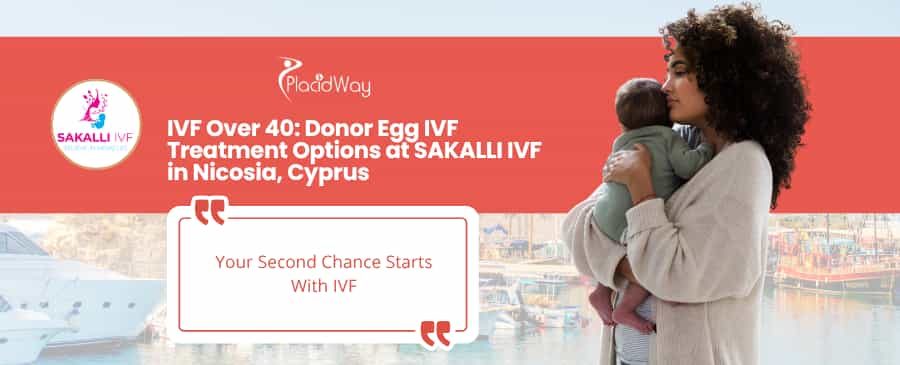
IVF Over 40: Donor Egg IVF Treatment Options at SAKALLI IVF
For many individuals and couples, the path to parenthood is not always straightforward. Fertility challenges can bring emotional uncertainty, questions, and difficult decisions. The most important thing to remember is that you are not alone, and modern reproductive medicine offers several effective solutions to help build your family.
If you have been exploring fertility treatments and are considering options such as in vitro fertilisation (IVF) with donor eggs, it is completely natural to have questions. This guide explains the Donor Egg IVF Treatment in Cyprus process, who may benefit from it, and what to expect throughout the treatment journey.
Who May Benefit From Donor Egg IVF?
Donor egg IVF is often recommended for women whose egg number or egg quality has declined, making pregnancy with their own eggs less likely. It can also be an effective option in several other situations.
You may consider donor egg IVF if you:
-
Have low ovarian reserve or reduced egg quality
-
Are over the age of 40, when egg quality and quantity naturally decline
-
Have experienced early menopause (menopause before age 45)
-
Carry a genetic condition that you wish to avoid passing to your child
-
Have undergone cancer treatments such as chemotherapy or radiotherapy that affected ovarian function
-
Have experienced multiple unsuccessful IVF cycles using your own eggs
At SAKALLI IVF, each patient receives a personalised fertility assessment, allowing our specialists to recommend the most suitable treatment pathway based on your medical history and fertility profile.
How the Donor Egg IVF Process Works
Donor egg IVF follows many of the same steps as conventional IVF treatment. The key difference is that the eggs used for fertilisation come from a carefully screened donor.
Understanding the process can help you feel more confident and prepared for treatment.
Understanding the Donor Egg IVF Process
Donor egg IVF follows many of the same medical steps as traditional IVF treatment. The primary difference is that the eggs used for fertilisation come from a carefully screened donor.
Donor Selection
Patients are matched with donors based on characteristics that are important to them, such as physical traits, blood group, and other relevant factors.
In accordance with local regulations, egg donation is completely anonymous. The identities of both the donor and recipient remain confidential, and identifying information is not shared between parties.
All donors undergo extensive medical screening, including:
-
Comprehensive medical history evaluation
-
Genetic screening
-
Infectious disease testing
-
Hormonal and fertility assessment
This rigorous screening process helps ensure donors are in good health and minimizes the risk of genetic or infectious conditions being transmitted.
Preparing the Uterus for Embryo Transfer
To prepare for embryo transfer, medication is usually prescribed to help optimize the uterine lining so it is ready to receive the embryo.
If fresh donor eggs are used, the recipient’s cycle synchronised with the donor’s cycle. If frozen donor eggs are used, the process is generally more flexible because cycle synchronisation is not required.
Egg Retrieval and Fertilisation
The donor undergoes a short procedure to retrieve the eggs. These eggs are then fertilised in the laboratory using sperm from either:
-
The patient’s partner
-
A selected sperm donor
Fertilisation occurs in the IVF laboratory, where embryos are carefully monitored as they develop.
Embryo Culture and Development
Following fertilisation, the embryos are cultured in a highly controlled laboratory environment and carefully monitored throughout their development.
Embryo development is assessed at specific stages, typically including cleavage-stage embryos (Day 3) and blastocyst-stage embryos (Day 5–6). The quality and development of each embryo are carefully evaluated by the embryologist together with Dr. Mustafa Sakalli, allowing the team to select the most suitable embryo for transfer.
Embryo Transfer
Once the embryo reaches the appropriate stage of development, one or more embryos may be transferred into the uterus. This procedure is simple, minimally invasive, and usually does not require anesthesia.
The number of embryos transferred is carefully determined based on several factors, including the patient’s age, uterine condition, personal preferences, and the medical guidance of Dr. Mustafa Sakalli, with the aim of maximizing the chances of pregnancy while maintaining safety.
Pregnancy Test
Approximately 12–14 days after embryo transfer, a blood test is performed to determine whether implantation has occurred and pregnancy has been achieved.
Success Rates With Donor Egg IVF
Donor egg IVF often provides significantly higher pregnancy success rates, particularly for women over the age of 40 or those with diminished ovarian reserve.
Scientific evidence shows that success rates using donor eggs can be substantially higher than IVF using a patient’s own eggs at advanced maternal age.
For example, studies have demonstrated that in women aged 43–50, live birth rates can increase from approximately 5% with their own eggs to over 30% when donor eggs are used.
Individual outcomes depend on several factors, including:
-
Uterine health
-
Overall medical condition
-
Sperm quality
-
Embryo development and quality
A consultation with a fertility specialist can help determine your personalised chances of success.
Emotional Considerations
Choosing donor egg IVF is a deeply personal decision, and it is completely normal to experience a range of emotions throughout this process.
Some individuals may initially feel uncertainty about using donor eggs or about the absence of a genetic connection. Others may feel hopeful and reassured by the opportunity to achieve pregnancy through this treatment.
It is also important to remember that you will carry the pregnancy in your own uterus, experience the pregnancy yourself, give birth to your baby, and nurture your child through breastfeeding and early bonding. The physical and emotional connection formed during pregnancy and after birth plays a profound role in the relationship between mother and child.
All of these feelings are natural and valid. Professional counseling and compassionate clinical support can help patients navigate this journey with confidence and peace of mind.
At SAKALLI IVF, we believe that emotional support is an essential part of fertility care, and our team is here to guide you every step of the way.
Why Choose SAKALLI IVF for Donor Egg Treatment?
Direct involvement of Dr. Mustafa Sakall? and expert embryologists in every stage of embryo development.
Comprehensive medical and genetic testing for all donors to ensure the highest safety and success standards.
Individualized fertility assessments tailored to your unique medical history and age profile.
Compassionate clinical support and counseling to help you navigate the emotional journey of parenthood.
Take the Next Step With SAKALLI IVF
If you are considering donor egg IVF in Nicosia Cyprus and would like more information, we invite you to schedule a video consultation with one of our fertility specialists. During the consultation, we can review your medical history, discuss treatment options, and help you understand the most appropriate path forward. Contact us today to begin your fertility journey with expert guidance and personalised care.




.png)
-Package-in-Kyrenia,-Cyprus-by-Kyrenia-IVF-Center.jpg)




.jpg)









Share this listing