


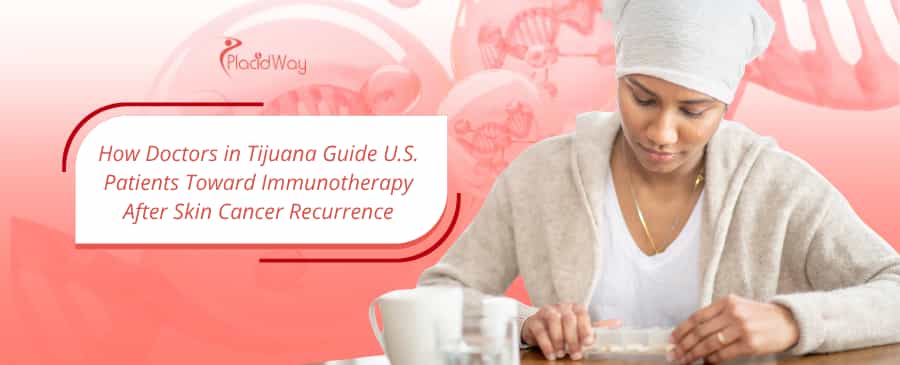
Navigating Skin Cancer Immunotherapy in Tijuana Mexico
There is a unique, suffocating quiet that fills a room when a doctor tells you your cancer has returned. For patients who have already endured the painful surgeries, the anxious waiting for biopsy results, and the sheer terror of an initial skin cancer diagnosis, a recurrence feels like a cruel betrayal by their own body. The emotional exhaustion is profound, leaving families feeling unmoored and terrified that they have run out of viable medical options. Yet, in the midst of this overwhelming darkness, seeking skin cancer immunotherapy in Tijuana has become a vital beacon of hope for many searching for a new way to fight.
When traditional treatments like surgical excision or localized radiation fail to keep the disease at bay, the path forward requires a profound shift in medical strategy. International oncologists gently guide patients away from treatments that failed them, introducing them to advanced biological therapies designed to awaken their own immune systems. Choosing to participate in medical tourism in Mexico is a fiercely brave decision, born out of a relentless desire to live. It offers access to highly sophisticated, life-extending protocols in an environment that honors your vulnerability and respects the incredibly difficult journey you have already traveled.
Clinical studies indicate that advanced melanoma recurrences happen in up to 30% of patients who were initially treated for early-stage disease, highlighting the critical need for robust, systemic second-line therapies like immune checkpoint inhibitors.
Understanding the Devastation of Skin Cancer Recurrence
The psychological toll of a skin cancer recurrence, particularly aggressive forms like melanoma or advanced squamous cell carcinoma, is impossible to overstate. You likely believed you were cured; you celebrated clean scans and tried to move forward with your life, only to find a new dark spot, or worse, feel a swollen lymph node. The fear that crashes over you in that moment is paralyzing, deeply rooted in the knowledge that the cancer has learned how to hide and survive in your body. It is completely normal to feel a profound sense of grief and anger when faced with this terrifying reality.
Biologically, a recurrence generally means that microscopic cancer cells escaped the initial treatment, quietly multiplying until they formed a detectable threat once more. Because these surviving cells have already proven resistant to standard local therapies, oncologists must typically pivot to systemic treatments that treat the entire body. By looking toward advanced skin cancer treatment abroad, patients can access medications that do not just target the visible tumor, but hunt down the microscopic threats circulating in the bloodstream. Understanding this medical shift helps alleviate the fear that your body is failing, reframing it as an opportunity for a new, systemic defense.
Melanoma is particularly adept at suppressing the body's natural immune response, which is why when it returns, it often requires powerful biological interventions to literally "unmask" the cancer cells so your T-cells can see them again.
Why Patients Seek Medical Tourism in Mexico for Skin Cancer
There is a specific, heartbreaking agony in knowing that a life-saving medication exists, but discovering it is financially out of reach. In the United States, the out-of-pocket costs for advanced biological treatments can rapidly decimate a family's life savings, adding a crushing layer of financial toxicity to an already terrifying diagnosis. Patients seek affordable immunotherapy for skin cancer across the border because they refuse to let the price tag dictate their survival. They are fighting for the chance to see their children graduate, to hold their grandchildren, and to simply live without the shadow of impending medical bankruptcy.
However, the journey south is rarely just about the cost; it is profoundly about the quality of human connection. The finest immunotherapy clinics in Tijuana are deeply celebrated for their empathetic, highly personalized models of care. Patients who felt like a mere number in overwhelmed domestic hospital systems often weep with relief when a Mexican oncologist sits with them for an hour, simply listening to their fears. This deeply humane approach rebuilds the emotional strength necessary to endure the grueling reality of ongoing cancer treatment.
When planning your journey, allow yourself the grace to acknowledge the emotional weight of traveling for care. Bring a trusted loved one to every cross-border consultation to help you process the complex medical information and share the emotional burden.
Comprehensive Cost of Skin Cancer Immunotherapy in Mexico
Sitting at a kitchen table surrounded by denied insurance claims and towering medical bills is a nightmare that countless cancer patients endure. The monthly price of advanced checkpoint inhibitors in North America can be staggering, forcing families to make impossible choices between their health and their homes. The **cost of skin cancer treatment in Mexico** provides a vital release valve from this immense pressure, offering the exact same FDA-approved pharmaceutical agents at structurally sustainable prices. This financial relief allows patients to redirect their precious energy back to where it belongs: fighting the disease.
To truly reclaim control of your future, you must understand the complete financial landscape of international care. A responsible medical budget must account for not only the life-saving infusions but also the necessary diagnostics, physician consultations, and vital laboratory monitoring that keeps you safe. While prices naturally vary based on your personalized biological protocol, the transparency of international pricing generally allows for concrete, honest planning. Below is a realistic comparison of what families typically face when budgeting for their survival.
| Crucial Oncology Procedure | Average Cost in Tijuana, Mexico | Estimated Cost in US/Canada |
|---|---|---|
| Immunotherapy Infusion (Per Cycle) | $4,500 - $8,000 | $12,000 - $20,000+ |
| Comprehensive Initial Oncology Review | $150 - $300 | $500 - $1,500 |
| Whole-Body PET/CT Diagnostic Scan | $800 - $1,500 | $3,000 - $7,000 |
| Vital Hematology and Biomarker Panels | $100 - $250 | $400 - $1,200 |
The profound cost discrepancy across the border is generally attributed to strict national pharmaceutical price caps and diverse international distribution models, not a reduction in the purity or efficacy of the life-saving medications.
The Medical Shift to Checkpoint Inhibitors for Melanoma
When you are told your skin cancer has returned, you need a medical strategy that is smarter than the disease. In the past, advanced melanoma offered little hope, but the advent of immune checkpoint inhibitors has radically altered the landscape of survival. Medications targeting the PD-1 or CTLA-4 pathways do not poison the body like traditional chemotherapy; instead, they release the "brakes" on your own immune system. This biological awakening allows your exhausted T-cells to finally recognize and systematically destroy the cancer cells that caused the recurrence.
Accessing these powerful biological agents through skin cancer care across the border means you are stepping into the modern era of precision oncology. Your international medical team will deeply evaluate your specific type of recurrence to determine which inhibitor, or combination of inhibitors, will offer the strongest defense. It is a terrifying transition, moving from surgeries you can see to intravenous drips you must trust, but it represents the most potent weapon modern medicine currently possesses against recurring skin cancers.
Because immunotherapy entirely changes how your body functions, you must never begin these treatments without a rigorous cardiovascular and autoimmune screening. A compassionate oncologist will demand these tests to protect your fragile system from overwhelming inflammation.
Preparing for Advanced Skin Cancer Treatment Abroad
Walking into a new clinic in a different country carries a profound vulnerability. To ensure your safety, reputable international oncology centers will require a complete diagnostic mapping of your body before a single drop of medicine is administered. This intense preparation phase generally involves updated PET scans, extensive blood work, and sometimes the molecular testing of old biopsy tissues. These doctors are not merely checking boxes; they are meticulously searching for the unique biological markers that will dictate your personalized treatment plan.
The goal of this rigorous evaluation is to guarantee that the prescribed immunotherapy will be both highly targeted and as safe as possible for your weary body. By engaging in medical tourism in Mexico, patients often find that these diagnostic workups are completed with astonishing speed and deep care, avoiding the agonizing weeks of waiting typical in domestic systems. This rapid, precise preparation is the crucial foundation upon which your renewed fight for life will be built.
Compile a deeply detailed timeline of your initial cancer diagnosis, every surgery, and every medication you previously tried. This written history is the most precious tool your new doctor will use to understand how your specific cancer behaves.
Biomarker testing, specifically looking for genetic mutations like BRAF in melanoma cases, allows international oncologists to precisely predict if your body is structurally ready to respond to specific immunotherapy agents.
The Timeline for Immunotherapy Clinics in Tijuana
Committing to an advanced biological treatment requires surrendering to a strict, rhythmic timeline that will govern your life for months. Immunotherapy is typically administered via intravenous infusions every two, three, or four weeks, depending strictly on the pharmacological protocols of the specific drug. This means patients must find the emotional and physical endurance to travel across the border repeatedly, maintaining an unwavering commitment to their infusion schedule. Skipping doses or delaying treatments can tragically give the aggressive cancer cells an opportunity to hide once again.
Perhaps the most agonizing part of skin cancer immunotherapy in Tijuana is the waiting game that follows the infusions. Unlike surgical excision, where the tumor is immediately gone, the immune system takes time to mount its counterattack. Patients must generally wait several months before follow-up scans can objectively prove if the treatment is halting the recurrence. This period of profound uncertainty requires immense emotional support from your cross-border clinical team, who will monitor you closely during the long wait.
Testimonial Title: Finding Rhythm in the Chaos
"When my melanoma returned, the thought of driving to Mexico every three weeks felt impossible. I was so tired. But the clinic staff became like family. They knew my name, they held my hand during the IV drips, and suddenly, the travel just became part of my routine. I am exhausted, but my latest scans show the tumors are finally shrinking."
Testimonial Title: The Agony of Waiting
"The hardest part was the three months between starting treatment and getting my first PET scan. Every day I wondered if the cross-border trips were working. My Mexican oncologist called me personally twice a week just to check on my mental state. That level of deeply human care is what kept me from falling apart before we got the good news."
Managing Side Effects of Affordable Immunotherapy for Skin Cancer
We ask our bodies to endure unimaginable things in the name of survival. While immunotherapy spares patients from the devastating hair loss and severe nausea of traditional chemotherapy, it introduces a terrifying new set of risks. Because these medications radically amplify your immune system, your body can become confused and begin attacking healthy organs, a condition known as immune-related adverse events (irAEs). Patients frequently endure a bone-deep, crushing fatigue, unpredictable full-body rashes, or severe digestive pain that makes daily life feel impossible.
When you are receiving affordable immunotherapy for skin cancer in another country, managing these frightening symptoms requires absolute, unshakeable trust in your medical team. You must suppress the urge to be "tough" and immediately report any strange physical feeling, no matter how minor it seems. The compassionate doctors at your international clinic are highly trained to recognize these inflammatory side effects quickly, often pausing treatment and administering systemic steroids to rescue your organs before permanent damage occurs.
The terrifying reality of immune checkpoint side effects is their sheer unpredictability; a patient might feel perfectly fine for months, only to have a severe inflammatory reaction suddenly appear seemingly overnight.
Always demand a detailed, wallet-sized medical card from your international clinic that clearly lists your specific immunotherapy drugs. If you experience an emergency back home, presenting this card to local doctors can save your life.
Evaluating Top-Tier Oncology Centers in Tijuana
Entrusting your fragile life to a foreign medical institution is an act of incredible, terrifying faith. To quiet the anxiety whispering in your mind, you must evaluate international clinics with absolute, uncompromising rigor. The safest immunotherapy clinics in Tijuana proudly display their national and international accreditations, proving they adhere to the strictest global standards for sterile environments and pharmaceutical handling. You must seek out facilities that are entirely transparent about their safety records and the specific board certifications of their oncology staff.
Beyond the sterile walls and modern infusion chairs, you must evaluate the collaborative soul of the clinic. The highest quality centers utilize a multidisciplinary tumor board approach, ensuring that your delicate case is reviewed by a team of medical oncologists, specialized radiologists, and compassionate nursing staff. Ensuring this robust web of medical expertise is in place guarantees that your pursuit of skin cancer care across the border is anchored in absolute, undeniable clinical excellence.
Healthcare research consistently demonstrates that clinics utilizing specialized oncology nursing teams report significantly lower rates of preventable infusion complications, providing a vital layer of safety for vulnerable patients.
Many world-class facilities in Mexico actively participate in international oncology symposiums, ensuring their physicians remain at the absolute forefront of rapidly evolving melanoma treatment protocols.
The Deeply Human Approach of Mexican Oncologists
There is a profound healing that occurs the moment a doctor looks you in the eye, puts down the medical chart, and truly sees your terror. In many domestic healthcare systems, patients fighting a recurrence feel rushed through cold, fifteen-minute appointments, leaving them feeling like a burden rather than a human being. Conversely, the physicians guiding advanced skin cancer treatment abroad are frequently celebrated for their unhurried, deeply empathetic bedside manner. They sit with you, they let you cry, and they gently explain the terrifying science of immunotherapy until you feel safe.
This immense emotional support is not merely a pleasant bonus; it is a critical component of your physical survival. Studies have long suggested that chronic, unmanaged stress actively suppresses the immune system the very system these drugs are trying to awaken. By providing a sanctuary of compassionate care, integrated with nutritional and psychological support, these international teams help rebuild your broken resilience. They treat the trauma of your recurrence with the same urgency as the cancer itself.
The cultural emphasis on deep familial respect in Mexico naturally extends into their medical care models, resulting in an environment where international patients are fiercely protected and treated like family.
Real Stories of Skin Cancer Care Across the Border
When you are drowning in terrifying statistics and survival rates, what your heart truly craves is the voice of someone who has survived the storm. The choice to seek oncology care in a foreign country is fraught with anxiety, and the fear of the unknown can be paralyzing. However, the shared narratives of those who have bravely walked this path before you cast a vital light into the darkness. Their stories validate your fears while simultaneously proving that compassionate, life-saving healing is possible just across the border.
Every single cancer journey is agonizingly unique, dependent on a thousand invisible biological variables. Yet, hearing how others managed the exhausting travel, navigated the terrifying side effects, and ultimately found hope through skin cancer immunotherapy in Mexico provides an emotional scaffolding. These real-world testimonies remind you that behind every clinical file is a human being fighting desperately for more time, and that you are never truly alone in this fight.
Testimonial Title: Overcoming the Fear of the Unknown
"When the melanoma came back, my local doctor said my options were limited and wildly expensive. I was terrified to go to Mexico. But the moment I met my oncologist in Tijuana, I wept with relief. He held my hands and explained the PD-1 inhibitors in a way I finally understood. The infusions were hard, but the clinic's humanity saved my life and my sanity."
Testimonial Title: A Husband's Fight for His Wife
"Watching my wife suffer through her recurrence broke me. The financial stress of treatments in the US was tearing our family apart. Seeking affordable care across the border was a desperate leap of faith. The medical team there didn't just treat her cancer; they gave us a safe place to breathe. Her scans are stable now, and we finally have hope again."
Preparing Your Family for Cross-Border Healing
When your life feels entirely out of your control, the physical act of organizing your medical journey can be profoundly grounding. Before you even cross the border, you must become the fierce archivist of your own survival. This means gathering every agonizing detail of your medical history: the heartbreaking pathology reports, the dates of every failed surgery, and the physical discs of every scan. Handing this complete, unvarnished truth to your new international team is the first crucial step in forging a safe path forward.
Beyond organizing the medical files, you must prepare your family for the emotional reality of **medical tourism in Mexico**. You must have deeply honest conversations with your loved ones about the profound fatigue you will experience from both the travel and the medications. By setting realistic expectations and creating a strong emotional support system at home, you build the resilience necessary to endure the grueling months of treatment ahead. Together, you can face the anxiety of the journey, holding tightly to the hope it represents.
The "Hold Onto Hope" Journey Checklist:
- Secure physical and digital copies of all recurrence pathology reports.
- Obtain actual imaging discs (PET/CT) from your local radiologist.
- Ensure passports are valid for at least six months beyond your treatment dates.
- Write down a list of your deepest fears to discuss openly with your new doctor.
Never pack your vital medical records in checked luggage. Always carry your entire medical history in your personal carry-on bag to ensure it is never lost in transit.
Value-Based Support from PlacidWay During Your Medical Journey
When you are fighting the terrifying reality of a cancer recurrence, the sheer logistics of coordinating international healthcare can feel like a suffocating, insurmountable wall. You do not have to carry this heavy, complex burden alone. PlacidWay exists to guide terrified families safely through the overwhelming global healthcare landscape, connecting you with vetted, deeply compassionate medical institutions so you can focus entirely on your healing.
Our mission is to stand beside you in this incredibly vulnerable moment, providing transparent support and honoring the immense weight of your medical decisions. Finding the right facility for **cost of skin cancer treatment in Mexico** requires meticulous care, and we are dedicated to illuminating your path forward with empathy, expertise, and absolute integrity.
- Providing immediate, transparent access to profiles of internationally accredited oncology centers and board-certified specialists who understand your specific struggle.
- Gently facilitating the secure, highly organized transfer of your complex medical history between your local doctors and your new international providers.
- Assisting you in obtaining clear, rigorously honest treatment estimates, actively alleviating the terrifying anxiety of unexpected financial burdens.
- Offering deeply empathetic patient coordination services, ensuring every single one of your fearful medical questions is answered directly by qualified clinical staff.
- Empowering you with objective data and extensive educational resources, giving you the courage and clarity needed to make confident decisions for your survival.
Navigating the complexities of cross-border oncology care with a dedicated patient coordination service has been shown to significantly reduce the pre-treatment anxiety levels of vulnerable patients.
Frequently Asked Questions About Skin Cancer Treatment Abroad
The fear of the unknown is often as agonizing as the disease itself. When you are considering leaving your home country to save your life, your mind is undoubtedly flooded with a thousand anxious questions. Validating these intense fears and seeking objective, highly honest answers is the most crucial step in taking back control of your health and your future.
Below, we have answered the most deeply pressing questions families ask when faced with the terrifying transition to international oncology care. We hope these medical and logistical insights bring a small measure of peace and clarity as you bravely plan your path forward.
Safety is always the primary concern when your body is already weary from previous battles with cancer. Many leading international oncology clinics adhere strictly to global safety protocols and employ board-certified specialists who monitor patients vigilantly. It is deeply important to verify a clinic's accreditations and consult with your home oncologist before traveling.
When skin cancer, such as melanoma, returns, it generally means the cancer cells survived previous surgeries or treatments. Immunotherapy is typically recommended because it works differently by empowering your own immune system to systematically seek out and attack these hiding cancer cells throughout your body.
The agonizing financial weight of cancer care is frequently alleviated across the border, where treatments are generally 40% to 60% lower. A single infusion cycle typically ranges between $4,500 and $8,000, allowing families to sustain necessary long-term care without completely depleting their life savings.
Intravenous immunotherapy is typically administered in strict cycles, generally requiring a clinic visit every two to four weeks. While the recurring travel can be exhausting, many patients establish a comforting rhythm, sometimes utilizing medical border passes to make the journey as smooth as possible.
Because these medications hyper-activate your natural defenses, most patients typically experience profound fatigue, skin rashes, or gastrointestinal changes. It is incredibly important to report even the slightest physical change to your medical team, as immune-related inflammation requires prompt, compassionate intervention.
Absolutely, maintaining a strong relationship with your local medical team is a vital lifeline during international treatment. Cross-border oncologists are generally highly accustomed to sharing detailed lab results and digital scan files to ensure your care remains seamless and deeply collaborative.
Heartbreakingly, most primary US health insurance networks do not directly cover the cost of international oncology care. However, the significantly reduced out-of-pocket costs in Mexico often make self-funding realistic, and some families successfully utilize specialized medical financing.
While the actual intravenous drip typically lasts between 30 and 90 minutes, patients generally spend a half-day at the clinic. This precious time allows for unhurried blood work, deep conversations with your physician, and a period of safe observation following the treatment.
Many international clinics are globally celebrated for treating the whole human being, not just the disease. Patients typically have access to integrative support such as nutritional counseling and psychological care, helping to rebuild the emotional resilience broken by a cancer recurrence.
To receive the safest, most precise care, you must bring the complete narrative of your medical history. This critically includes your original pathology reports, records of previous surgeries or treatments, and physical discs containing your most recent PET or CT scans.
Experiencing intense anxiety before your follow-up scans, commonly referred to as "scanxiety," is a universally recognized emotional trauma among cancer patients. You are completely normal for feeling terrified during these waiting periods.
Never hesitate to ask your international medical team to re-explain a concept if you are feeling overwhelmed by fear. True medical professionals will patiently answer the same question ten times until you feel safe and understood.
References:
- Mayo Clinic. (2026). Melanoma - Diagnosis and Advanced Treatment Options. https://www.mayoclinic.org/
- National Center for Biotechnology Information, PubMed. (2026). Systemic Immunotherapy Protocols for Recurrent Skin Cancers. https://pubmed.ncbi.nlm.nih.gov/
- U.S. Food and Drug Administration (FDA). (2026). Checkpoint Inhibitors and Approvals for Advanced Melanoma. https://www.fda.gov/
- World Health Organization (WHO). (2026). Global Burden of Skin Cancers and Access to Biologic Therapies. https://www.who.int/
.png)
















Share this listing