



Patient Profile
Name: Natalie Foster
Age: 42
Condition: Enamel deterioration, discoloration and tooth spacing
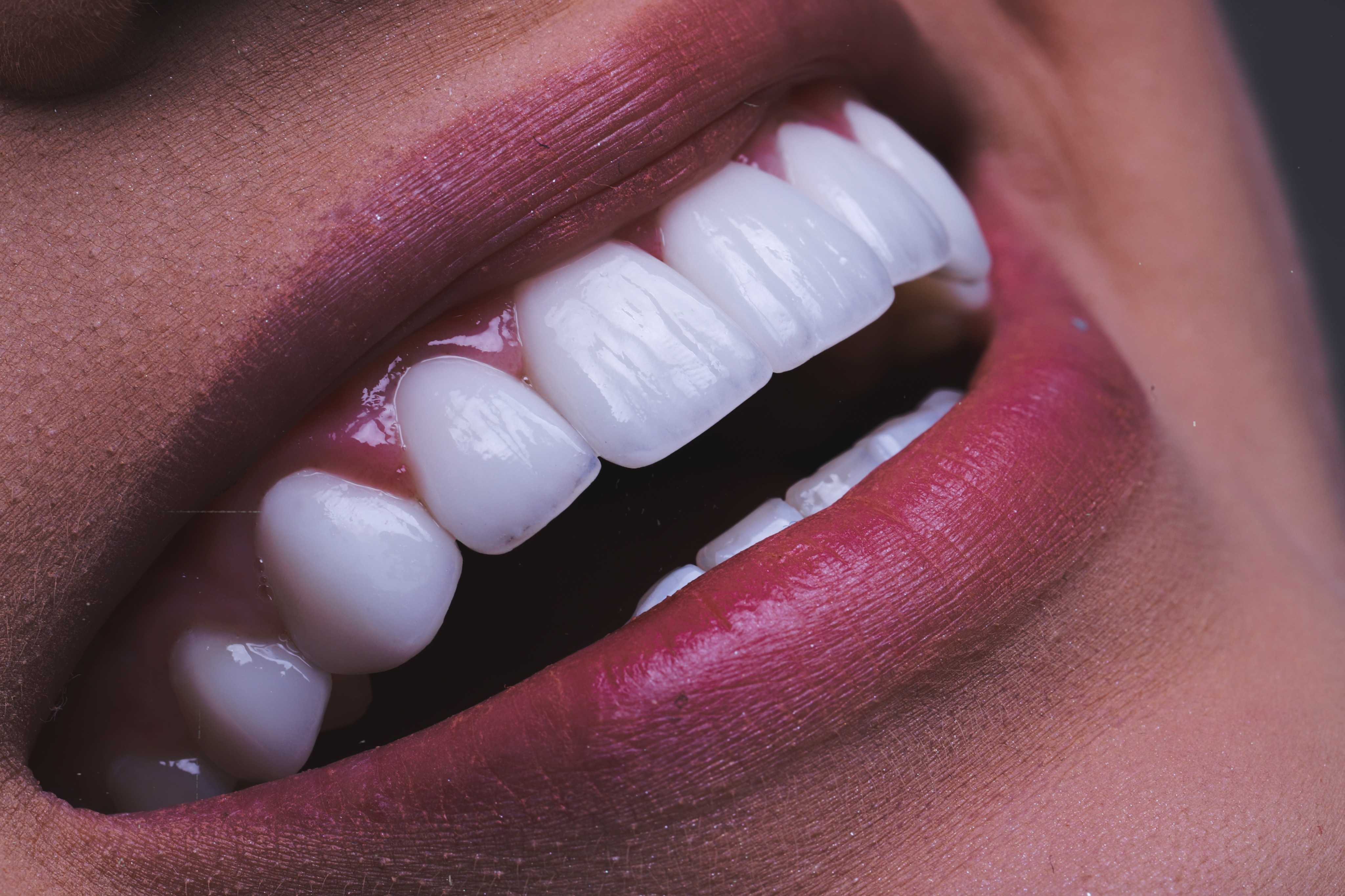
Treatment: Porcelain dental veneers with possible whitening and gum contouring
Destination: Bogota, Colombia
Provider: Not specified in the source content
Journey at a Glance
Main problems: Discolored, chipped, or misaligned front teeth visible in professional/social settings; Tooth wear from grinding or aging; Spacing or shape irregularities affecting smile aesthetics; Increasing reluctance to smile in photos, meetings, or social…
Previous care: Requested payment plans from US cosmetic dentists (often 18-24 months at high interest); Explored dental discount plans (limited dentist networks, modest savings ~10-15%); DIY whitening strips and at-home trays (minimal, temporary results)
Travel driver: Cost arbitrage + aesthetic urgency + time compression into single trip
Treatment explored: Porcelain dental veneers with possible whitening and gum contouring
Personal goal: Smile naturally in meetings, photographs and social situations.
You start by closing your lips in family photographs.
You master the tight, professional half-smile for client introductions.
You reposition your laptop in Zoom meetings so the webcam doesn't highlight the enamel wear.
You stop ordering coffee on first dates to avoid temporary staining.
You buy a thicker, more abrasive whitening paste.
You buy another one.
You practice covering your mouth with your hand when you laugh.
You accept that looking completely relaxed in public is simply a luxury meant for other people.
"It doesn't even look that bad."
"You're being far too hard on yourself."
"Nobody is looking closely at your teeth."
Your professional world has quietly become smaller.
The hardest part is not the structural deterioration or the prohibitive financial barrier, but the waiting.
We should introduce Natalie Foster, even though she is not a real person.
Natalie Foster is not a real PlacidWay client.
She is a fictional composite built from the exact situations, frustrations, and questions American professionals face every day.
She is forty-two.
She lives in Austin, Texas.
She manages local marketing accounts for a mid-sized logistics firm.
She drives to work, plans weekend hikes, and balances a household budget with ordinary competence.
She built an entire routine around rationalizing the structural wear.
She explained the enamel thinning away as a natural, unavoidable consequence of aging.
She blamed the slight shifting on her own refusal to wear a retainer in college.
Then she tried everything that did not require applying for a dental loan.
Whitening strips.
Charcoal powders.
Over-the-counter night guards.
Discount dental networks.
Avoiding the camera entirely.
Standard cosmetic intervention for this degree of structural and aesthetic wear usually requires porcelain veneers to replace the visible facial surface of the teeth, a procedure formally indicated when natural enamel cannot be chemically whitened or orthodontically salvaged (ada.org).
She finally requested a comprehensive treatment plan from her local specialist, only to read the formal insurance denial.
"Cosmetic."
When?
The financial barrier is entirely systemic.
More than seventy-four million Americans lack basic dental coverage, and even comprehensive employer-sponsored plans routinely deny elective cosmetic restorations, leaving out-of-pocket costs to dictate access (cdc.gov).
But Natalie Foster doesn't experience the US dental system as a national statistic.
She experiences it when the local dentist's financial coordinator slides a care plan across the desk showing USD 18,000 for eight upper teeth.
"We offer financing for twenty-four months."
She experiences it when her insurance provider abruptly rejects the pre-authorization claim.
"This code falls under aesthetic exclusion."
She experiences it sitting in her car in the clinic parking lot, doing mental math that never resolves in her favor.
"I just need to find another way."
She has already tried to be relentlessly patient.
The narrative that professionals seeking cosmetic care abroad are simply impatient shoppers ignores the years they spent trying to make the domestic system work.
She waited out the mandatory waiting periods on three different dental discount networks.
She saved discretionary income for two years only to watch domestic clinical fees effortlessly outpace her savings rate.
She researched clear aligners, only to learn they cannot repair degraded enamel.
She spoke to her employer's human resources department about flexible spending limits.
"I've done exactly what I was supposed to do."
"It just isn't enough."
The calculation begins to shift:
From "Can I tolerate this?" to "How much of my life am I prepared to organise around it?"
The domestic alternative fails quietly at the kitchen table.
Her local alternative fails on the unglamorous nuance of household economics.
Financing USD 18,000 at eighteen percent interest over three years creates a monthly burden that competes directly with a car payment or property taxes.
It forces a false choice between professional confidence and long-term financial security.
She sits at the kitchen table with her husband, Marcus, looking at the loan agreement.
"We could technically afford the monthly payment."
"But affording it and being able to afford it aren't the same thing."
She isn't searching for international dentistry yet.
Her initial search queries are small, localized, and pragmatic:
Can you get veneers on just the front four teeth?
Payment plans for cosmetic dentistry Austin TX.
How long do composite resin veneers last?
Cheapest state for dental work in US.
Dental tourism reviews.
Then the algorithm begins serving her articles about Colombia.
Specifically, Bogota.
Her initial reaction is entirely appropriate.
"I'm not going to South America just because dental work is cheaper."
That instinct is exactly right.
Price should never answer a clinical or medical question.
Why does the capital of Colombia keep appearing on her screen?
Bogota continues to surface in her research because it has structurally repositioned itself within the global healthcare market.
The Colombian government has actively developed medical tourism infrastructure, strictly regulating clinic sterilization protocols and specialized dental certifications to attract international patients (minsalud.gov.co).
The geographic reality makes the difference:
Bogota is only a four-hour flight from major Texas hubs.
The necessary reframe requires moving past the concept of national branding.
The question is never whether Colombia is good at dentistry.
Countries do not place porcelain restorations.
Prosthodontists do, clinical teams do, and specialized ceramic laboratories do.
There is always something concrete to verify.
The US Centers for Disease Control and Prevention officially advises individuals considering medical tourism to independently research their specific provider's accreditation and to consult with a domestic clinician before traveling (cdc.gov).
Her first question was the most predictable one.
Indicative pricing for an eight-veneer porcelain restoration in Bogota currently ranges from USD 3,000 to USD 6,000, varying based on the exact ceramic material, the seniority of the prosthodontist, and the clinic's digital imaging capabilities (placidway.com).
Her father's voice echoes in the back of her mind:
"If a deal looks too good to be true, somebody is hiding the real cost."
"What exactly am I getting?"
Are the temporary veneers included while the permanent ones are milled?
Does this cover the initial panoramic X-rays?
Are the consultation fees separate?
Is local anesthesia standard, or billed per injection?
Who pays for the revisions if the color matching is wrong?
Does the quote include professional whitening for the lower teeth?
Are ground transfers from the airport covered?
Is the ceramic e.max, zirconia, or a standard porcelain blend?
Does the clinic use a local lab or an in-house milling machine?
What happens if a veneer cracks on day three?
Do they provide a custom night guard for the plane ride home?
Is translation assistance provided during the clinical hours?
The advertised number is only the beginning of the conversation.
The questions force a permanent shift in her research.
She stops looking for the lowest possible price.
She starts looking for the highest degree of transparency.
Understanding what the procedure actually involves changes everything.
Understanding the physical reality of the procedure is essential for evaluating the logistics.
Porcelain veneer placement requires permanently removing a thin layer of natural tooth enamel—typically less than a millimeter—to allow the ceramic shell to bond flush with the gum line, a structural alteration that cannot be reversed (mouthhealthy.org).
The clinical work happens over two main appointments separated by several days of laboratory fabrication.
It is medical treatment, governed by strict biological realities, regardless of the postal code where it occurs.
"Wait. What am I supposed to do for five days between appointments?"
The promotional brochures rarely put the recovery constraints on the front page.
The unglamorous operational reality is that international dental care is largely a waiting game played in hotel rooms.
Conflicting guidance exists regarding post-preparation recovery; some authorities recommend an immediate return to light activity, while others caution against significant altitude changes and dietary stress during the temporary veneer phase (travel.state.gov).
The variation itself is the lesson.
This biological constraint must be part of the travel plan before committing, not discovered as an afterthought.
"Wait. Does that mean I can't eat solid food while exploring the city?"
Possibly, depending on how your dentin reacts to the temporary bonding cement.
How far is the hotel from the clinic in morning traffic?
Will the high altitude of Bogota cause localized gum swelling to persist longer?
Is there a pharmacy within safe walking distance of the accommodation?
Do the local restaurants serve soft foods that won't dislodge the temporaries?
What is the protocol if a temporary shell falls off at nine o'clock at night?
Can the clinic accommodate a delayed inbound flight without rushing the preparation?
Who do I call if I experience acute nerve pain on a Sunday?
Does the hotel offer purified water for rinsing?
Are the clinic's sterilization standards verified by a global accreditation board?
Will the final fitting appointment leave enough time to catch an evening flight?
The necessary reframe is straightforward:
This is not tourism in any conventional sense.
The trip is a clinical extraction from her normal life.
The destination is entirely secondary to the logistics of recovery.
She is traveling solely to heal in a different chair.
Marcus isn't just coming along to carry the luggage.
He is the invisible second participant in the medical journey.
He will be the one managing the WhatsApp communication with the clinic coordinator when Natalie Foster cannot speak.
He will be the one remembering the medication schedule when she is exhausted.
He will be the one noticing if her bite seems misaligned before they leave for the airport.
He needs to know exactly what the escalation path is if an emergency occurs.
Comprehensive medical complications insurance—which is distinct from standard travel insurance—is a non-negotiable requirement for accompanying partners managing care abroad (cdc.gov).
He is part of the clinical support system too.
Then comes the uncomfortable conversation about biological risk.
All elective dental restorations carry inherent biological risks, including nerve damage, irreversible pulpitis, asymmetric gum healing, and mechanical failure of the ceramic bond (fda.gov).
Natalie Foster learns to aggressively distrust the vocabulary of medical marketing:
Completely safe.
No risk.
Guaranteed success.
Perfect smile.
Painless procedure.
True informed consent means understanding far more than the hoped-for outcome.
Her consultation questions become significantly sharper.
She replaces her original questions with better ones.
Can you show me a case where the initial bonding failed?
How many veneer placements does this specific prosthodontist perform weekly?
What is your clinical protocol for managing acute postoperative infection?
Are your ceramic materials sourced from certified international suppliers?
Will I meet the master ceramist who is actually designing my teeth?
What happens if I refuse the final aesthetic look before bonding?
Do you provide a written warranty that is legally binding?
How do you handle post-treatment complications once I am back in Texas?
Are your digital impressions compatible with US dental software?
What would you see in my preliminary X-rays that would make you tell me not to proceed?
She doesn't only want a clinician willing to do the work.
She wants a clinician willing not to.
Has she truly exhausted all of her options at home?
Patients have a fundamental right to request alternative treatment codes, appeal cosmetic denials based on functional impairment, and seek sliding-scale care at regional dental colleges (hhs.gov).
Can my current dentist offer a phased treatment plan over two years?
Is there a dental school within driving distance seeking board patients?
Will my insurance cover the enamel preparation if I pay for the ceramics out of pocket?
Can we achieve seventy percent of the aesthetic result with cheaper composite bonding?
Would a localized credit union offer a lower interest rate for medical financing?
The Bogota option should be compared with Natalie Foster's real, verified alternatives, not with a worst-case assumption about her home system.
The night before the decision looks entirely different.
The kitchen table looks different than it did three months ago.
A printed dossier of clinic certifications.
A spreadsheet of out-of-pocket travel costs.
A translated copy of the clinical guarantee.
A confirmed schedule of laboratory milling times.
A list of emergency contacts in Bogota.
"I think we actually know what we're doing," Marcus says.
"We know what could go wrong, at least," Natalie Foster replies.
The deep research didn't make them more afraid.
It made them capable of deciding.
What she actually wants isn't found in a dental laboratory.
When her sister asks her why she is going to so much trouble for cosmetic dentistry, Natalie Foster gives the expected answer about looking professional on video calls.
But what she actually wants is highly specific:
Get eight porcelain veneers in one trip and return to work smiling within ten days.
She wants to laugh without raising her hand to her mouth.
She wants to sit in a strategy meeting without analyzing the overhead lighting.
She wants the background anxiety of her appearance to quietly dissolve.
Not the flight.
Not the e.max porcelain.
Not the medical tourism package.
Not the destination.
Freedom.
And underneath that:
Reclamation.
Traveling to South America might be the answer, but it might not be.
Traveling to Colombia might be the correct strategic answer for her situation.
It might not be.
She might discover her jaw clenching makes porcelain too fragile to risk.
She might find the required time away from work cannot be justified.
She might secure an unexpected domestic financing rate that makes staying home viable.
She might decide the logistical stress of international healing outweighs the financial savings.
She might simply accept her natural smile and invest the money elsewhere.
Any of those outcomes can represent a successful, informed decision.
The goal of exploring medical tourism is not to be persuaded into buying a plane ticket.
The goal is to ensure that financial frustration doesn't make a permanent biological decision for you.
You are evaluating paths forward, not just price tags.
Maybe you have spent years hiding your smile in corporate photographs.
Maybe you have memorized the exact angle where your chipped enamel catches the light.
Maybe you are exhausted by the friction of American dental billing.
Maybe you are carrying the quiet resentment of being priced out of your own confidence.
Maybe you are simply tired of waiting.
You do not need to decide today.
You just need to start asking better questions.
What exact clinical problem am I trying to solve?
What does my local system genuinely demand I pay for it?
Are my biological expectations realistic?
Who is legally accountable if the restoration fails?
How much logistical friction am I willing to endure to bridge the financial gap?
Do I have the logistical support to travel safely?
Am I running toward a solution, or just running away from a price tag?
You are not just comparing prices.
You are comparing paths forward.
Hope isn't the promise that everything will be perfectly fixed.
Hope isn't the promise that a cheap flight will solve complex dental decay.
Hope isn't the promise that a clinic in Bogota will instantly erase years of insecurity.
Hope isn't the promise that international medicine is without risk.
Hope is having enough transparent, verifiable information to make a medical decision that actually feels like yours.
It is the capacity to read clinical reviews critically.
It is the ability to walk away from a consultation that feels rushed.
It is the power to separate the marketing brochure from the biological reality.
It is the permission to demand accountability across borders.
It is the transition between two internal states:
From "I suppose I'll just have to keep waiting."
To:
"What other informed options do I have?"
PlacidWay — Your Way to Hope.
PlacidWay helps individuals safely explore global healthcare alternatives, compare accredited international providers, and prepare the critical questions needed for secure medical travel.
We do not provide clinical advice, diagnose dental conditions, or guarantee aesthetic outcomes.
For someone like Natalie Foster, a clinic in Bogota isn't a promise of perfection, it is one carefully evaluated route worth understanding.
Your Way to Hope.
This article is entirely educational and does not recommend that any individual undertake elective international medical travel or cosmetic dentistry. Individual suitability, biological viability, and surgical risk require direct professional assessment. The reader should consult their own licensed domestic clinician or prosthodontist, independently verify the current regulatory status of any international provider, and obtain appropriate medical complications insurance prior to making any travel or treatment decisions.
.png)






.png)
.png)
.png)


.png)
.png)
.png)









Share this listing