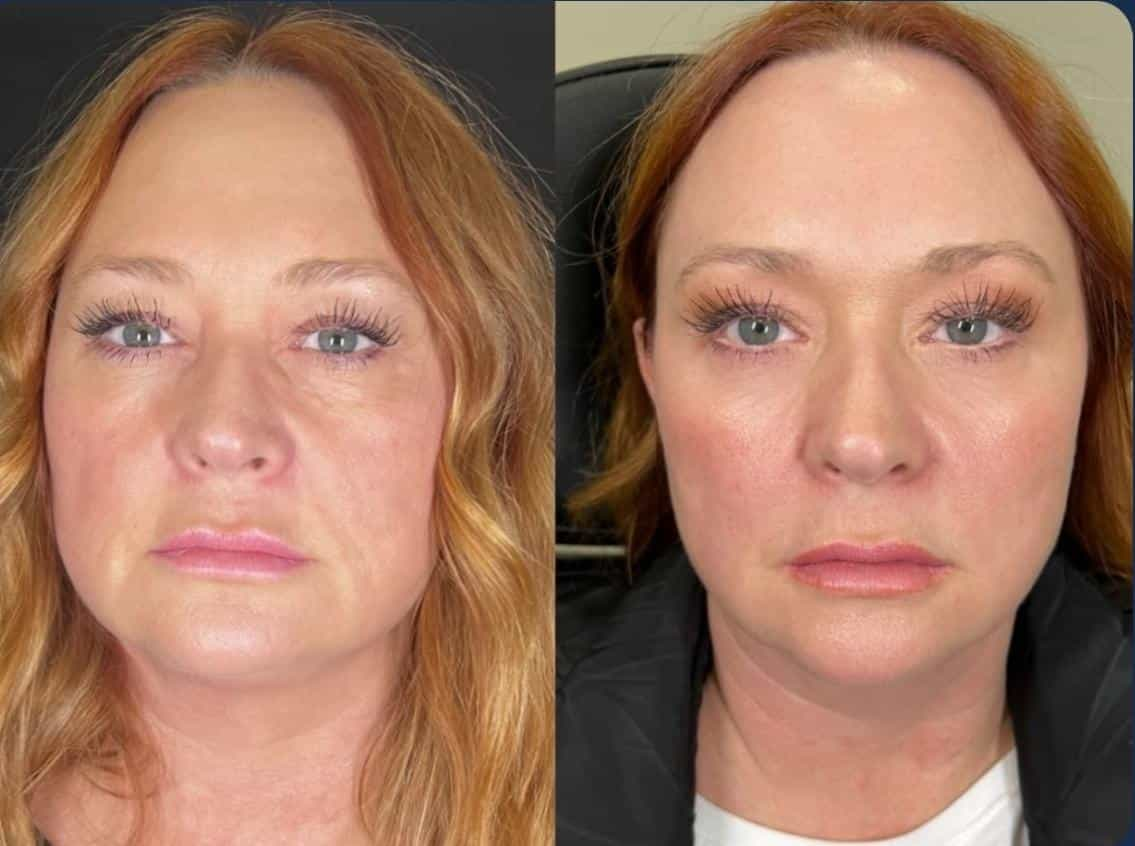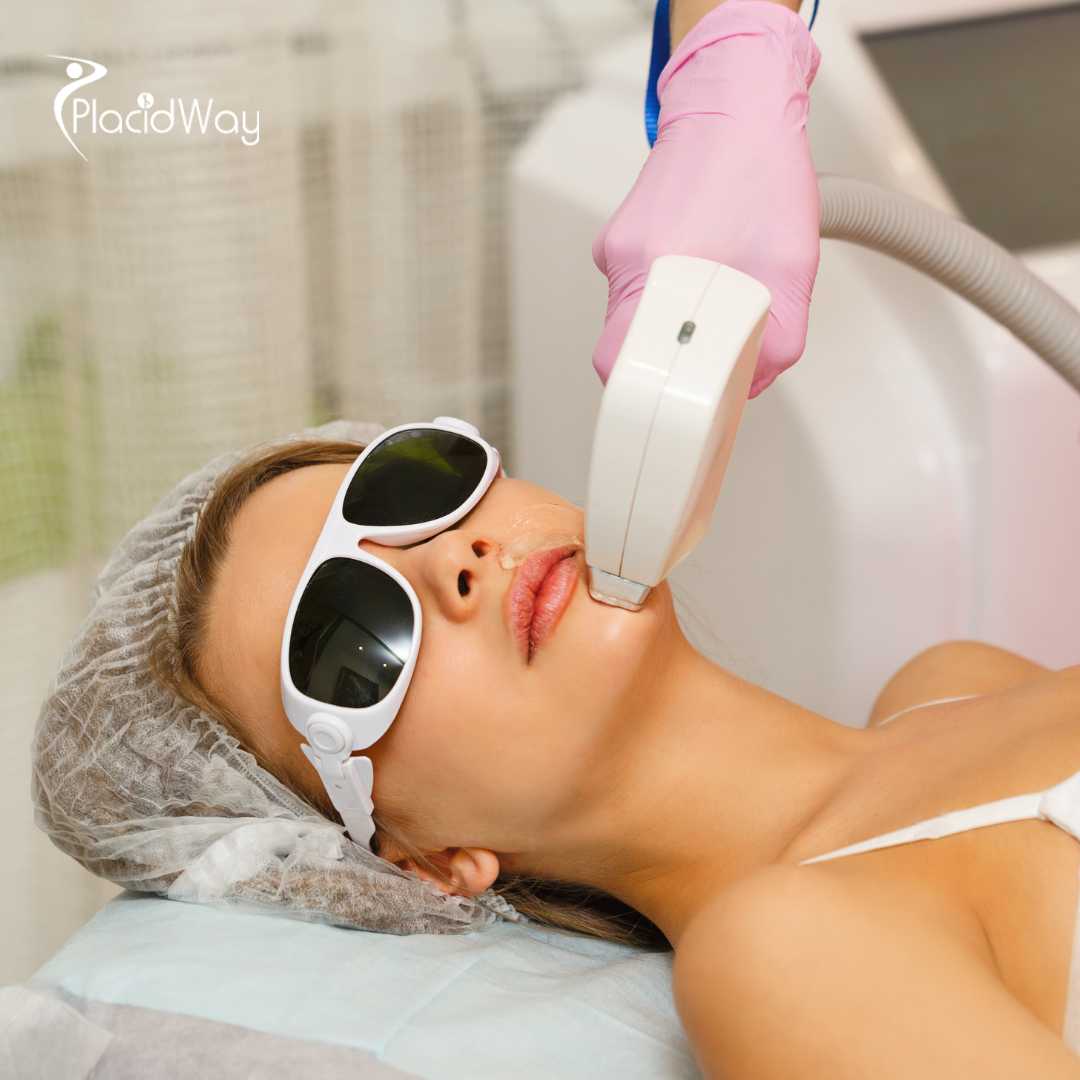
The Video Calls She Kept Avoiding: Wang Xinyi’s Acne Scarring Laser Resurfacing Story from China to South Korea

Publish date: Modified date: Medically reviewed by: Dr. Somchai Theeravit on Aug 31, 2026 Author: Amelia Pricilia

Wang Xinyi’s Acne Scarring Laser Resurfacing Story 

Patient Profile

Name: Wang Xinyi

Age: 33

Condition: Acne vulgaris with scarring and photoaging

Treatment: Fractional laser, pico-laser, RF microneedling or combination dermatology treatment

Destination: Seoul, South Korea

Journey at a Glance

Main problems: Persistent acne despite multiple topical and oral treatments; Atrophic or hypertrophic acne scars; Hyperpigmentation and post-inflammatory marks; Uneven skin texture and large pores

Previous care: Over-the-counter skincare (retinol, vitamin C, chemical exfoliants); Topical prescriptions (tretinoin, benzoyl peroxide, adapalene) across 2–3 dermatologists; Oral antibiotics (doxycycline, minocycline) for acne management

Travel driver: Combination of clinical expertise unavailable domestically, shorter wait times

Treatment explored: Fractional laser, pico-laser, RF microneedling or combination dermatology treatment

Personal goal: Improve skin texture and confidence after fragmented treatments produced limited improvement.

You stop turning your camera on during morning stand-ups.

You learn to angle your chair away from the window light in conference rooms.

You begin booking restaurant tables in the dimmest corners available.

You practice resting your hand casually against your jawline while speaking.

You start leaving social gatherings just before the bright overhead lights switch on.

You throw away another half-empty bottle of high-end liquid foundation.

You build a meticulous evening routine that absorbs an hour of your night.

You tell yourself that this is just a temporary phase of adult stress.

"You just need to drink more water," your mother mentions during a weekend call.

"It is probably the office air conditioning," a colleague suggests over lunch.

"Have you tried resting more?" your partner asks quietly.

Your professional world has quietly become smaller.

You realize the hardest part is not the daily discomfort or the financial cost, but the sheer exhaustion of waiting for something to work.

Meet Wang Xinyi.

Wang Xinyi is not a real PlacidWay client.

She is a fictional composite built from the precise situations, frustrations, and clinical questions that urban Chinese professionals face every day.

Wang Xinyi is thirty-three.

She lives in Shanghai and directs regional marketing for a European logistics firm.

She manages a team of twelve people, coordinates multinational campaigns, and presents quarterly strategies to a board of directors.

She handles complex logistical emergencies with immediate precision.

Her skin, however, refuses to be managed.

The escalation happens slowly, then all at once.

For years, she attributed the texture on her cheeks to travel fatigue and late nights.

She approached the problem with the same systematic competence she applies to her career.

Over-the-counter retinol.

Vitamin C serums.

Chemical exfoliants.

Topical tretinoin.

Oral antibiotics.

Light therapies.

Standard dermatological guidance dictates that severe acne scarring and persistent photodamage require intervention with ablative or non-ablative fractional lasers once active inflammation is controlled.

At her third specialist consultation of the year, a prominent physician looks at her under a harsh magnifying lamp.

"Severe inflammatory acne residua with deep atrophic scarring."

She accepts the diagnosis and asks the natural follow-up question:

"When?"

The system demands a specific kind of endurance.

Wait times for specialized laser dermatology appointments at top public Tier 1 hospitals in China frequently stretch from six to twelve months due to immense patient volume.

But Wang Xinyi doesn't experience the healthcare system as a national statistic.

She experiences it as standing in a crowded hallway outside a specialist's office, holding a numbered ticket.

"The doctor can see you for five minutes."

She experiences it as logging into an appointment portal at midnight, only to watch every slot turn gray instantly.

"The system is currently busy, please refresh."

She experiences it as sitting in a high-stakes meeting, feeling a new cystic nodule throbbing under her jawline.

"Does anyone have questions about the presentation?"

She has already tried to be patient.

People seeking cosmetic or dermatological treatments are often stereotyped as impulsive shoppers chasing immediate gratification.

Wang Xinyi is neither impulsive nor careless.

She has spent ¥60,000 across three domestic aesthetic clinics.

She has endured chemical peels that left her skin raw and weeping for days.

She has meticulously applied specialized barrier creams every three hours.

She has kept detailed photographic logs of her skin's texture under identical lighting conditions.

"I am doing everything they instructed."

"I just need to give it more time."

Her daily internal monologue transitions from "Can I tolerate this?" to something heavier:

"How much of my life am I prepared to organise around it?"

The nearer alternative eventually stalls.

Shanghai possesses an abundance of high-end private aesthetic centers.

She visits a beautifully appointed clinic in Jing'an district offering imported fractional laser treatments.

The environment is pristine, the staff are attentive, and the wait time is negligible.

But the quoted price for a full course of deep scar revision is nearly triple the benchmark global cost, and the physician delegates the actual laser operation to a junior technician.

She sits at her kitchen table that evening with her laptop open.

"I have the money in savings right now."

"But paying it feels like being deliberately exploited."

She isn't searching for Seoul yet.

How to hide deep acne scars on video calls.
Best dermatologist in Shanghai wait time.
Fractional CO2 laser cost China private clinic.
Asian skin hyperpigmentation laser risks.
Seoul dermatology clinic acne scar treatment.

The algorithm begins feeding her detailed recovery vlogs from Chinese professionals who traveled to South Korea for skin resurfacing.

She watches videos of exact protocols, clear timelines, and transparent pricing structures.

Her first instinct is naturally defensive.

"I'm not going abroad just because something is cheaper."

This instinct is protective, competent, and entirely correct.

Why does Seoul keep appearing in her research?

The prominence of South Korea in aesthetic dermatology is built on an immense domestic volume of clinical practice.

South Korean regulatory frameworks permit rapid adoption and domestic iteration of advanced aesthetic devices, creating highly competitive markets where physicians specialize deeply in Asian skin phenotypes.

But Wang Xinyi recognizes the danger of geographical generalization.

The question is never whether a country is good at dermatology.

Countries do not perform laser resurfacing; individual clinical teams operating specific calibrated devices do.

There is always something highly concrete to verify.

International health advisories strongly recommend that patients traveling for aesthetic procedures independently verify clinical credentials rather than relying on promotional agency narratives.

Her first question was: "How much?"

The indicative cost for a comprehensive acne scar revision program in Seoul commonly varies between USD 2,500 and USD 4,500, depending heavily on the combination of modalities, the inclusion of RF microneedling, and the seniority of the clinical director.

She remembers her father's quiet advice about large purchases:

"The cheapest price usually hides the most expensive problems."

"What exactly am I getting?"

Thirteen things the advertised price may or may not cover.

Does this include the initial dermatologist consultation?
Are blood panels or allergy tests required before the procedure?
Does the fee cover the specialized numbing cream application?
Are the post-laser soothing masks charged separately on the final bill?
Is the LED light therapy part of the base package?
Do I need to pay extra for an English or Chinese medical translator?
Are the prescription oral antibiotics for recovery included?
Does this cover the mandatory follow-up assessment three days later?
Is the biological growth-factor serum a mandatory upsell?
What happens to the price if we need a stronger fractional laser setting?
Are domestic taxes and clinic administrative fees built into this quote?
Does this include a week's supply of protective hydrocolloid dressings?
Will I be charged for direct messaging access to a nurse after I fly home?

The advertised number is only the beginning of the conversation.

What does the procedure actually involve?

Deep scar revision typically requires creating controlled micro-injuries in the dermis to stimulate collagen production, often utilizing devices that have stringent regulatory oversight for safety and efficacy.

In Seoul, this commonly involves layering treatments: passing a fractional CO2 or Erbium laser to resurface the top layer, followed immediately by radiofrequency microneedling to target deeper structural bands.

The clinical mechanism is brutal but highly calibrated.

It relies entirely on the precise thermal destruction of old tissue to force the body to build new scaffolding.

She understands the biology, which forces her to pivot to a vastly different logistical reality.

"Wait. Does that mean I will be bleeding?"

The part the glossy brochures rarely put on the front page.

The operational reality of advanced laser resurfacing is inherently unglamorous.

Current clinical guidance regarding post-laser downtime varies significantly, with some institutions suggesting three days of redness and others mandating up to fourteen days of strict sun avoidance and barrier repair.

The variation itself is the lesson.

This physical constraint must be the foundation of the travel plan before committing, not an afterthought discovered in a foreign hotel room.

Possibly, depending on the depth of the treatment.

Can I safely ride the subway back to my hotel?

Will my face be heavily bandaged or just deeply red?

How exactly do I wash my face the morning after the procedure?

What do I do if the hotel room air conditioning is excessively dry?

Am I allowed to apply physical sunscreen before walking to the airport?

How much weeping or skin peeling is considered medically normal on day three?

Can I eat hot or spicy food while my skin barrier is compromised?

What happens if I sweat walking up a hill in a Seoul neighborhood?

Do I need to sleep elevated on extra pillows to prevent facial swelling?

How do I explain my medical appearance to passport control officers?

Will my regular domestic moisturizer burn when I finally attempt to use it?

What is the exact communication protocol if I suspect an infection?

Traveling for medical treatment is not a holiday, and it is rarely the easier path.

Her sister isn't just coming along for the shopping.

Wang Xinyi plans to travel with her younger sister.

The invisible second participant carries an immense, unspoken load.

Her sister will be the one navigating the pharmacy language barrier to purchase extra gauze.

Her sister will be the one closing the hotel blackout curtains during the day.

Her sister will need to know precisely what the clinic's emergency contact number is if Wang Xinyi develops a fever.

Medical tourism guidelines explicitly advise that patients secure comprehensive travel insurance that covers specific complications arising from elective procedures, as standard policies routinely exclude them.

Her sister is part of the care system too.

Then comes the uncomfortable conversation about risk.

Fractional laser resurfacing carries documented risks of post-inflammatory hyperpigmentation, prolonged erythema, bacterial infection, and, ironically, worsening of scar tissue if performed improperly on deeper skin tones.

Wang Xinyi learns to aggressively distrust certain promotional phrases.

Completely safe. No risk. Guaranteed success. Painless procedure.

Informed consent means understanding far more than just the hoped-for outcome.

Her questions become sharper and better.

She abandons vague queries like "Is this clinic good?" for highly specific clinical interrogations.

"How many times have you performed this exact protocol on Chinese skin types?"
"What is the most common complication you see at this specific laser depth?"
"Can you show me a case study where the scarring did not improve at all?"
"How do you adjust the RF energy to mitigate post-inflammatory hyperpigmentation risks?"
"What specific skin baseline requires you to delay or refuse treatment?"
"How do you clinically manage unexpected thermal damage during the procedure?"
"Which exact layer of the dermis are we targeting with this pass today?"
"What is your protocol for managing severe post-laser erythema in a foreign patient?"
"Why are you recommending this specific device over the older fractionated options?"
"How many passes of the laser do you typically perform for my scar grade?"
"What is the exact timeline for collagen remodeling in my specific case?"
"What would you see on my skin that would make you tell me not to proceed?"

She doesn't only want a clinician willing to perform the procedure.

She wants a clinician who is actively willing not to.

Have I truly exhausted my options at home?

Citizens always retain the right to seek second opinions or request referrals to specialized tertiary academic hospitals within their domestic system.

She needs to ask her current Shanghai provider uncomfortable questions.

"Is there a cancellation list I can join for the laser department?"
"Does a different hospital branch have earlier availability for this machine?"
"Are there newer non-ablative treatments available domestically that we haven't tried?"
"What happens if I choose to do absolutely nothing for the next six months?"
"Can you recommend a private clinic locally that uses the same standardized protocols?"

Seoul should be compared with Wang Xinyi's real alternatives, not with a worst-case assumption about the Chinese healthcare system.

The night before the decision.

The same kitchen table is now covered in organized documents.

A spreadsheet comparing clinic credentials. Printed translations of Korean medical consent forms. Flight itineraries with three buffer days built in.

"You seem surprisingly calm about all of this."

"I finally know exactly what we are dealing with."

The meticulous research didn't make her more afraid; it made her more capable of deciding.

What she actually wants isn't the procedure.

When asked what she wants, the expected answer is "perfect skin."

The real answer is much smaller: to sit near a window in a meeting without thinking about the light.

To throw out the heavy foundation.

To look at a photograph without zooming in on her cheek.

To reclaim the hour she spends in front of the bathroom mirror every night.

Not the laser. Not the growth factors. Not the medical tourism package. Not the flight to Seoul.

Relief.

And underneath that:

Dignity.

Seoul might be the answer, but it might not be.

She might discover that her scarring type will not respond sufficiently to laser treatment to justify the travel.

She might realize that she cannot take enough consecutive days off work to recover safely.

She might decide that waiting eight months for a trusted Shanghai dermatologist is a better strategic choice.

She might find that the financial buffer required for potential complications makes the trip irresponsible right now.

She might simply decide she is too exhausted to organize an international medical trip.

Or, she might verify the clinic, understand the downtime, transfer the deposit, and board the two-hour flight from Pudong to Incheon.

Any of those can be an informed, intelligent decision.

The goal of this research is not to persuade you to travel, it is to make sure frustration doesn't make the decision for you.

The hand-off.

Maybe you've stopped turning on your camera.

Maybe you've grown tired of being told to drink more water.

Maybe you've refreshed a hospital booking portal at midnight for the last time.

Maybe you've spent too much money on skincare that fundamentally cannot alter dermal scarring.

Maybe you are just exhausted by the daily management of your own face.

You do not need to decide today.

What exactly is the name and calibration of the laser they use?

How many days must I hide from the sun completely?

Who is the person actually holding the device?

What is my absolute final domestic option?

Do I have the logistical support to recover safely abroad?

Am I chasing a cheap price or a clinical solution?

What happens if I say no to all of this?

You are no longer just comparing prices.

You are comparing paths forward.

Hope isn't the promise that your skin will be flawless.

Hope is not a glossy brochure.

Hope is not an unregulated guarantee.

Hope is not a discounted package deal in a foreign city.

Hope is simply having enough verifiable information to make a decision that feels like yours.

You are capable of asking the hard questions. You are capable of demanding clear answers. You are capable of walking away from a consultation that feels rushed. You are capable of choosing to wait. You are capable of booking the flight when the clinical logic aligns with your reality.

The sentence in your head changes:

From "I suppose I'll just have to keep waiting." to:

"What other informed options do I have?"

PlacidWay — Your Way to Hope.

We help individuals navigate the complexity of global healthcare by providing the tools to explore options, compare international facilities, understand logistical realities, and prepare the right questions. We do not provide clinical advice or direct medical services.

For someone facing a difficult choice between prohibitive domestic waitlists and progressive health decline, looking abroad isn't a promise of a cure—it is one route worth understanding thoroughly.

Your Way to Hope.
Medical disclaimer

This article is strictly educational and does not recommend that any individual undertake a fractional laser procedure or travel abroad for medical care. Individual clinical suitability, dermatological health, and procedural risk require direct professional assessment. The reader must consult their own independent clinician or primary care adviser, independently verify the credentials and current regulatory status of any foreign provider, and obtain appropriate travel and medical complication insurance before making any healthcare decisions.

The Video Calls She Kept Avoiding: Wang Xinyi’s Acne Scarring Laser Resurfacing Story from China to South Korea

About Article

  • Translations: EN ZH
  • Treatment: Skin Care
  • Country: South Korea
  • Overview This educational overview follows Wang Xinyi, a composite Chinese patient exploring Acne Scar Treatment in Seoul, South Korea. It summarizes daily-life effects, previous care and why treatment abroad is being considered. Candidacy, safety, recovery and follow-up remain central to informed decision-making.

Trusted Medical Tourism Platform Since 2007

60+
Countries
2k+
Clinics
19.5k+
Reviews
2.5k+
Qualified Doctors
1.1M+
Patients Served Since 2007