
Scar-Free Surgical Recovery: V-NOTES Hysterectomy in Saudi Arabia
Severe uterine bleeding caused by uterine fibroids or structural abnormalities can significantly disrupt daily life. Advanced surgical techniques such as Vaginal Natural Orifice Trans-Endoscopic Surgery (V-NOTES) allow gynecological surgeons to perform hysterectomies through natural openings without making visible abdominal incisions. Leading medical centers like King Faisal Specialist Hospital and Research Centre (KFSHRC) provide access to Minimally Invasive Gynecological Surgery in Saudi Arabia, combining endoscopic precision with advanced patient care.

Quick Summary
- Condition Addressed: Severe uterine bleeding and heavy menstrual loss commonly caused by uterine fibroids, adenomyosis, or benign uterine pathology.
- Innovative Procedure: V-NOTES hysterectomy combines transvaginal access with specialized endoscopic visualization, leaving zero abdominal scars.
- Key Patient Advantages: Potential for reduced blood loss, decreased postoperative pain, lower reliance on pain medication, shorter hospital stays, and faster overall recovery.
- Specialized Care Center: Offered at King Faisal Specialist Hospital and Research Centre (KFSHRC) in Saudi Arabia by multidisciplinary surgical and gynecological teams.
- Clinical Eligibility: Suitability depends on uterine volume, pelvic anatomy, prior surgical history, and individual patient health parameters.
- Cost Considerations: Surgical package costs in Saudi Arabia are calculated in USD and vary based on pre-operative imaging, hospital stay length, and specialized surgical equipment.
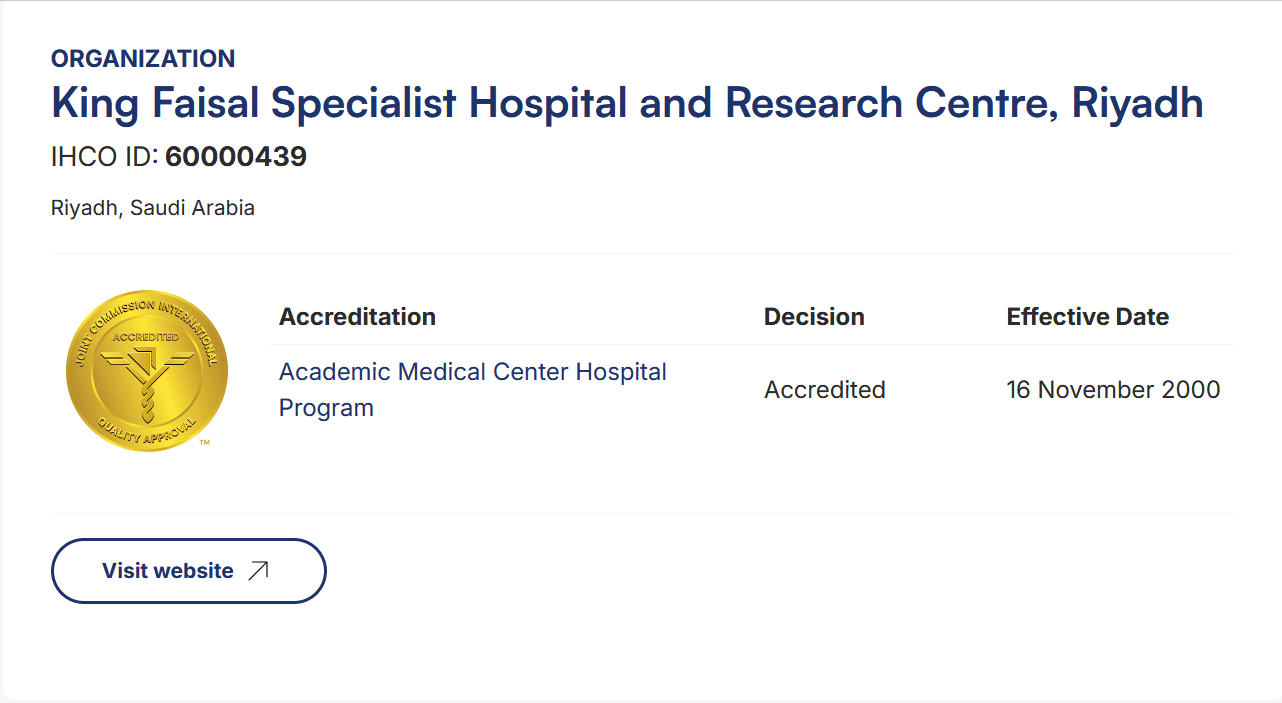
Featured Healthcare Institution in Saudi Arabia

Restoring Comfort Without Abdominal Scars: Understanding Severe Uterine Bleeding
Severe uterine bleeding—clinically termed abnormal uterine bleeding (AUB) or menorrhagia—is a frequent health concern affecting women during their reproductive and perimenopausal years. When menstrual loss becomes excessively heavy, prolonged, or unpredictable, it poses physical, emotional, and social challenges.
Medical advances in Minimally Invasive Gynecological Surgery in Saudi Arabia now allow women facing persistent uterine disorders to undergo surgical management without enduring long abdominal incisions or visible scarring. Techniques like Vaginal Natural Orifice Trans-Endoscopic Surgery (V-NOTES) merge traditional vaginal surgery with high-definition laparoscopic visualization, enabling surgical precision with faster patient recovery.
What Causes Persistent or Severe Uterine Bleeding?
Persistent uterine bleeding can originate from structural changes within the uterine wall, hormonal imbalances, or systemic medical conditions. Identifying the exact underlying cause determines whether medical therapy, minor procedures, or definitive surgical interventions are recommended.
Adenomyosis
A condition where the endometrial lining grows into the uterine muscle wall, causing painful enlargement and heavy menstrual bleeding.
Endometrial Polyps
Localized overgrowths of the uterine lining that disrupt vascular stability and cause irregular, heavy intermenstrual bleeding.
Hormonal Dysfunction
Anovulatory cycles, thyroid disorders, or perimenopausal hormonal fluctuations that lead to uncontrolled endometrial thickening.
Symptoms and Complications of Severe Uterine Bleeding
Recognizing the clinical manifestations of severe uterine loss is essential to prevent chronic systemic complications. Patients experiencing severe symptoms require comprehensive medical evaluation:
- Heavy menstrual bleeding that disrupts daily activities, work, and sleep routines.
- Menstrual periods lasting longer than seven consecutive days.
- Unpredictable bleeding or spotting between scheduled menstrual periods.
- Pelvic discomfort, heaviness, or fullness caused by an enlarged uterus.
- Fatigue, dizziness, or weakness associated with acute or chronic blood loss.
- Iron-deficiency anemia resulting from prolonged depletion of hemoglobin reserves.
Global Shift Toward Minimally Invasive Hysterectomy Approaches (%)
Source: Data synthesized from World Health Organization (WHO) and American College of Obstetricians and Gynecologists (ACOG) surgical quality reports.
When Is Hysterectomy Considered for Severe Uterine Bleeding?
Hysterectomy—the surgical removal of the uterus—is typically recommended when conservative medical therapies fail to provide symptomatic relief or when benign structural conditions significantly compromise quality of life. Medical guidelines prioritize less invasive options before considering surgical excision.
Indications for surgical intervention include:
- Failure of medical management (tranexamic acid, hormonal contraceptives, progestin-releasing IUDs).
- Recurrent, severe iron-deficiency anemia requiring intravenous iron or transfusion therapy.
- Large or symptomatic uterine fibroids causing mechanical compression on the bladder or bowel.
- Extensive adenomyosis unresponsive to conservative systemic treatments.
- Completed childbearing in women seeking a definitive, permanent solution for Severe Uterine Bleeding Treatment in Saudi Arabia.
What Is V-NOTES Hysterectomy and How Does It Work?
Vaginal Natural Orifice Trans-Endoscopic Surgery (V-NOTES) represents an evolutionary advancement in minimally invasive gynecology. By combining natural orifice access through the vagina with advanced endoscopic inflation, lighting, and camera systems, surgeons gain enhanced anatomical visibility inside the pelvic cavity.
During a V-NOTES Hysterectomy in Saudi Arabia, a specialized gel port device is positioned at the vaginal cuff. High-definition endoscopic instruments and a
video camera are introduced through this single port, allowing the surgical team to insufflate the pelvis with carbon dioxide, visualize pelvic structures on high-resolution screens, and precisely dissect uterine vessels and ligaments without touching the anterior abdominal wall.
How V-NOTES Differs From Traditional Hysterectomy Approaches
Understanding the differences between surgical modalities helps patients evaluate their options alongside their consulting gynecologist:
| Feature | V-NOTES Hysterectomy | Laparoscopic Hysterectomy | Abdominal Hysterectomy |
|---|---|---|---|
| Surgical Access | Transvaginal natural orifice | 3–4 small abdominal punctures | Large lower abdominal incision |
| Visible Abdominal Scars | None (Zero external scars) | Multiple small scars (5–12 mm) | Single long scar (10–15 cm) |
| Abdominal Wall Trauma | Zero muscle or skin trauma | Low to moderate muscle puncture | High tissue dissection & traction |
| Postoperative Pain | Significantly lower | Moderate | High; requires opioid analgesia |
| Typical Hospital Stay | Outpatient or 24 hours | 24–48 hours | 3–5 days |
- Accessing the uterus through the vagina rather than abdominal incisions.
- Using specialized endoscopic instruments to visualize deep pelvic structures clearly.
- Avoiding visible abdominal surgical scars completely.
- Assessing candidacy based on uterine size, mobility, and pelvic anatomy.
- Reducing abdominal wall trauma and wound-related complications.
- Considering alternative surgical approaches when dense pelvic adhesions are present.
Evaluating Patients Before V-NOTES Hysterectomy
Patient selection is critical to ensuring the safety and efficiency of Endoscopic Surgery in Saudi Arabia. Pre-operative evaluations include:
Pelvic Imaging & Assessment
- Transvaginal pelvic ultrasound to measure uterine size.
- Pelvic MRI in complex fibroid cases.
- Assessment of uterine mobility and vaginal access.
Medical & Anesthetic Review
- Complete blood count (CBC) to check hemoglobin levels.
- Coagulation profiles and metabolic testing.
- Anesthesia risk classification and cardiac clearance.
Surgical Risk Evaluation
- Review of prior pelvic surgeries or C-section history.
- Evaluation for severe endometriosis or adhesions.
- Discussion of organ preservation (ovaries/cervix).
Key Steps in the V-NOTES Hysterectomy Procedure
V-NOTES procedures follow structured surgical steps executed under strict sterile operating room standards:
- Anesthesia & Positioning: General anesthesia is administered, and the patient is placed in the dorsal lithotomy position.
- Vaginal Access: A circumferential incision is made around the cervix to enter the anterior and posterior pelvic peritoneum.
- Single-Port Placement: A specialized flexible V-NOTES gel port is inserted into the vaginal vault to maintain pneumoperitoneum.
- Endoscopic Visualization: The abdominal cavity is insufflated with carbon dioxide, establishing high-definition camera visualization.
- Vessel & Ligament Dissection: Endoscopic energy devices seal and divide the uterine arteries, uterosacral ligaments, and round ligaments.
- Uterine Removal: The uterus (and ovaries or fallopian tubes if indicated) is removed vaginally. Larger fibroid uteri may undergo controlled morcellation within a containment bag.
- Hemostasis & Closure: Surgical sites are inspected under direct vision to confirm complete hemostasis before the vaginal cuff is closed with absorbable sutures.
The Role of Minimally Invasive Gynecologic Surgery Specialists
V-NOTES requires dual expertise: mastery of classical vaginal surgical techniques and advanced proficiency in endoscopic video manipulation. Because working space is compact and specialized single-port instruments are used, surgical teams undergo rigorous specialized training.
Institutions like King Faisal Specialist Hospital and Research Centre (KFSHRC) maintain dedicated subspecialty departments where gynecologic surgeons work alongside specialized anesthesiologists, endoscopic surgical technicians, and nursing care teams to ensure optimal surgical precision.
Recovery After V-NOTES Hysterectomy
Postoperative protocols focus on early mobilization, pain control, and monitoring organ recovery. Because abdominal incisions are completely absent, patients generally report significantly milder discomfort compared to conventional surgical routes.
| Timeframe | Clinical Monitoring | Patient Activity Guidelines |
|---|---|---|
| First 24 Hours | Vital signs surveillance, monitoring vaginal bleeding, pain & nausea control. | Assisted ambulation, light fluid intake, removal of urinary catheter. |
| Days 2 to 7 | Monitoring urinary and bowel function, oral pain medication as needed. | Rest at home, light short walks, avoiding heavy lifting (>5 kg). |
| Weeks 2 to 4 | Evaluating resolution of minor vaginal discharge and surgical healing. | Gradual resumption of routine desk work and non-strenuous activities. |
| Weeks 6 to 8 | Postoperative clinical examination to confirm complete vaginal cuff healing. | Full return to normal exercise, swimming, and pelvic rest clearance. |
- Monitoring vital signs and postoperative vaginal spotting.
- Managing minor pelvic pressure with mild non-opioid oral pain medications.
- Encouraging early movement and ambulation as clinically appropriate to prevent blood clots.
- Monitoring normal urinary clearance and bowel function prior to hospital discharge.
- Following strict pelvic rest guidelines (avoiding tampons, douching, or intercourse for 6–8 weeks).
- Attending scheduled follow-up appointments to verify internal tissue healing.
Potential Benefits, Risks, and Limitations of V-NOTES Hysterectomy
Reported Clinical Benefits
- Zero Abdominal Scars: Complete elimination of external skin cuts.
- Reduced Postoperative Pain: Significantly lower analgesic requirements.
- Shorter Hospitalization: Many patients return home within 24 hours.
- Minimal Blood Loss: Endoscopic energy seals vessels precisely.
- Lower Hernia Risk: Zero risk of incisional trocar hernias.
Surgical Risks & Limitations
- Anatomical Constraints: Unsuitable for extremely large fixed uteri.
- Adhesion Challenges: Dense pelvic adhesions from prior surgeries may require conversion to standard laparoscopy.
- Infection & Bleeding: Rare risk of vaginal cuff hematoma or infection.
- Specialist Dependence: Requires experienced surgeons skilled in V-NOTES.
Clinical Case Spotlight: V-NOTES Hysterectomy at KFSHRC
Patient Management Summary
- Medical Center: King Faisal Specialist Hospital and Research Centre (KFSHRC), Jeddah, Saudi Arabia.
- Patient Profile: A woman in her fifties presenting with severe vaginal bleeding caused by multiple uterine fibroids.
- Procedure Executed: Vaginal Natural Orifice Trans-Endoscopic Surgery (V-NOTES) hysterectomy.
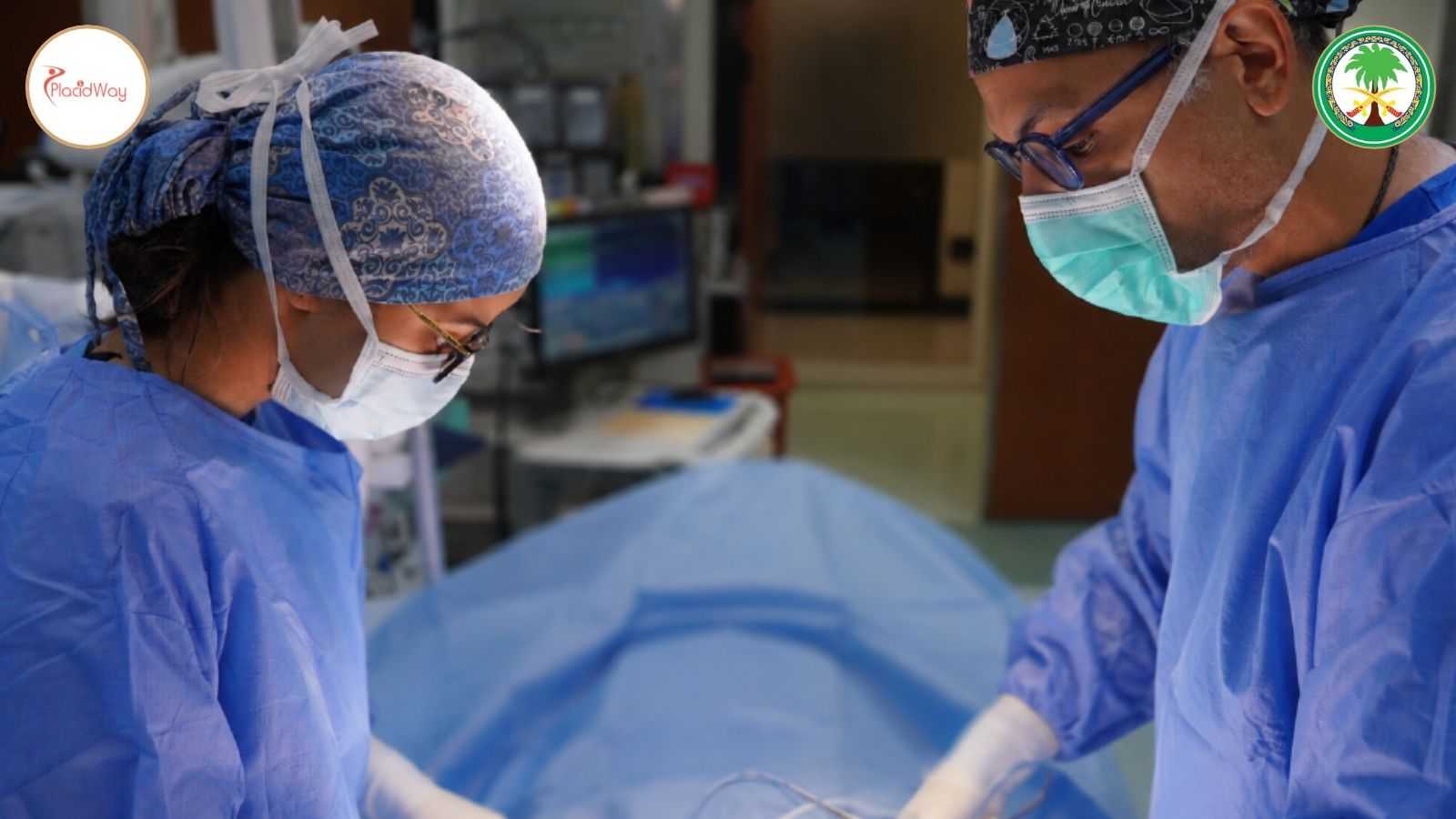
- Surgical Approach: The surgical team successfully removed the uterus through the vaginal canal using specialized endoscopic single-port instrumentation without making any abdominal skin incisions.
- Multidisciplinary Team: Executed by the Department of Obstetrics and Gynecology in coordination with specialized surgical, anesthesia, and nursing care teams.
- Outcome: The patient experienced minimal intraoperative blood loss, reduced postoperative pain, required minimal pain medication, and achieved rapid recovery, returning home shortly after surgery.
Accessing Minimally Invasive Gynecologic Surgery in Saudi Arabia
Saudi Arabia's healthcare sector has established advanced tertiary infrastructure supporting international and regional medical patients. Institutions like KFSHRC Saudi Arabia provide comprehensive clinical care pathways, state-of-the-art operating suites, and international coordinator support.
Patients seeking surgical management for severe uterine bleeding can request specialist consultations, submit prior imaging records remotely, receive itemized cost estimations calculated in USD, and coordinate treatment plans with gynecological specialists prior to travel.
Frequently Asked Questions
What is V-NOTES hysterectomy?
V-NOTES stands for Vaginal Natural Orifice Trans-Endoscopic Surgery. It is an advanced minimally invasive procedure where the uterus is removed through the vaginal canal using laparoscopic cameras and instruments, leaving zero abdominal scars.
How does V-NOTES differ from standard laparoscopic hysterectomy?
Standard laparoscopic hysterectomy requires three to four small incisions on the abdomen to insert trocars. V-NOTES places all endoscopic instruments through a single gel port inserted vaginally, avoiding abdominal wall punctures entirely.
Is V-NOTES suitable for large uterine fibroids?
Suitability depends on uterine size and pelvic mobility. Moderately enlarged fibroid uteri can often be removed via V-NOTES using contained tissue morcellation techniques, though extremely large or fixed uteri may require alternative approaches.
How long is the recovery time after V-NOTES hysterectomy?
Most patients experience faster recovery compared to abdominal surgery. Light daily activities can usually be resumed within 1 to 2 weeks, with full recovery and clearance for physical exercise at 4 to 6 weeks.
Will I have visible scars on my stomach after V-NOTES?
No. Because all surgical steps are performed through the vaginal opening, V-NOTES leaves zero abdominal scars.
Is V-NOTES hysterectomy painful?
Patients generally report less pain compared to abdominal or standard laparoscopic hysterectomies because the abdominal wall muscles and skin nerves are not cut or stretched.
Can ovaries be removed or preserved during V-NOTES?
Yes. Depending on patient age, medical indication, and personal preference, the ovaries and fallopian tubes can either be preserved or safely removed alongside the uterus during a V-NOTES procedure.
What are the main risks associated with V-NOTES?
As with all hysterectomies, potential risks include minor bleeding, infection at the vaginal cuff, urinary tract infection, or rare injury to adjacent pelvic organs (bladder or ureter). Conversion to traditional laparoscopy may occur if unexpected adhesions are encountered.
How long do I need to stay in the hospital after V-NOTES?
Many patients are discharged within 24 hours of surgery. Some uncomplicated cases may be managed on an outpatient day-surgery basis depending on clinical assessment.
How do I know if I am a good candidate for V-NOTES at KFSHRC?
Candidate evaluation requires a comprehensive gynecological examination, pelvic ultrasound imaging, review of prior surgical history, and direct consultation with a minimally invasive gynecological surgeon at King Faisal Specialist Hospital and Research Centre.
Consult Gynecological Specialists at KFSHRC
Explore advanced treatment options for severe uterine bleeding and learn more about V-NOTES Hysterectomy in Saudi Arabia at King Faisal Specialist Hospital and Research Centre. Request personalized clinical information, schedule specialist evaluations, and receive transparent pricing details in USD.
Request Hospital InformationDisclaimer: This content is provided for educational and informational purposes only and does not constitute medical advice, diagnosis, or treatment. Always seek the advice of a qualified physician or healthcare provider with any questions regarding a medical condition. Never disregard professional medical advice or delay seeking treatment because of information read in this document.
References & Resources:
- American College of Obstetricians and Gynecologists (ACOG)
- AAGL — Elevating Minimally Invasive Gynecologic Surgery
- Saudi Central Board for Accreditation of Healthcare Institutions (CBAHI)
- Ministry of Health — Kingdom of Saudi Arabia
- Royal College of Obstetricians and Gynecologists (RCOG)
- National Center for Biotechnology Information (NCBI)
























Share this listing