
Advancing Congenital Heart Care: Pediatric Heart Surgery in Saudi Arabia
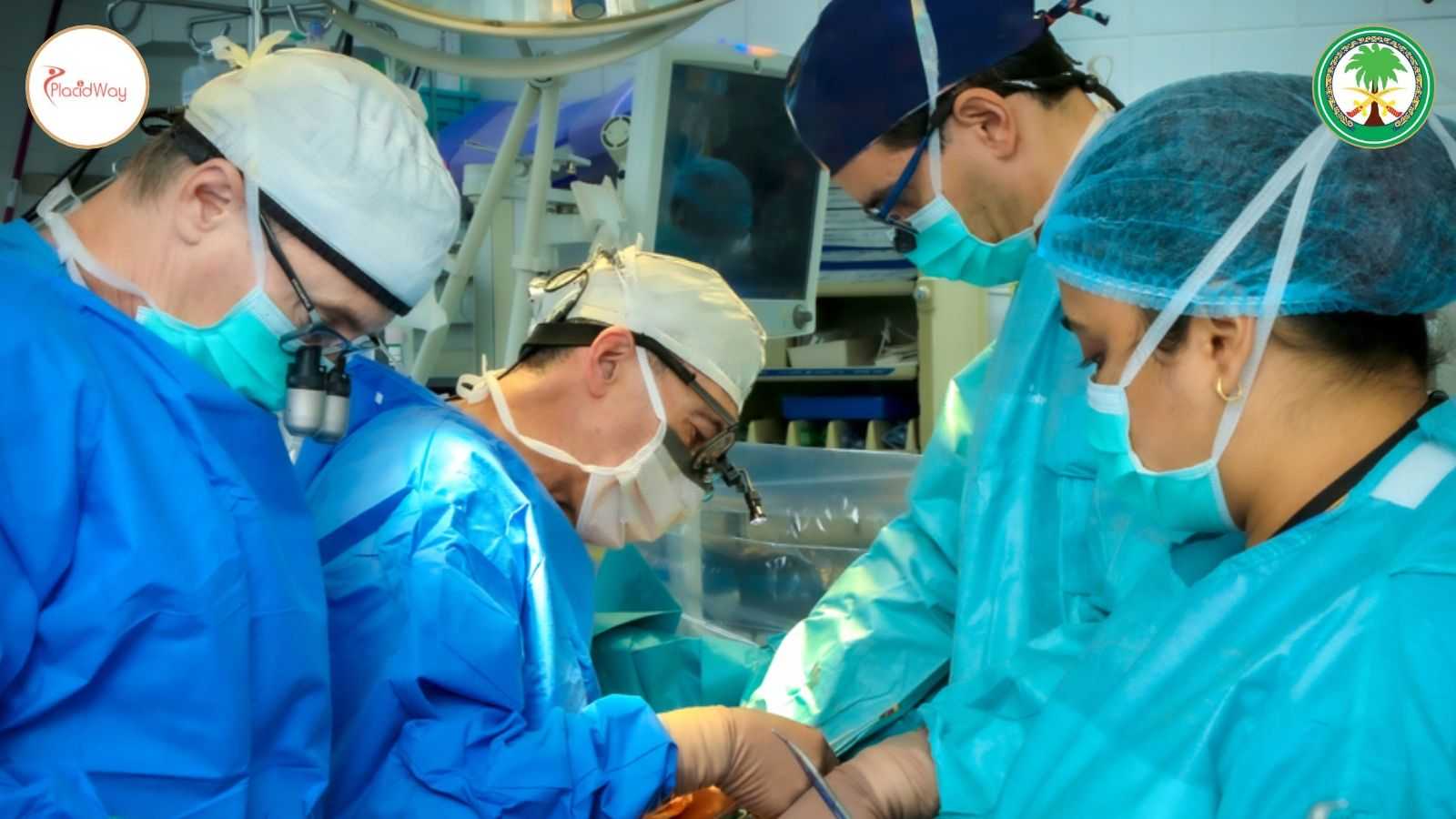
Minimally Invasive Pediatric Heart Surgery in Saudi Arabia continues to advance through innovative surgical techniques designed to support effective treatment while minimizing the physical impact of surgery on young patients. At King Faisal Specialist Hospital and Research Centre (KFSHRC) in Riyadh, a specialized pediatric cardiac surgery program uses minimally invasive approaches for eligible children with selected structural heart conditions. Instead of opening the breastbone as in conventional open-heart surgery, surgeons may access the heart through a smaller incision between the ribs, potentially reducing surgical trauma, postoperative discomfort, and recovery time. The hospital reported a reduction in hospital stay among children undergoing these procedures, highlighting the potential value of carefully selected minimally invasive techniques in pediatric cardiac care.

Quick Summary: Key Clinical Insights
- Surgical Innovation: Surgeons perform Minimally Invasive Heart Surgery in Saudi Arabia by accessing the heart through a small incision between the ribs rather than dividing the breastbone (sternotomy).
- Reduced Hospital Stay: Clinical program data demonstrates a 44% reduction in hospital stay duration among children eligible for minimally invasive procedures.
- Faster Postoperative Recovery: Children undergoing minimally invasive repairs average approximately 5 days in the hospital, compared with 9 days following conventional open-heart surgery.
- Demonstrated Clinical Volume: Over 54 pediatric patients have been successfully treated through specialized minimally invasive cardiac programs in Riyadh.
- Leading Medical Infrastructure: King Faisal Specialist Hospital and Research Centre (KFSHRC) offers advanced robotic and thoracoscopic pediatric cardiac surgical capabilities in the Middle East.
- Multidisciplinary Care: Comprehensive treatment involves pediatric cardiac surgeons, pediatric cardiologists, cardiac anesthesiologists, perfusionists, and specialized intensive care nurses.
- Financial Clarity: Medical care estimates are provided transparently in USD for international and regional patient planning.
Featured Healthcare Provider Profile
King Faisal Specialist Hospital and Research Centre (KFSHRC)
Riyadh, Saudi Arabia
King Faisal Specialist Hospital and Research Centre (KFSHRC) in Saudi Arabia is a world-renowned tertiary and quaternary healthcare institution. Operating at the forefront of medical technology, KFSHRC Saudi Arabia provides comprehensive specialized care in pediatric cardiology, robotic-assisted surgery, and complex cardiac defect repair.
View Full Hospital Profile
Clinical Program Data: Minimally Invasive vs Conventional Open-Heart Surgery
Data recorded across 54 pediatric patients receiving Pediatric Cardiac Surgery in Saudi Arabia highlights the tangible benefits of minimally invasive techniques in reducing surgical trauma and accelerating recovery.
Average Hospital Stay Duration (Days) in Pediatric Cardiac Surgery
Source: KFSHRC Pediatric Cardiac Surgery Program Data (54 cases evaluated). Values reflect average postoperative recovery stay comparisons.
Giving Little Hearts a Brighter Future: Understanding Congenital Heart Defects
Congenital heart defects represent structural abnormalities of the heart or major blood vessels present at birth. These malformations develop during early fetal heart formation and can affect blood flow through the heart chambers, valves, or connected blood vessels.
Advances in pediatric cardiology and cardiothoracic surgery now allow medical teams to correct complex structural issues earlier and with significantly reduced surgical trauma. Specialized programs focused on Congenital Heart Defect Surgery in Saudi Arabia integrate advanced diagnostic imaging, micro-surgical precision, and dedicated pediatric intensive care to optimize outcomes for infants and children.
Early Detection
Echocardiograms and prenatal screening allow early identification of structural heart variations.
Surgical Precision
Miniaturized instruments and high-definition video assistance enable repairs through minor incisions.
Sternal Preservation
Accessing the heart between ribs preserves breastbone integrity and reduces postoperative pain.
What Are Congenital Heart Defects and How Do They Affect Children?
The human heart functions as a dual-pump system with four distinct chambers separated by muscular walls (septa) and regulated by one-way valves. In children born with congenital heart defects, structural deviations impair normal oxygenation and circulatory efficiency.
Depending on whether the defect causes oxygen-poor blood to circulate throughout the body, conditions are broadly categorized as cyanotic or acyanotic. Over time, uncorrected structural defects can result in elevated pulmonary blood pressure, cardiac enlargement, decreased physical endurance, and developmental delays.
Common Signs and Symptoms of Congenital Heart Defects in Children
Symptom severity varies according to the specific cardiac anatomy and blood flow disruption. Parents and caregivers should monitor for key clinical indicators:
- Rapid or difficult breathing: Tachypnea or shortness of breath during resting periods or mild activity.
- Bluish discoloration of the lips or skin: Cyanosis indicating reduced arterial oxygen saturation.
- Poor feeding and difficulty gaining weight: Tiring quickly during nursing or meals, leading to failure to thrive.
- Excessive sweating during feeding or activity: Diaphoresis caused by increased sympathetic nervous system workload.
- Persistent fatigue and reduced exercise tolerance: Inability to keep up with peers during regular play.
- Heart murmurs or abnormal heart rhythms: Auscultated turbulent blood flow or arrhythmia detected during routine examinations.
When Do Children Need Minimally Invasive Heart Surgery?
Surgical intervention becomes necessary when a congenital structural defect cannot heal spontaneously and poses risks to lung or heart function. Medical teams evaluate surgical timing based on the child's age, weight, overall stability, and anatomical anatomy.
What Is Minimally Invasive Pediatric Heart Surgery?
Minimally Invasive Pediatric Heart Surgery in Saudi Arabia represents an advanced surgical approach where surgeons access the heart through a small incision placed discreetly between the ribs (a right mini-thoracotomy) rather than dividing the breastbone (sternotomy). Specialized video-assisted thoracoscopic cameras and micro-instruments allow cardiac surgeons to repair complex internal defects with high accuracy while preserving skeletal integrity.
Types of Congenital Heart Defects That May Require Surgical Treatment
Eligibility for minimally invasive options depends on anatomical suitability. Conditions frequently treated through surgical intervention include:
| Condition Category | Anatomical Focus & Surgical Objective |
|---|---|
| Atrial Septal Defects (ASD) | Closing abnormal openings in the wall between the upper heart chambers to prevent lung overcirculation. |
| Ventricular Septal Defects (VSD) | Repairing defects in the muscular or membranous wall between lower chambers to normalize pressure. |
| Selected Valve Abnormalities | Repairing or reconstruction of mitral, tricuspid, or aortic valves to restore proper blood regulation. |
| Patent Ductus Arteriosus (PDA) | Surgical ligation or division of persistent fetal blood vessels between aorta and pulmonary artery. |
| Structural Blood Flow Defects | Correcting partial anomalous pulmonary venous connections or relieving subaortic stenosis. |
| Individualized Complex Cases | Tailored surgical planning evaluated by multidisciplinary pediatric heart teams. |
Evaluating Children for Minimally Invasive Cardiac Surgery
Not every child is automatically a candidate for minimally invasive access. Patient selection relies on high-resolution 3D echocardiography, cardiac MRI, or CT angiography to verify that internal heart structures can be safely repaired through a smaller operative window.
Key Stages of Minimally Invasive Pediatric Heart Surgery
- Reviewing echocardiograms and cardiac imaging: Constructing detailed spatial maps of the internal heart anatomy.
- Assessing the child's anatomy and overall health: Verifying chest wall geometry, vascular access, and pulmonary status.
- Selecting the appropriate surgical access technique: Planning exact incision coordinates between specified ribs.
- Administering anesthesia and establishing monitoring: Implementing advanced pediatric cardiac anesthesia and transesophageal echocardiography (TEE).
- Correcting the heart defect using the planned approach: Patching septal defects or repairing valves under cardiopulmonary bypass support.
- Assessing heart function and stability after procedure: Confirming defect closure and hemodynamic stability before closing the incision.
The Role of Pediatric Cardiac Surgeons and Multidisciplinary Care Teams
Successful treatment of Congenital Heart Disease Treatment in Saudi Arabia relies on integrated medical teamwork. Dedicated care teams bring together pediatric cardiac surgeons, pediatric cardiologists, cardiac anesthesiologists, perfusion specialists, intensive care physicians, and specialized pediatric nurses.
Recovery and Monitoring After Pediatric Heart Surgery
Postoperative care takes place in dedicated pediatric cardiac intensive care units (PCICU). Structured monitoring protocols include:
Cardiac & Vital Monitoring
- Continuous heart rhythm tracking
- Arterial pressure surveillance
- Central venous pressure monitoring
Respiratory & Oxygenation
- Oxygen saturation evaluation
- Early extubation protocols
- Pulmonary toilet & lung expansion
Comfort & Complication Surveillance
- Multimodal pain management
- Wound assessment & hygiene
- Encouraging early mobilization & feeding
Potential Benefits, Risks, and Limitations of Minimally Invasive Heart Surgery
Parents evaluating surgical choices should weigh clinical advantages alongside surgical risks in consultation with medical specialists.
Potential Benefits
- Preserved Breastbone: Eliminates risk of sternal non-union or deep sternal wound infection.
- Reduced Hospital Stay: Average stay of ~5 days compared to ~9 days with open surgery.
- Smaller Incisions: Reduced scarring located discreetly under the arm or breast line.
- Decreased Pain: Reduced postoperative analgesia requirements.
- Faster Return: Accelerated recovery allows quicker resumption of normal childhood activities.
Risks and Considerations
- Anatomical Limits: Highly complex or multi-component defects may still require full open exposure.
- Standard Surgical Risks: Bleeding, infection, rhythm disturbances, or residual shunts.
- Specialized Expertise Required: Demands highly trained surgical teams and micro-instruments.
- Perfusion Setup: Specialized peripheral femoral or central cannulation protocols.
- Emergency Conversion: Possibility of converting to sternotomy if safety requires expanded visualization.
Advancing Specialized Pediatric Cardiac Surgery in Saudi Arabia
Saudi Arabia's major medical centers, exemplified by King Faisal Specialist Hospital and Research Centre, continue to expand advanced pediatric cardiothoracic care. By integrating robotic technology, 3D surgical modeling, and dedicated pediatric intensive care, medical centers in Riyadh offer world-class treatment for international and regional pediatric cardiac patients.
Frequently Asked Questions
What is minimally invasive pediatric heart surgery?
Minimally invasive pediatric heart surgery repairs structural heart defects through a small incision made between the ribs, avoiding the need to cut through the breastbone (sternum).
How much shorter is the hospital stay compared to open-heart surgery?
Clinical program data reports an average hospital stay of approximately 5 days after minimally invasive surgery, compared with 9 days following conventional open-heart surgery—reflecting a 44% reduction in stay length.
Which congenital heart defects can be repaired using minimally invasive techniques?
Atrial septal defects (ASD), ventricular septal defects (VSD), selected valve malformations, patent ductus arteriosus (PDA), and specific structural vascular defects are frequently candidate conditions.
Where is the incision located in minimally invasive heart surgery?
The incision is typically a small right mini-thoracotomy placed along the side of the chest between the ribs, leaving a significantly smaller scar hidden beneath the arm.
Is heart-lung machine bypass still required for minimally invasive surgery?
Yes, most intracardiac defect repairs require cardiopulmonary bypass support, which is established using specialized micro-cannulas tailored for pediatric patients.
Are all children with congenital heart defects candidates for minimally invasive procedures?
No. Candidate selection depends on the child's weight, exact internal heart anatomy, defect complexity, and overall health status as evaluated through echocardiograms and 3D cardiac imaging.
What center in Saudi Arabia provides specialized minimally invasive pediatric heart surgery?
King Faisal Specialist Hospital and Research Centre (KFSHRC) in Riyadh is a recognized quaternary hospital providing comprehensive pediatric cardiac and minimally invasive surgical care.
What are the main advantages of preserving the breastbone (sternum)?
Preserving the sternum maintains chest wall stability, reduces postoperative pain, lowers bone infection risks, and allows children to move and recover upper body strength much faster.
How can international families request care in Saudi Arabia?
Families can submit medical records, echocardiogram reports, and clinical summaries through PlacidWay Medical Tourism to receive initial treatment plan evaluations in USD from medical teams.
What follow-up care is required after pediatric cardiac surgery?
Postoperative follow-up involves baseline echocardiograms, periodic pediatric cardiology reviews, medication management if needed, and ongoing monitoring of physical growth and activity milestones.
Explore Pediatric Cardiac Surgery at KFSHRC
Seeking advanced treatment for a child with a congenital heart defect? Request a consultation and detailed treatment plan evaluation for Congenital Heart Disease Treatment in Saudi Arabia. Connect with Medical Specialists via PlacidWay
Request Hospital ConsultationMedical Disclaimer: The information contained in this article is provided for educational and informational purposes only and does not constitute medical advice, diagnosis, or treatment. Medical decisions regarding pediatric cardiac surgery must be made in consultation with a qualified pediatric cardiologist or cardiac surgeon based on a child's complete medical evaluation and diagnostic imaging.
References:
- World Health Organization (WHO) — Congenital Anomalies & Pediatric Care Standards
- American Heart Association (AHA) — Congenital Heart Defect Guidelines
- The Society of Thoracic Surgeons (STS) — Pediatric Cardiac Surgery Outcomes Database
- American College of Cardiology (ACC) — Pediatric Cardiology Research & Clinical Quality
- European Association for Cardio-Thoracic Surgery (EACTS) — Minimally Invasive Guidelines
- Ministry of Health Saudi Arabia — Specialized Healthcare Services Portal
- PubMed Central (PMC) — Clinical Research Studies on Thoracoscopic Pediatric Heart Surgery





















Share this listing