

Regenerative Aesthetic Medicine · Bangkok, Thailand
Skin Renewal Facial Rejuvenation: Regenerative Facial Treatment in Thailand
Skin changes with time. Firmness softens, the complexion looks duller or more tired, and many people start asking whether a cell-based treatment belongs in their options. If you are researching stem cell facial treatment in Bangkok, you will find a wide range of claims. This guide sets out what Healthi Life Longevity Center actually offers, what the protocol looks like, what it costs in published prices, and what the evidence can and cannot tell you today.
Physician-Supervised Protocol
One point before anything else. Stem Cell Facial Skin Renewal in Bangkok Thailand at Healthi Life is a physician-supervised medical protocol, and it is investigational. Outcomes vary and are not guaranteed. A physician confirms eligibility after assessment, and sometimes the answer is no.
Featured Medical Facility & Leadership
Healthi Life Longevity Center & Key Personnel
Healthi Life Longevity Center
The Urban Longevity House, Bangkok, Thailand
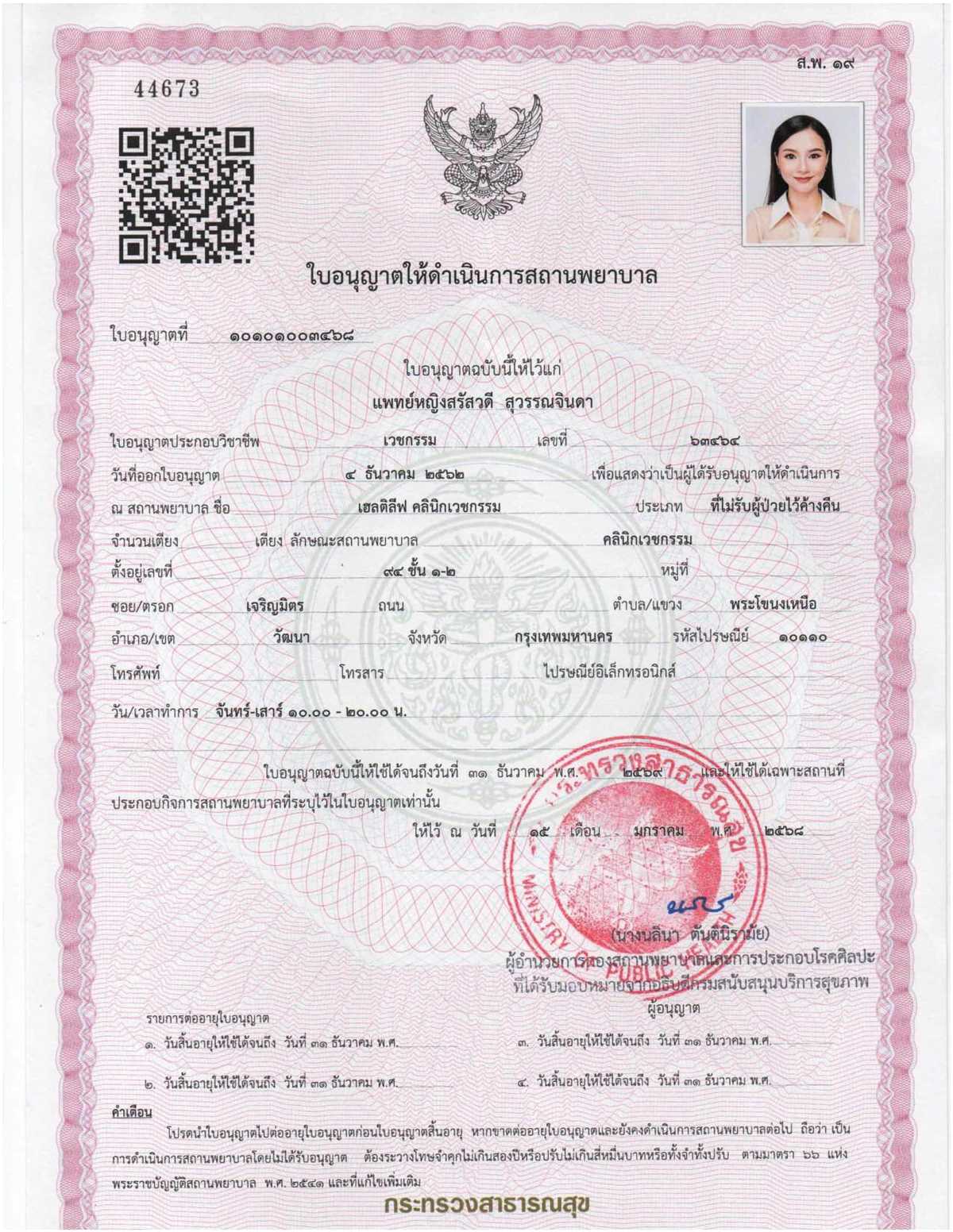
Facility Certification
Licensed Medical Clinic (10101003468)
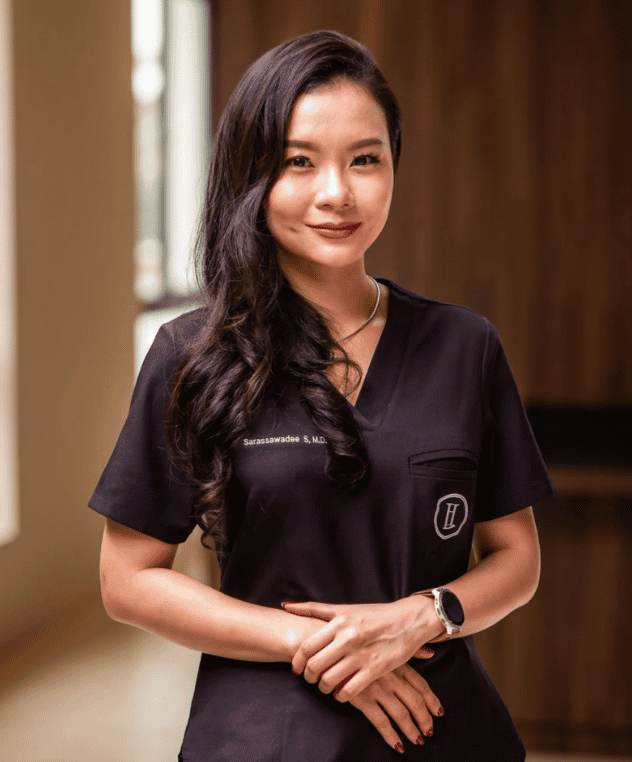
Dr. Sarassawadee Suwanjinda, MD (Dr. Petch)
Co-Founder & Chief Medical Strategy Officer
Chapter 01 · Definition & Sources
What "Facial Skin Renewal" Is
Facial Skin Renewal is the center's stem cell program for facial skin. Its stated indication is skin aging, loss of firmness, and a dull or tired complexion. The cells used are mesenchymal stem cells (MSCs) taken from fresh umbilical cord tissue, collected during planned C-section deliveries. There are no fetal or embryonic sources and no animal products. Donors are screened, every batch has a Certificate of Analysis, and processing is xeno-free, meaning it avoids animal-derived components.
"MSC" is a defined term. The International Society for Cellular Therapy set out minimal criteria for these cells in 2006: they adhere to plastic in culture, carry a specific set of surface markers, and can differentiate into bone, fat and cartilage cells in the laboratory. That definition describes what the cells are in a dish. It does not, on its own, tell you what they do once they are given to a person, which is why the clinical evidence section below matters.
Two features of the center's protocol are worth naming:
- Fresh, not frozen: The cells are administered without a freeze-thaw cycle. A 2022 review in Current Stem Cell Reports discusses how freezing and thawing may affect the safety and efficacy of cell products, and notes that the picture differs between cell types, including MSCs. Frozen cells are also used clinically. Fresh is the protocol the center chose, and it is a choice, not a proven advantage in every setting.
- Partner laboratories: The cells are prepared by GMP and ISO-certified partner laboratories. Those certifications are held by the laboratories, not by Healthi Life.
Chapter 02 · Candidate Evaluation
Who May Be a Candidate, and Who Is Not
The treatment is designed for adults who are concerned about visible skin aging and want to explore a cell-based approach under medical supervision. Typical reasons people ask about it include a loss of firmness, a tired-looking complexion, or a wish to try something beyond topical products.
Whether you qualify is a medical decision. Every candidate goes through eligibility screening, a medical history review and a risk assessment before approval. Physicians generally look at areas such as current infections, recent illness, medical history, immune conditions, medications, and pregnancy or breastfeeding status. The exact criteria are set by the treating physician, and you should ask for them at your consultation.
You may not be a candidate if the physician judges the risk to be higher than the reasonable expectation of benefit, or if your concern is better handled another way. For example, a skin problem that needs a diagnosis, such as a changing mole or a persistent rash, needs a dermatological assessment first. It is not a reason to receive cells. Not every guest qualifies, and the center would rather tell you so before you travel than after.
Chapter 03 · The Medical Process
How the Protocol Runs at Healthi Life
The sequence is built around screening first and treatment second:
- Discovery Consultation: A complimentary 20-minute call, by phone or video. You describe your goals and send recent records. The team reviews your case before you travel.
- Physician assessment in Bangkok: A physician reviews your history, examines your skin and confirms eligibility. The final dose is also confirmed at this stage.
- Treatment: If you are approved, the protocol is given under physician supervision with defined monitoring. The route and technique are explained by the physician at consultation, and they are set for your case.
- Recovery: Most protocols require little downtime. Recovery is discussed individually. Mild, short-lived reactions can follow an infusion or an injection session. You are given a contact before you leave and are asked to report any high or persistent fever, breathlessness, chest pain, or spreading redness or swelling at an injection site right away.
- Follow-up: Stem cell programs include a 30 to 90-day medical follow-up after you leave, which can be done remotely if you have flown home.
How many sessions you need depends on the clinical indication, your biological status and your longer-term objectives. That number is set by the physician, not by a package.
Chapter 04 · Pricing & Transparency
Published Prices
Every treatment listed here is dispensed only after a medical consultation at Healthi Life and on a physician's prescription. Prices are published for transparency, not as an offer to supply.
Facial Skin Renewal has one published price for each cell dose. The dose is confirmed by a physician after assessment. Approximate USD figures use about THB 31 per US dollar.
| Program | Dose | Price (THB) | Approx. USD |
|---|---|---|---|
| Facial Skin Renewal | 5 million cells | 59,000 | $1,900 |
| Facial Skin Renewal | 10 million cells | 89,000 | $2,900 |
| Facial Skin Renewal | 15 million cells | 119,000 | $3,800 |
A few notes on reading this table. The dose is the number of cells, not a measure of the result you will get. A higher dose is not a promise of a better outcome, and the physician decides which dose suits you. Prices are in Thai baht, and the dollar column is an approximation, so check the exchange rate on the day you pay. Travel, accommodation and any additional tests are separate.
If you are comparing providers, ask each one for the cell type, the dose, the source, the batch documentation and the price in writing.
Chapter 05 · Comparative Options
Alternatives and First-Line Care
Cell-based treatment is not where most people should begin. Daily sun protection, a skin routine prescribed by a dermatologist, and procedures with a long record of use are all reasonable first steps, and a physician may suggest them before or alongside cells. The center also offers other treatments for skin, including PRP (platelet-rich plasma) therapy and injectable aesthetic treatments, which are described separately. The right order depends on your skin, your goals and your budget.
If you are weighing exosomes against stem cells for the face, the two are different products. Stem cells are living cells; exosomes are tiny vesicles released by cells and contain no cells.
Chapter 06 · Evidence & Safety
Risks and the Limits of the Evidence
This is the most important section, and it deserves plain language.
Regulatory status: The United States FDA's consumer alert states that, generally, all stem cell products require FDA approval, and that the only FDA-approved stem cell products at that date were blood-forming cells from umbilical cord blood, for specific uses. The FDA's list of approved cellular therapies has since added one mesenchymal stromal cell product, remestemcel-L, for a single narrow indication. The agency's consumer alert says no exosome products are approved either. That is a US position, given here for context. Thai rules are different, and you should ask the center to explain the regulatory status of each product in Thailand before you commit.
Clinical evidence: The published evidence for stem cell and exosome products in facial skin is still developing. A 2026 systematic review in Dermatology Practical & Conceptual screened 1,032 papers and included 21. The authors report improvements in elasticity, wrinkle depth, hydration and pigmentation across the studies, and they also state that larger standardized trials with longer follow-up are needed to confirm efficacy and long-term safety. That review covered extracellular vesicle and exosome products from several sources, not only umbilical cord cells, so it does not settle the question for any single product. For umbilical cord MSCs given for facial aging specifically, you should assume the evidence base is limited and ask your physician to show you what exists.
Personal risk: Any injection or infusion carries general risks, such as pain, bruising, infection, an allergic reaction or an unexpected immune response. Fatigue or a mild, short-lived temperature can follow an infusion. The physician will go through these with you, along with risks specific to your health.
Results: Some people notice a change in how their skin looks or feels. Others notice little. No one can promise which group you will fall into, and the center does not.
Chapter 07 · Consultation Checklist
Questions to Ask Before You Decide
The International Society for Stem Cell Research publishes patient questions for anyone considering a stem cell treatment. Use them, and add these:
Product & Evidence
- What is the cell type, the source, and the dose I would receive?
- Can I see the Certificate of Analysis for the batch?
- What does the evidence show for this exact product and this exact use? Can you show me the papers?
Medical & Safety
- What are the risks for someone with my medical history?
- What would make you decline to treat me?
- What follow-up is included, and who do I call if something goes wrong after I fly home?
Pricing & Terms
- What does the full price cover, and what is extra?
A provider who welcomes these questions is a better sign than one who answers with enthusiasm.
Chapter 08 · Facility Details
Visiting Healthi Life in Bangkok
Healthi Life Longevity Center, The Urban Longevity House, is at 94 Ekkamai 10 Alley, Khlong Tan Nuea, Watthana, Bangkok 10110. It opened in February 2025 and has welcomed 2,500+ guests from 50+ countries. The center is open Monday to Saturday, 11:00 to 19:00, and the team works in English, Thai and Japanese. The medical facility is licensed in Thailand as Healthi-Life Medical Clinic (license 10101003468). Medical leadership rests with two co-founder physicians: Dr. Sarassawadee Suwanjinda ("Dr. Petch"), Co-Founder & Chief Medical Officer and IBLM Diplomate, and Dr. Napat Hunsajarupan ("Dr. First"), Co-Founder & Medical Director, a dermatologist. The center was named "2025 Regenerative Clinic of the Year in Asia-Pacific" at the GlobalHealth Asia-Pacific Awards.
International guests begin with the online Discovery Consultation, then book their assessment in Bangkok. Send your recent lab results and history so a physician can review them before you arrive. Some guests also book the Advanced Check-Up (30,000, 90+ biomarkers, all-inclusive, no separate lab fees) as a baseline. Diagnostics are for assessment only, and a physician reviews the results with you. That baseline is what a longer-term longevity program with physician follow-up is built on.
Chapter 09 · Common Questions
Frequently Asked Questions
1. What is Facial Skin Renewal?
A physician-supervised stem cell protocol for facial skin, using umbilical cord mesenchymal stem cells. It is investigational, and its indication is skin aging, loss of firmness and a dull or tired complexion.
2. Where do the cells come from?
From fresh umbilical cord tissue collected during planned C-section deliveries. There are no fetal or embryonic sources and no animal products. Donors are screened, each batch has a Certificate of Analysis, and processing is xeno-free.
3. Are the cells fresh or frozen?
Fresh, with no freeze-thaw cycle. Frozen cells are also used clinically. Fresh is the protocol the center chose.
4. How much does it cost?
59,000 (about $1,900) for 5 million cells, 89,000 (about $2,900) for 10 million, and 119,000 (about $3,800) for 15 million. The treatment is dispensed only after a medical consultation and on a physician's prescription. Prices are published for transparency, not as an offer to supply.
5. How many sessions will I need?
It depends on your clinical indication, your biological status and your goals. The physician determines it at consultation.
6. Will I have downtime?
Most protocols require little downtime, and recovery is discussed individually. Fatigue or a mild, short-lived temperature can follow an infusion. Report any high or persistent fever, breathlessness, chest pain or spreading redness or swelling right away.
7. Is it safe?
It is delivered inside a structured medical framework with eligibility screening, history review, risk assessment and monitoring. No medical treatment is risk-free, and the product is investigational. The physician explains the risks that apply to you.
8. Can I be treated if I live abroad?
Yes, after an online Discovery Consultation and a physician assessment in Bangkok. Stem cell programs include a 30 to 90-day follow-up that can continue remotely.
9. Who should not have the treatment?
Anyone a physician judges to be at unacceptable risk, or whose concern is better managed another way. Not every guest qualifies.
10. How do I start?
Request a complimentary 20-minute Discovery Consultation. A physician confirms eligibility and the final dose after clinical assessment in Bangkok.
Note: Outcomes vary and are not guaranteed. Stem cell therapy is investigational. Eligibility is confirmed by a physician.





















Share this listing