
Regenerative Protocols in Bangkok
Energy Assessment Recovery Support: UC-MSC IV Therapy in Bangkok
Feeling tired for a week is ordinary. Feeling tired for months, or finding that you no longer bounce back after illness, travel or a hard stretch of work, is a medical question. People who reach this point often start reading about systemic stem cell protocols. This guide explains how physicians at Healthi Life Longevity Center in Bangkok approach persistent fatigue and slow recovery with UC-MSC IV Therapy in Bangkok Thailand, what the 50 million, 70 million and 100 million cell protocols are, what they cost in published prices, and why a medical workup has to come first.
Featured Provider & Medical Leadership
Healthi Life Longevity Center
Healthi Life Longevity Center
Certificate of Accreditation
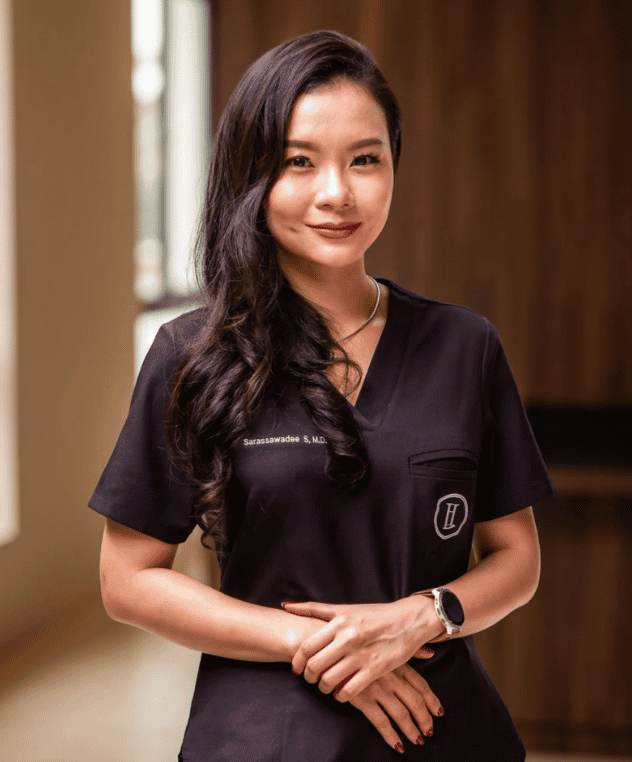
Dr. Sarassawadee Suwanjinda, MD (Dr. Petch)
Co-Founder & Chief Medical Strategy Officer
Stem cell therapy here is a physician-supervised medical protocol, and it is investigational. Outcomes vary and are not guaranteed. Eligibility is confirmed by a physician, and sometimes the answer is no.
01 / Clinical Assessment
Fatigue needs a medical workup first
This is the central point of the article, so it comes early. Persistent fatigue is a symptom, not a diagnosis. It can come from many places: anemia or other nutrient deficiencies, thyroid and other hormonal conditions, sleep disorders such as sleep apnea, depression or anxiety, infections, inflammatory or autoimmune disease, heart or lung conditions, diabetes, side effects of medication, and the aftermath of a viral illness. Some of these are straightforward to treat, and none of them is solved by cells.
Clinical guidance for a widely discussed fatigue disorder, myalgic encephalomyelitis/chronic fatigue syndrome (ME/CFS), reflects this. The NICE guideline on ME/CFS, published in October 2021, covers identification and assessment before and after diagnosis as well as management and review, and it centers on individualized support. A 2023 review in Mayo Clinic Proceedings describes ME/CFS as a chronic neurologic disease often preceded by infection, notes its significant overlap with post-COVID syndrome, and lays out a generalist approach to diagnosis, evaluation and management. The shared message is that diagnosis and evaluation come before any specific treatment.
At Healthi Life, the equivalent step is the Advanced Check-Up, published at 30,000, all-inclusive, with no separate lab fees. The Advanced tier covers 90+ biomarkers, measured across the Six Medical Pillars: Fundamental & Metabolic Health; Immunity, Inflammation & Toxic Load; Gut & Brain Health; Hormones, Vitality & Performance; Micronutrients, Nutrition & Antioxidants; and Reverse Aging — Cellular, Genetic & Epigenetic. Diagnostics are for assessment only, and a physician reviews the results with you. A stem cell protocol for fatigue is considered after that baseline, not instead of it. If the workup finds a treatable cause, the physician will tell you that, and you may not need cells at all.
02 / Protocol Options
What the protocols are
Two published programs fit this topic.
Energy & Recovery Restoration is a 50 million cell protocol. Its stated indication is chronic inflammation, persistent fatigue and post-viral recovery.
Full Body Longevity Renewal is published at 50 million, 70 million and 100 million cells. Its stated indication is systemic aging, low energy and declining organ function.
Both use mesenchymal stem cells (MSCs) from fresh umbilical cord tissue, collected during planned C-section deliveries, and both are delivered as an infusion into a vein. There are no fetal or embryonic sources and no animal products. Donors are screened, every batch has a Certificate of Analysis, and processing is xeno-free. The cells are administered fresh, without a freeze-thaw cycle, and are prepared by GMP and ISO-certified partner laboratories. Those certifications are held by the laboratories, not by Healthi Life.
"Systemic" means the cells are given to the whole body through the bloodstream, as opposed to a local injection into one joint or area. The dose, 50 million, 70 million or 100 million cells, is the number of cells in the infusion.
Source & Safety
Fresh umbilical cord tissue from planned C-sections, 100% xeno-free, with batch Certificates of Analysis.
Delivery Method
Systemic intravenous (IV) infusion administering fresh cells without a freeze-thaw cycle.
03 / Dosage Decision
How a physician approaches the dose
The honest answer is that the physician decides, case by case, after assessment. The center states that the number of sessions depends on clinical indication, biological status and long-term objectives, and that eligibility and final dose are confirmed by a physician. A higher dose is not a promise of a stronger effect, and it is not automatically the better choice. Factors a physician commonly weighs include your workup results, your medical history, how your body has responded to illness in the past, your goals, and how much risk you and the physician are comfortable with. There is no public formula that assigns a person to 50, 70 or 100 million, and anyone who tells you there is should be asked to show the evidence.
04 / Eligibility
Who may be a candidate, and who is not
People who may be considered are adults with persistent fatigue, slow recovery or post-viral exhaustion who have completed a medical workup, whose treatable causes have been addressed or excluded, and who want to explore a cell-based approach under supervision.
You may not be a candidate if:
Exclusion Criteria / Physician Guidelines
Screening involves a medical history review and a risk assessment, and the treating physician sets the exact criteria. Not every guest qualifies.
05 / Patient Journey
How the protocol runs at Healthi Life
- Discovery Consultation. A complimentary 20-minute call, by phone or video. Share your symptoms, timeline, medications and any recent lab results.
- Workup. Where one has not been done, a baseline such as the Advanced Check-Up. A physician reviews results with you.
- Physician assessment. The physician confirms eligibility and the final dose.
- Infusion. Given under physician supervision with defined monitoring.
- Recovery. Most protocols require little downtime. Fatigue or a mild, short-lived temperature can follow an infusion. Report any high or persistent fever, breathlessness, chest pain, or spreading redness or swelling at an injection site right away.
- Follow-up. Stem cell programs include a 30 to 90-day medical follow-up, which can continue remotely.
Core Safety Rule
Every treatment is dispensed only after a medical consultation at Healthi Life and on a physician's prescription.
06 / Pricing Structure
Published prices
Every treatment listed here is dispensed only after a medical consultation at Healthi Life and on a physician's prescription. Prices are published for transparency, not as an offer to supply. Approximate USD figures use about THB 31 per US dollar.
| Program | Dose | Price (THB) | Approx. USD |
|---|---|---|---|
| Energy & Recovery Restoration | 50 million cells | 559,000 | $18,000 |
| Full Body Longevity Renewal | 50 million cells | 559,000 | $18,000 |
| Full Body Longevity Renewal | 70 million cells | 699,000 | $22,500 |
| Full Body Longevity Renewal | 100 million cells | 900,000 | $29,000 |
The Advanced Check-Up is the Advanced tier, published at 30,000. Other tiers exist. The dollar column is approximate, so check the rate on the day you pay. Travel and accommodation are separate. Exosome IV Therapy, a cell-free option with doses of 50 billion (35,000, about $1,100) and 250 billion (150,000, about $4,800) exosomes, is another option a physician may discuss for recovery and inflammation. It is a different product from cells.
07 / Alternatives & First-Line Options
Alternatives and first-line care
For persistent fatigue, first-line care is a diagnosis and treatment of what is found: correcting deficiencies, managing sleep, treating thyroid or other hormonal problems, reviewing medications, and addressing mood. For ME/CFS or post-viral fatigue, guidance emphasizes individualized, collaborative support rather than a single treatment. Nutrition, graded and carefully paced activity, and sleep work are part of most plans, and a physician should tailor them, because the wrong kind of exertion can set some people back.
Within the center, options short of a systemic cell protocol include NAD+ IV therapy and IV nutrition therapy, and a longevity program with physician follow-up, where results are compared at every visit. A reasonable path is to start with the workup and the least intensive measure that fits, and to escalate only if a physician sees a reason to.
08 / Clinical Realities
Risks and the limits of the evidence
No fatigue-specific proof. The evidence for umbilical cord MSCs in chronic fatigue itself is limited. The closest published trial we could verify is a 2024 phase I/II randomized, double-blind, placebo-controlled study in Stem Cell Research & Therapy, in which people with aging frailty received intravenous umbilical cord MSCs or placebo and were followed for six months. Safety was monitored throughout. The MSC group showed greater improvement in the physical component of an SF-36 quality-of-life score than placebo (p = 0.042), and differences in a timed up-and-go test. The 4-meter walk difference did not reach significance (p = 0.21). Frailty is a different condition from chronic fatigue, the population, regimen and cell product differ from those used at any one center, and the trial was early-phase. Treat it as a signal that the field is being studied, not as proof for fatigue.
Regulatory status. The United States FDA's consumer alert, current as of April 2024, states that, generally, all stem cell products require FDA approval, and that the only FDA-approved stem cell products at that date were blood-forming cells from umbilical cord blood, for specific uses. The FDA's list of approved cellular therapies has since added one mesenchymal stromal cell product, remestemcel-L, for a single narrow indication. That is a US position, given for context. Thai rules differ, and you should ask the center to explain the status of each product in Thailand.
Personal risks. An intravenous infusion can cause pain at the site, a reaction during or after the infusion, a temperature, infection or an allergic or immune response. The physician reviews the risks that apply to you. Because these programs are investigational, long-term outcomes are not fully known.
Cost. These are the highest-priced protocols in the center's stem cell list. Weigh that against uncertain evidence and ask what a lower-intensity step would cost first.
09 / Consultation Checklist
Questions to ask
The International Society for Stem Cell Research publishes a patient list of questions to ask a doctor. Add these:
- What did my workup find, and what treatable causes have we excluded?
- Why a cell protocol rather than the standard care for my situation?
- Why this dose, 50, 70 or 100 million, for me?
- What does the evidence show for this exact product and this exact use?
- What are the risks given my history?
- What would make you decline to treat me?
- What follow-up is included, and who do I call from abroad?
- What does the price cover, and what is extra?
10 / Facility Overview
Visiting Healthi Life in Bangkok
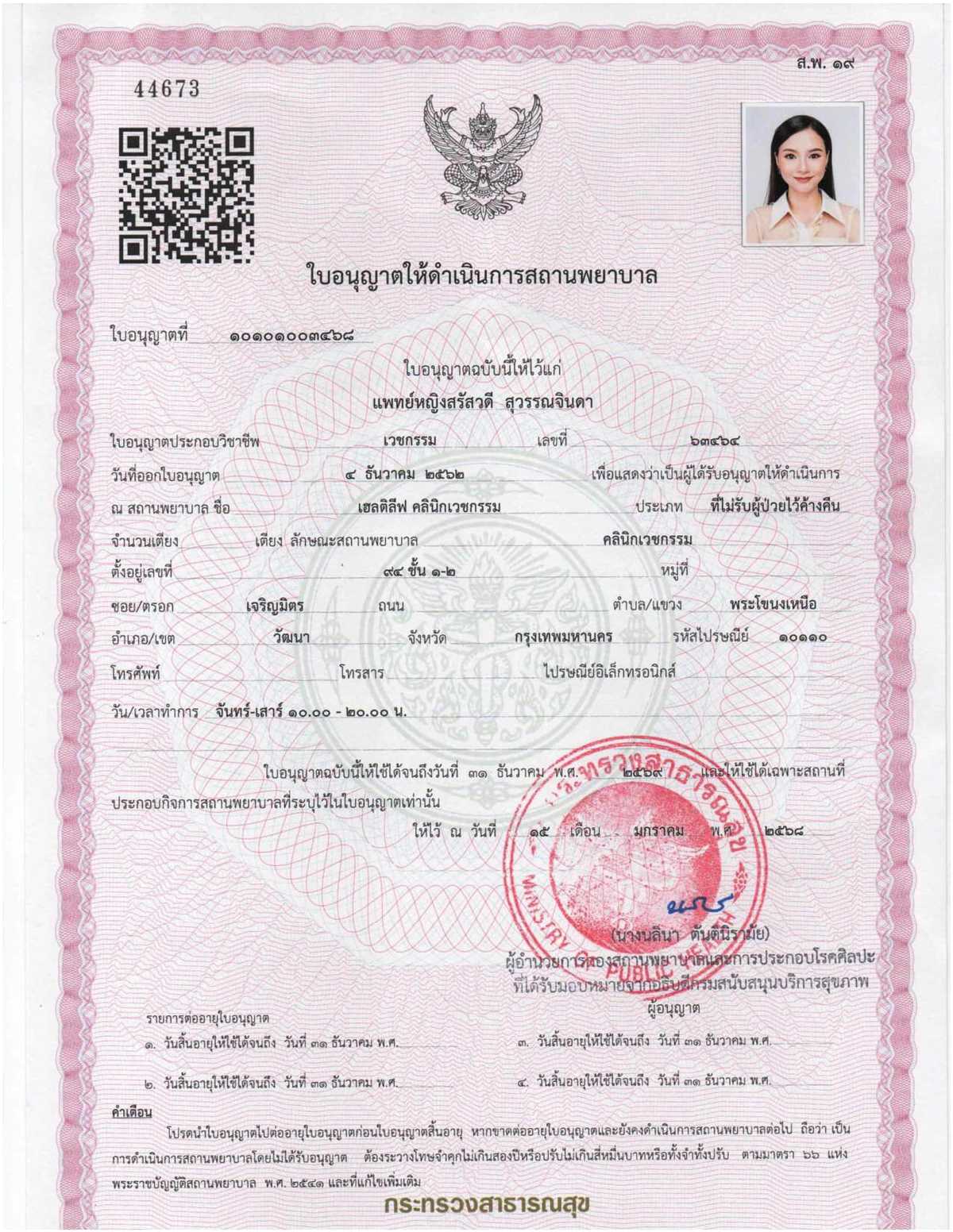
Healthi Life Longevity Center, The Urban Longevity House, is at 94 Ekkamai 10 Alley, Khlong Tan Nuea, Watthana, Bangkok 10110. It is open Monday to Saturday, 11:00 to 19:00, and the team works in English, Thai and Japanese. It is licensed in Thailand as Healthi-Life Medical Clinic (license 10101003468). Medical leadership rests with Dr. Sarassawadee Suwanjinda ("Dr. Petch"), Co-Founder & Chief Medical Officer and IBLM Diplomate, and Dr. Napat Hunsajarupan ("Dr. First"), Co-Founder & Medical Director. The center was named "2025 Regenerative Clinic of the Year in Asia-Pacific" at the GlobalHealth Asia-Pacific Awards. Guests flying in can begin with an online consultation and send their records for review.
11 / Knowledge Base
Frequently asked questions
1. Can stem cells treat chronic fatigue? +
No one can promise that. Persistent fatigue has many causes, and the evidence for umbilical cord MSCs in fatigue is limited. Outcomes vary and are not guaranteed.
2. Why a workup first? +
Because fatigue is a symptom with many possible causes, some of them common and treatable. The Advanced Check-Up is published at 30,000, all-inclusive; the Advanced tier covers 90+ biomarkers, and Check-Up tiers range from 60+ to 150+ lab biomarkers.
3. What is the difference between 50, 70 and 100 million cells? +
The number of cells in the infusion. A physician decides the dose after assessment. A higher number is not a promise of a better result.
4. What does each cost? +
Energy & Recovery Restoration, 50 million cells: 559,000 (about $18,000). Full Body Longevity Renewal: 559,000 (50 million), 699,000 (about $22,500, 70 million) and 900,000 (about $29,000, 100 million). Treatment is dispensed only after a medical consultation at Healthi Life and on a physician's prescription. Prices are published for transparency, not as an offer to supply.
5. Where do the cells come from? +
Fresh umbilical cord tissue from planned C-section deliveries, with donor screening, a Certificate of Analysis per batch and xeno-free processing. No fetal, embryonic or animal sources.
6. Are the cells fresh or frozen? +
Fresh, with no freeze-thaw cycle. Frozen cells are also used clinically. Fresh is the center's protocol choice.
7. Will I have downtime? +
Most protocols require little downtime. Fatigue or a mild, short-lived temperature can follow an infusion. Report a high or persistent fever, breathlessness, chest pain or spreading redness or swelling right away.
8. Who should not have it? +
Anyone whose fatigue has not been evaluated, anyone with an active infection or a risk the physician judges too high, and anyone for whom standard care is the better first step.
9. What follow-up is there? +
A 30 to 90-day medical follow-up for stem cell programs, remotely if you have flown home.
10. How do I start? +
Request a complimentary 20-minute Discovery Consultation. A physician confirms eligibility and the final dose after assessment in Bangkok.
Outcomes vary and are not guaranteed. Stem cell therapy is investigational. Eligibility is confirmed by a physician.
Sources
Read the NICE Guidelines for ME/CFS Diagnosis and Management. National Institute for Health and Care Excellence. "Myalgic encephalomyelitis (or encephalopathy)/chronic fatigue syndrome: diagnosis and management" (NG206). Published October 29, 2021.
Explore the 2023 Review of ME/CFS Diagnosis and Management. Grach SL, Seltzer J, Chon TY, Ganesh R. "Diagnosis and Management of Myalgic Encephalomyelitis/Chronic Fatigue Syndrome." Mayo Clinic Proceedings, 2023.
Read the 2024 Umbilical Cord MSC Clinical Trial. Zhu Y, Huang C, Zheng L, et al. "Safety and efficacy of umbilical cord tissue-derived mesenchymal stem cells in the treatment of patients with aging frailty: a phase I/II randomized, double-blind, placebo-controlled study." Stem Cell Research & Therapy, 2024;15.
Review the FDA Regenerative Medicine Safety Alert. U.S. Food and Drug Administration. "Consumer Alert on Regenerative Medicine Products Including Stem Cells and Exosomes." Published July 22, 2020; content current as of April 9, 2024.
Explore the ISSCR Questions to Ask Your Doctor. International Society for Stem Cell Research. "What to Ask Your Doctor" (patient resources, AboutStemCells.org).
Check the FDA List of Approved Cellular and Gene Therapies. U.S. Food and Drug Administration. "Approved Cellular and Gene Therapy Products."

























Share this listing