
A regenerative care guide
Stem Cell Therapy for Knee Osteoarthritis in Bangkok: Questions to Ask Before Treatment
Knee osteoarthritis (OA) is a gradual wearing of the joint that can make stairs, walking and sleep harder. Many people with it eventually ask whether stem cell therapy is worth considering, and many travel to do so.
01 / Context and governance
The pause before traveling for treatment
This guide explains what the treatment is, what the published research does and does not show, how the protocol runs at Healthi Life Longevity Center in Bangkok, what it costs, and which questions are worth asking any provider before you agree to anything.
One point comes first. Stem cell therapy for knee OA is investigational. Outcomes vary and are not guaranteed. A physician decides after an assessment whether it suits you, and sometimes the answer is no.
Featured Provider & Leadership Profile

Healthi Life Longevity Center
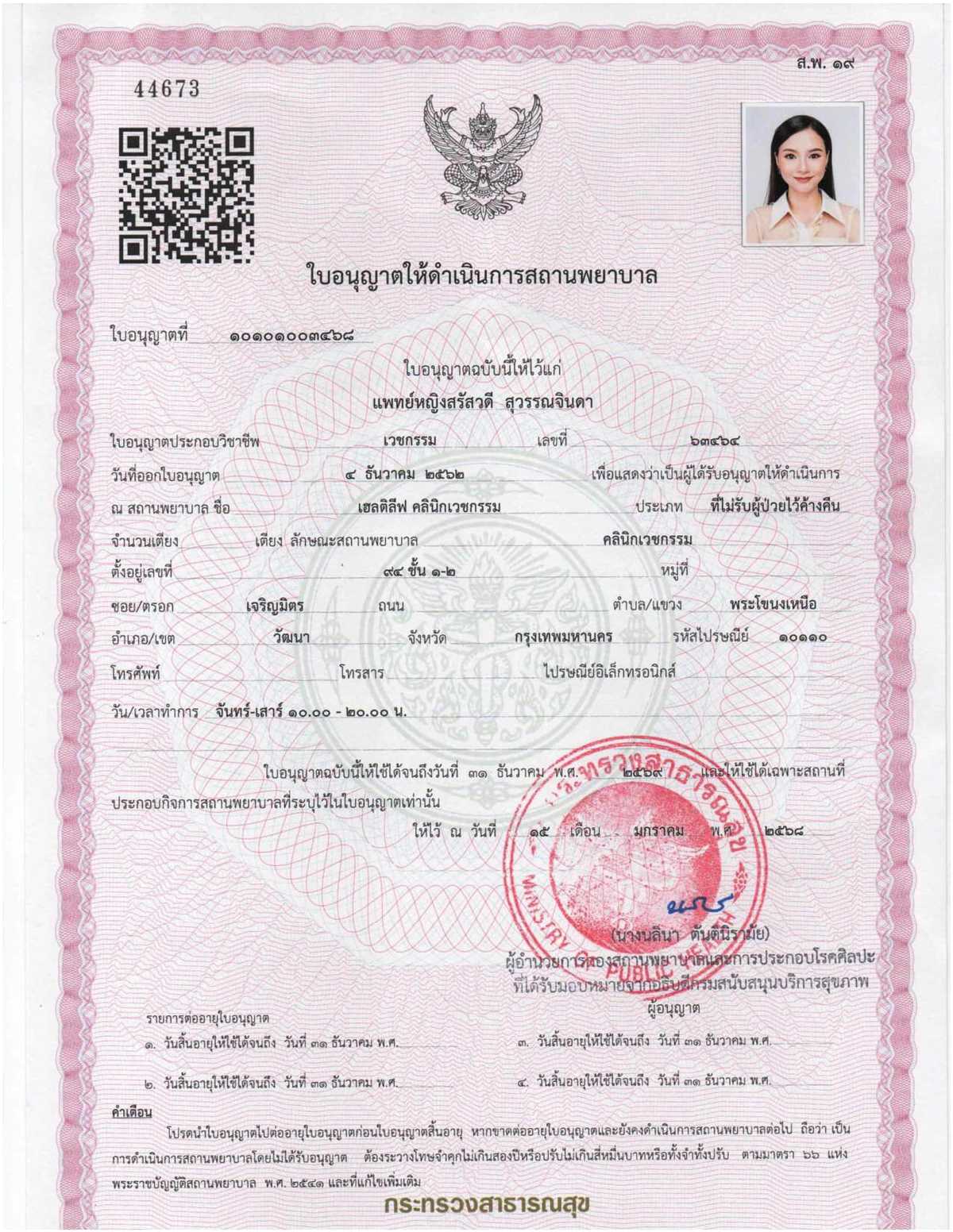
Official Accreditation / Certificate

Dr. Sarassawadee Suwanjinda, MD (Dr. Petch)
Co-Founder & Chief Medical Strategy Officer

Dr. Napat Hunsajarupan, MD (Dr. First)
Co-Founder & Chief Medical Officer
02 / The treatment mechanism
What stem cell therapy for knee osteoarthritis is
In knee OA, the cartilage that cushions the ends of the thigh bone and shin bone thins, and the surrounding joint lining and bone change as well. Treatment usually aims to reduce pain and improve function. Stem cell therapy adds another option: cells are placed in the joint with the aim of influencing that environment.
The cells used for this purpose are mesenchymal stem cells (MSCs), a cell type that can be taken from several tissues, including bone marrow, fat and umbilical cord. At Healthi Life, the cells are umbilical cord mesenchymal stem cells (UC-MSC). They come from fresh umbilical cord tissue collected during planned C-section deliveries. There are no fetal or embryonic sources and no animal products. Donors are screened, every batch has a Certificate of Analysis, and processing is xeno-free. Cells are administered fresh, without a freeze-thaw cycle. Frozen cells are also used clinically; fresh is the protocol the center chose. The cells are prepared by GMP and ISO-certified partner laboratories. Those certifications are held by the laboratories, not by Healthi Life.
The knee program uses a product described as chondrogenic MSC, at doses of 5, 10 or 15 million cells per joint. A cell count is not a promise of a result. Ask the physician to explain in plain terms how the product is prepared and why a particular dose was chosen for you.
03 / Clinical evidence
What the research shows, in plain terms
A guideline recommends against it. The 2019 American College of Rheumatology and Arthritis Foundation guideline for hand, hip and knee OA recommends strongly against stem cell injections for knee and hip OA. The authors cited concern about the variety of preparations and the lack of standardization in how cells are prepared and given.
Some controlled trials are encouraging, but small. A phase I/II randomized trial in Chile compared umbilical cord MSCs with hyaluronic acid in 26 people with knee OA. Doses were 20 million cells, given once or twice (at baseline and at six months). Over 12 months there were no severe adverse events reported. Only the cell-treated groups improved significantly in pain and function from their starting point, and at 12 months the group that received two doses had lower pain scores than the hyaluronic acid group. MRI scores did not differ between groups (Matas et al., 2019). With 26 participants, one trial cannot settle the question, and its doses were not the doses used in Bangkok programs.
Earlier work used a different cell source. A 2014 proof-of-concept trial in Korea injected each person's own fat-derived MSCs into 18 people at three dose levels. There was no treatment-related adverse event, and the highest-dose group improved on the WOMAC score at six months (Jo et al., 2014). It had no control group, so it shows feasibility, not proof of benefit.
Pooled analyses are more cautious. A 2026 network meta-analysis of randomized trials pooled 24 studies with 2,960 participants and compared several injected biologic products, including umbilical cord MSCs, with hyaluronic acid. Some differences were statistically significant, but the improvements in pain and function did not exceed the minimal clinically important difference up to 12 months. No serious adverse events were reported, and the imaging findings were inconsistent (Han et al., 2026).
Taken together, a reasonable reading is this: no serious adverse events were reported in these published trials, although they were too small to detect uncommon problems; the benefit is uncertain and probably varies from person to person, and large, long, well-controlled trials are still needed.
04 / Candidate selection
Who may be a candidate, and who may not
Eligibility is confirmed by a physician. In general, the people who may be considered are adults with symptomatic knee OA who have already tried first-line care and who want to understand a regenerative option. Some features favor a closer look: pain that limits daily life despite exercise and weight management, imaging that matches the symptoms, and realistic expectations.
You may not be a candidate, or the physician may advise waiting, if any of the following apply:
- Your symptoms do not match your imaging, or the pain may come from the hip, spine or another source.
- You have an active infection, an inflamed joint of unclear cause, or a medical history that raises risk. The physician reviews history and risk before approval.
- You are looking for a guaranteed result, or a quick fix that avoids exercise and rehabilitation.
- The joint damage is so advanced that a different pathway, such as orthopedic surgical assessment, is more appropriate.
- You are not able to attend the follow-up plan.
A "no" from a physician is a normal and useful outcome of an assessment. The center describes its model as governance-first: eligibility screening comes before treatment approval, and not every guest qualifies.
05 / Clinical pathway
How the protocol runs at Healthi Life
The process is built around assessment first.
- Discovery Consultation. A complimentary 20-minute Discovery Consultation, by phone or video, lets the team review your case before you travel. Send recent imaging reports and lab results if you have them.
- Eligibility screening. The physician reviews your medical history and assesses risk. A final decision is made after clinical assessment in Bangkok.
- Dose decision. The physician confirms the cell dose after assessment (5, 10 or 15 million cells per joint). Eligibility and final dose are not decided by a price list.
- Treatment under physician supervision. The cells are fresh UC-MSC with a Certificate of Analysis for the batch. Most protocols require little downtime, and recovery is discussed individually. Fatigue or a mild, short-lived temperature can follow. A high or persistent fever, breathlessness, chest pain, or spreading redness or swelling at the injection site should be reported right away; every guest receives a contact for this before leaving.
- Follow-up. Stem cell programs include a structured medical follow-up of 30 to 90 days after you leave.
The exact injection technique, any imaging guidance and the visit schedule are set by the physician. Ask for them in writing during your consultation.
The center is at 94 Ekkamai 10 Alley, Khlong Tan Nuea, Watthana, Bangkok 10110. It is licensed in Thailand as Healthi-Life Medical Clinic (license 10101003468), and it was named 2025 Regenerative Clinic of the Year in Asia-Pacific at the GlobalHealth Asia-Pacific Awards. An award is background, not evidence that a treatment works for your knee.
06 / Pricing structure
Published prices
Every treatment listed here is dispensed only after a medical consultation at Healthi Life and on a physician's prescription. Prices are published for transparency, not as an offer to supply.
Knee Mobility Restoration and Joint Mobility Restoration follow the same per-joint doses and prices. Dose is confirmed by a physician after assessment. Cells are UC-MSC, administered fresh, with a Certificate of Analysis per batch.
| Program | Dose | Price (THB) | Approx. USD (about ?31 per USD) |
|---|---|---|---|
| One knee, chondrogenic MSC | 5 million cells | ?86,000 | $2,800 |
| One knee, chondrogenic MSC | 10 million cells | ?123,000 | $4,000 |
| One knee, chondrogenic MSC | 15 million cells | ?157,000 | $5,100 |
| Both knees, one session, chondrogenic MSC | 5 million cells each | ?155,000 | $5,000 |
Every treatment listed here is dispensed only after a medical consultation at Healthi Life and on a physician's prescription. Prices are published for transparency, not as an offer to supply.
Prices are fixed and listed per dose before you commit. Ask what the price includes and what is billed separately, and get the answer in writing. Treating both knees is covered in a separate article in this series.
07 / Alternatives & first-line care
Alternatives and first-line care
Stem cell therapy is not a replacement for first-line care, and a responsible provider will talk about it. The 2019 ACR and Arthritis Foundation guideline gives strong recommendations for exercise, weight loss for people with knee OA who are overweight or obese, self-management programs, tai chi, cane use, tibiofemoral bracing for tibiofemoral knee OA, topical NSAIDs, oral NSAIDs and intra-articular glucocorticoid injections for knee OA. Other options with a conditional recommendation include balance exercises, yoga, acupuncture, thermal modalities and certain medicines.
Practically, that means a strengthening and activity plan, weight management where relevant, bracing or walking aids if needed, and medicines or injections chosen with your own doctor. If these have not been tried, or have been tried briefly, a good provider will usually suggest them alongside, or before, any cell therapy. Cell therapy, where it is used, is typically considered an addition for people who want to explore a regenerative approach after assessment.
08 / Risks & limits
Risks and limits of the evidence
- Investigational status. No stem cell product is approved by the U.S. FDA for orthopedic conditions. The FDA consumer alert (content current as of April 2024) lists blood-forming cells from umbilical cord blood as the approved stem cell products, for blood-production disorders and not for other uses. Thailand regulates medicine separately from the United States, but the point stands wherever you are treated: this is not a routine, standardized treatment.
- Variable products. Cell source, dose, preparation and injection method differ between trials and providers. Results from one product do not transfer to another.
- Short follow-up. The trials above follow participants for months to a couple of years. Long-term outcomes are less well documented.
- Side effects. In the cited trials, no severe adverse events were reported, but small trials can miss uncommon problems. Temporary soreness, fatigue and a mild, short-lived temperature are discussed by the center. Infection and reaction risks exist with any injection.
- Reporting. If you are harmed after treatment with a product marketed as regenerative medicine, the FDA asks that U.S. consumers report it through its MedWatch program, and you should also tell the treating physician.
Be cautious of any provider that promises results, discourages a second opinion, or cannot show you a Certificate of Analysis for the cell batch.
09 / Patient checklist
Questions to ask before treatment
- What is my diagnosis, and does my imaging match my symptoms?
- Which first-line options have I tried, and which should I try first?
- What cells are used, where are they prepared, and can I see the Certificate of Analysis?
- Are the cells fresh or frozen, and how does that matter for my case?
- What dose do you propose for me, and why?
- What does the published research say about this exact product, not just stem cells in general?
- What are the risks, and what should I do if I feel unwell after I leave Thailand?
- What is included in the price, and what is extra?
- What follow-up will I receive, and how can I reach the team?
- Under what circumstances would you advise me not to have the treatment?
The International Society for Stem Cell Research (ISSCR) also publishes The ISSCR Guide to Stem Cell Treatments, with a "What to Ask Your Doctor" section.
Some guests also book the Advanced Check-Up (?30,000, 90+ biomarkers, all-inclusive, no separate lab fees) as a baseline. That baseline is what a longer-term longevity program with physician follow-up is built on.
10 / FAQ
Frequently asked questions
- Is stem cell therapy for knee OA approved?
No stem cell product is approved by the FDA for orthopedic conditions, and stem cell therapy at Healthi Life is investigational. It is delivered as a physician-supervised medical protocol after eligibility screening. - Does it work?
Outcomes vary and are not guaranteed. Small controlled trials have reported pain and function improvements, while a 2026 pooled analysis found that gains did not exceed the minimal clinically important difference up to 12 months. Your physician can discuss what is realistic for you. - What kind of cells are used?
Umbilical cord mesenchymal stem cells (UC-MSC), administered fresh, with a Certificate of Analysis per batch and xeno-free processing, prepared by GMP and ISO-certified partner laboratories. - Where do the cells come from?
Fresh umbilical cord tissue collected during planned C-section deliveries. No fetal or embryonic sources and no animal products are used, and donors are screened. - How many sessions will I need?
That depends on the indication, your biology and your goals, and the physician decides during the consultation. The published knee grid lists doses per joint. - Is there downtime?
Most protocols require little downtime, and recovery is discussed individually. Fatigue or a mild, short-lived temperature can follow. - How much does it cost?
Per knee: ?86,000 (about $2,800) for 5 million cells, ?123,000 (about $4,000) for 10 million and ?157,000 (about $5,100) for 15 million. Treatment is dispensed only after a medical consultation and on a physician's prescription. - Can I be assessed before I fly?
Yes. A complimentary 20-minute Discovery Consultation is available by phone or video, and a physician confirms eligibility and final dose after clinical assessment in Bangkok. - Who should not have the treatment?
People with unexplained pain, active infection, relevant medical risks, or expectations of a guaranteed result may be advised against it. A physician makes the call, and sometimes the answer is no. - What follow-up is provided?
Stem cell programs include structured medical follow-up for 30 to 90 days after you leave.
References
Kolasinski SL, Neogi T, Hochberg MC, et al. 2019 American College of Rheumatology/Arthritis Foundation Guideline for the Management of Osteoarthritis of the Hand, Hip, and Knee. Arthritis Care & Research, 2020. [https://doi.org/10.1002/acr.24131](https://doi.org/10.1002/acr.24131)
Matas J, Orrego M, Amenabar D, et al. Umbilical Cord-Derived Mesenchymal Stromal Cells (MSCs) for Knee Osteoarthritis: Repeated MSC Dosing Is Superior to a Single MSC Dose and to Hyaluronic Acid in a Controlled Randomized Phase I/II Trial. Stem Cells Translational Medicine, 2019. [https://doi.org/10.1002/sctm.18-0053](https://doi.org/10.1002/sctm.18-0053)
Han JH, Jung M, Chung K, et al. Intra-articular Orthobiologics Show Statistically but Not Clinically Meaningful Improvements Compared With Viscosupplementation in Knee Osteoarthritis: A Network Meta-analysis of Randomized Controlled Trials. Arthroscopy, 2026 (PMID 42524752). [https://doi.org/10.1002/arj.70411](https://doi.org/10.1002/arj.70411)
Jo CH, Lee YG, Shin WH, et al. Intra-articular Injection of Mesenchymal Stem Cells for the Treatment of Osteoarthritis of the Knee: A Proof-of-Concept Clinical Trial. Stem Cells, 2014. [https://doi.org/10.1002/stem.1634](https://doi.org/10.1002/stem.1634)
U.S. Food and Drug Administration. Consumer Alert on Regenerative Medicine Products Including Stem Cells and Exosomes (content current as of April 9, 2024). [https://www.fda.gov/vaccines-blood-biologics/consumers-biologics/consumer-alert-regenerative-medicine-products-including-stem-cells-and-exosomes](https://www.fda.gov/vaccines-blood-biologics/consumers-biologics/consumer-alert-regenerative-medicine-products-including-stem-cells-and-exosomes)
International Society for Stem Cell Research. The ISSCR Guide to Stem Cell Treatments (patient resources). [https://www.aboutstemcells.org/patient-resources/](https://www.aboutstemcells.org/patient-resources/)
Healthi Life Longevity Center, 94 Ekkamai 10 Alley, Khlong Tan Nuea, Watthana, Bangkok 10110. Request a complimentary 20-minute Discovery Consultation through PlacidWay. Stem cell therapy is investigational; outcomes vary and are not guaranteed.






























Share this listing