


Tbilisi IVF Surges as Europeans Bypass Spanish Clinics
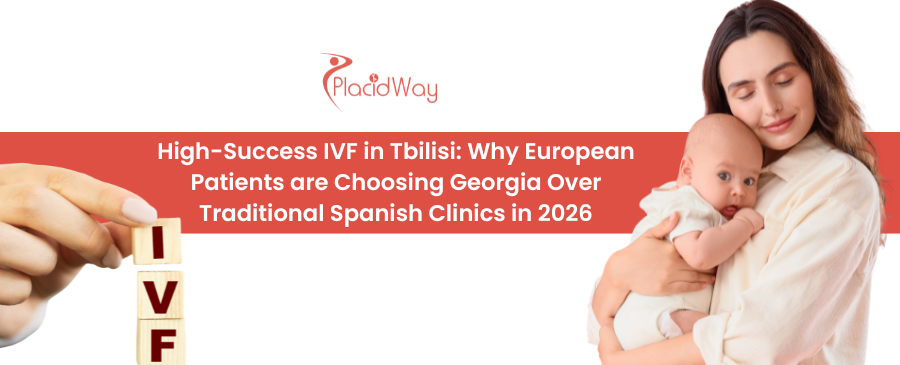
Driven by rising costs, Europeans are flocking for high-success IVF in Tbilisi in 2026. Offering advanced treatments at 60% less than Spanish hubs, Georgia’s progressive reproductive laws and world-class care are reshaping global medical tourism.
The 2026 Shift: Why IVF in Tbilisi Outpaces Western Europe
For the past two decades, Western European nations—particularly Spain and the Czech Republic—have dominated the cross-border reproductive care market. However, a dramatic market realignment has occurred in 2026. A combination of crushing medical inflation, heavily saturated clinics, and increasingly restrictive legislation across the European Union has forced prospective parents to look further east. In this rapidly evolving landscape, the capital city of Georgia has emerged as the undisputed leader in reproductive medicine, offering a highly sophisticated medical infrastructure that rivals, and frequently exceeds, traditional Western hubs.
The surge in demand for high-success IVF in Tbilisi is not merely a trend driven by cost savings; it is a profound shift toward uncompromising medical excellence. Georgian medical centers have strategically invested hundreds of millions of dollars into their reproductive healthcare sectors, importing top-tier laboratory equipment from the United States and Germany. As a result, European patients who previously endured year-long waitlists in their home countries are now discovering that they can access immediate, world-class fertility treatments in a rapidly modernizing, culturally rich European gateway. This seamless blend of accessibility, clinical precision, and patient-centric care is redefining the gold standard for global fertility tourism.
Did You Know?
The volume of inbound medical tourists seeking fertility treatments in Georgia has increased by an astonishing 65% since 2023. Currently, European and North American patients make up over half of all IVF cycles performed in the country's premium reproductive centers.
Regulatory Freedom: Georgia's Progressive Fertility Laws
One of the most compelling catalysts driving the exodus of fertility patients from Western Europe to the Caucasus is the stark contrast in legislative frameworks. In recent years, countries like the United Kingdom, Germany, and even Spain have introduced stringent regulations surrounding assisted reproductive technology (ART). These sweeping legal changes have included the removal of donor anonymity, restrictive age limits for prospective mothers, and outright bans on commercial surrogacy. For thousands of couples and individuals facing complex infertility diagnoses, these regulatory bottlenecks have effectively extinguished their hopes of building a biological family within their home borders.
Conversely, Georgia boasts some of the most progressive, stable, and transparent reproductive laws in the world. Since 1997, the nation has legally protected the rights of intended parents, offering a robust legislative umbrella that permits anonymous egg and sperm donation, gestational surrogacy for heterosexual couples, and highly flexible age parameters for IVF candidates. Crucially, Georgian law stipulates that the intended parents are registered as the sole legal parents on the child's birth certificate immediately upon birth, completely circumventing the agonizing, multi-year adoption or parental order processes required in Western jurisdictions. This unparalleled legal certainty provides international patients with immense psychological relief during an already emotionally taxing journey.
Cost vs. Quality: The Economics of European IVF Travel
The economic realities of modern fertility treatments can be devastating for the average European family. As public healthcare systems (such as the UK's NHS) strictly limit funded IVF cycles, patients are frequently forced into the private sector. In Spain, an epicenter for private fertility care, a single standard IVF cycle utilizing donor eggs can easily exceed €9,000, excluding the exorbitant costs of hormonal stimulation medications, mandatory genetic testing, and facility fees. When multiple cycles are required to achieve a live birth, patients often face crippling medical debt, second mortgages, or the heartbreaking decision to abandon their family-planning goals entirely.
Tbilisi has disrupted this exclusionary pricing model by leveraging macroeconomic advantages without sacrificing clinical quality. Because the cost of real estate, administrative operations, and medical labor is significantly lower in Georgia compared to the Eurozone, premier fertility centers can pass these substantial savings directly to the patient. An all-inclusive IVF package in Tbilisi—often featuring ICSI, advanced embryo monitoring, and comprehensive donor compensation—typically costs between 50% and 70% less than its Western European equivalent. This democratization of reproductive medicine ensures that patients are paying for cutting-edge science and elite medical expertise, rather than inflated domestic overhead.
Advanced Reproductive Technology and Success Rates in Georgia
The extraordinary success rates achieved by Georgian fertility centers are deeply rooted in their commitment to technological superiority. In 2026, the elite IVF laboratories in Tbilisi are virtually indistinguishable from the top-tier facilities found in Boston, London, or Madrid. These centers utilize Class 100 cleanroom environments equipped with highly sensitive air filtration systems to completely eliminate volatile organic compounds (VOCs), ensuring optimal conditions for delicate embryo development. Furthermore, standard protocols routinely incorporate time-lapse incubation systems (such as the EmbryoScope), which utilize artificial intelligence to continuously monitor cellular division without disturbing the embryos' stable environment.
Beyond hardware, the clinical expertise driving these technologies is truly world-class. The new generation of embryologists and reproductive endocrinologists operating in Tbilisi are heavily integrated into the global medical community. The vast majority hold specialized certifications from the European Society of Human Reproduction and Embryology (ESHRE) and have completed extensive fellowships in the United States or Western Europe. Their mastery of complex micromanipulation techniques—including Preimplantation Genetic Testing for Aneuploidies (PGT-A), Intracytoplasmic Sperm Injection (ICSI), and advanced oocyte vitrification—ensures that patients undergoing IVF in Tbilisi experience live-birth success rates that consistently match, or surpass, global averages.
Comparing the True Cost of IVF: Spain vs. Tbilisi Packages
A primary grievance among patients navigating domestic European fertility clinics is the pervasive lack of billing transparency. "Bait-and-switch" pricing models are unfortunately common, where the advertised cost of an IVF cycle covers only the most basic laboratory procedures, leaving patients blindsided by thousands of euros in additional charges for mandatory blood panels, blastocyst culturing, and embryo freezing.
By stark contrast, the medical tourism infrastructure in Georgia is built upon the concept of the "all-inclusive package." This patient-centric billing philosophy guarantees absolute financial predictability. The table below illustrates the staggering financial disparities between an average premium clinic in Spain and top-tier facilities in Tbilisi, highlighting exactly why the international pivot to the Caucasus has become so pronounced.
"The European fertility landscape is undergoing a massive realignment in 2026. Patients are no longer willing to endure endless waitlists, legal hurdles, and exorbitant fees in traditional Western hubs. High-success IVF in Tbilisi has emerged as the definitive alternative, offering global patients uncompromised technological excellence, fiercely transparent legal frameworks, and profound affordability."
— Pramod Goel, CEO of PlacidWay
Comprehensive Care: The Holistic Patient Experience in Tbilisi
Recognizing that fertility treatments are inherently stressful, the medical tourism sector in Georgia has evolved to offer an unparalleled, white-glove concierge experience. Facilities have completely reimagined the clinical environment, transforming sterile hospital settings into serene, spa-like wellness retreats. When international patients commit to an IVF cycle in Tbilisi, they are not merely purchasing a medical procedure; they are stepping into a meticulously coordinated ecosystem of care designed to optimize their psychological and physical well-being.
These elite international patient programs routinely incorporate a wealth of supportive services designed to eliminate travel anxiety and allow patients to focus entirely on their treatment outcomes. Key elements of this holistic approach include:
- Dedicated Multilingual Coordinators: Patients are assigned personal medical concierges fluent in English, Spanish, German, and French to translate complex medical data and handle daily scheduling.
- VIP Logistics and Transfers: From the moment patients land at Tbilisi International Airport, private chauffeurs handle all ground transportation between luxury accommodations, clinical appointments, and pharmacies.
- Psychological Support Systems: Acknowledging the emotional toll of infertility, comprehensive packages often include access to licensed fertility counselors who specialize in supporting cross-border intended parents.
- Integrated Holistic Therapies: To improve implantation rates and lower cortisol levels, many centers offer complementary acupuncture, nutritional counseling, and specialized fertility massage prior to embryo transfer.
- Transparent Donor Matching: Unlike restrictive Western European systems, Georgian databases offer incredibly detailed phenotypic profiles, allowing parents to make deeply informed choices in a supportive environment.
Did You Know?
The cultural emphasis on hospitality in Georgia extends directly into its medical sector. The nation, famous for its ancient viticulture and culinary warmth, provides an exceptionally low-stress, welcoming environment—a critical, often overlooked factor that heavily contributes to successful embryo implantation rates.
How PlacidWay Connects Families to Premier IVF in Tbilisi
While the advantages of traveling to Georgia for reproductive care are statistically undeniable, attempting to navigate a foreign medical system independently can be highly daunting. The internet is flooded with digital marketing from hundreds of overseas facilities, making it incredibly difficult for an anxious patient to independently verify a clinic's ISO certifications, audit their true success rates, or guarantee the ethical sourcing of their donor programs. This critical information gap is exactly where dedicated global healthcare facilitators become an essential component of the fertility journey.
Acting as a highly trusted, independent connector, PlacidWay meticulously curates a network of exclusively vetted, internationally accredited reproductive centers. Through this robust platform, prospective parents can easily compare comprehensive profiles of elite Georgian facilities, review highly transparent pricing structures, and read verified testimonials from successful international families. By streamlining the complex credential verification process and facilitating direct, secure virtual consultations with leading reproductive endocrinologists, PlacidWay empowers patients to make confident, data-driven decisions regarding their future families.
Preparing for Your Medical Journey to the Caucasus Region
Transitioning from the initial consultation phase to boarding a flight to Eastern Europe requires minimal logistical friction, thanks to Georgia's highly developed tourism infrastructure. Tbilisi International Airport serves as a major regional hub, offering direct, highly affordable flights from nearly every major European capital, including London, Paris, Berlin, and Munich. Furthermore, Georgia offers remarkably accommodating visa policies, allowing citizens of the EU, UK, and North America to enter and reside in the country visa-free for up to a full year. This flexibility is particularly invaluable for patients requiring extended stays for complex surrogacy programs or multiple IVF cycles.
Beyond the clinical excellence, patients frequently discover that the destination itself is profoundly restorative. Nestled between the Caucasus Mountains and the Black Sea, Tbilisi is a vibrant, safe, and culturally immersive city. Patients are encouraged to blend their medical itineraries with gentle tourism—strolling through the historic cobblestone streets of Old Tbilisi, relaxing in the famous sulfur baths, and enjoying organic, nutrient-dense Mediterranean-style cuisine. This seamless fusion of elite medical intervention and restorative travel ensures that patients return home not just with the highest possible chances of pregnancy, but rejuvenated in mind and spirit.




.png)
.png)

.png)
.png)


















Share this listing