


AI-Driven IVF in Georgia Boosts Success for 40+ Patients
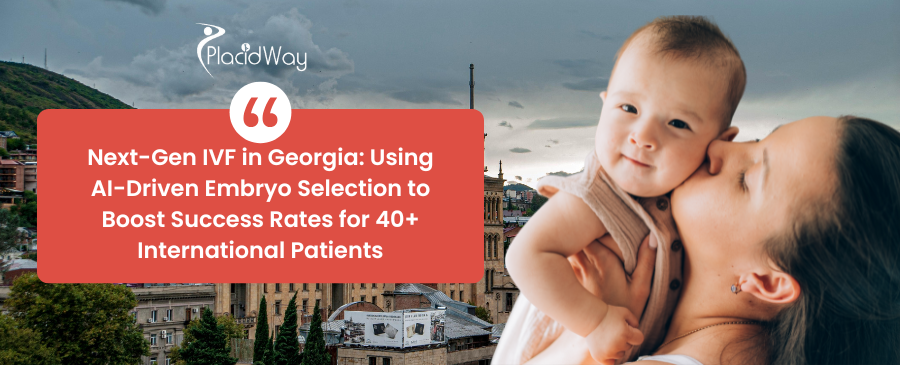
Driven by breakthrough technology, women over 40 are increasingly seeking Next-Gen IVF in Georgia. By utilizing AI-driven embryo selection in Georgia, this Eurasian medical hub offers unprecedented success rates and affordable fertility care for global patients in 2024.
The Rise of Next-Gen IVF in Georgia for International Patients
The global landscape of reproductive medicine is undergoing a massive geopolitical shift, with the Republic of Georgia rapidly emerging as the premier destination for advanced fertility treatments. Historically, patients from the United States, Western Europe, and Australia were limited to highly expensive domestic clinics or neighboring countries with strict age restrictions. However, the introduction of Next-Gen IVF in Georgia has completely disrupted this paradigm. By integrating world-class embryology standards with accessible pricing, this dynamic Eurasian nation is attracting thousands of medical tourists seeking to overcome complex infertility diagnoses.
What truly sets this destination apart is its rapid adoption of Next-Generation Assisted Reproductive Technology (ART). Georgian fertility hubs have heavily invested in importing elite medical hardware and recruiting internationally trained reproductive endocrinologists. As a result, international patients are no longer traveling merely for cost savings; they are flying across the globe to access superior technological interventions that are often waitlisted or prohibitively expensive in their home countries. For patients grappling with diminished ovarian reserve or advanced maternal age, this combination of high-tech intervention and rapid accessibility is nothing short of life-changing.
Did You Know?
The integration of artificial intelligence in embryology can increase clinical pregnancy rates by up to 30% for women over the age of 40, primarily by eliminating human error in the morphological grading of blastocysts.
How AI-Driven Embryo Selection Revolutionizes Fertility Care
The most groundbreaking advancement driving international patients to Georgian clinics is the implementation of AI-driven embryo selection. Traditionally, embryologists relied on subjective, microscopic visual inspections at specific time intervals to determine which embryo had the highest potential for implantation. This manual grading system, while effective, is inherently limited by human perception. Today, top-tier laboratories in Georgia utilize sophisticated time-lapse incubators equipped with high-definition cameras that capture thousands of images of developing embryos every few minutes.
These vast datasets are then analyzed by proprietary artificial intelligence algorithms. The AI evaluates complex morphokinetic parameters—subtle patterns of cell division and structural integrity—that are entirely invisible to the human eye. By cross-referencing this real-time developmental data against global databases of successful implantations, the AI assigns a highly accurate viability score to each embryo. For international patients, particularly those with a limited number of viable eggs, this non-invasive technology ensures that only the most chromosomally robust embryo is transferred, drastically reducing the physical and emotional toll of failed IVF cycles and miscarriages.
Why Women Over 40 Are Flocking to Georgia for IVF Treatments
Navigating fertility treatments over the age of 40 presents a unique set of biological and bureaucratic challenges. In many Western nations, health insurance mandates and clinic success-rate protections result in strict age caps, effectively shutting out older women from receiving treatment with their own eggs. Georgia offers a compassionate, science-backed alternative, catering specifically to this demographic through a multi-faceted approach to reproductive care. When international patients explore their options, they discover several compelling reasons to cross borders:
- No Arbitrary Age Limits: Georgian medical protocols prioritize individual ovarian reserve testing and overall physical health over arbitrary chronological age limits, providing hope to women in their late 40s.
- Advanced Genetic Screening: Comprehensive Preimplantation Genetic Testing for Aneuploidy (PGT-A) is seamlessly paired with AI selection, virtually eliminating the risk of transferring embryos with chromosomal abnormalities.
- Accessible Donor Programs: For patients who require donor gametes, the country boasts a robust, legally protected, and highly regulated egg and sperm donor registry with zero wait times.
- Holistic Protocol Customization: Reproductive endocrinologists in this region are renowned for utilizing bespoke stimulation protocols, including PRP (Platelet-Rich Plasma) ovarian rejuvenation, rather than standard cookie-cutter dosages.
- Cost-Effective Multiple Cycles: Because the cost per cycle is significantly lower, women over 40 can afford to undergo embryo banking (multiple retrievals) to secure a healthy embryo before attempting a transfer.
Breaking Down the Costs: IVF in Georgia vs. the United States
The financial toxicity associated with fertility treatments in the United States and the United Kingdom forces many couples to abandon their dreams of parenthood. A single cycle of standard IVF in North America can easily exceed $20,000, and when cutting-edge add-ons like time-lapse imaging, AI embryo selection, and PGT-A are included, the bill can skyrocket past $35,000. Because these procedures are rarely covered by standard health insurance, patients are often forced into taking out second mortgages or high-interest medical loans.
Conversely, the cost structure in Georgia is remarkably transparent and deeply discounted compared to Western averages, without any compromise on technological superiority. The lower cost of living, subsidized medical education, and favorable real estate overhead allow Georgian medical facilities to offer premium, Next-Gen IVF packages at a fraction of the cost. This aggressive pricing model completely democratizes access to state-of-the-art reproductive science, allowing patients to budget for travel, luxury accommodations, and comprehensive treatment for less than the cost of a basic cycle at home.
The Advanced Medical Infrastructure Powering Georgia's IVF Boom
The high success rates reported across this Eurasian medical hub are not a stroke of luck; they are the direct result of massive capital investment into ultra-modern medical infrastructure. Reproductive success hinges heavily on the environment in which embryos are cultured. To that end, fertility centers in Georgia have constructed state-of-the-art embryology laboratories that rival, and often surpass, those found in London or New York. These facilities feature ISO-certified Class 100 clean rooms, equipped with advanced HEPA filtration and positive pressure systems that meticulously strip the air of Volatile Organic Compounds (VOCs), creating a pristine environment essential for sensitive blastocyst development.
Beyond the physical laboratories, the human capital within these facilities is extraordinary. The region has become a magnet for top-tier scientific talent, recruiting senior embryologists who have honed their skills at leading institutions across Europe and the Americas. This intersection of brilliant medical minds and unrestricted access to Next-Gen diagnostic tools—such as advanced sperm DNA fragmentation testing, endometrial receptivity arrays (ERA), and AI morphological mapping—creates a formidable ecosystem designed to tackle the most stubborn cases of unexplained infertility and recurrent implantation failure.
"The integration of Artificial Intelligence in embryo selection has completely redefined what is possible for maternal patients over 40. By eliminating human subjectivity, we are seeing unprecedented clinical pregnancy rates. Georgia has masterfully positioned itself at the forefront of this revolution, offering global patients a sanctuary where advanced technological infrastructure meets highly ethical, affordable reproductive care."
— Pramod Goel, CEO of PlacidWay
Navigating the Legal and Ethical Landscape of Fertility in Georgia
A critical factor driving the influx of international medical tourists is Georgia's exceptionally progressive and transparent legal framework surrounding Assisted Reproductive Technology (ART). Since 1997, the government has maintained clear, legally binding statutes that explicitly protect the rights of intended parents. For international couples, this means that procedures such as egg donation, sperm donation, and gestational surrogacy are legally secure, with the intended parents' names immediately placed on the child's birth certificate upon delivery, effectively bypassing the arduous adoption processes required in many other jurisdictions.
Furthermore, the country maintains highly ethical standards regarding donor anonymity and compensation. The donor registry system is robust, allowing prospective parents to review detailed medical histories, educational backgrounds, and physical characteristics of donors to ensure an optimal genetic match. This legally protected, transparent environment completely removes the anxiety and ambiguity that often plagues international fertility journeys, allowing patients over 40 to confidently proceed with comprehensive treatment plans, knowing their parental rights are irrevocably secured by national law.
Did You Know?
Over 5,000 international intended parents travel to the Republic of Georgia annually specifically for assisted reproductive technologies, making it one of the top three fastest-growing fertility tourism destinations in the world.
Connecting with Top Fertility Hubs Through PlacidWay
While the prospect of affordable, AI-driven fertility care is highly attractive, attempting to coordinate complex medical treatments across the globe can be incredibly overwhelming. Patients are often faced with language barriers, logistical hurdles, and the daunting task of verifying the international credentials of foreign laboratories. To navigate this high-stakes environment safely, thousands of prospective parents rely on dedicated medical tourism facilitators to bridge the gap between their dreams and reality.
As a global leader in medical travel, PlacidWay serves as the ultimate independent connector for international patients seeking Next-Gen IVF in Georgia. The platform meticulously vets regional medical facilities, ensuring they maintain the highest European society accreditations and utilize authentic AI embryo selection technology. By utilizing PlacidWay, patients can effortlessly compare top-rated fertility hubs, review transparent, all-inclusive pricing structures, and schedule secure telemedicine consultations with leading reproductive endocrinologists before ever booking a flight. This guided approach completely mitigates the stress of international healthcare navigation.
What to Expect During Your IVF Journey and Recovery in Tbilisi
Embarking on an IVF cycle abroad requires a commitment of typically two to three weeks, and the medical tourism infrastructure in Georgia ensures this time is spent in absolute comfort and tranquility. Upon arriving in the vibrant, historic capital of Tbilisi or the coastal city of Batumi, international patients are treated to concierge-level medical hospitality. Comprehensive treatment packages generally include dedicated patient coordinators, private airport transfers, and English-speaking liaisons who guide patients through every blood draw, ultrasound scan, and consultation.
Beyond the pristine clinic walls, the therapeutic nature of the destination itself plays a vital role in the treatment's success. Stress management is a critical component of healthy embryo implantation, and recovering in a culturally rich, scenic environment offers a profound psychological benefit. Patients can spend their waiting periods exploring ancient architecture, enjoying world-renowned culinary experiences, and relaxing in luxury boutique hotels that partner directly with medical centers. This seamless blend of elite medical science and restorative tourism provides the ultimate environment for patients over 40 to finally realize their dreams of starting or expanding their family.



.png)

.png)
.png)






.png)











Share this listing