


Turkey Medical Tourism to Hit $17.3B by 2035
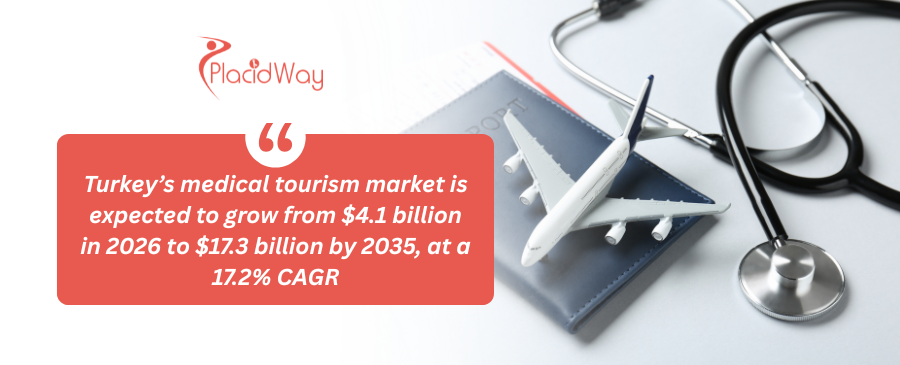
Driven by elite infrastructure and massive savings, patients seeking a hair transplant in Turkey or rhinoplasty in Istanbul will push the 2026 $4.1B market to $17.3B by 2035. This staggering 17.2% CAGR boom is rapidly redefining global medical travel for patients worldwide.
The Driving Forces Behind Turkey's 17.2% CAGR Growth Surge
The global healthcare landscape is currently undergoing a massive geographical shift, and the Eurasian nation of Turkey has firmly established itself as the primary beneficiary. Financial analysts and healthcare economists project that the country's medical tourism sector will expand from an impressive $4.1 billion in 2026 to an astronomical $17.3 billion by 2035. This represents a compound annual growth rate (CAGR) of 17.2%, a metric that vastly outpaces domestic healthcare growth in traditional Western markets. This boom is not an accidental phenomenon but the result of decades of strategic government investment, stringent regulatory frameworks, and a relentless focus on capturing the international patient demographic.
Several macroeconomic and industry-specific factors are fueling this unprecedented expansion. In regions like the United States, the United Kingdom, and Western Europe, healthcare systems are increasingly burdened by skyrocketing inflation, critical staffing shortages, and unmanageable wait times for elective procedures. In stark contrast, the Turkish government has heavily subsidized its medical infrastructure, allowing private health cities and surgical centers to operate with state-of-the-art technology while maintaining a fraction of the overhead costs. By seamlessly merging world-class clinical outcomes with their historically robust hospitality sector, Turkey has created an irresistible value proposition for international patients seeking everything from bariatric surgery in Turkey to complex cardiovascular interventions.
Did You Know?
The Turkish Ministry of Health has actively incentivized medical tourism by creating tax-free healthcare zones and partnering with the national airline to offer highly discounted flight rates specifically for international patients carrying validated medical appointments.
Why Global Patients Prioritize a Hair Transplant in Turkey
Perhaps no other procedure has become as synonymous with the nation's medical identity as follicular restoration. Men and women from across the globe routinely travel for a hair transplant in Turkey, driven by a combination of unmatched surgical expertise and revolutionary technological implementation. Traditional hair restoration in North America or the UK often utilizes outdated strip-harvesting techniques that leave visible scarring and require extended downtimes. Conversely, Turkish specialists are universally recognized as pioneers in advanced Direct Hair Implantation (DHI) and Sapphire Follicular Unit Extraction (FUE). These minimally invasive techniques ensure maximal graft survival rates, zero linear scarring, and a highly dense, natural-looking hairline.
Beyond the superior clinical methodologies, the sheer volume of cases handled by these specialized aesthetic hubs has cultivated an environment of elite surgical mastery. Because the destination sees hundreds of thousands of hair loss patients annually, the technicians and surgeons have developed an unparalleled aesthetic eye for designing hairlines that perfectly suit diverse ethnic backgrounds and facial structures. This hyper-specialization, combined with all-inclusive pricing models that do not penalize patients by charging per graft, has completely monopolized the global hair restoration market, contributing massively to the projected $17.3 billion valuation.
Understanding the Anatomy of Premium Turkish Medical Packages
One of the most profound innovations driving the 17.2% CAGR is the perfection of the all-inclusive medical tourism package. Facilities operating in major hubs like Istanbul and Antalya have recognized that international patients require more than just excellent surgery; they require logistical peace of mind. To eliminate the anxiety of traveling abroad for medical care, elite centers bundle every aspect of the patient journey into a single, transparently priced itinerary. When organizing travel through reputable platforms, a standard premium package includes:
- VIP Airport Transfers: Patients are greeted directly at the arrivals gate by dedicated, multi-lingual concierge staff and transported in luxury, Wi-Fi-enabled private vehicles.
- Five-Star Accommodations: Recovery takes place in partnered luxury hotels that are specifically trained to cater to post-operative dietary needs and comfort requirements.
- Comprehensive Medical Translation: Dedicated native-speaking patient coordinators accompany the traveler to every consultation, surgery, and follow-up to ensure zero communication barriers.
- All Diagnostic Testing: Pre-operative blood panels, EKG testing, 3D facial imaging, and specialized consultations are entirely covered without hidden domestic upcharges.
- Extensive Post-Op Care Products: Patients receive all necessary medications, specialized compression garments, orthopedic pillows, and medical-grade shampoos necessary for optimal healing before returning home.
Comparing the True Cost of Surgery: Global vs. Turkish Averages
The financial calculus of modern medical travel is undeniable. In domestic Western markets, procedures such as dental veneers or bariatric operations are heavily penalized by an inflated network of facility fees, high medical malpractice insurance premiums, and privatized health insurance monopolies. Consequently, middle-class patients are often priced entirely out of life-changing aesthetic or preventative care. The Turkish medical market systematically bypasses these artificial price inflators.
By offering comprehensive pricing that is frequently 60% to 75% lower than US or UK averages, patients can achieve top-tier medical results without incurring predatory debt. The table below illustrates the stark economic disparities that are funneling millions of international patients into the Eurasian market, driving the rapid progression toward the $17.3 billion industry benchmark.
The Advanced Medical Infrastructure Fueling Istanbul's Boom
The immense projected growth from $4.1 billion to $17.3 billion is anchored by a staggering physical transformation of the nation's healthcare infrastructure. Medical zones in major urban centers have evolved into sprawling, futuristic health cities. These multi-disciplinary mega-complexes are engineered from the ground up to cater to the unique requirements of the international medical tourist. They house advanced robotic surgical systems, highly specialized intensive care units, integrated pharmaceutical research wings, and dedicated international patient departments that function with the efficiency of luxury hotel concierges.
Furthermore, this infrastructure boom is heavily supported by massive investments in digital health technologies. Patients seeking a rhinoplasty in Istanbul or complex dental implants in Antalya can now begin their journey with hyper-realistic 3D virtual consultations, allowing them to visualize exact surgical outcomes before booking a flight. In the operating rooms, the integration of AI-assisted diagnostic tools and ultrasonic surgical instruments ensures that procedures are vastly less invasive, leading to significantly reduced recovery times. This commitment to technological superiority is a core reason why discerning patients continually choose this transcontinental hub over rival destinations.
"The projection of a $17.3 billion valuation by 2035 is not merely a statistical anomaly; it is a testament to an absolute revolution in healthcare accessibility. By perfectly aligning elite, JCI-accredited medical infrastructure with a deeply ingrained culture of hospitality, this region has effectively democratized high-end surgical care. We are witnessing a historic paradigm shift where patients are no longer restricted by the limitations or inflated costs of their domestic healthcare systems."
— Pramod Goel, CEO of PlacidWay
Safety First: Unpacking Turkish Board Certification and Regulations
As the volume of inbound patients accelerates, safety and regulatory oversight remain the foundational pillars sustaining consumer trust. The Turkish Ministry of Health exercises stringent, unwavering control over the medical tourism sector. For any facility to legally treat international travelers, it must obtain a specialized International Health Tourism Authorization Certificate. This process mandates intense audits of the facility’s surgical infection rates, the board certification status of its attending physicians, and the structural integrity of its intensive care capabilities.
Additionally, the nation boasts one of the highest concentrations of Joint Commission International (JCI) accredited medical centers in the world. Surgeons specializing in weight loss surgery in Turkey or aesthetic facial reconstruction undergo rigorous, decade-long academic residencies that mirror, and often exceed, European and North American standards. Furthermore, it is commonplace for top-tier specialists to maintain active fellowships with esteemed international boards, such as the International Society of Aesthetic Plastic Surgery (ISAPS) or the International Federation for the Surgery of Obesity (IFSO), ensuring clinical protocols are globally standardized and flawlessly executed.
Did You Know?
Turkey is currently home to more than 40 Joint Commission International (JCI) accredited hospitals. This prestigious global gold seal of approval guarantees that the facility operates under the exact same stringent patient safety, sterilization, and emergency response protocols as elite hospitals in the United States.
What to Expect During Your Rhinoplasty Recovery in Turkey
The recovery phase is where the unique fusion of medical precision and traditional hospitality truly shines, creating an unparalleled patient experience. Unlike domestic procedures where patients are often discharged into isolation within hours of anesthesia, those undergoing facial aesthetics or cosmetic dentistry in Turkey are enveloped in a highly curated healing environment. Specialized medical tourism hotels are equipped with ergonomic recovery beds, nutrient-dense menus crafted to reduce postoperative inflammation, and access to on-call nursing staff who meticulously monitor the healing process around the clock.
As the initial recovery period subsides, patients frequently take advantage of their geographic location. While vigorous activity is restricted, the latter days of an itinerary often allow for gentle, therapeutic exploration. Whether it is enjoying the serene Mediterranean coastline following breast augmentation in Antalya, or taking a peaceful cruise along the Bosphorus after a successful dental procedure, this integration of a restorative vacation drastically reduces psychological stress. This holistic approach to wellness accelerates physical healing and cements the destination's reputation as the ultimate intersection of elite healthcare and luxury travel.
The Strategic Role of PlacidWay in Your Healthcare Journey
Despite the overwhelming advantages of international medical travel, navigating an unfamiliar healthcare landscape on the other side of the globe can be a daunting prospect for independent travelers. The internet is flooded with aggressive marketing campaigns, making it exceedingly difficult to verify genuine medical credentials, authenticate facility accreditations, or guarantee transparent pricing structures. This critical information gap is exactly where specialized medical tourism facilitators become absolutely essential to securing a safe and successful surgical outcome.
Acting as an independent, highly trusted global connector, PlacidWay removes the guesswork from cross-border healthcare. The platform meticulously vets an exclusive network of premier international providers, allowing patients to seamlessly compare profiles, analyze real, verified patient testimonials, and review comprehensive cost structures without hidden fees. By facilitating direct virtual consultations with globally credentialed specialists, PlacidWay empowers patients to make highly informed, confident decisions, ensuring they receive elite medical care customized entirely to their personal aesthetic and financial goals.















Share this listing