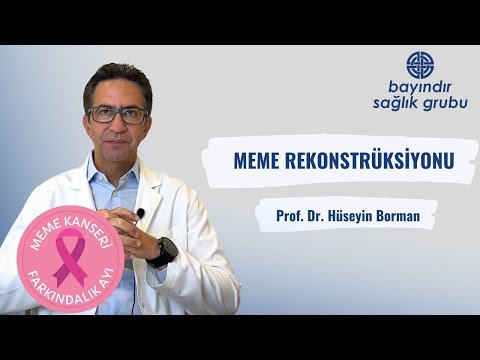
The journey through cancer is profoundly challenging, and losing a breast to mastectomy often deeply impacts a woman's sense of self. Today, advanced breast reconstruction surgery offers a powerful pathway to physical and emotional wholeness. This transformative procedure goes beyond mere cosmetic enhancement, restoring natural contours, physical balance, and vital self-confidence.
Watch this insightful clinical presentation by a leading plastic and reconstructive surgery specialist to discover the comprehensive mastectomy reconstruction options available today. From immediate silicone breast implants to advanced autologous tissue procedures, understanding these medical advancements is the first step toward reclaiming your silhouette and your future.
Video Chapters & Quick Navigation
Understanding Breast Reconstruction Surgery After Mastectomy
Breast reconstruction surgery is a highly specialized medical discipline dedicated to rebuilding the shape, size, and physical appearance of a breast following its removal due to cancer. This transformative surgical intervention is not viewed merely as a cosmetic luxury, but rather as an essential component of holistic oncological rehabilitation. As the clinical expert outlines at [00:11], the techniques utilized to rebuild the chest can be broadly categorized based on the exact timing of the procedure and the biological or synthetic materials employed.
Losing a part of one's body to cancer fundamentally alters a patient's psychological landscape. The mirror reflects a changed reality that can induce feelings of profound grief and a diminished sense of self. Engaging in breast reconstruction is an active, empowering step toward psychological reclamation. By systematically rebuilding the breast mound, skilled reconstructive surgeons provide patients with the physical symmetry required to navigate their daily lives comfortably.
Furthermore, restoring the physical weight and natural balance of the chest is crucial for long-term musculoskeletal health. Amputating a breast without replacing its volume can lead to secondary physical issues, such as chronic shoulder, neck, and back pain. By choosing to undergo one of the many mastectomy reconstruction options available, patients are investing in both their mental well-being and their physical equilibrium.
Immediate vs. Delayed Breast Reconstruction: Timing Your Healing
One of the most critical and defining decisions in the reconstructive journey is determining the optimal timing for the surgical intervention. As highlighted by the specialist at [00:20], breast reconstructions are generally divided into two distinct timeline protocols: immediate reconstruction and delayed reconstruction. Each specific pathway offers unique advantages and is carefully chosen based on the patient's immediate health status, the stage of the cancer, and the impending oncology treatment plan.
The Benefits of Immediate Breast Reconstruction
Immediate breast reconstruction is performed simultaneously with the mastectomy procedure. While the surgical site is already open and fully accessible, the reconstructive surgeon steps in immediately after the oncology surgeon finishes removing the cancerous tissue. This collaborative approach significantly streamlines the surgical process and drastically reduces the total number of operations the patient must endure under general anesthesia.
From a profound psychological standpoint, waking up from a mastectomy with a reconstructed breast mound already in place can drastically reduce the emotional trauma associated with breast amputation. Furthermore, the final aesthetic outcomes are often vastly superior. Operating immediately allows the surgeon to optimally preserve the patient's native skin envelope, ensuring that the new breast closely mimics the original anatomical structure.
Why Some Patients Opt for Delayed Breast Reconstruction
Despite the undeniable benefits of a simultaneous surgery, immediate reconstruction is not always the safest or most viable clinical option. Delayed breast reconstruction is deliberately postponed until the patient has completely healed from the mastectomy and has successfully finished all necessary adjuvant therapies. As noted in the presentation at [03:11], allowing the body to fully recover its strength is sometimes a strict medical prerequisite.
This deliberate waiting period ensures that the patient's immune system is robust enough to handle additional surgical trauma. It also guarantees that the delicate reconstructive materials—whether synthetic implants or transferred living tissue—will not be catastrophically compromised by the harsh realities of impending cancer treatments like targeted radiation.
| Clinical Feature | Immediate Reconstruction | Delayed Reconstruction |
|---|---|---|
| Surgical Timing | Performed during the primary mastectomy surgery | Performed months or years after active cancer treatments end |
| Total Surgical Sessions | Fewer overall surgeries and anesthesia exposures required | Requires a completely separate, dedicated surgical event |
| Psychological Impact | The patient never experiences a completely flat chest wall | Requires the patient to cope with breast loss temporarily |
| Radiation Interference | May complicate wound healing if radiation is suddenly required | Allows for the incredibly safe completion of all radiation therapy |
Breast Reconstruction with Silicone Implants: A Popular Choice
For a vast majority of women, choosing breast reconstruction with implants represents the most straightforward, globally standardized, and minimally invasive pathway to restoring their figure. Silicone implants, which are soft, cohesive gel-filled medical devices, are expertly engineered to closely mimic the natural weight, density, and physical feel of human breast tissue. As mentioned in the clinical overview at [00:44], utilizing silicone prostheses is a highly effective and historically proven method for post-mastectomy reconstruction.
How Silicone Breast Implants After Mastectomy Work
Following the surgical removal of the cancerous glandular tissue, a hollow cavity or "pocket" is naturally created within the chest wall. In a direct-to-implant based procedure, the reconstructive surgeon carefully sterilizes and prepares this existing space before placing a precisely chosen silicone implant into it. The exact dimensions, forward projection, and physical shape of the implant are meticulously selected by the surgical team based on the precise volume of tissue that was excised.
By accurately matching the volume of the synthetic implant to the patient's original, native anatomy, the surgeon ensures a balanced, highly symmetrical, and natural-looking final result. The cohesive gel inside modern silicone implants ensures that even in the exceedingly rare event of a shell rupture, the silicone material remains structurally intact and does not migrate through the body.
The Critical Importance of Skin Preservation
The ultimate aesthetic success of utilizing silicone breast implants after mastectomy relies almost entirely on the quality and volume of the remaining chest skin. When an oncology surgeon is safely able to perform a skin-sparing or nipple-sparing mastectomy, the native dermal envelope is preserved wonderfully intact. As detailed at [01:13], having a fully preserved, robust skin layer allows for exceptional aesthetic outcomes.
This preserved skin acts as a powerful, natural biological bra. It seamlessly supports the underlying weight of the silicone implant, completely hides internal surgical margins, and prevents the implant from looking unnaturally spherical or mechanically attached to the chest wall.
Overcoming Skin Limitations: The Role of Tissue Expanders
Unfortunately, preserving a flawless skin envelope is not clinically possible in every single mastectomy case. If a breast tumor is situated aggressively close to the surface of the skin, the surgical team must remove the nipple, the areola, and a wide margin of the surrounding skin to ensure completely clear, cancer-free borders. This necessary, life-saving step inevitably leaves the remaining chest skin excessively tight, rigidly flat, and physically unable to accommodate a full-sized silicone implant immediately.
The Two-Stage Tissue Expander Process
When the residual skin is far too tight, attempting a direct-to-implant procedure is highly likely to fail, leading to wound reopening or catastrophic implant extrusion. Instead, surgeons initiate a highly successful two-stage process, beginning with the insertion of a tissue expander. As explicitly explained at [01:34], a tissue expander is an initially empty, balloon-like silicone device securely placed beneath the remaining skin and chest muscle.
Over the course of several subsequent weeks or months, the patient returns to the clinic where a medical professional gradually inflates this expander by injecting sterile saline fluid through a tiny, specialized magnetic port. This slow, incredibly steady inflation gently stretches the overlying skin, safely coaxing the body into generating new cellular growth to comfortably accommodate the slowly increasing volume.
Once the skin has organically reached the exact desired elasticity and physical dimension, the secondary surgical stage is scheduled. During this much shorter follow-up procedure, the fully inflated tissue expander is carefully extracted, and a permanent, highly cohesive silicone breast implant is securely placed into the newly created, perfectly customized anatomical pocket.
Innovative Solutions: The Becker Prosthesis
In certain meticulously selected clinical scenarios, reconstructive surgeons may opt for a more streamlined medical device known as a Becker prosthesis. Mentioned specifically in the surgical overview at [02:12], this highly innovative implant acts as a versatile hybrid tool. It functions initially as an adjustable tissue expander to steadily stretch the tight, restricted chest skin.
However, unlike traditional expanders, it does not require a secondary major surgery to swap it out. The Becker prosthesis remains safely in the body to serve as the permanent implant once the desired aesthetic volume is achieved, drastically simplifying the patient's overall recovery timeline.
Autologous Breast Reconstruction: Harnessing Your Own Tissue
While premium silicone implants provide phenomenal and long-lasting results for many, they are not universally suitable for every single body type or complex medical history. Some patients strongly prefer avoiding any synthetic or foreign materials within their bodies, while others possess severe anatomical limitations that rule out implants entirely. For these distinct individuals, autologous breast reconstruction—widely known as flap surgery—offers a highly sophisticated, entirely organic alternative by using the patient's own living tissue to meticulously rebuild the breast mound.
When Silicone Implants Are Not the Best Option
There are very distinct medical scenarios where relying on a silicone prosthesis is highly discouraged by surgical experts. As highlighted at [02:29], if a patient naturally has exceptionally thin, highly fragile skin, an implant will lack the necessary soft tissue coverage. This inevitably leads to visible, unsightly rippling beneath the skin, extreme chronic discomfort, and a much higher risk of surgical failure.
Additionally, chest areas that have been heavily compromised by severe, high-dose radiation damage frequently lack the robust micro-blood supply needed to heal an implant pocket securely. In these highly complex, challenging cases, transferring healthy, well-vascularized autologous tissue from another part of the body becomes an absolute clinical necessity to ensure long-term reconstructive success.
Donor Sites: Abdominal and Back Tissue Flaps
Autologous breast reconstruction requires harvesting a precise combination of healthy skin, fat, and occasionally muscle from a viable donor site on the patient's own body. These donor locations are carefully selected by the surgeon based on the patient's unique body composition, natural fat distribution, and previous surgical history. As noted at [02:46], these restorative tissues are predominantly sourced from either the upper back or the lower abdominal region.
- Latissimus Dorsi Flap (Back Tissue): This highly reliable technique takes an oval section of skin, fat, and the broad latissimus dorsi muscle from the upper back, tunneling it gracefully under the skin of the underarm to the chest. Because back tissue is often relatively thin, this specific flap is frequently combined with a small, underlying silicone implant to achieve adequate and aesthetically pleasing breast projection.
- TRAM Flap (Abdominal Tissue): Utilizing robust tissue from the lower abdomen, this traditional method transfers a section of the abdominal muscle along with its overlying fat and skin to the chest wall. It provides excellent, warm volume and has the highly desired secondary aesthetic benefit of flattening the stomach, visually akin to a cosmetic tummy tuck.
- DIEP Flap (Advanced Abdominal Tissue): Representing the absolute pinnacle of reconstructive microsurgery, the DIEP flap exclusively uses the lower abdominal fat and skin while leaving the core abdominal muscles entirely intact and undamaged. This results in significantly less post-operative core weakness and a much smoother, faster abdominal recovery profile.
Navigating Post-Treatment Complexities: Chemotherapy and Radiation
Cancer treatment is rarely straightforward, and the vital necessity of adjuvant therapies like chemotherapy and radiation significantly influences the entire reconstructive timeline. High-dose local radiation, while incredibly effective at hunting down and destroying residual cancer cells, fundamentally alters the deep cellular structure of the chest skin. It causes the dermal layers to become tough, highly unyielding, and incredibly prone to poor wound healing, making any immediate reconstruction exceedingly risky and prone to severe infection.
Because of these severe dermal changes, delayed breast reconstruction after radiation has become the absolute gold standard protocol for many oncology teams. Patients are typically advised to wait patiently for six to twelve months after completing their final, exhausting radiation session before attempting surgery. This crucial waiting period allows the acute inflammatory response in the chest to fully subside and the delicate microvascular environment to stabilize completely.
Addressing Scar Tissue and Painful Adhesions
When patients finally undergo a delayed breast reconstruction, the plastic surgeon is frequently confronted with highly challenging, altered post-mastectomy anatomy. Over the long months of waiting and healing, the chest wall heals entirely flat, and the remaining skin severely shrinks, wrinkles, and forms dense, painful adhesions against the underlying ribcage structure.
As explicitly described by the surgical expert at [03:44], the very first critical phase of a late reconstruction involves meticulously and safely reopening these aggressively healed sites. The surgeon must painstakingly separate the adhered, shriveled tissues to recreate a receptive surgical pocket.
Once these tight fibrotic adhesions are safely released, the surgeon will carefully assess the quality of the freed skin. If the tissue is deemed sufficiently viable, a tissue expander will be introduced to gently coax it back to a functional, healthy elasticity. Conversely, if the radiation damage is simply too severe or the skin remains hopelessly tight, the surgeon will confidently bypass expanders entirely and utilize the patient's own autologous flap tissue to introduce fresh, healthy, undamaged skin into the highly compromised chest area.
Preparing for Your Breast Reconstruction Journey
Embarking on the transformative path of reconstructive surgery requires thorough, meticulous medical preparation and a crystal-clear understanding of the recovery landscape ahead. It is not merely a physical transformation but a profound, long-term emotional undertaking that demands a supportive home environment, realistic aesthetic expectations, and excellent communication with your medical team. Proper, dedicated preparation ensures that your body is in the optimal physiological state to handle the acute stress of surgery and the subsequent heavy healing demands.
Crucial Questions to Ask Your Plastic Surgeon
Before firmly committing to a specific mastectomy reconstruction option, it is absolutely imperative to have a highly candid, in-depth consultation with a board-certified plastic and reconstructive surgeon. Being an active, informed participant in your own healthcare is vital. Here is a curated list of essential questions to aggressively guide your surgical discussion:
- Am I anatomically a better candidate for silicone implants or an autologous tissue flap based on my body mass?
- How exactly will my upcoming radiation or chemotherapy treatments dictate the timing of my surgery?
- What are the specific, localized risks associated with using a tissue expander for breast reconstruction in my particular case?
- How many total surgeries and anesthesia exposures should I realistically expect to undergo before the entire aesthetic process is completely finished?
- Can you provide me with extensive before-and-after photographic evidence of previous patients with a similar body type and cancer stage to mine?
Addressing these critical, highly specific questions ensures that you and your surgical team are perfectly aligned in your goals. It rapidly dispels medical anxiety and replaces fear with empowered, actionable, and highly comforting medical knowledge.
The Recovery Experience: Reclaiming Your Vitality
Understanding the immediate and long-term post-operative recovery timeline is absolutely essential for anyone bravely undergoing breast reconstruction. The recovery experience varies drastically and fundamentally depending on the specific surgical approach that was ultimately chosen by you and your doctor. For patients who receive direct-to-implant silicone breast implants after mastectomy, the initial acute recovery is relatively swift and manageable. Most patients can expect to comfortably return to light, non-strenuous daily activities within a mere two to three weeks.
However, heavy lifting, rigorous cardiovascular exercise, and excessive arm reaching must be strictly and religiously avoided for at least six full weeks. This strict timeline is vital to prevent the newly placed implant from aggressively shifting out of its carefully crafted, healing anatomical pocket.
In stark contrast, the recovery timeline for autologous breast reconstruction is significantly more physically demanding and complex. Because a tissue flap procedure involves managing essentially two completely separate surgical sites—the donor area on the abdomen or back, and the recipient area on the chest—the body requires immense caloric energy and deep rest to heal. Patients undergoing a complex TRAM or DIEP flap can anticipate a mandatory hospital stay of three to five days to carefully monitor the fragile microvascular connections. Complete recovery and a full return to normal baseline energy levels can take upwards of eight to twelve weeks.
Regardless of the specific surgical method chosen, long-term, vigilant monitoring is vital to your continued health. For those with silicone implants, routine MRI or ultrasound screenings may be highly recommended years down the line to ensure the structural integrity of the synthetic implant shell. Conversely, reconstructed breasts masterfully made from autologous tissue will naturally and beautifully fluctuate in size corresponding to your overall body weight changes, as the transferred fat cells behave exactly as they did in their original location. Maintaining a highly stable, nutrient-dense diet and attending all scheduled follow-up oncology appointments will ensure that the beautiful, life-affirming results of your reconstructive journey endure wonderfully for a lifetime.
Ready to Begin Your Reconstructive Journey?
Navigating mastectomy reconstruction options doesn't have to be overwhelming or financially devastating. PlacidWay connects you with globally recognized, board-certified plastic and reconstructive surgeons who offer world-class, highly personalized care at accessible prices. Take the first empowering step toward restoring your beautiful silhouette and your vital confidence today.
GET A FREE QUOTE
Share this listing