


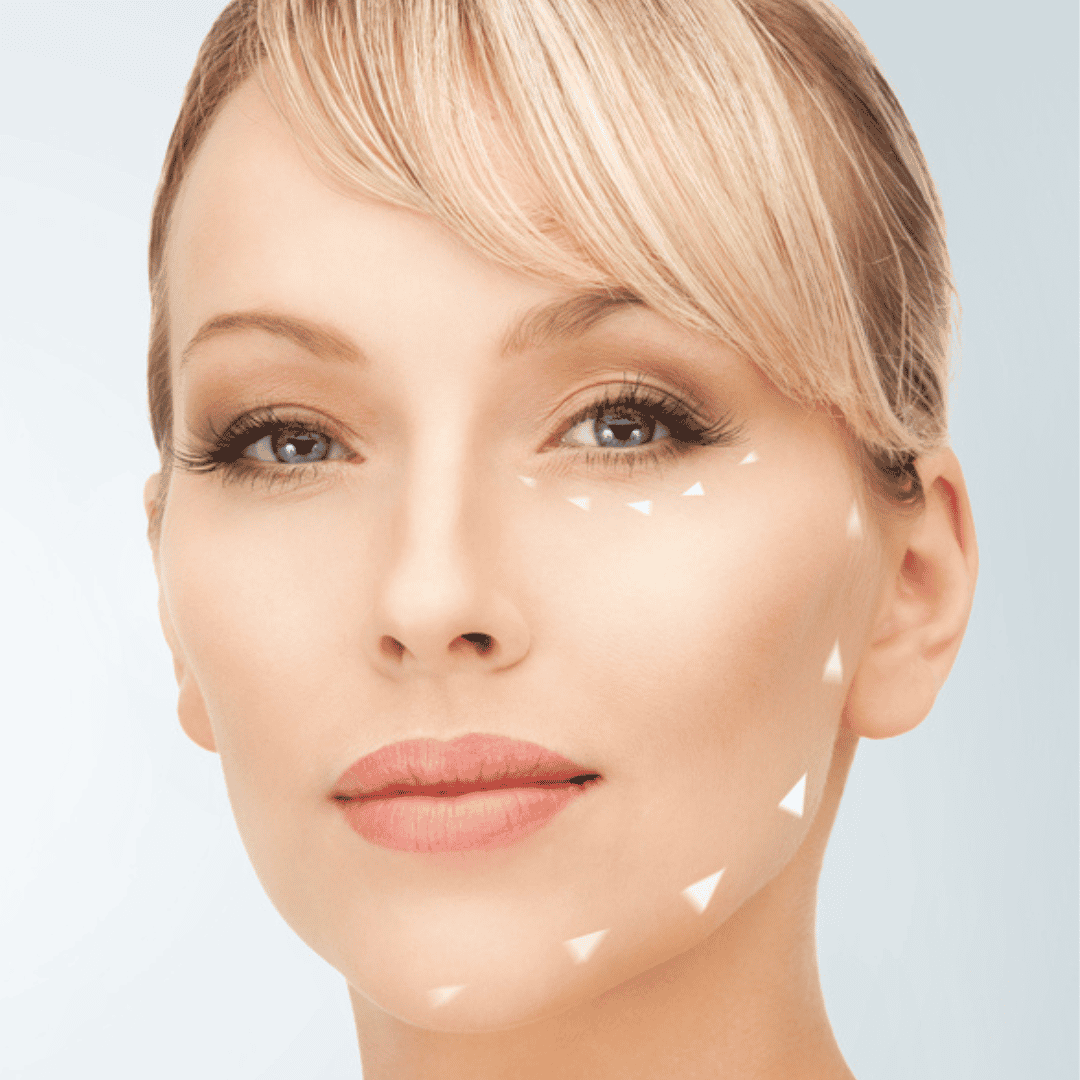
The Fat Transfer to Face and Upper/Lower Eyelid Package combines facial fat grafting with upper and lower blepharoplasty in one personalized facial rejuvenation plan.
Facial fat transfer is designed to restore selected areas of lost volume, while eyelid surgery addresses excess upper eyelid skin, puffiness, under-eye bags, and loose lower eyelid skin. The aim is to create a smoother, better-rested, and naturally refreshed appearance while preserving the patient’s individual facial characteristics.
Facial fat grafting uses fat collected from the patient’s own body. The fat is removed through limited liposuction, purified, and carefully injected into selected facial areas. Upper and lower blepharoplasty can be performed during the same surgical session when the surgeon determines that combining the procedures is medically appropriate.
Procedures Included
Facial Fat Transfer
Facial fat transfer, also called facial fat grafting or autologous fat transfer, is used to restore volume and improve shallow facial contours.
Fat is generally collected from a donor area such as the abdomen, waist, thighs, or another area with sufficient fatty tissue. After purification, the fat is placed in small amounts within carefully selected areas of the face.
Depending on the patient’s anatomy, facial fat transfer may be used to improve:
- Flattened or volume-deficient cheeks
- Hollow temples
- Tear trough or under-eye hollowing
- An uneven lower eyelid-to-cheek transition
- Nasolabial folds
- Marionette lines
- Loss of volume around the mouth
- Selected facial contour irregularities
- General facial deflation associated with aging or weight loss
The areas treated and the amount of fat transferred are determined individually. Fat is not automatically injected into every area listed above.
Because some transferred fat may be naturally reabsorbed, the final retained volume cannot be predicted with complete accuracy. A secondary fat-transfer session or touch-up may occasionally be recommended.
Upper Eyelid Surgery
Upper blepharoplasty is designed to improve excess skin and fatty deposits affecting the upper eyelids.
The incision is usually positioned within the natural upper eyelid crease. Through this incision, the surgeon may conservatively remove excess skin, reposition or remove selected fat deposits, and adjust underlying tissue when required.
Upper eyelid surgery may help improve:
- Hooded or heavy-looking upper eyelids
- Excess skin covering the natural eyelid crease
- Upper eyelid puffiness
- Uneven eyelid contours
- A tired or aged-looking upper eye area
- Visual obstruction caused by excess skin in appropriately selected patients
Upper blepharoplasty does not automatically correct a low eyebrow or true eyelid ptosis. Brow lift or ptosis repair must be evaluated and quoted separately when required.
Lower Eyelid Surgery
Lower blepharoplasty focuses on under-eye bags, loose skin, and irregularities between the lower eyelid and upper cheek.
Depending on the patient’s anatomy, the surgeon may use an incision positioned just beneath the lower eyelashes or a transconjunctival incision placed inside the lower eyelid. The external approach can allow treatment of excess skin, while the internal approach allows fat to be removed or repositioned without removing skin.
Lower eyelid surgery may help improve:
- Under-eye bags
- Lower eyelid puffiness
- Excess or crepey lower eyelid skin
- Bulging lower eyelid fat
- An uneven eyelid-to-cheek transition
- A tired-looking under-eye area
Lower eyelid surgery and facial fat transfer perform different functions. Blepharoplasty treats eyelid skin and fat compartments, while facial fat grafting restores volume in selected facial areas. The surgeon determines whether fat should be transferred near the under-eye area, to the cheeks, or to other parts of the face.
Why Combine These Procedures?
Facial aging may involve both tissue excess and volume loss. Removing excess eyelid skin alone may not correct hollow cheeks, temples, or tear troughs, while facial fat transfer alone cannot remove significant loose eyelid skin or correct prominent eyelid bags.
Combining the procedures may allow the surgeon to:
- Reduce upper eyelid hooding
- Improve lower eyelid bags and loose skin
- Restore selected areas of facial volume
- Create a smoother transition between the eyelids and cheeks
- Improve balance between the eye area and the rest of the face
- Achieve comprehensive rejuvenation without relying only on tissue removal
Not every patient requires all three components. The final treatment plan is based on clinical examination rather than the package title alone.
Who May Be a Suitable Candidate?
This package may be suitable for adults who:
- Have excess or sagging upper eyelid skin
- Experience upper eyelid puffiness
- Have under-eye bags or loose lower eyelid skin
- Have facial volume loss affecting the cheeks, temples, or other areas
- Have sufficient donor fat for harvesting
- Are in generally good health
- Are close to a stable and healthy body weight
- Do not smoke or are prepared to stop before and after surgery
- Have realistic expectations about the outcome
- Can follow postoperative care and travel instructions
Patients who smoke may have an increased risk of delayed healing and reduced fat-graft survival. Patients who are extremely thin may not have sufficient donor fat for the planned treatment.
Patients with dry eyes, glaucoma, thyroid disease, diabetes, vision problems, previous eye surgery, eyelid weakness, or other eye-related conditions may require additional evaluation before surgery. A complete eye examination or assessment by an ophthalmologist may be recommended in selected cases.
Final eligibility is determined by the surgeon after reviewing the patient’s medical history, facial anatomy, eye health, donor areas, photographs, medications, previous treatments, and expectations.
Personalized Surgical Planning
Before preparing the final treatment plan, the surgeon may evaluate:
- Upper eyelid skin and fat distribution
- Lower eyelid position and support
- Under-eye bags and tear trough anatomy
- Eye shape and natural asymmetry
- Dry-eye symptoms and tear production
- Cheek and temple volume
- Facial proportions and skin quality
- Potential fat donor areas
- Previous eyelid surgery, fillers, or facial treatments
- History of significant weight change
- Current medications and supplements
- Smoking or nicotine use
Facial fat transfer requires individualized planning because different facial areas have different anatomical and vascular characteristics. The procedure should be performed by a surgeon experienced in facial fat grafting and periorbital surgery.
Typical Package Inclusions
Package inclusions may vary according to the patient’s medical needs and the provider’s final quotation. The package may include:
- Preoperative consultation with the surgeon
- Facial and eyelid assessment
- Personalized surgical planning
- Limited liposuction for fat harvesting
- Fat purification and preparation
- Facial fat transfer to agreed treatment areas
- Upper blepharoplasty
- Lower blepharoplasty
- Surgeon’s fees
- Anesthesia services
- Operating room and standard facility fees
- Routine preoperative blood tests
- Medications administered during the procedure
- Standard dressings and postoperative care materials
- Compression garment for the donor area when required
- Follow-up examinations during the patient’s stay
- Suture removal when necessary
- Patient coordinator assistance
Hotel accommodation, airport transfers, interpretation services, prescription medication after discharge, additional medical tests, extended hospital stays, revision procedures, or treatments not specifically listed should be confirmed directly with the clinic.
Treatment Process
Before surgery, the patient undergoes a medical evaluation and detailed examination of the face and eyelids. Clinical photographs may be taken for planning and medical documentation.
During the fat-transfer portion of the procedure, the surgeon:
- Collects fat from the selected donor area through limited liposuction.
- Processes and purifies the harvested fat.
- Injects small amounts into the agreed facial areas to improve volume and contour.
The surgeon then performs upper and lower eyelid surgery using techniques selected according to the patient’s eyelid anatomy. Fat within the eyelids may be removed or repositioned independently of the fat grafted to the face.
Intravenous sedation or general anesthesia may be used. Because several procedures are being performed together, the final anesthesia method is selected by the surgeon and anesthesia team based on the treatment extent and the patient’s health.
After surgery, the patient is monitored in a recovery area. Same-day discharge may be possible in selected cases, while overnight observation may be recommended for others.
Recovery and Aftercare
Swelling, bruising, tenderness, tightness, and temporary numbness may occur in the face, eyelids, and fat donor area. The eyelids may also temporarily feel dry or irritated, and vision may be blurred by prescribed lubricating ointment.
Patients may be instructed to:
- Keep the head elevated while resting
- Apply cold compresses as directed
- Use prescribed eye drops, ointments, and medications
- Avoid rubbing or placing pressure on the eyes
- Protect the grafted facial areas from unnecessary pressure
- Wear a donor-area compression garment when recommended
- Avoid smoking and nicotine products
- Avoid alcohol during early recovery
- Avoid strenuous exercise, bending, and heavy lifting
- Temporarily avoid contact lenses and eye makeup
- Wear sunglasses and protect healing areas from sunlight
- Attend all scheduled follow-up appointments
Many eyelid surgery patients are socially presentable within approximately 10 to 14 days, although residual swelling and bruising may remain. Fat-transfer swelling may also continue for several weeks. Because this package combines multiple procedures, some patients may need more than two weeks before returning to demanding work or major social commitments.
The eyelid area continues to heal over several months. Transferred fat also requires time to establish a blood supply and stabilize, so the final facial volume should not be judged during the early recovery period. Final fat-transfer results may take approximately four to six months to become established.
Patients should not make flight or long-distance travel arrangements without receiving clearance from the treating surgeon.
Expected Outcome
The combined package aims to achieve:
- A smoother upper eyelid contour
- Reduced upper eyelid hooding and puffiness
- Less noticeable under-eye bags
- A smoother lower eyelid area
- Improved facial volume and contour
- Fuller and better-defined cheeks when treated
- A smoother eyelid-to-cheek transition
- A more balanced and naturally refreshed appearance
- Reduced contrast between hollow and heavy-looking facial areas
Results develop gradually as swelling decreases and the transferred fat stabilizes. A portion of the grafted fat may be reabsorbed, while the surviving fat can provide long-lasting volume. Facial aging and weight changes will continue to affect the result over time.
No specific degree of fat retention, symmetry, aesthetic improvement, or duration of results can be guaranteed. Additional fat grafting or revision surgery may occasionally be required.
Risks and Important Considerations
All surgical procedures involve potential risks.
Possible eyelid surgery risks include:
- Bleeding or infection
- Anesthesia-related complications
- Dry or irritated eyes
- Temporary blurred or double vision
- Difficulty closing the eyes
- Changes in eyelid sensation
- Visible or unfavorable scarring
- Eyelid asymmetry
- Lower eyelid retraction
- Ectropion or outward turning of the lower eyelid
- Lid lag
- Injury to eye muscles
- Temporary or, very rarely, permanent vision changes
- The possible need for revision surgery
Possible facial fat-transfer and donor-area risks include:
- Bleeding or infection
- Swelling and prolonged edema
- Fluid accumulation
- Irregularities or lumps
- Facial asymmetry
- Under-correction or over-correction
- Fat reabsorption
- Fat necrosis or oil cyst formation
- Changes in skin sensation
- Donor-area contour irregularity
- Unfavorable scarring
- Unsatisfactory aesthetic results
- The possible need for additional fat transfer
Fat injected into facial areas also carries a rare but potentially severe risk of accidental vascular embolization, which can lead to vision loss, stroke, or other serious neurological complications. This is one reason facial fat grafting should be performed by an appropriately qualified surgeon with specific experience in facial anatomy and fat-transfer techniques.
Procedures Not Automatically Included
Unless specifically stated in the final treatment plan, this package does not automatically include:
- Brow lift
- Ptosis repair
- Canthopexy or canthoplasty
- Facelift or neck lift
- Skin resurfacing
- Chemical peel
- Dermal fillers
- Facial implants
- Extensive body liposuction or body contouring
- Revision eyelid surgery
- Secondary fat-transfer sessions
Patients must provide complete information about medical conditions, eye symptoms, allergies, medications, supplements, smoking, previous surgery, and previous injectable treatments. Blood-thinning medication must not be stopped unless approved by both the prescribing physician and the surgical team.
This package description is provided for general informational purposes only. It does not replace an individual medical examination, diagnosis, or personalized treatment recommendation from a qualified surgeon.



.png)











Share this listing