


The Complete Guide to Stem Cell Therapy for Knee Injuries in Tijuana: Fernando Monroy's Experience
Living with chronic joint pain can drain the joy from everyday life, but Fernando Monroy's journey with stem cell therapy for knee injury in Tijuana Mexico at Dra Brenda Delangel offers a powerful beacon of hope. For years, patients facing debilitating meniscus tears or severe osteoarthritis were told that invasive knee replacement surgery was their only option. Today, advanced regenerative medicine provides a highly effective, non-surgical alternative. Discover how cutting-edge treatments just across the border are transforming lives, accelerating joint healing, and restoring mobility without the need for extensive surgery.
Video Chapters & Quick Navigation
The Disabling Reality of Chronic Knee Injuries
Living with a severe knee injury is a physically and emotionally draining experience that impacts every single facet of daily life. For individuals suffering from advanced osteoarthritis, traumatic meniscus tears, or sports-related cartilage degradation, the persistent and sharp ache in the joints can make simple tasks feel monumental. Activities like walking up a flight of stairs, driving a car, or playing with grandchildren become daunting challenges. The traditional medical establishment often funnels these patients toward a highly invasive and permanent destination: joint replacement surgery. While total knee arthroplasty can be effective for some, it comes with substantial risks, grueling months of physical therapy, and lengthy recovery periods.
Furthermore, artificial joints have a finite lifespan, meaning younger or more active patients face the terrifying prospect of multiple revision surgeries throughout their lifetime. As highlighted in the video at , this is the exact predicament that leads many individuals to actively seek out alternative solutions to preserve their natural joint anatomy. By harnessing the human body's innate healing mechanisms, regenerative treatments aim to address the root cause of the joint degradation. Patients no longer want to simply mask the pain with corticosteroid injections or replace their natural joints with metal and plastic implants if biological healing is an option.
High-volume long-tail keywords such as alternative to knee replacement surgery and treating meniscus tear without surgery are becoming increasingly common search terms as patient awareness around cellular therapy grows. The disabling reality of chronic knee injuries does not have to be a permanent life sentence. Advanced regenerative therapies are proving day by day that the body possesses remarkable capabilities to repair itself when provided with the optimal biological environment and cellular tools.
Fernando Monroy's Search for a Non-Surgical Alternative
Fernando Monroy’s situation was all too familiar for those battling chronic joint conditions. Facing the grim prospect of losing his mobility and abandoning his active lifestyle, he was determined to find a better way forward. Local physicians had presented a limited menu of options: manage the pain with pharmaceutical drugs, endure temporary relief from cortisone shots, or submit to the operating table for a full joint replacement. Fernando recognized that none of these options aligned with his goal of natural healing and long-term athletic preservation.
His research led him to the rapidly advancing field of cellular medicine. As discussed at , Fernando discovered that regenerative medicine in Tijuana offered access to cutting-edge treatments that were often restricted or astronomically priced in his home country. His story highlights a broader, powerful trend in modern global healthcare. Patients are taking absolute control of their medical journeys, refusing to settle for local limitations, and traveling to specialized international hubs where innovative treatments are both readily accessible and highly effective.
By expanding his horizons, Fernando found a pathway that prioritized tissue regeneration over tissue removal. His meticulous search eventually guided him to one of the most respected specialists in the region, completely altering the trajectory of his recovery. The decision to pursue an alternative to knee replacement surgery is a deeply personal one, requiring extensive research, but as Fernando's outcome proves, the diligence pays off immensely.
Why Choose Tijuana for Regenerative Medicine?
Tijuana has rapidly transformed from a bustling border town into a globally recognized epicenter for advanced medical tourism, particularly in the field of regenerative medicine. The primary driver of this medical renaissance is the regulatory environment. In Mexico, regulatory bodies like COFEPRIS (the equivalent of the FDA) have established stringent but progressive frameworks that allow for the ethical expansion of stem cell treatments. While the FDA in the United States currently restricts many potent cellular therapies to clinical trials or limits the expansion of cells, Mexican clinics are legally permitted to cultivate and administer highly concentrated, potent doses of mesenchymal stem cells.
As noted at in the patient documentation, Tijuana is uniquely positioned just minutes across the border from San Diego, California. This geographic advantage means North American patients do not have to endure long, exhausting international flights to receive world-class care. They can easily drive or take a short shuttle ride to access state-of-the-art medical facilities. Furthermore, the clinics operating in Tijuana's premier medical districts, such as Zona Rio, are equipped with the latest diagnostic imaging technology and adhere to international sterilization standards.
The appeal of stem cell therapy for knee injury in Tijuana Mexico goes far beyond mere convenience. Patients benefit from a holistic, multidisciplinary approach to healthcare. Unlike the highly compartmentalized medical system in the US, clinics in Tijuana often integrate cellular therapy with nutritional counseling, physical therapy, and comprehensive blood panels to ensure the body is in an optimal state to accept and utilize the regenerative cells.
Excellence in Care with Dra Brenda Delangel
At the heart of Fernando's successful recovery is the unparalleled medical expertise of Dra Brenda Delangel. Renowned for her meticulous approach to regenerative medicine, Dra Brenda Delangel reviews consistently highlight her deep commitment to personalized patient care. She does not believe in a one-size-fits-all approach. Every single patient undergoes a rigorous evaluation process that includes a thorough review of their MRI scans, detailed blood work, and a comprehensive physical examination of the affected joint.
Dra Brenda's clinic stands out because of her dedication to utilizing the highest quality cellular products. As highlighted during the consultation phase at , she takes the time to educate her patients extensively on the biology of the treatment. She explains precisely how the cells will interact with the damaged cartilage and the surrounding synovial fluid. This educational empowerment is crucial for reducing patient anxiety and setting realistic, scientifically grounded expectations for the recovery timeline.
Moreover, Dra Brenda utilizes advanced ultrasound-guided injection techniques. Injecting stem cells blindly into a joint capsule is a highly outdated practice that can lead to suboptimal results. By using real-time ultrasound imaging, she ensures that the regenerative biologics are delivered with pinpoint accuracy directly to the site of the meniscus tear or the area of maximum cartilage degradation, thereby maximizing the therapeutic potential of the treatment.
The Science of Mesenchymal Stem Cells for Joint Repair
Understanding Cellular Regeneration
To truly appreciate Fernando's outcome, it is essential to understand the underlying science of mesenchymal stem cells for joints. Mesenchymal Stem Cells (MSCs) are multipotent cells that possess a remarkable ability to differentiate into various cell types, including chondrocytes (cartilage cells), osteoblasts (bone cells), and adipocytes (fat cells). However, their true regenerative power lies not just in their ability to replace damaged tissue, but in their sophisticated signaling capabilities.
The Paracrine Effect
When highly concentrated MSCs are introduced into an arthritic or damaged knee joint, they initiate a process known as the paracrine effect. They release a powerful cocktail of growth factors, cytokines, and exosomes. These bioactive molecules actively communicate with the patient's native cells. They instruct the local environment to halt destructive inflammation, reduce scar tissue formation, and stimulate the resident progenitor cells to begin repairing the degraded cartilage matrix.
Wharton's Jelly and Cellular Viability
Top-tier clinics in Tijuana frequently utilize ethically sourced allogeneic MSCs derived from Wharton's Jelly within the human umbilical cord. Unlike autologous stem cells extracted from an older patient's own bone marrow or fat tissue—which may have diminished vitality due to the aging process—umbilical cord-derived cells are robust, highly proliferative, and immune-privileged. This means they carry an extremely low risk of rejection while offering the highest possible regenerative potential for repairing a severe knee injury.
The Step-by-Step Stem Cell Procedure Guide
For patients considering traveling for care, understanding the procedural workflow helps alleviate travel-related anxiety. The journey begins long before the patient crosses the border. Through facilitators like PlacidWay, patients submit their medical history, X-rays, and MRI scans for a preliminary digital consultation. Once approved as a candidate, the on-site process in Tijuana is highly streamlined. Upon arrival at the clinic, patients undergo a final, in-person diagnostic confirmation.
The actual procedure day is surprisingly straightforward and minimally invasive. As Fernando experienced at , the process does not require general anesthesia, avoiding the associated systemic risks. The knee area is thoroughly sterilized and locally numbed. Under high-resolution ultrasound guidance, the specialist precisely targets the damaged intra-articular spaces. The entire injection process typically takes less than an hour from start to finish.
Following the injection, patients are monitored for a brief observation period to ensure there are no immediate adverse reactions. Because the treatment involves no surgical incisions, no bone shaving, and no hardware implantation, the trauma to the joint is virtually non-existent. Patients can typically walk out of the clinic on their own two feet, albeit with specific instructions to rest and avoid strenuous weight-bearing activities for the first few critical days of cellular integration.
Cost Comparison: Stem Cell Therapy in Mexico vs. the United States
One of the most compelling reasons patients cross the border is the dramatic financial advantage. The cost of stem cell therapy in Mexico is a fraction of what patients would pay in the United States or Canada, without sacrificing any quality regarding the cellular product or the medical expertise. In the US, a single, low-dose stem cell injection can easily cost between $5,000 and $10,000 out of pocket, as insurance rarely covers regenerative therapies. Conversely, comprehensive packages in Tijuana are vastly more affordable and often include higher cell counts.
| Treatment Factor | United States Clinics | Tijuana, Mexico Clinics |
|---|---|---|
| Average Cost per Joint | $5,000 - $10,000+ | $2,500 - $4,500 |
| Cell Culturing Limits | Highly Restricted by FDA | Allowed by COFEPRIS (Millions of Cells) |
| Wait Times | Weeks to Months | Minimal (Often within days) |
| Overall Value | Low cell count for high price | Maximum cellular potency for low cost |
By leveraging the favorable exchange rate and the lower operational overhead in Mexico, renowned specialists like Dra Brenda Delangel can pass these savings directly to the patient. This democratization of healthcare ensures that life-changing treatments are not exclusively reserved for elite athletes or the ultra-wealthy.
Fernando's Stem Cell Knee Injection Recovery Time
The stem cell knee injection recovery time is vastly different from the agonizing rehabilitation associated with surgical joint replacements. During the first 48 to 72 hours, patients might experience mild localized swelling or a feeling of fullness in the knee capsule. This is a completely normal inflammatory response as the injected cells begin their biological work. As noted at , Fernando was advised to apply ice and limit heavy walking during this initial phase to allow the cells to attach to the damaged cartilage matrix securely.
Between weeks one and four, patients typically report a significant reduction in their baseline chronic pain. The potent anti-inflammatory cytokines released by the MSCs begin to calm the hostile environment within the arthritic joint. During this period, gentle stretching and low-impact movements are encouraged to promote synovial fluid circulation, which nourishes the newly regenerating tissues. Heavy lifting or high-impact sports remain strictly off-limits.
The true structural healing becomes highly evident between months two and six. As Fernando progressed through his recovery timeline, he noticed a dramatic improvement in his joint stability and range of motion. The cellular differentiation process takes time, as building new, robust cartilage is biologically demanding. However, by the six-month mark, many patients who were once unable to navigate stairs find themselves returning to activities like cycling, swimming, and even light jogging with renewed confidence and zero pain.
Preparing for Your Medical Tourism Journey to Mexico
Embarking on a medical tourism journey requires careful logistical preparation to ensure a stress-free experience. The first crucial step is gathering all recent medical documentation. Obtaining a high-quality MRI scan within the last six months is imperative, as this imaging provides the foundational map for the specialist to calculate the required cellular dosage and pinpoint the exact injection sites. Next, patients must ensure their passports are up to date for smooth border crossing procedures at the San Ysidro port of entry.
Partnering with an established medical tourism facilitator like PlacidWay can seamlessly bridge the gap between planning and execution. They assist in coordinating virtual consultations, managing appointment schedules, and recommending recovery-friendly accommodations in Tijuana's safest medical districts. Many premium clinics also offer complimentary concierge transportation, picking patients up directly from the San Diego International Airport and driving them across the border in private medical shuttles.
Mental preparation is equally important. While cellular therapy is a remarkable scientific advancement, it is not an overnight magic wand. Patients must arrive with the understanding that regenerative medicine works in harmony with the body's natural biological timelines. Committing to the post-treatment rehabilitation protocols, maintaining an anti-inflammatory diet, and avoiding premature physical exertion are essential responsibilities the patient must embrace to guarantee the success of the investment.
Securing Your Long-Term Mobility and Health
Fernando Monroy’s success story is a powerful testament to the efficacy of regenerative medicine. Beyond the immediate relief of acute pain, stem cell therapy sets the foundation for sustainable, long-term joint health. However, the procedure is only one half of the mobility equation. To protect their newly rejuvenated knees, patients must adopt proactive lifestyle habits. Engaging in targeted physical therapy to strengthen the surrounding quadriceps, hamstrings, and calf muscles is vital, as strong muscular support significantly reduces the mechanical load placed directly on the knee cartilage.
Nutritional support also plays a profound role in preserving joint integrity. Incorporating a diet rich in Omega-3 fatty acids, antioxidants, and adequate hydration helps maintain a healthy synovial fluid viscosity. Maintaining an optimal body weight is arguably the most critical long-term strategy, as every extra pound of body weight places exponentially more stress on the knee joints with every step taken. By combining the profound cellular repair provided by Dra Brenda Delangel with dedicated personal health management, patients can enjoy decades of pain-free, unhindered movement.
The landscape of orthopedic care has fundamentally shifted. You no longer have to accept chronic pain as an inevitable consequence of aging or past injuries. With world-class medical facilities just across the border, highly potent biological treatments, and a fraction of domestic costs, restoring your quality of life is more achievable now than ever before in medical history.
Ready to Reclaim Your Mobility and Live Pain-Free?
Take the first step toward natural joint healing. Connect with top-rated regenerative medicine specialists in Tijuana, Mexico, and discover if stem cell therapy is the right non-surgical solution for you. Let PlacidWay guide your journey to lasting relief.
REQUEST YOUR FREE MEDICAL QUOTE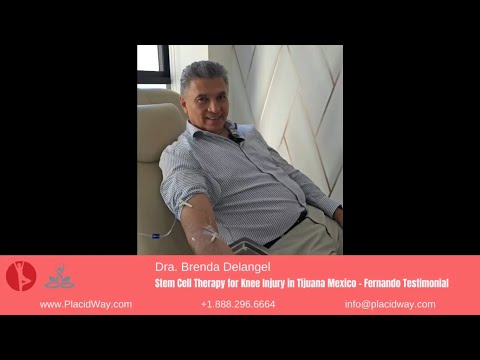

.png)




.jpg)
.png)


-(10).png)
-(3).png)
.png)
.png)








Share this listing