


Is Gender Selection Legal in Thailand? Navigating IVF, PGD, and Medical Laws
Is gender selection legal in Thailand? For couples dreaming of completing their families through family balancing, this remains one of the most frequently asked questions in reproductive medicine. Deciphering international fertility laws can be an overwhelming process, especially when conflicting information exists online regarding assisted reproductive technologies.
Thailand has emerged as a premier global destination for advanced fertility treatments, drawing thousands of medical tourists annually. This comprehensive guide breaks down the exact legal framework, the cutting-edge science of Preimplantation Genetic Diagnosis (PGD), and what international patients must know before traveling to Bangkok for gender selection procedures.
Video Chapters & Quick Navigation
- The Legal Landscape of IVF in Thailand
- Understanding PGD and PGS Testing
- Medical Reasons vs. Family Balancing
- The Step-by-Step IVF Process
- Global Cost Comparison for Fertility Treatments
- Why Thailand Dominates Medical Tourism
- Preparing for Your Fertility Journey
- Strict Legal Requirements for International Patients
The Legal Landscape of IVF and Gender Selection in Thailand
To directly answer the primary question: Is gender selection legal in Thailand? The answer requires a nuanced understanding of Thai medical legislation. In 2015, the Thai government introduced the Protection of Children Born from Assisted Reproductive Technologies Act. This sweeping legislation was designed to heavily regulate the fertility industry and prevent unethical practices.
Under this specific law, choosing a baby's gender strictly for social reasons—often referred to as family balancing—is technically prohibited. Fertility clinics are forbidden from advertising pure social gender selection services. However, there is a very important and fully legal medical exception that international patients must understand.
Preimplantation Genetic Diagnosis (PGD) and Preimplantation Genetic Screening (PGS) are entirely legal when utilized to screen embryos for severe genetic abnormalities. Because comprehensive chromosomal screening naturally reveals the sex chromosomes (XX or XY) of the healthy embryos, parents are informed of the gender prior to the embryo transfer. This means that while pure social selection is restricted, discovering and choosing a genetically healthy embryo of a specific gender is a legal byproduct of vital medical testing.
The Role of the Medical Council of Thailand
The Medical Council of Thailand enforces strict guidelines on how clinics operate regarding in vitro fertilization. Their primary goal is to ensure that all fertility treatments prioritize the health and safety of the unborn child. By allowing genetic screening to prevent hereditary diseases, the Council acknowledges the immense medical value of PGD technology.
For international couples traveling for IVF gender selection in Thailand, it is crucial to work with fully licensed, legally compliant clinics. Reputable hospitals will frame the treatment around chromosomal screening to prevent conditions like Down Syndrome or Thalassemia, rather than solely marketing the procedure as a way to choose a baby boy or girl.
Understanding PGD and PGS Testing for Sex Selection
To fully grasp how you can choose a baby's gender in Bangkok, you must understand the technology driving the process. PGD (Preimplantation Genetic Diagnosis) and PGS (Preimplantation Genetic Screening) are cutting-edge laboratory techniques performed during an IVF cycle. These tests are the only scientifically proven methods to guarantee gender with over 99% accuracy.
PGS, now often referred to as PGT-A (Preimplantation Genetic Testing for Aneuploidies), evaluates embryos to ensure they have the correct number of chromosomes. A normal human embryo has 46 chromosomes, arranged in 23 pairs. The 23rd pair determines the biological sex of the child. When embryologists map these chromosomes, they can instantly identify whether an embryo is genetically male or female.
How Embryo Biopsies are Performed
The genetic testing process occurs in a highly specialized embryology laboratory. After eggs are fertilized, they are allowed to develop for five to six days until they reach the blastocyst stage. At this point, the embryo consists of over a hundred cells divided into two distinct parts: the inner cell mass (which becomes the fetus) and the trophectoderm (which becomes the placenta).
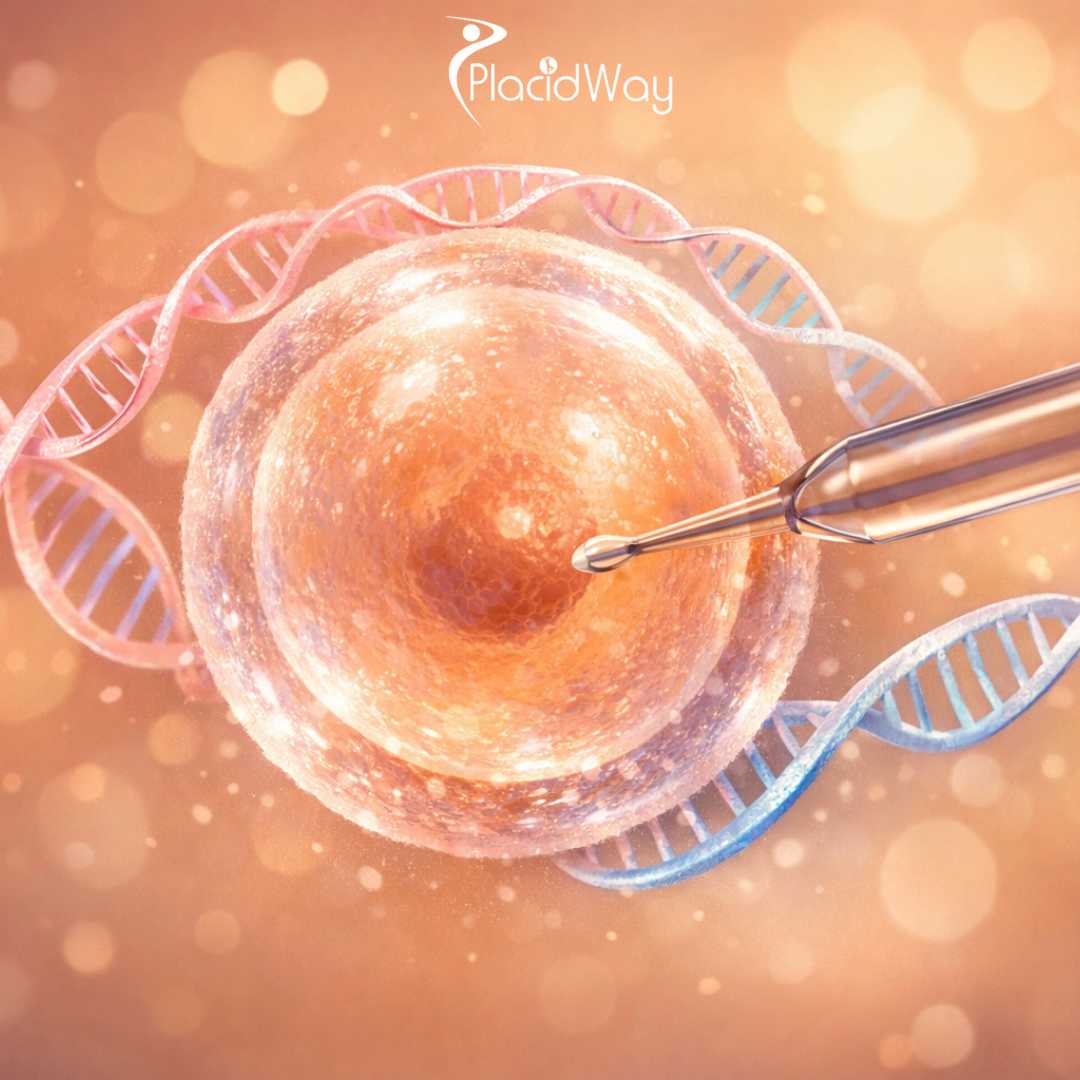
A highly skilled embryologist uses a microscopic laser to safely extract three to five cells from the trophectoderm. This delicate biopsy does not harm the future baby. The extracted cells are then sent through Next Generation Sequencing (NGS) machines, which provide a complete genetic map and confirm the gender of each viable embryo before implantation.
Medical Reasons vs. Family Balancing: The Vital Distinction
When discussing gender selection clinics in Thailand, it is imperative to differentiate between medical necessity and social preference. Medical sex selection is an absolute lifeline for families carrying devastating sex-linked genetic disorders. These are hereditary diseases that primarily affect one specific gender, usually males.
For example, conditions like Hemophilia, Duchenne Muscular Dystrophy, and Fragile X syndrome are linked to the X chromosome. If a mother is a carrier of one of these severe conditions, any male child she conceives has a drastically higher risk of inheriting the disease. In these high-risk scenarios, choosing a female embryo is not a matter of preference; it is a vital medical intervention to ensure a healthy child.
The Concept of Family Balancing
Conversely, family balancing refers to parents who already have one or more children of a particular sex and desire a child of the opposite sex to complete their family dynamic. While psychological desires for family symmetry are valid, they do not qualify as a medical necessity.
Because Thai law requires a medical justification for PGT, clinics approach family balancing patients by emphasizing the necessity of overall chromosomal screening. Advanced maternal age (women over 35) is a universally accepted medical reason to perform PGT-A, as the risk of chromosomal abnormalities like Down Syndrome increases exponentially. Through this vital screening, the gender is revealed, satisfying the parents' desire for family balancing while remaining legally compliant.
The Step-by-Step IVF Process for Gender Selection in Thailand
Embarking on an IVF gender selection journey in Thailand requires a significant commitment of time, emotion, and resources. Understanding the timeline is crucial for international patients planning their medical tourism itinerary. The entire process generally spans three to four weeks in Bangkok, depending on individual response to medications.
The journey begins with ovarian stimulation. The female patient is prescribed daily hormonal injections (gonadotropins) to stimulate the ovaries into producing multiple mature follicles simultaneously, rather than the single egg normally released during a natural menstrual cycle. Frequent ultrasound scans and blood tests are required during this phase to monitor follicular growth and prevent complications like Ovarian Hyperstimulation Syndrome (OHSS).
Egg Retrieval and Fertilization
Once the follicles reach the optimal size, a final trigger shot is administered, and the egg retrieval procedure is scheduled 36 hours later. This is a minimally invasive, painless outpatient procedure performed under light, twilight sedation. A fertility specialist uses an ultrasound-guided needle to carefully aspirate the eggs from the ovaries.
On the same day, the male partner provides a sperm sample. Top-tier clinics in Thailand exclusively use Intracytoplasmic Sperm Injection (ICSI) for PGD cases. Instead of traditional IVF where sperm and egg are mixed in a dish, an embryologist selects a single, morphologically perfect sperm and injects it directly into the center of each mature egg, drastically increasing fertilization success rates.
Embryo Culture and Transfer
The fertilized eggs are cultured in advanced incubators for five days. Once they reach the blastocyst stage, the trophectoderm biopsy is performed, and the genetic material is sent for NGS testing. Within a few days, the clinic provides a comprehensive genetic report detailing the chromosomal health and gender of every embryo.
The final step is the embryo transfer. The parents select a healthy embryo of their desired gender, which is then carefully transferred into the mother's uterus using a thin, flexible catheter. This procedure requires no anesthesia. Any remaining healthy embryos can be cryopreserved (frozen) for future sibling journeys.
Global Cost Comparison: Why Thailand is the Financial Choice
One of the primary driving forces behind the boom in medical tourism for fertility treatments is the exorbitant cost of reproductive medicine in Western countries. In nations where gender selection is legal, such as the United States, fertility clinics charge premium rates that are inaccessible to the average family.
The gender selection clinics in Thailand cost a fraction of what patients would pay in North America, without any compromise on medical quality, technological advancement, or sanitary standards. Thailand offers transparent, all-inclusive IVF packages that eliminate the financial anxiety associated with unexpected medical billing.
| Country | Average IVF + PGD Cost (USD) | Legal Status of Family Balancing |
|---|---|---|
| United States | $20,000 - $35,000 | Fully Legal |
| United Kingdom | $15,000 - $20,000 | Strictly Illegal |
| Australia | $12,000 - $18,000 | Strictly Illegal |
| Thailand | $8,000 - $12,000 | Legal via Genetic Screening |
As the table demonstrates, patients traveling to Bangkok can save upwards of 60% on their fertility journey. These substantial savings easily cover the cost of flights, luxury accommodation, and a relaxing holiday in Southeast Asia during the treatment cycle.
Why Thailand Dominates Medical Tourism for Fertility
Affordability is only one piece of the puzzle. Thailand has deliberately cultivated a world-class healthcare infrastructure designed specifically to cater to international patients. The kingdom is home to numerous Joint Commission International (JCI) accredited hospitals, ensuring strict adherence to global safety and quality protocols.
The fertility specialists operating the top gender selection clinics in Bangkok are internationally recognized. Many Thai reproductive endocrinologists have completed extensive medical fellowships in the United States, Australia, or the United Kingdom. They bring leading-edge scientific knowledge and Western clinical standards back to their state-of-the-art facilities in Thailand.
The Impact of a Stress-Free Environment
Medical experts widely agree that psychological stress can negatively impact IVF success rates. Cortisol levels can interfere with reproductive hormones, potentially compromising the response to stimulation medications. This is where Thailand offers a unique, intangible medical benefit.
Undergoing IVF while juggling the stresses of work, commuting, and daily life at home is exhausting. In Thailand, patients step away from their daily stressors into a culture famous for its profound hospitality. Recovering from an egg retrieval while overlooking the pristine beaches of Phuket or relaxing in a luxury Bangkok hotel significantly improves mental well-being, fostering a positive environment for conception.
Preparing for Your Fertility Journey to Southeast Asia
Planning an international medical trip requires meticulous organization. For an IVF cycle with genetic testing, female patients should prepare to stay in Thailand for approximately 21 to 28 days. This ensures sufficient time for the entire stimulation protocol, egg retrieval, laboratory testing, and the subsequent embryo transfer.
The male partner's timeline is much more flexible. Men are typically only required to be present at the clinic for one or two days to provide the necessary sperm sample on the day of the egg retrieval. Many partners choose to fly in for a long weekend and return home for work, while the female patient remains in Thailand to complete the transfer phase.
Pre-Treatment Health Optimization
Success starts long before you board the flight to Bangkok. Leading Thai specialists recommend that couples begin optimizing their fertility health at least three months prior to the IVF cycle. This is because the life cycle of a developing egg and sperm takes roughly 90 days.
- Dietary Changes: Adopt a Mediterranean-style diet rich in antioxidants, leafy greens, and lean proteins to reduce cellular inflammation.
- Supplementation: High-quality CoQ10, prenatal vitamins, Vitamin D, and Folate are critical for improving egg and sperm quality.
- Lifestyle Adjustments: Strict cessation of smoking, limiting alcohol intake, and reducing caffeine consumption are mandatory for optimal outcomes.
Strict Legal Requirements for International Patients
Before booking flights, international couples must be fully aware of the strict legal prerequisites enforced by the Thai government. To prevent commercial surrogacy and unethical fertility tourism, Thailand requires definitive proof of legal marriage for any couple undergoing assisted reproductive technologies.
Under Thai law, fertility clinics are strictly prohibited from providing IVF or PGD services to unmarried couples or single individuals. You must present an official, legally recognized marriage certificate at your initial consultation. If your marriage certificate is not in English, it must be officially translated and notarized before it will be accepted by the hospital's legal department.
Choosing the Right Clinic Partner
Navigating the complex landscape of medical tourism requires expert guidance. Not all clinics in Bangkok offer the same standard of care. Some facilities lack the necessary in-house NGS technology for rapid genetic testing, requiring them to outsource biopsies, which can delay the embryo transfer process.
Through comprehensive vetting and stringent quality controls, organizations like PlacidWay connect international patients with only the most elite, fully compliant fertility centers in Thailand. These premier institutions boast proprietary, state-of-the-art embryology labs, ensuring that your precious genetic material is handled with the utmost precision and security.
Achieving your dream of family balancing through safe, legal, and highly advanced medical channels is entirely possible. By choosing the right legal pathway, understanding the science of genetic screening, and partnering with world-class specialists, completing your family in the Land of Smiles is a reality waiting to unfold.
Ready to Start Your Family Balancing Journey?
PlacidWay Medical Tourism connects you with top-rated, legally compliant IVF and PGD clinics in Thailand. Experience world-class fertility care and guaranteed gender selection accuracy at a fraction of Western costs.
GET A FREE CLINIC QUOTE




.png)
.png)
.png)









Share this listing