


Mike Janusch's Journey with Stem Cell Therapy for Parkinson's Disease at GIOSTAR, Bengaluru
A Parkinson's disease diagnosis often feels like a definitive endpoint, leaving patients with limited options focused purely on symptom management rather than true healing. For Mike Janusch, the relentless progression of tremors and muscular rigidity prompted a bold search for alternative solutions beyond traditional pharmaceuticals.
His search led him to India, a rising global superpower in regenerative medicine. By pursuing advanced stem cell therapy for Parkinson's disease at GIOSTAR Bengaluru, Mike discovered a path to reclaiming his mobility and quality of life. Watch to explore the groundbreaking science of cellular repair and see how medical tourism is redefining neurological care.
Video Chapters & Quick Navigation
Understanding Parkinson's Disease and the Limitations of Standard Care
Parkinson's disease is a progressive, neurodegenerative disorder that primarily affects the dopamine-producing neurons in a specific area of the brain called the substantia nigra. As these crucial neurons deteriorate and die, the brain struggles to produce adequate dopamine, a neurotransmitter essential for smooth, coordinated muscle movement. This biological deficit leads to the classic hallmark symptoms of the disease, including involuntary resting tremors, muscular rigidity, bradykinesia (slowness of movement), and severe postural instability.
For decades, the gold standard of treatment has heavily relied on dopamine replacement therapies, most notably Levodopa. While these medications can provide significant symptomatic relief during the early stages of the disease, they do not halt or reverse the underlying neuronal death. Over time, the efficacy of these drugs wanes, leading to frustrating "on-off" motor fluctuations where a patient oscillates between periods of decent mobility and severe stiffness.
Furthermore, prolonged use of traditional Parkinson's medications frequently results in dyskinesia—erratic, involuntary movements that can be just as debilitating as the disease itself. Deep Brain Stimulation (DBS) is another advanced surgical option, but it remains highly invasive and carries significant risks. This stark reality leaves many patients feeling trapped in a cycle of diminishing returns, propelling individuals like Mike Janusch to seek out innovative regenerative medicine for neurological disorders abroad.
Mike Janusch’s Battle with Neurological Decline
Like many individuals diagnosed with a degenerative neurological condition, Mike's journey began with subtle, easily dismissed signs. At in the video, he details how minor twitches in his hand eventually evolved into persistent tremors that began to interfere with his daily life. Simple tasks like holding a cup of coffee, buttoning a shirt, or typing on a keyboard became monumental challenges requiring intense concentration and effort.
As the disease progressed, Mike experienced profound muscular rigidity. The stiffness in his limbs made walking difficult, altering his gait to the shuffling steps characteristic of advanced Parkinson's. This physical decline took a severe psychological toll. The loss of independence and the constant battle against his own body led to feelings of frustration, isolation, and anxiety regarding what the future might hold.
Despite strictly adhering to his prescribed medication regimen, Mike noticed the therapeutic windows were shrinking. He vividly describes at the realization that traditional medicine was only masking his symptoms temporarily. He needed a treatment that addressed the root cause of his condition—cellular degeneration. This critical turning point ignited his exhaustive research into global healthcare options, ultimately pointing him toward the promising field of stem cell therapy for Parkinson's disease.
Why Choose GIOSTAR Bengaluru for Regenerative Medicine?
When searching for high-quality stem cell treatments, the sheer volume of international clinics can be overwhelming. Mike chose the Global Institute of Stem Cell Therapy and Research (GIOSTAR) in Bengaluru, India, for several highly specific, scientifically backed reasons. GIOSTAR is widely recognized as an international pioneer in the field of regenerative medicine, boasting a leadership team comprised of elite scientists and clinicians from premier institutions worldwide.
A Hub of Technological and Medical Innovation
Bengaluru is frequently referred to as the Silicon Valley of India, but its prowess extends far beyond software. The city has rapidly evolved into a premier destination for advanced medical tourism, hosting state-of-the-art hospitals and research facilities that rival the best institutions in the United States and Europe. GIOSTAR's Bengaluru facility operates under incredibly strict, internationally recognized safety and quality protocols.
The laboratories where the stem cells are processed utilize cutting-edge clean room technology to guarantee zero contamination. As Mike notes at , stepping into the GIOSTAR facility felt like entering a futuristic scientific institute. The clinical environment provided immense peace of mind, assuring him that he was in the hands of global experts dedicated to ethical, evidence-based stem cell research for neurological disorders.
Holistic Patient-Centric Care
What truly sets GIOSTAR apart is their commitment to personalized, holistic patient care. They do not employ a one-size-fits-all approach. Every patient undergoes rigorous pre-treatment evaluations, including advanced neuroimaging, detailed blood work, and comprehensive neurological assessments. This data is utilized to craft a highly customized stem cell protocol tailored specifically to the patient's unique physiological makeup and disease progression.
The Science Behind Stem Cell Therapy for Neurological Disorders
To fully appreciate Mike's recovery, one must understand the profound biological mechanisms at play during stem cell therapy. Unlike conventional drugs that synthetically replace missing neurotransmitters, stem cells possess the remarkable ability to initiate actual tissue repair and regeneration. In the context of Parkinson's disease, Mesenchymal Stem Cells (MSCs) are frequently utilized due to their potent immunomodulatory and neuroprotective properties.
When these highly specialized cells are introduced into the patient's body, they migrate toward areas of inflammation and tissue damage—a process known as homing. Once they arrive at the damaged neural sites, they do not necessarily transform into new dopamine-producing neurons immediately. Instead, their primary mode of action is through the "paracrine effect."
At in the video, the medical team explains how stem cells secrete a rich cocktail of neurotrophic factors, cytokines, and growth proteins. These powerful biological molecules work synergistically to halt ongoing neuronal death, stimulate the brain's intrinsic repair mechanisms, and drastically reduce neuroinflammation. By creating a nurturing microenvironment within the brain, stem cell therapy helps revive dormant neurons, encouraging them to resume natural dopamine production.
The Treatment Process: What to Expect in Bengaluru
Traveling across the globe for an advanced medical procedure requires meticulous planning, but GIOSTAR and its medical tourism partners ensure a seamless experience. The protocol for stem cell therapy for Parkinson's disease is generally an outpatient or short-stay procedure, though patients are advised to remain in the city for a week or more for monitoring and supportive therapies.
Evaluation and Cell Harvesting
Upon arriving in Bengaluru, Mike underwent a final round of thorough clinical diagnostics. Following medical clearance, the process began with the harvesting of cells. Depending on the specific medical protocol, stem cells are typically derived either from the patient's own body (autologous—usually from adipose tissue or bone marrow) or from ethically sourced, rigorously screened umbilical cord tissue (allogeneic).
Targeted Administration
The method of delivery is crucial for treating neurological conditions because the blood-brain barrier naturally blocks many substances from entering the central nervous system. As shown at , stem cells at GIOSTAR are often administered via an intrathecal injection (directly into the spinal canal) alongside intravenous (IV) infusions. This dual-delivery method ensures that a maximum number of viable stem cells bypass the blood-brain barrier and reach the central nervous system to exert their neuroprotective effects.
Evaluating Mike's Remarkable Results and Quality of Life Improvements
The true measure of any medical intervention lies in its impact on a patient's daily life. While stem cell therapy is not a definitive "cure" for Parkinson's disease, the symptomatic relief and slowing of disease progression can be profoundly life-changing. For Mike, the initial changes were subtle but incredibly promising.
During his post-treatment follow-up at , Mike details the significant reduction in his resting tremors. The involuntary shaking that once dictated his daily routine diminished substantially, allowing him to regain fine motor control. He joyfully recounts being able to sign his own name clearly and hold a glass of water without spilling—victories that may seem small to healthy individuals but represent massive milestones for Parkinson's patients.
Beyond motor function, Mike experienced a profound improvement in his overall energy levels and sleep quality. Chronic fatigue and sleep disturbances are rampant among Parkinson's patients due to nocturnal rigidity and medication side effects. By reducing neuroinflammation, the stem cell therapy allowed Mike's body to finally rest, facilitating deeper, more restorative sleep. His facial expressions, previously blunted by the disease (a condition known as facial masking), became much more animated, allowing him to communicate his emotions naturally once again.
| Treatment Method | Primary Mechanism | Key Benefits | Major Limitations |
|---|---|---|---|
| Levodopa / Medications | Chemical dopamine replacement. | Immediate symptom relief in early stages. | Loses efficacy over time; causes severe dyskinesia. |
| Deep Brain Stimulation (DBS) | Electrical impulses block abnormal nerve signals. | Reduces tremors and medication reliance. | Highly invasive brain surgery; carries infection risks. |
| Stem Cell Therapy (GIOSTAR) | Cellular repair, neurogenesis, anti-inflammation. | Addresses root cause; improves overall brain health; non-surgical. | Results vary by patient; requires travel abroad for advanced protocols. |
Cost Comparison: Stem Cell Treatment in India vs. The West
A driving factor in the boom of medical tourism for regenerative medicine is the prohibitive cost of experimental treatments in Western countries. In the United States and the United Kingdom, advanced stem cell therapies are often classified as experimental or elective, meaning insurance rarely covers the procedure. Patients are frequently left to pay entirely out of pocket.
In contrast, India has strategically positioned itself to offer world-class medical treatments at highly competitive rates without compromising on quality, safety, or technological advancement. The cost of living, lower administrative overheads, and favorable exchange rates make high-end medical procedures dramatically more accessible.
For a comprehensive Parkinson's stem cell protocol, patients in the US might face bills ranging from $25,000 to over $40,000. At premier institutes like GIOSTAR Bengaluru, similar or more advanced multi-day protocols typically range from $8,000 to $15,000. This massive cost differential empowers patients to access life-changing therapies while affording a comfortable, stress-free recovery period in a beautiful, culturally rich environment.
Preparing for Your Medical Journey to India
Embarking on a medical journey abroad may seem daunting, but specialized agencies have streamlined the entire process. Before booking flights, patients must undergo a remote medical consultation. By sending detailed medical records, MRI scans, and blood tests to the specialists at GIOSTAR, patients receive a clear indication of their eligibility and a customized treatment roadmap.
Once approved, medical tourism facilitators assist with medical visa applications, which India provides efficiently for international patients. They also arrange secure airport transfers in specially equipped vehicles and book accommodations in luxury recovery hotels situated near the clinical facility. Traveling with a trusted caregiver or family member is highly recommended, as they provide essential emotional support and practical assistance during the immediate post-treatment recovery days.
Mike's profound testament at highlights the impeccable hospitality and deep empathy displayed by the Indian medical staff. He emphasizes that he never felt like just a number on a chart. The warmth, cultural richness, and unwavering dedication of the clinical team transformed what could have been a stressful medical procedure into a deeply healing and empowering life experience.
Take Control of Your Neurological Health Today
Don't let Parkinson's disease dictate your future. Explore advanced, affordable stem cell therapy options at world-renowned clinics like GIOSTAR in India. Connect with PlacidWay Medical Tourism to discover how regenerative medicine can help you reclaim your mobility and quality of life.
REQUEST YOUR FREE MEDICAL CONSULTATION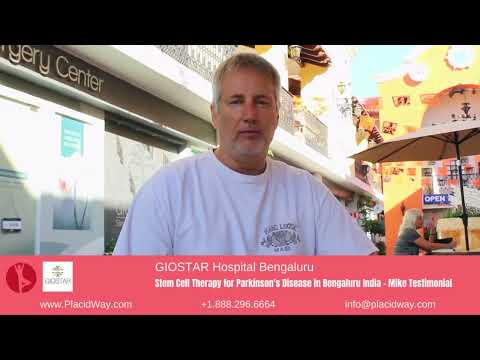
















Share this listing