


The Complete Guide to Achieving Maximum Hair Transplant Density
About this guide: When considering surgical hair restoration, the most common goal for patients is not merely to have hair on their head again, but to achieve a thick, natural-looking result. However, understanding true hair transplant density requires looking beyond basic graft counts. The science of follicular density is a delicate balancing act between donor supply, surgical artistry, and physiological limits.
Many patients mistakenly believe that a successful procedure involves packing as many hair follicles as possible into a bald spot. The reality is far more complex. Modern implantology focuses on achieving the illusion of maximum density without compromising the scalp's blood supply. Explore the precise mathematics, advanced surgical techniques, and biological factors that dictate the ultimate thickness of your restored hairline.
Video Chapters & Quick Navigation
Understanding Natural vs. Transplanted Density
Before diving into the mechanics of a hair restoration procedure, it is crucial to establish a biological baseline. A healthy human scalp that has never experienced androgenetic alopecia typically boasts a hair density of 80 to 100 follicular units per square centimeter. This natural abundance provides total scalp coverage, preventing any visible skin from showing through the hair canopy.
However, transplanted hair density operates under completely different physical and biological constraints. As highlighted at in our detailed breakdown, attempting to recreate 100 follicular units per square centimeter during a surgical procedure is practically impossible. More importantly, attempting such dense packing would be medically reckless.
When surgeons extract and implant hair follicles, they are placing living tissue into a new environment that relies heavily on localized blood supply. If incisions are placed too closely together—attempting to perfectly match natural density—the scalp's vascular system becomes overwhelmed. This leads to a severe complication known as tissue necrosis, where the blood supply fails and the newly implanted grafts die before they can take root.
The Math Behind Grafts Per Square Centimeter
Because matching original density is biologically impossible, modern hair restoration relies on strategic mathematics. Clinical studies have proven that the human eye cannot perceive hair loss until approximately 50% of the original density is gone. Therefore, a successful hair transplant density target is generally between 40 and 55 grafts per square centimeter.
At this specific density range, the scalp receives enough follicles to block light from reflecting off the skin, effectively creating the visual appearance of a full head of hair. Exceeding 55 grafts per square centimeter significantly increases the risk of graft failure without offering a proportional aesthetic benefit. The primary goal is cosmetic illusion, not exact biological replication.
To determine how many grafts you need, a surgeon will assess the square footage of your recipient area (the balding zone) and multiply it by the target density. For instance, an area measuring 50 square centimeters multiplied by a target density of 40 grafts requires a minimum extraction of 2,000 follicular units from the donor area.
Surgical Artistry: The Illusion of Density
If surgeons can only replace 40% to 50% of your original hair, how do the results look so thick and natural? The answer lies in the concept of illusory density. Elite hair transplant surgeons do not just place hair into the scalp randomly; they engineer the placement using precise angles and strategic distribution.
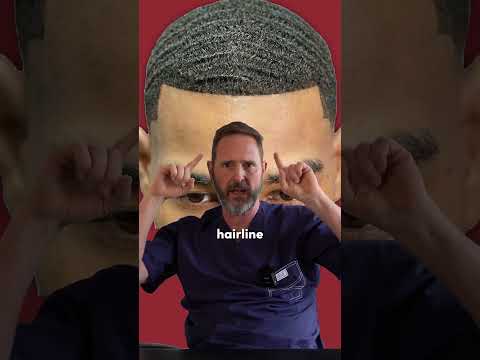
One of the most vital techniques is the "shingling effect." By implanting hair follicles at a strict 15 to 45-degree angle—mimicking the natural lay of native hair—the growing hair cascades over the scalp. Just as overlapping shingles protect a roof from rain, acutely angled hair follicles overlap one another, blocking light and completely obscuring the scalp beneath. You can see this visual concept referenced at in the video overview.
Additionally, surgeons perform strategic graft sorting under a microscope. Natural follicular units contain anywhere from one to four individual hair shafts. A master surgeon will place single-hair grafts exclusively at the very front of the hairline to ensure a soft, natural transition. The double, triple, and quadruple-hair grafts are packed tightly into the mid-scalp and crown, generating massive volume and bulk where it matters most.
The Impact of Individual Hair Characteristics
A crucial factor in achieving high-density hair transplants that is often overlooked is the patient's innate hair characteristics. The caliber, or thickness, of the individual hair shaft plays a tremendous role in the final aesthetic outcome. The mathematical relationship between hair thickness and scalp coverage is exponential.
A patient with a thick hair caliber (around 80 microns) will achieve vastly superior coverage with 2,000 grafts compared to a patient with fine hair (around 50 microns) receiving the exact same number of grafts. Thick hair takes up more physical surface area, naturally blocking more light. This phenomenon is why patients with coarse or wavy hair often require fewer extractions to achieve a remarkably dense result.
Hair color contrast also heavily influences the perception of density. Patients with low contrast between their hair color and skin tone (such as blonde hair on pale skin, or black hair on dark skin) benefit from an enhanced illusion of density. High contrast scenarios, like dark hair on pale skin, require much tighter graft packing to prevent the bright scalp from shining through the dark hair canopy.
FUE vs. DHI: Which Technique Yields Better Density?
When researching high-density hair restorations, patients frequently encounter two primary acronyms: FUE (Follicular Unit Extraction) and DHI (Direct Hair Implantation). Both are incredible advancements over the outdated strip-mining techniques of the past, but they approach density in slightly different ways.
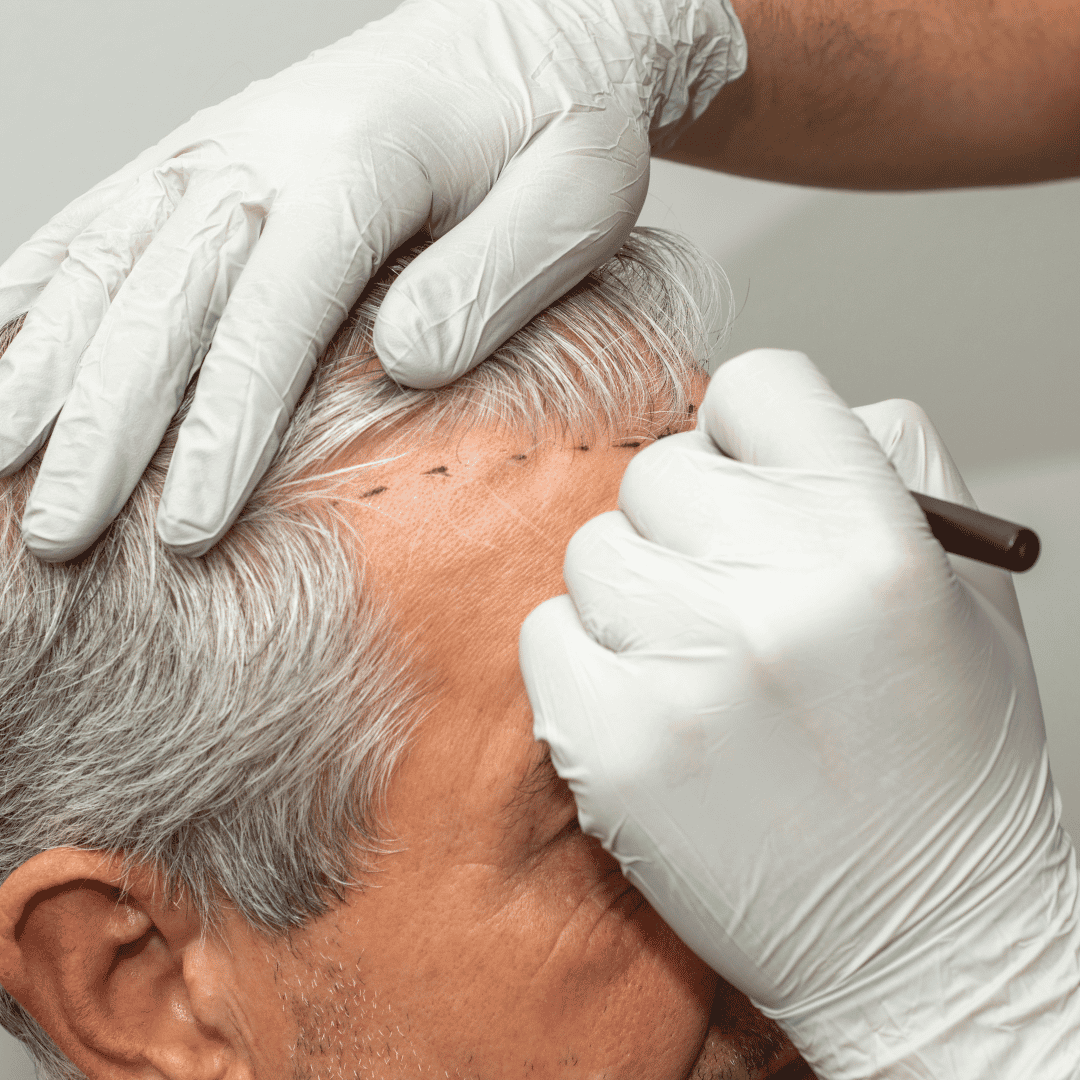
Traditional FUE involves a two-step process. First, the surgeon uses a sapphire blade to create tiny recipient channels across the balding area. Next, technicians use micro-forceps to manually insert the extracted grafts into these pre-made slits. While Sapphire FUE can achieve excellent density, the physical space required to make the incisions safely limits how closely the grafts can be packed together without damaging neighboring native hairs.
DHI, on the other hand, utilizes a specialized medical tool known as the Choi Implanter Pen. The extracted follicle is loaded directly into the hollow needle of the pen. The surgeon then simultaneously punctures the scalp and implants the graft in a single fluid motion. Because DHI bypasses the pre-incision phase, surgeons can navigate safely between existing native hairs. This makes DHI the superior choice for patients looking to increase density in thinning areas without shaving their entire head.
| Technique | Maximum Safe Density | Best Suited For | Incision Tool |
|---|---|---|---|
| Sapphire FUE | 40-50 grafts/cm² | Large bald areas, completely bare scalps | Sapphire micro-blade |
| DHI (Choi Pen) | 45-55+ grafts/cm² | Adding density between existing hairs | Choi Implanter Needle |
Protecting the Donor Area: The Risk of Overharvesting
An obsession with achieving maximum hair transplant density can sometimes lead to devastating consequences if the surgeon is inexperienced or unethical. The donor area—the horseshoe-shaped region at the back and sides of the head where DHT-resistant hair grows—is a finite resource. You are born with a specific number of donor hairs, and once extracted, they do not grow back in that exact location.
A healthy donor zone typically contains between 12,000 and 15,000 viable follicular units available for extraction over a lifetime. Extracting more than 4,000 to 5,000 grafts in a single mega-session forces the surgeon to take follicles too closely together from the back of the head. This catastrophic error results in "overharvesting."
Overharvesting leaves the donor region looking moth-eaten, scarred, and unnaturally thin. A masterful surgeon must balance the desire for high density in the front with the critical need to preserve the natural density in the back. Maintaining an even extraction pattern ensures that the donor area remains visually flawless, even when the hair is cut short.
Maximizing Graft Survival for Ultimate Fullness
True hair transplant density is not measured on the day of surgery; it is measured 12 months later when the final results mature. Implanting 4,000 grafts is meaningless if only 2,000 of them survive the healing process. Patient compliance during the immediate post-operative phase is arguably as important as the surgeon's skill in ensuring a dense final outcome.
During the first 72 hours, the newly implanted grafts are not yet firmly anchored into the blood supply of the scalp. Any physical trauma, such as bumping the head or scratching an itch, can physically dislodge the follicle, permanently reducing your overall density. Patients must sleep at an elevated 45-degree angle to minimize swelling and prevent accidental friction against pillows.
Furthermore, managing scalp circulation is vital. Nicotine acts as a powerful vasoconstrictor, drastically reducing oxygen and nutrient delivery to the fragile new grafts. Smoking or vaping during the recovery phase is one of the leading causes of poor graft survival and sparse density. Following strict aftercare protocols guarantees that every single implanted graft has the optimal environment to thrive.
The Role of Adjuvant Therapies
To further boost the illusion of high density, top-tier clinics often combine surgical restoration with adjuvant medical therapies. Platelet-Rich Plasma (PRP) therapy involves spinning the patient's own blood in a centrifuge to isolate growth factors, which are then injected back into the scalp. PRP accelerates tissue healing and can stimulate miniaturized native hairs to grow thicker and stronger.
Additionally, protecting the native hair that sits behind the newly transplanted zone is essential for long-term density. Hair loss is a progressive condition. If a patient receives a dense hairline transplant but continues to lose the native hair behind it, an unnatural gap will form. Medical therapies like Finasteride and topical Minoxidil act as a shield, halting further hair loss and maintaining a dense, unified canopy from front to back.
Global Cost Comparisons for High-Density Hair Transplants
Achieving a high-density hair transplant requires extensive surgical time, advanced technology like sapphire blades or Choi implanters, and a massive team of skilled technicians. In countries like the United States, the United Kingdom, or Canada, clinics frequently charge per graft. At an average of $5 to $8 per graft, a high-density procedure requiring 3,500 grafts can easily soar past the $20,000 mark.
This exorbitant pricing model is why medical tourism for hair restoration has exploded in popularity. Global hubs of excellence, particularly in Turkey, Mexico, and India, offer world-class density at a fraction of Western prices. Clinics in these regions typically offer comprehensive, all-inclusive packages rather than charging per follicular unit.
- Turkey: The undisputed capital of global hair restoration. High-density FUE or DHI packages typically range from $1,800 to $3,500. These packages often include VIP airport transfers, luxury hotel stays, and PRP treatments.
- Mexico: Highly favored by North American patients seeking shorter travel times. World-class border clinics offer massive graft extractions for $3,000 to $5,000, utilizing American board-certified protocols.
- India: Renowned for highly skilled surgeons and robust technological infrastructure. A premium, high-density transplant can be secured for as low as $1,500 to $2,500.
By leveraging global medical networks, patients no longer have to compromise on density due to budget constraints. Instead of settling for a sparse 1,500-graft procedure locally, patients can travel abroad to receive the full 4,000-graft high-density restoration they actually need, all while saving up to 70%.
Your Path to Maximum Fullness
Understanding hair transplant density equips you to have informed, realistic conversations with your medical provider. You now know that attempting to recreate teenage density is medically unsound, and that the true secret to an undetectable restoration lies in the masterful angulation and strategic placement of follicular units.
Whether you require a minor hairline touch-up using the precision of the DHI Choi pen, or a massive 4,500-graft Sapphire FUE mega-session to restore an entirely bare crown, your ideal solution exists. The barrier between you and a youthful, dense head of hair is thinner than ever before.
Take control of your hair loss journey today. Explore high-density techniques, protect your donor area, and demand nothing short of artistic excellence from your chosen surgical team. Your future self—looking in the mirror with renewed confidence—will thank you.
Ready for a High-Density Hair Transformation?
Don't settle for sparse results or exorbitant local prices. PlacidWay Medical Tourism connects you with elite, globally accredited hair transplant surgeons who specialize in maximum density FUE and DHI techniques. Get the full, natural hairline you deserve at a price you can afford.
GET A FREE QUOTE TODAY




.png)



-Over-Traditional-FUE-Methods.png)

.png)








Share this listing