


How Stem Cell Therapy for Knee Pain in Cabo San Lucas, Mexico Supports Mobility and Healing
Millions of people struggle daily with debilitating joint discomfort, but advanced stem cell therapy for knee pain in Cabo San Lucas, Mexico, is revolutionizing how we treat mobility issues. Rather than relying on temporary steroid injections or committing to highly invasive total joint replacement surgery, patients are discovering the profound benefits of regenerative medicine. By harnessing the body's natural cellular healing mechanisms, top-tier medical facilities in Los Cabos offer a pathway to restored cartilage, reduced inflammation, and long-lasting relief. Watch to understand how medical tourists are combining world-class orthopedic treatments with serene recovery environments.
Video Chapters & Quick Navigation
The Limitations of Traditional Knee Treatments
For decades, patients suffering from severe osteoarthritis, meniscus tears, or chronic joint degradation have been forced into a narrow corridor of treatment options. Initially, orthopedic doctors prescribe non-steroidal anti-inflammatory drugs (NSAIDs) and physical therapy. While these interventions can momentarily mask symptoms, they do absolutely nothing to repair the underlying structural damage occurring within the joint. Over time, prolonged use of oral pain medications can lead to severe gastrointestinal and cardiovascular side effects.
As the video explains at , when oral medications inevitably fail, patients are typically transitioned to corticosteroid injections. Cortisone is designed to provide rapid relief from swelling and severe pain. However, modern clinical studies have revealed a dark side to repeated steroid use. Frequent cortisone injections actively accelerate cartilage loss and weaken the surrounding tendons, ultimately expediting the need for invasive surgical intervention.
The final traditional step is total knee arthroplasty, commonly known as a knee replacement. While modern surgical techniques have improved, joint replacement remains a major, highly invasive procedure. It requires sawing away natural bone, implanting metal and plastic prosthetic components, and enduring a grueling, agonizing rehabilitation period that can last up to a year. Furthermore, prosthetic joints have a limited lifespan, meaning younger or more active patients face the terrifying prospect of future revision surgeries.
Understanding Regenerative Medicine for Knee Health
The paradigm of orthopedic care is shifting rapidly away from artificial joint replacement and moving toward biological preservation. Stem cell therapy represents the pinnacle of this medical evolution. Rather than cutting away damaged tissue, regenerative medicine seeks to heal the tissue from a microscopic, cellular level. It utilizes the body's intrinsic ability to heal, amplifying it with highly concentrated, powerful biological agents.
Stem cell therapy for knee pain primarily relies on delivering a high volume of undifferentiated cells directly into the damaged articular capsule. Once injected, these specialized cells act as biological contractors. They navigate to the areas of highest inflammation and structural deficit, releasing a cascade of growth factors, cytokines, and essential proteins. This biochemical signaling commands the body's local immune system to halt destructive inflammation while simultaneously stimulating local progenitor cells to begin dividing and forming new, healthy cartilage and synovial tissue.
This groundbreaking approach is why medical tourism for orthopedic care is skyrocketing. As highlighted at in the video, patients no longer have to accept joint degradation as an inevitable consequence of aging. Regenerative treatments actively change the joint environment from a degenerative state to a restorative one, fostering long-term mobility without the profound trauma of an operating room.
Why Cabo San Lucas is the Premier Destination for Regenerative Orthopedics
When North Americans search for alternatives to knee surgery, Cabo San Lucas rapidly emerges as the premier destination. Located at the southern tip of the Baja California Peninsula, Los Cabos is not just a luxury vacation hotspot; it is a meticulously developed medical hub. The region has invested tens of millions of dollars into state-of-the-art hospitals, advanced laboratory facilities, and recruiting globally educated medical specialists.
Regulatory Advantages and Enhanced Cell Expansion
One of the primary reasons patients cross the border for this specific treatment revolves around regulatory frameworks. In the United States and Canada, health agencies place strict limitations on how stem cells can be handled, expanded, and administered. Clinics in the US are generally restricted to using same-day, autologous stem cells extracted from a patient's own bone marrow or adipose fat. These cells cannot be legally expanded in a laboratory to reach optimal therapeutic dosages.
Conversely, the medical regulatory body in Mexico (COFEPRIS) maintains rigorous safety standards while allowing for advanced cell culturing and expansion. As mentioned at , clinics in Cabo San Lucas can ethically source, isolate, and multiply superior stem cells in highly controlled, sterile laboratories. This means a patient in Mexico can receive an injection containing tens of millions of robust, highly viable stem cells, ensuring a vastly superior clinical outcome compared to the restricted treatments available back home.
Geographic Proximity and Travel Ease
Beyond the medical superiority, logistical convenience plays a massive role. Cabo San Lucas is incredibly accessible. Direct flights from major hubs like Los Angeles, Dallas, Houston, and Phoenix land at Los Cabos International Airport (SJD) in just over two hours. Patients suffering from severe knee pain do not want to endure fourteen-hour flights to Asia or Eastern Europe. The short, comfortable flight path allows patients to travel without causing excessive joint stiffness or deep vein thrombosis risks.
The Science of Mesenchymal Stem Cells in Knee Repair
Not all stem cells are created equal. The gold standard for treating orthopedic conditions like knee osteoarthritis is the Mesenchymal Stem Cell (MSC). These specific multipotent cells have the unique biological capability to differentiate into osteoblasts (bone cells), chondrocytes (cartilage cells), and myocytes (muscle cells). When directed into a damaged knee joint, their restorative potential is truly staggering.
In the top clinics of Cabo San Lucas, specialists heavily utilize Wharton’s Jelly-derived Mesenchymal Stem Cells. These cells are ethically sourced from the umbilical cords of healthy, full-term, live-birth deliveries with explicit maternal consent. The advantage of umbilical cord MSCs is their "day zero" biological age. They have not been subjected to decades of environmental toxins, aging, or systemic disease. Because they are immune-privileged, they do not trigger rejection responses in the recipient's body, making them incredibly safe and universally compatible.
When Wharton’s Jelly MSCs are injected into the intra-articular space of the knee, they execute three primary functions:
- Immunomodulation: They act as biological directors, down-regulating the aggressive, chronic inflammatory response that causes joint swelling and daily pain.
- Paracrine Signaling: They release specialized exosomes and growth factors that essentially "wake up" the patient's dormant, aging cells, instructing them to repair local tissue.
- Tissue Regeneration: By laying down a hyaluronic acid-rich scaffolding, MSCs create an environment where new cartilage can securely form, restoring the smooth gliding surface of the knee joint.
Shattering the Financial Barrier: Cost Comparison
One of the most distressing realities for patients seeking regenerative medicine in North America is the financial barrier. Because health insurance and Medicare generally classify stem cell therapy as "investigational" or "experimental," these treatments require entirely out-of-pocket payments. In major US cities, a single, low-dose stem cell injection can cripple a family's savings, often delivering sub-optimal results due to domestic regulatory limitations on cell count.
As detailed at in the video presentation, the financial dynamic shifts entirely when traveling to Los Cabos. Thanks to lower operational overhead, localized pharmaceutical economics, and integrated medical tourism packages, patients can receive world-class, high-dosage treatments for a fraction of domestic prices.
| Treatment Factor | United States / Canada | Cabo San Lucas, Mexico |
|---|---|---|
| Average Cost Per Knee | $6,000 - $12,000 USD | $3,000 - $5,500 USD |
| Stem Cell Source | Autologous (Patient's Bone Marrow/Fat) | Allogeneic (Expanded Wharton's Jelly MSCs) |
| Cell Count / Dosage | Low (Limited by lack of lab expansion) | Extremely High (25M to 100M+ per joint) |
| Cell Age / Viability | Matches patient's biological age | Day Zero (Maximum vitality and replication) |
| Overall Value | High cost, restrictive protocols | Superior medical efficacy, luxury recovery included |
Determining Patient Candidacy for Knee Injections
While the regenerative potential of MSCs is vast, accurate patient screening is vital for achieving high success rates. Reputable orthopedic and regenerative clinics in Cabo San Lucas place a tremendous emphasis on evidence-based diagnostics. They do not accept every patient blindly; instead, they require recent MRI imaging, detailed medical histories, and X-rays to ensure the individual is a genuine candidate for the procedure.
Ideal Candidates for Regenerative Orthopedics
The most favorable outcomes are typically seen in patients suffering from mild to moderate osteoarthritis (Grades 1 through 3). In these stages, there is still a foundational matrix of cartilage remaining within the joint, which acts as a scaffold that the new stem cells can build upon. Patients with partial meniscus tears, chronic patellar tendinitis, ligament strains, and general joint degradation due to sports injuries are exceptionally well-suited for this targeted approach.
Considerations for Severe Bone-on-Bone Arthritis
For patients facing severe, Grade 4 "bone-on-bone" osteoarthritis, stem cell therapy requires realistic expectations. While it may not completely regrow a massive, thick pad of cartilage if the original tissue is entirely obliterated, it can still provide profound benefits. In these advanced cases, the high-dose MSC injections drastically alter the inflammatory environment within the knee capsule. This reduction in chronic inflammation often significantly diminishes daily pain, vastly improving the patient's quality of life and potentially delaying the necessity of a total joint replacement for several years.
The Step-by-Step Patient Journey in Los Cabos
Embarking on a medical journey for stem cell therapy in Cabo San Lucas is designed to be a frictionless, VIP experience. Leading medical tourism facilitators like PlacidWay understand that patients dealing with knee pain require streamlined logistics. The moment a patient arrives at the Los Cabos International Airport, the therapeutic journey begins.
As outlined at , patients are greeted by bilingual concierges and transported via private, climate-controlled vehicles directly to their luxury hotel or recovery suite. The initial consultation takes place the following day. During this comprehensive evaluation, the lead orthopedic specialist reviews the patient's recent imaging, conducts a physical assessment of the knee's range of motion, and customizes the precise cellular dosage required.
The injection day is remarkably straightforward and minimally invasive. Conducted in a sterile, modern procedure room, the knee is first prepped and locally anesthetized to ensure absolute comfort. Utilizing state-of-the-art ultrasound or fluoroscopic guidance, the specialist maps the interior architecture of the knee in real-time. This imaging technology guarantees that the concentrated stem cell solution is delivered precisely into the exact millimeter of damaged tissue, maximizing the biological impact. The entire procedure generally takes less than an hour, and patients walk out of the clinic under their own power.
Post-Treatment Recovery and Long-Term Mobility
Unlike total knee replacement surgery, which demands immediate, painful physical therapy to prevent scar tissue formation, stem cell therapy requires a period of gentle unloading. The initial 48 to 72 hours are crucial. Patients are advised to engage in minimal weight-bearing activities. This is where the Cabo San Lucas environment provides an immense psychological and physical benefit. Rather than recovering in a cold, sterile hospital room or struggling up the stairs at home, patients can recline on a sun-drenched balcony overlooking the Sea of Cortez, allowing their body the serene environment it needs to initiate cellular repair.
The Biological Timeline of Healing
The healing mechanism of regenerative medicine is not instantaneous like a painkiller; it is a profound, progressive biological rebuilding. During the first two weeks, patients often notice a sharp decrease in acute, sharp pains as the immunomodulatory effects of the stem cells suppress joint inflammation. By weeks four through eight, the paracrine signaling reaches its peak, and structural rebuilding of the cartilage matrix becomes noticeable. Patients typically report a restored range of motion, decreased stiffness in the morning, and an ability to navigate stairs with vastly reduced discomfort.
By the three to six-month mark, the maximum regenerative effects are realized. As noted at , many individuals who were previously told they needed immediate joint replacements find themselves returning to low-impact sports, hiking, swimming, and playing with their grandchildren without hesitation. The integration of high-viability stem cells combined with the expertise of Cabo's medical professionals creates a synergistic effect that genuinely gives patients their active lives back.
Embracing the Future of Orthopedics Without Surgery
Living with chronic knee pain isolates individuals from the activities and people they love. The outdated model of waiting until a joint is entirely destroyed only to replace it with metal and plastic is no longer the only viable option. Advanced regenerative medicine provides a scientifically proven, minimally invasive alternative that respects and enhances the human body's native healing abilities.
Cabo San Lucas stands at the vanguard of this medical revolution. By offering legally permitted, highly expanded mesenchymal stem cells administered by globally recognized orthopedic specialists, this breathtaking coastal city has become a beacon of hope for joint pain sufferers. Between the dramatic financial savings, the unparalleled quality of the cellular products, and the tranquil environment conducive to healing, medical tourism for orthopedic care in Los Cabos is a life-changing investment in long-term mobility.
Ready to Reclaim Your Mobility Without Surgery?
Stop letting chronic knee pain dictate your life. Connect with elite, board-certified orthopedic specialists in Cabo San Lucas, Mexico, and discover if high-dose stem cell therapy is right for you. Get exclusive pricing, free consultations, and complete travel coordination today.
REQUEST YOUR FREE QUOTE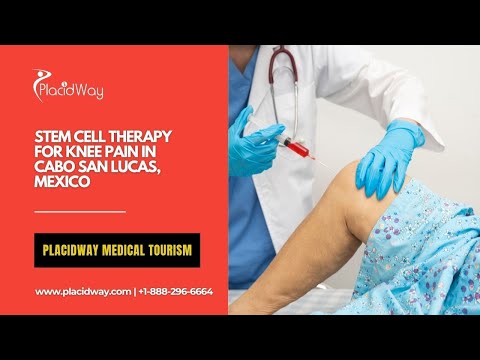
















Share this listing