


The landscape of aesthetic medicine is constantly evolving, with practitioners continually seeking methods that provide natural, long-lasting results. A primary focus for many patients globally is securing a highly specialized deep plane facelift in South Korea, a region renowned for its meticulous approach to surgical excellence. Achieving optimal outcomes requires a profound understanding of sub-SMAS facial anatomy and the continuous refinement of surgical techniques.
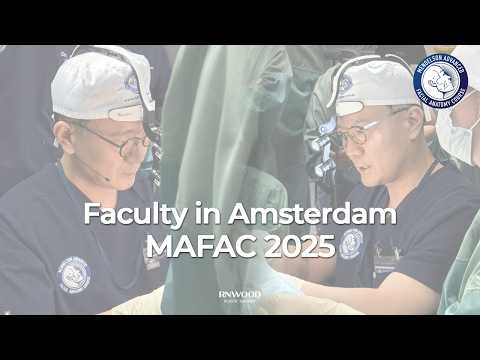
In the pursuit of mastering facial rejuvenation surgery, continuous education and hands-on peer collaboration are non-negotiable for top-tier plastic surgeons. The Mendelson Advanced Facial Anatomy Course (MAFAC) stands as a pinnacle of this educational pursuit. In this detailed overview, we will explore the critical insights shared by Dr. Min-Hee Ryu, Director of RNWOOD Plastic Surgery in Seoul, regarding his faculty experience at MAFAC and the intricate mechanisms behind safe, effective ligament release in modern facelift procedures [00:00].
Video Chapters
Understanding the Mendelson Advanced Facial Anatomy Course (MAFAC)
The Mendelson Advanced Facial Anatomy Course, widely known as MAFAC, is recognized globally as a premier academic program dedicated strictly to the advancement of facial rejuvenation surgery [00:15]. Founded upon the groundbreaking anatomical discoveries of Dr. Bryan Mendelson, the course provides an unparalleled platform for practicing surgeons to elevate their understanding of facial architecture. The curriculum is meticulously designed to move beyond theoretical knowledge, immersing participants in the tactile realities of facial tissue layers.
Dr. Min-Hee Ryu has been an integral part of this prestigious institution, serving as a faculty member since 2016 [00:26]. His continuous involvement underscores the rigorous standards required to instruct at this level. By acting as a demonstrator and dissection tutor, faculty members like Dr. Ryu guide international participants through complex sub-SMAS dissections, ensuring that the next generation of aesthetic surgeons adopts the safest, most effective methodologies available today.
The Importance of Intensive Hands-On Cadaver Dissection in Plastic Surgery Training
One of the defining characteristics of high-level surgical training programs is the inclusion of intensive hands-on cadaver dissection [00:22]. While textbooks and 3D modeling offer foundational knowledge, they cannot replicate the tactile feedback, tissue resistance, and anatomical variations encountered in actual human anatomy. Cadaver workshops provide a risk-free environment where surgeons can practice complex maneuvers, such as navigating around the delicate branches of the facial nerve, without jeopardizing patient safety.
During the MAFAC program in Amsterdam, participants engage directly with anatomical specimens under the supervision of expert tutors. This hands-on approach is critical for mastering the deep plane facelift technique, which requires precise entry into the sub-SMAS (Superficial Musculoaponeurotic System) spaces. Understanding the exact location and tension of the facial retaining ligaments can only be fully appreciated through direct physical interaction and expert guidance at the dissection table.
- Real-time Tactile Feedback: Surgeons learn the exact pressure needed to release tough ligaments without damaging adjacent structures.
- Navigating Anatomical Variations: Hands-on training exposes surgeons to the natural physiological differences between individuals, preparing them for real-world unpredictability.
- Risk-Free Skill Refinement: Complex, high-stakes maneuvers can be practiced repeatedly, ensuring high consistency when operating on live patients.
Mastering the PUSH DOWN Technique for Superior Facial Rejuvenation
Innovation in surgical methodology is what separates standard outcomes from exceptional, natural-looking results. During the MAFAC program, Dr. Ryu demonstrated a highly specialized, SAFE surgical technique known as the "PUSH DOWN Technique" [00:43]. This approach represents a paradigm shift in how surgeons handle the deep tissues of the face during a comprehensive lifting procedure.
Unlike traditional methods that rely heavily on pulling the skin or superficially tightening the SMAS layer—often resulting in a tight, artificial appearance—the PUSH DOWN technique focuses on deep tissue repositioning. By utilizing specific vectors and applying pressure in a calculated downward and outward motion, the surgeon can safely isolate the critical retaining ligaments that anchor the facial tissues to the underlying bone. This technique allows for a tension-free redraping of the SMAS, leading to a much more youthful and un-operated aesthetic.
The fundamental goal of this technique is to improve both safety and consistency in outcomes [01:00]. By standardizing the approach to ligament release, surgeons can predictable elevate the midface, define the jawline, and smooth the nasolabial folds without exerting undue stress on the skin flap. This meticulous attention to deep anatomical repositioning is a hallmark of elite plastic surgery practices.
Safely Releasing Retaining Ligaments During a Deep Plane Facelift
The true efficacy of a deep plane facelift lies in the surgeon's ability to identify and manipulate facial retaining ligaments. These ligaments are strong, fibrous bands that connect the underlying facial skeleton to the dermis, essentially acting as anchor points. As we age, these ligaments remain fixed while the surrounding soft tissues descend, creating the hallmark signs of aging such as jowls, deep marionette lines, and hollowed cheeks. Therefore, a successful deep plane facelift in South Korea relies entirely on releasing these constraints [00:48].
The key principle of the deep plane approach is the complete and safe release of these retaining ligaments [00:52]. The major ligaments involved include the zygomatic ligaments (which tether the cheek tissue) and the mandibular ligaments (which contribute to jowl formation). If a surgeon only pulls the superficial layers without releasing these deep anchors, the lift will be restricted, the results will be short-lived, and the face will appear unnaturally stretched. The PUSH DOWN technique facilitates the precise identification of these ligaments, allowing the surgeon to snip them cleanly at their base.
Once the retaining ligaments are fully released, the entire composite flap—consisting of the skin, subcutaneous fat, and the SMAS—becomes fully mobile. This mobility is what permits the surgeon to glide the descended facial tissues back into their youthful, anatomical position without relying on the skin to bear the tension of the lift. The result is a profound, structural rejuvenation that ages gracefully alongside the patient.
| Surgical Aspect | Traditional SMAS Facelift | Deep Plane Facelift |
|---|---|---|
| Ligament Handling | Often left intact, pulling against them. | Completely released for full tissue mobility. |
| Tension Placement | Tension often falls on the skin and superficial layers. | Zero tension on the skin; tension is borne by deep fascial tissues. |
| Aesthetic Result | Can appear "pulled" or tight; shorter longevity. | Natural, holistic elevation; highly durable, long-lasting results. |
Preventing Nerve Injury in Advanced Facial Plastic Surgery
Perhaps the most critical, and challenging, aspect of deep facial dissection is the preservation of the facial nerve (Cranial Nerve VII). The branches of the facial nerve control all muscles of facial expression. An injury to these delicate structures during surgery can result in temporary or permanent facial paralysis, which is a devastating complication. The central philosophy taught at MAFAC is releasing retaining ligaments absolutely without nerve injury [00:54].
The facial nerve branches lie in close proximity to the retaining ligaments, particularly in the midface and lower jaw regions. The transition from the safe, avascular anatomical spaces into the ligamentous zones requires extreme precision. Surgeons trained in advanced techniques utilize the natural facial spaces as roadmaps, carefully sweeping connective tissue away to clearly visualize the nerve branches before any cut is made. This methodical, unhurried approach is what guarantees patient safety.
Techniques like the PUSH DOWN method are specifically engineered to keep the surgical instruments away from the trajectory of the nerve. By pushing the tissues down and elevating the ligaments into clear view, the surgeon creates a safe distance between their scissors and the nerve endings. It is this depth of anatomical mastery that distinguishes a highly qualified deep plane facelift specialist from a general cosmetic practitioner.
Global Collaboration and Diverse Surgical Philosophies in Aesthetics
The field of plastic surgery is not monolithic; it thrives on the exchange of diverse ideas and techniques. One of the greatest strengths of the MAFAC program is its profound respect for diverse surgical philosophies [01:06]. By bringing together leading experts from various continents, the course fosters an environment where techniques are debated, refined, and synthesized to create the best possible outcomes for patients worldwide.
As a dissection tutor, Dr. Ryu highlights the importance of working closely with international participants and sharing practical knowledge at the dissection table [01:20]. This collaborative atmosphere ensures that no single technique remains stagnant. Surgeons learn from each other's unique challenges and successes, adapting their approaches based on different demographic needs and anatomical variations encountered across global populations.
This cross-pollination of knowledge is heavily influenced by pioneers like Dr. Bryan Mendelson, whose teachings have served as the foundation for many academic and surgical journeys [01:46]. When a surgeon actively participates in this global dialogue, they bring a wealth of refined, world-class techniques back to their own practice. Patients ultimately benefit from this collective wisdom, receiving care that is informed by the latest international advancements in aesthetic surgery.
Choosing an Expert Dissection Tutor for Your Cosmetic Needs
When considering a major procedure like a deep plane facelift, the credentials and continuous education of your chosen surgeon are paramount. A surgeon who serves as a faculty member and dissection tutor at a globally recognized institution demonstrates a level of expertise that goes far beyond standard medical licensure. They are not only practicing the techniques; they are entrusted with teaching them to other qualified surgeons.
The commitment to academic excellence, as shown by participating in rigorous hands-on cadaver workshops, reflects a dedication to patient safety and surgical consistency. Surgeons who continually strive to share their knowledge and experience actively contribute to the elevation of the entire field [01:50]. For patients seeking top-tier facial rejuvenation, choosing a surgeon with this level of academic involvement provides peace of mind that their face is in the hands of a true anatomical master.
Ultimately, the meticulous release of retaining ligaments, the mastery of techniques to prevent nerve injury, and the dedication to global surgical philosophies are the hallmarks of an elite plastic surgeon. By understanding the depth of training required for these procedures, patients can make highly informed decisions regarding their aesthetic journey and achieve the beautiful, natural results they desire.
Ready to Transform Your Appearance?
If you are considering a highly specialized deep plane facelift in South Korea and want to learn more about the advanced techniques that guarantee natural, safe results, connect with global medical experts today.
Get Free QuoteView Full Video Transcript
[00:00] Hello! This is Dr. Min-Hee Ryu from RNWOOD Plastic Surgery in Seoul, South Korea.
[00:06] I would like to briefly share my experience as a Faculty member in Amsterdam MAFAC, 2025.
[00:15] MAFAC is a global leading academic program dedicated to advancing facial rejuvenation surgery with intensive hands-on cadaver dissection.
[00:26] I have served as MAFAC faculty since 2016, and at this course, I participated as a demonstrator and dissection tutor.
[00:38] During the program, I demonstrated a SAFE Surgical technique, which is called a 'PUSH DOWN Technique', which focuses on SAFELY RELEASING Retaining Ligaments in DEEP PLANE FACELIFT.
[00:52] The key principle of DEEP PLANE FACELIFT is Releasing Retaining Ligaments without nerve injury.
[01:00] This technique was designed to improve safety and consistency.
[01:06] One of MAFAC's greatest strengths is its respect for diverse surgical philosophies and its emphasis on hands-on learning.
[01:17] As a dissection tutor in MAFAC, I worked closely with international participants, sharing practical knowledge and experience at the dissection table.
[01:29] MAFAC has been the foundation of my academic and surgical journey.
[01:34] It is a great honor not only to learn from the world's leading masters, but also to contribute and share techniques I have learned and developed.
[01:46] Following the teachings of my mentor, Dr. Bryan Mendelson, I will continue striving to share my knowledge and experience more actively.
[01:57] I look forward to meeting everyone again in MAFAC 2026. Thank you!







.jpg)









Share this listing