
Patients seeking profound facial rejuvenation are increasingly exploring options for a deep plane facelift in South Korea due to the country's unparalleled surgical expertise. As facial aging involves complex structural shifts beyond mere skin laxity, advanced procedures have evolved to focus on repositioning deeper anatomical layers. Renowned specialists, such as Dr. Min-Hee Ryu from RNWOOD Plastic Surgery, continually refine these meticulous methods to ensure optimal patient safety and highly natural results.
A comprehensive understanding of underlying facial anatomy is paramount for anyone considering this transformative procedure. This in-depth guide explores the sophisticated surgical techniques utilized by top practitioners in Seoul to restore lasting, youthful facial contours without the artificial appearance of older methods.
Video Chapters & Quick Navigation
- The Evolution of Deep Plane Facelift
- Understanding the PUSH DOWN Technique
- Releasing Retaining Ligaments Safely
- Preventing Facial Nerve Injury
- Why Advanced Facial Anatomy Matters
- The Role of MAFAC in Global Surgery
- Traditional vs Deep Plane Facelift
- Hands-On Cadaver Dissection
- Strategic Approaches to Rejuvenation
- Choosing Top Plastic Surgeons in Seoul
The Evolution of Deep Plane Facelift Procedures in South Korea
South Korea has firmly established itself as a premier global destination for advanced cosmetic procedures. The transition from superficial skin tightening to the deep plane facelift in South Korea marks a significant milestone in aesthetic medicine. Early facelift variations primarily addressed loose skin, which often resulted in a stretched, unnatural, or "windblown" appearance.
Surgeons in Seoul now prioritize the manipulation of the superficial musculoaponeurotic system (SMAS) and deeper facial structures. By accessing the sub-SMAS plane, practitioners can elevate entire anatomical units of the face simultaneously. This approach comprehensively addresses midface drooping, deep nasolabial folds, and significant jowling without relying on skin tension.
At RNWOOD Plastic Surgery [00:00], experts continuously adopt and develop refined surgical methodologies. The clinical focus has decisively shifted from merely pulling tissue to completely releasing and repositioning it. This philosophy ensures that the structural integrity of the face is restored, providing patients with significantly longer-lasting outcomes.
Understanding the PUSH DOWN Technique for Facial Rejuvenation
Innovations in facial plastic surgery are consistently driven by the need to minimize surgical trauma while maximizing aesthetic improvement. The "PUSH DOWN Technique" represents a highly specialized maneuver designed to enhance the safety and effectiveness of deep facial dissections. During complex facial rejuvenation surgery, practitioners must navigate through delicate layers of tissue to access anchoring points.
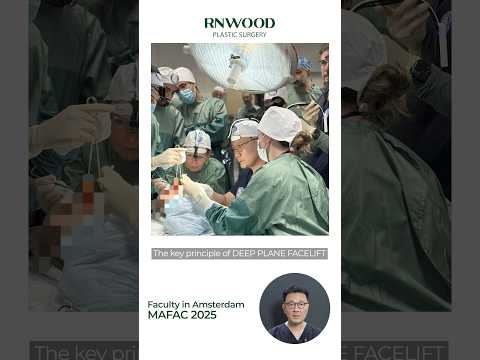
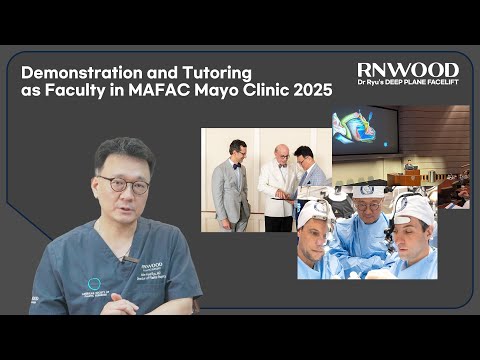
By employing the PUSH DOWN method, the surgeon safely clears the operative field while protecting underlying anatomical structures. As demonstrated at the MAFAC course [00:36], this approach significantly reduces the risk of unintended tissue tearing or trauma. The technique involves applying controlled downward pressure on the deeper tissues while gently elevating the composite skin-muscle flap.
Traditional dissection methods sometimes rely on aggressive pulling or upward tension, which can distort anatomy and increase the likelihood of vascular bleeding. The PUSH DOWN technique mitigates these risks by maintaining anatomical relationships in a more natural, relaxed state during the operation. This meticulous approach directly contributes to a smoother, faster recovery process for the patient.
The Critical Importance of Safely Releasing Retaining Ligaments
To fully appreciate the mechanics of a modern facelift, one must understand the role of retaining ligaments in the face. These ligaments are strong, fibrous bands that anchor the skin and soft tissues directly to the underlying facial skeleton. They are essentially responsible for keeping facial fat pads in their proper, elevated position during our youth.
As we age, these robust ligaments remain firmly fixed while the surrounding soft tissues begin to descend due to gravity and volume loss. This discrepancy in tissue movement creates visible signs of aging, such as heavy jowls, marionette lines, and deep cheek hollows. Safely releasing retaining ligaments is the fundamental cornerstone of a successful deep plane facelift [00:46].
The major tethers involved include the zygomatic ligaments in the midface and the masseteric-cutaneous ligaments along the jawline. Once these strong bands are surgically divided, the entire facial flap becomes completely mobile and tension-free. The surgeon can then easily reposition the fat pads and muscle layers back to their youthful locations before seamlessly draping the skin.
Preventing Nerve Injury During Complex Facelift Surgery
The primary concern for any individual considering deep plane facelift surgical techniques is the safety of their facial nerves. The facial nerve controls all dynamic muscles of facial expression, and its delicate branches travel directly beneath the SMAS layer where the surgery occurs. Protecting these vital neural pathways is the absolute highest priority during the operation.
The deep plane approach, when performed by an expert, actually offers a highly safe surgical environment. The key principle of the procedure is releasing retaining ligaments without causing any nerve injury [00:51]. Methodologies like the PUSH DOWN technique provide the necessary spatial visibility to clearly identify and protect these microscopic branches.
Rigorous anatomical training ensures that the surgeon can anticipate the exact location of the nerves based on reliable bone and fascial landmarks. Rather than dissecting blindly, the practitioner creates clear anatomical spaces where the nerves are known to be absent. This strategic, predictable approach minimizes direct contact with nerve fibers, drastically reducing surgical risks.
Why Advanced Facial Anatomy Matters for Plastic Surgeons
A profound understanding of three-dimensional facial anatomy is the defining characteristic of a master aesthetic surgeon. The human face is a highly complex, interconnected structure comprising distinct layers of skin, fat, muscle, deep fascia, and bone. Superficial anatomical knowledge is entirely insufficient for performing advanced facial rejuvenation surgery safely.
Anatomical variations between individual patients add another significant layer of complexity to facelift procedures. Surgeons must seamlessly tailor their dissection and lifting vectors based on the specific anatomical realities of the person on the operating table. Continuous education through dedicated academic programs allows practitioners to refine and expand this vital expertise [00:16].
Key Benefits of Advanced Anatomical Knowledge
Surgeons who dedicate time to rigorous anatomical studies offer distinct safety and aesthetic advantages to their patients. This deep structural understanding directly translates to superior surgical execution.
- Enhanced Precision: Exact identification of tissue layers ensures that lifting tension is applied strictly to the strong fascial foundations, leaving the superficial skin perfectly tension-free.
- Minimized Complications: A flawless mental map of facial nerve pathways drastically reduces the likelihood of inadvertent nerve trauma or excessive vascular bleeding.
- Customized Surgical Plans: Recognizing anatomical variations allows the surgeon to adapt their technique in real-time, tailoring the lift to the specific aging pattern of the individual.
- Faster Recovery Times: Efficient, atraumatic dissection methods lead to significantly less postoperative swelling and bruising, accelerating the overall healing process.
The Role of MAFAC in Enhancing Global Facelift Procedures
The Mendelson Advanced Facial Anatomy Course (MAFAC) stands as a global pillar of excellence in aesthetic surgical education. It is recognized worldwide as a premier academic program strictly dedicated to the science of facial rejuvenation. The course brings together the brightest minds in plastic surgery to intensely explore the architectural complexities of the human face.
Dr. Bryan Mendelson, the visionary founder of MAFAC, has revolutionized modern facelift surgery through his lifelong anatomical research. Following the teachings of such dedicated mentors allows working surgeons to continuously elevate their clinical practice [01:45]. The program's advanced curriculum focuses heavily on the deep facial spaces and the precise release of retaining ligaments.
One of the greatest strengths of the MAFAC program is its profound respect for diverse surgical philosophies [01:05]. It provides the indisputable anatomical truth upon which various surgical techniques can be safely and effectively built. Serving as a faculty member at this institution involves not only learning from world-renowned masters but also actively sharing developed techniques with the global medical community [01:35].
Comparing Traditional Facelifts vs Deep Plane Facelifts in South Korea
Choosing the right facelift technique is a critical decision that dictates both the longevity and naturalness of the final aesthetic result. Understanding the stark differences between older, traditional methods and the modern deep plane approach is essential for patients. A traditional SMAS plication or skin-only lift typically involves treating only the most superficial layers of the face.
In stark contrast, a deep plane facelift involves fully releasing the facial tissues from their deepest skeletal attachments. This sophisticated maneuver allows the entire cheek and jawline complex to be elevated as a single, cohesive anatomical unit. Because the deep, robust layers bear the entire weight of the lift, the skin heals naturally without ever looking stretched or "done."
| Surgical Feature | Traditional SMAS Facelift | Deep Plane Facelift |
|---|---|---|
| Surgical Depth | Superficial (Skin and upper SMAS only) | Sub-SMAS (Beneath muscle and fascia) |
| Tension Placement | Primarily placed on the skin | Placed securely on deep structural tissues |
| Ligament Release | Rarely or partially released | Fully released for true tissue mobility |
| Aesthetic Result | Can appear tight, stretched, or flattened | Highly natural, volumetric, and harmonious |
| Expected Longevity | Moderate duration (5 to 8 years) | Excellent duration (10 to 15+ years) |
The comparison table illustrates precisely why discerning patients seek out top specialists for their aesthetic procedures. While a deep plane facelift demands vastly more technical skill and anatomical precision, the long-term benefits far outweigh the surgical complexities. South Korean plastic surgeons remain globally recognized for their meticulous execution of these advanced techniques.
The Importance of Hands-On Cadaver Dissection Training
Theoretical medical knowledge must always be paired with practical, tactile application to truly master surgical techniques. Intensive hands-on cadaver dissection is an irreplaceable, foundational component of advanced surgical training. It provides practitioners the vital opportunity to explore the complex three-dimensional anatomy of the face without risking actual patient safety.
Working directly with anatomical specimens yields invaluable, real-world insights into the natural variations of facial structures. Surgeons can repeatedly practice the precise release of retaining ligaments and physically navigate the hidden pathways of the facial nerve. As a dissection tutor, working closely with international participants fosters a highly dynamic environment for sharing practical knowledge [01:16].
This collaborative exchange of techniques at the dissection table directly leads to the refinement of procedures like the PUSH DOWN technique. When dedicated surgeons from diverse global backgrounds share their tactile experiences, the collective expertise of the medical community elevates exponentially. This unwavering dedication to practical learning ensures that facelift techniques become inherently safer and more predictable.
Strategic Approaches to Long-Lasting Facial Rejuvenation
Achieving a genuinely youthful appearance that stands the test of time requires a comprehensive, highly strategic surgical approach. A successful deep plane facelift in South Korea intentionally addresses multiple vectors of facial aging simultaneously. It is not simply about erasing surface wrinkles, but about fundamentally restoring the volumetric balance and structural harmony that characterized the patient's youth.
As facial aging progresses, malar (cheek) fat inevitably descends, contributing to heavy nasolabial folds and a visibly depleted midface. By accessing the deep anatomical plane, surgeons can elevate these specific fat pads back to their original position over the cheekbones. This volumetric restoration recreates the desirable heart-shaped face of youth, often eliminating the need for excessive artificial dermal fillers.
The lower face and neck region are equally critical components of a unified rejuvenation strategy. The deep plane approach seamlessly allows for the lifting of the platysma muscle in the neck, creating a sharply defined, elegant jawline. Advanced techniques specifically designed to improve safety and surgical consistency ensure these comprehensive results are delivered reliably [00:58].
Choosing Highly Trained Plastic Surgeons in South Korea for Facelift
Selecting the right medical practitioner is undoubtedly the single most critical factor in your entire facial rejuvenation journey. South Korea boasts a highly competitive and rigorously regulated medical environment, naturally producing some of the finest aesthetic surgeons globally. However, prospective patients must look beyond superficial marketing to verify a surgeon's specific qualifications and academic contributions.
A surgeon's active involvement in international teaching and anatomical research serves as a very strong indicator of their true expertise. Practitioners who are invited to serve as faculty members at prestigious events like MAFAC have clearly demonstrated a mastery of facial anatomy [00:25]. These individuals actively shape the future of the field by educating the next generation of specialists.
When evaluating the investment or cost of a deep plane facelift in South Korea, patients should prioritize surgeons with documented expertise in sub-SMAS dissections. A highly qualified surgeon will provide comprehensive consultations that address the unique anatomical needs of the individual, rather than offering generalized solutions. By prioritizing practitioners dedicated to continuous anatomical study, patients ensure they are entrusting their face to a verified expert.
Ready to Transform Your Appearance?
Connect with top-rated, board-certified specialists for a deep plane facelift in South Korea. Receive expert medical guidance, personalized treatment plans, and exceptional care for your facial rejuvenation journey.
Get Free QuoteRead Full Video Transcript
[00:00] Hello! This is Dr. Min-Hee Ryu from RNWOOD Plastic Surgery in Seoul, South Korea.
[00:06] I would like to briefly share my experience as Faculty member in Amsterdam MAFAC 2025.
[00:16] MAFAC is a global leading academic program dedicated to advancing facial rejuvenation surgery with intensive hands-on cadaver dissection.
[00:25] I have served as MAFAC faculty since 2016, and at this course, I participated as a demonstrator and dissection tutor.
[00:36] During the program, I demonstrated a SAFE Surgical technique, which is called a 'PUSH DOWN Technique',
[00:46] which focuses on 'SAFELY Releasing Retaining Ligaments in DEEP PLANE FACELIFT'.
[00:51] The key principle of DEEP PLANE FACELIFT is Releasing Retaining Ligaments without nerve injury.
[00:58] This technique was designed to improve safety and consistency.
[01:05] One of MAFAC's greatest strengths is its respect for diverse surgical philosophies and its emphasis on hands-on learning.
[01:16] As a dissection tutor in MAFAC, I worked closely with international participants, sharing practical knowledge and experience at the dissection table.
[01:28] MAFAC has been the foundation of my academic and surgical journey.
[01:35] It is a great honor not only to learn from the world's leading masters, but also to contribute and share techniques I have learned and developed.
[01:45] Following the teachings of my mentor, Dr. Bryan Mendelson, I will continue striving to share my knowledge and experience more actively.
[01:56] I look forward to meeting everyone again in MAFAC 2026. Thank you!





.png)
.png)
.jpg)
.png)



.jpg)
.jpg)
.jpg)
.jpg)








Share this listing