


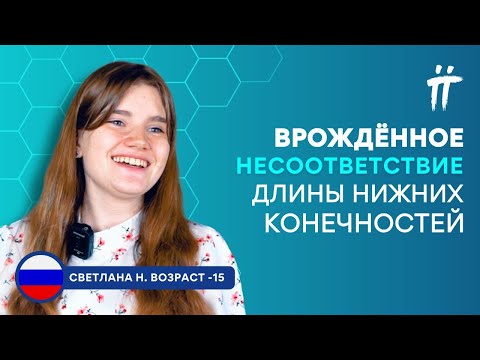
Svetlana, a 15-year-old girl from Khabarovsk, Russia, faced significant physical challenges due to a congenital lower limb length discrepancy. Her left leg was structurally shorter than her right leg, a condition that led to severe spinal load, an imbalanced gait, and persistent walking instability. After spending 15 years searching for a reliable medical solution, her family decided to pursue an advanced leg lengthening surgery procedure in Turkey. This comprehensive guide explores her life-changing experience, detailing the innovative orthopedic techniques utilized to correct her condition and restore her mobility.
Choosing the right medical path for complex skeletal deformities requires careful consideration of available technologies and specialized surgical expertise. Svetlana’s journey highlights the profound benefits of modern orthopedic surgery for leg length difference, moving away from outdated external frames to sophisticated internal magnetic nails. For individuals and families seeking effective limb length discrepancy treatment abroad, her detailed recovery timeline offers invaluable insights into the process, from the initial international consultation to walking independently just nine months post-operation.
Video Chapters & Quick Navigation
- Understanding Limb Length Discrepancy
- Exploring Global Orthopedic Options
- The Consultation and Travel Experience
- Advanced PRECISE Nail Technology
- The Biology of Distraction Osteogenesis
- Post-Operative Care and Lengthening
- Comprehensive Rehabilitation Protocol
- Long-Term Recovery and Mobility
- Why Choose Medical Tourism in Turkey
Understanding Congenital Lower Limb Length Discrepancy
At [00:00], Svetlana introduces herself and explains the core medical reason for her international journey. She was officially diagnosed with a congenital lower limb length discrepancy, meaning her left leg failed to grow at the same rate as her right leg from birth. As her father, Evgeny Novozhilov, points out at [00:49], the family knew about this condition early on, but the physical difference naturally became much more pronounced as she aged.
When an anatomical imbalance like this is left untreated, the body is forced to mechanically compensate during every single step. Svetlana describes the reality of this condition vividly at [00:17], explaining how the structural inequality caused severe instability and transferred an enormous amount of unnatural load directly onto her spine. Because the healthy leg absorbs the majority of the physical shock, the resulting biomechanical stress leads to rapid fatigue and severe discomfort during basic daily activities.
Addressing this condition requires more than just managing symptoms; it necessitates structural correction to prevent debilitating joint degradation in the future. By undergoing a specialized orthopedic surgery for leg length difference, patients can successfully restore proper pelvic alignment. This intervention is absolutely vital for eliminating chronic pain, preventing spinal scoliosis, and allowing the patient to achieve a normal, healthy gait.
Exploring Global Options for Orthopedic Correction
For more than a decade, Svetlana's family rigorously researched viable treatments for her progressive skeletal condition. As detailed at [01:11], the medical options presented by local clinics in their native Russia were incredibly limited. Orthopedic specialists primarily offered conservative management using shoe lifts or suggested highly invasive external fixators, such as the traditional Ilizarov apparatus.
The traditional Ilizarov frame is an external device consisting of heavy metal rings and thick surgical pins that pierce entirely through the muscle and skin into the bone. While it has historical significance, this older technique carries a much higher risk of pin-site infections, causes extensive visible scarring, and makes the recovery process physically agonizing. Determined to find a less invasive and more comfortable solution for his teenage daughter, Evgeny expanded their medical search globally.
At [01:28], Evgeny discusses how they evaluated top international healthcare destinations, actively comparing medical centers in South Korea and Israel. Ultimately, their extensive research led them to a specialized facility in Bursa, Turkey. The choice to pursue a limb length discrepancy treatment in Turkey was highly influenced by the country’s integration of state-of-the-art orthopedic technology and its reputation for exceptional, patient-focused surgical care.
The Consultation and Medical Travel Experience
Transparent and highly detailed communication is the foundational element of any successful medical procedure abroad. When the family first initiated contact with the Turkish clinic, they were immediately connected with an international patient coordinator named Eldar. At [01:51], Evgeny highlights how deeply impressed they were with the medical team's prompt, clear, and comprehensive responses regarding the complex procedure.
After remotely submitting Svetlana's diagnostic X-rays and comprehensive medical history, the specialized orthopedic surgeons returned a localized, precise treatment strategy. This meticulous medical assessment even astonished their primary physician back in Russia due to its clinical depth and accuracy. Establishing this high level of trust early on ensured the family felt completely safe and confident in their decision to travel internationally for this life-altering operation.
The actual logistical execution of traveling for bone lengthening surgery proved to be highly streamlined and stress-free. At [02:11], Svetlana recounts their smooth five-hour flight from Moscow directly to Istanbul, which was immediately followed by a comfortable two-hour ground transfer to Bursa. Upon arriving at the clinical facility, they were warmly welcomed by dedicated staff and fluent Russian-speaking translators, completely eliminating any language barriers and easing pre-surgical anxieties.
Advanced PRECISE Nail Technology for Leg Lengthening
The unparalleled success of Svetlana's medical treatment is directly attributed to the implementation of the advanced PRECISE intramedullary nail system. In stark contrast to the external metal frames offered in her hometown, the PRECISE system represents a revolutionary, fully internal lengthening solution. As elegantly demonstrated in the medical animation at [03:43], this internal technology has completely transformed modern orthopedic lengthening protocols.
During the operation, the leading orthopedic surgeon performs a highly precise surgical cut through the bone, known as an osteotomy, and subsequently inserts a specialized titanium rod directly into the bone marrow canal. This sophisticated rod houses a miniature magnetic motor that remains entirely hidden inside the patient's body. By utilizing this internal mechanism, patients avoid the heavy, cumbersome external hardware, drastically lowering infection risks and preventing permanent, widespread scarring.
The actual lengthening phase is managed non-invasively through an External Remote Controller (ERC) placed over the surgical site. The magnetic fields emitted by the external device interact seamlessly with the internal motor, gently and microscopically extending the titanium rod. This precise daily separation allows new, healthy bone to regenerate in the surgical gap, offering a superior level of physical comfort and clinical accuracy.
Comparing Bone Lengthening Technologies
Understanding the fundamental differences between available surgical devices is crucial for anyone considering orthopedic correction. The table below outlines why modern clinics rely exclusively on internal magnetic systems.
| Medical Feature | Traditional Ilizarov Frame | Modern PRECISE Internal Nail |
|---|---|---|
| Hardware Location | External metal rings surrounding the leg | Fully internal, encased within the bone marrow |
| Infection Risk | High, due to open pin sites through the skin | Extremely low, as the device is entirely enclosed |
| Daily Lengthening Method | Manual adjustment of external wrenches | Painless interaction via magnetic remote controller |
| Cosmetic Outcome | Significant, highly visible pin-track scarring | Minimal scarring limited to small surgical incisions |
The Biology of Distraction Osteogenesis in Bone Elongation
To fully grasp the effectiveness of a leg lengthening surgery procedure in Turkey, one must understand the underlying biological process known as distraction osteogenesis. This remarkable physiological response is triggered immediately after the surgeon performs the controlled osteotomy. The body recognizes the surgical site as a fracture and instantly mobilizes an aggressive healing response, flooding the area with bone-building cells known as osteoblasts.
However, rather than allowing the bone to instantly heal and fuse together, the internal PRECISE nail systematically creates a microscopic separation between the two bone segments every single day. This constant, gradual tension keeps the soft tissue in a highly active state of continuous regeneration. A soft callus initially fills the expanding gap, which, over several months, fully calcifies into dense, natural cortical bone. At [03:38], the medical team expertly reviews Svetlana's radiographic imaging to monitor this exact process of new bone consolidation.
This intricate procedure goes far beyond merely stretching skeletal tissue; it demands the meticulous, simultaneous expansion of surrounding muscles, nerves, and blood vessels. Therefore, the daily distraction rate is strictly limited to approximately one millimeter per day. Accelerating the process risks severe nerve damage and muscular tearing, while moving too slowly can cause premature bone fusion, abruptly halting the entire orthopedic correction.
Post-Operative Care and the Daily Lengthening Routine
The immediate weeks following the surgical intervention represent a highly critical phase for medical monitoring and early physical adaptation. At [03:08], Svetlana candidly shares her progress on the 20th day post-operation. She smoothly transitioned from the intensive clinical ward to a specialized, comfortable patient hotel nearby, continuing her supervised recovery while maintaining instant access to her surgical team.
A central component of this intensive recovery phase is the strict adherence to the daily magnetic lengthening routine. At [03:30], the video displays Evgeny carefully utilizing the precise External Remote Controller on his daughter’s leg. The handheld device is clinically programmed to distract the bone by exact, calculated increments. Svetlana acknowledges a manageable, dull aching sensation associated with the muscular stretching, but emphasizes that the discomfort rapidly decreases as the body adapts to the ongoing physical changes.
Throughout this distraction phase, continuous radiographic monitoring empowers the surgical staff to accurately track the rate of new bone formation. Svetlana intentionally highlights her positive psychological mindset during this demanding period, deeply attributing her emotional resilience to the unwavering support provided by her family and the highly empathetic clinical staff. This holistic support system is absolutely vital for enduring the lengthy physical transformation.
Comprehensive Rehabilitation Following Orthopedic Lengthening
Surgical intervention is strictly the first crucial step in effectively correcting a congenital lower limb length discrepancy. The subsequent rehabilitation phase is exactly where the anatomical changes are solidified into permanent, functional mobility. Following the early recovery stages, patients are required to commit to rigorous physical therapy designed to maintain muscle elasticity and preserve the full range of motion within the surrounding joints.
During the active daily lengthening phase, major muscle groups have a strong biological tendency to tighten rapidly in response to continuous skeletal stretching. Certified physical therapists collaborate intimately with patients to execute targeted stretching routines. These intense daily exercises are completely non-negotiable, as they directly prevent severe joint contractures, particularly protecting the vulnerable knee and ankle joints from permanent stiffness.
Essential Post-Operative Rehabilitation Steps
- Immediate Post-Op Mobilization: Encouraging early, assisted movement to promote vital blood circulation and prevent dangerous blood clots.
- Daily Targeted Stretching: Engaging in aggressive physical therapy to maintain hamstring, quadricep, and Achilles tendon flexibility.
- Supervised Mechanical Lengthening: Strictly adhering to the surgeon's prescribed daily millimeter increments using the external magnetic remote.
- Progressive Weight-Bearing: Gradually introducing partial body weight to the newly formed bone to stimulate calcification and structural density.
- Long-Term Gait Retraining: Working closely with physical therapists to correct years of compensatory walking habits and establish a normalized stride.
Long-Term Recovery and Restoring Independent Mobility
The ultimate metric of clinical success for any orthopedic lengthening procedure is the patient's long-term functional and biomechanical outcome. At [05:09], the documentary beautifully shifts to nine months post-operation, showcasing an incredibly remarkable physical transformation. Svetlana is actively filmed walking smoothly and entirely independently through a park in China, demonstrating absolute physical stability and newly discovered confidence.
By her eighth month of recovery, Svetlana had successfully and permanently discarded her medical crutches. The active distraction phase had concluded months prior, allowing the freshly generated bone tissue to undergo complete consolidation, ultimately matching the exact strength of her original skeletal structure. She passionately notes that walking has become astonishingly effortless, standing in sharp contrast to the debilitating fatigue she constantly endured prior to the intervention.
This overwhelming success explicitly underscores the highly transformative nature of modern surgical correction. Beyond the obvious physical advantages of achieving structural alignment and a balanced posture, the psychological liberation is deeply profound. For a young teenager, successfully overcoming a lifelong, restrictive physical deformity opens up a future defined by active, unhindered mobility and limitless personal potential.
Why Patients Choose Medical Tourism in Turkey for Orthopedics
The Novozhilov family’s experience perfectly illustrates a rapidly accelerating global trend: international patients seeking highly complex orthopedic treatments that are severely limited or entirely unavailable in their home nations. As Evgeny explicitly mentions at [01:33], their exhaustive search rightfully led them to Turkey. The nation has purposefully invested massive resources into developing a world-class, globally accredited healthcare infrastructure specifically designed to attract medical tourists.
Opting for a comprehensive limb length discrepancy treatment in Turkey provides patients with an unmatched combination of elite surgical expertise, cutting-edge FDA-approved technology, and highly structured patient care programs. Renowned clinics operate as comprehensive care centers, seamlessly coordinating airport logistics, luxury medical accommodations, and long-term therapeutic oversight. This highly integrated approach purposefully removes the immense logistical stress typically placed entirely on the patient and their family.
Most importantly, the overall financial accessibility of receiving orthopedic surgery for leg length difference in this region never compromises clinical safety or hardware quality. Surgeons strictly utilize the exact same premium implants, including the internal PRECISE magnetic nail, that are standard in premier Western medical facilities. By combining unparalleled medical precision with dedicated international patient advocacy, Turkey firmly remains the ultimate destination for life-changing skeletal reconstruction.
Ready to Transform Your Mobility?
If you or a loved one is struggling with a congenital limb length discrepancy, advanced internal lengthening solutions are available. Connect with leading orthopedic specialists in Turkey to review your unique case and explore tailored treatment options.
Get Free QuoteView Full Video Transcript
[00:00] ??? 15 ???, ? ?? ??????, ???? ? ?????? ?????????.
[00:00] ? ???????? ?? ???????? ??? ????????? ?????? ??????????...
[00:06] ??? ??? ? ???? ?????????? ????????? ????? ????.
[00:11] ?? ?????? ?????? ????? ???, ??? ???...
[00:16] ??????? ???????? ???? ?? ???????????...
[00:18] ? ???????? ???? ????????? ??? ???????? ?? ????...
[00:22] ? ????? ? ?????????????...
[00:24] ??? ????????-???? ?????? ??????, ??? ???...
[00:26] ??? ????????? ??????? ??????????.
[00:33] ????????????, ???? ????? ???????? ??????????.
[00:36] ??? 15 ???.
[00:37] ? ?? ??????, ???? ? ?????? ?????????.
[00:40] ??, ? ????????? ???????...
[00:42] ? ??????? ????? ????????.
[00:44] ??, ?????????? ????? ???????? ???????? ???????? ????????...
[00:49] ? ??????? ?? ??? ?????, ???...
[00:50] ??????? ? ????? ????? ????? ?????? ????????????? ? ?????????.
[00:54] ???, ?? ? ??????????????...
[00:55] 15 ??? ?????, ??????????? ? ??????? ?? ????????, ?? ??????...
[00:59] ? ???, ??? ? ???...
[01:00] ????????? ?????? ????????, ?????? ??? ??? ??????? ???? ????????, ???...
[01:05] ??, ??? ????????...
[01:06] ? ?? ????? ??? ??????.
[01:08] ? ?????? ?????...
[01:11] ???????? ????????? ??? ?????? ?? ??????????.
[01:14] ??, ??? ??????...
[01:16] ???????? ?????. ???.
[01:18] ? ?? ??????...
[01:20] ?????? ? ?????????...
[01:21] ? ?????? ??????? ?...
[01:23] ?? ??????...
[01:25] ?? ?????? ?????? ?????? ???????...
[01:27] ????? ??????? ? ?????...
[01:29] ? ???????...
[01:31] ?? ? ???...
[01:32] ????? ???????? ??? ? ????????? ?????? ????? ???????...
[01:35] ? ??????.
[01:37] ????? ????? ???...
[01:38] ??????????? ? ????????...
[01:40] ??????? ??? ??? ????????.
[01:42] ? ????? ?? ???...
[01:43] ??? ??????, ??????? ?? ???????, ??? ?????????? ??...
[01:46] ????????? ?????????...
[01:48] ??? ??????????? ? ????????? ?????.
[01:50] ????? ???? ???...
[01:51] ??????, ??????????, ???????. ? ??? ??????? ????, ???????...
[01:56] ? ?????? ???? ????? ????? ?????...
[01:58] ??? ????? ??????? ? ???????...
[02:00] ???????? ?????? ?...
[02:02] ????????? ???????, ???...
[02:04] ?? ?????? ??...
[02:05] ???????? ? ???????? ?????????? ?? ???? ????????.
[02:08] ? ??????...
[02:10] ?? ???????? ?? ??????...
[02:11] 5 ?????.
[02:13] ? ?? ??????? ???? ?? 2 ????.
[02:15] ?????? ????...
[02:16] ????????-???? ??????, ?...
[02:18] ? ????????, ??? ??? ???????????, ?...
[02:21] ?? ????, ??? ?? ????????? ?????.
[02:23] ????? ??...
[02:24] ???????? ? ????????...
[02:26] ?? ????????? ???????, ?...
[02:29] ?? ?????? ????????-???? ????? ????????????? ??????.
[02:33] ?????? ? ???? ????????, ??????? ? ????...
[02:36] ????? ?????????????...
[02:37] ??? ??? ???? ????????????...
[02:39] ??? ?????, ??? ??????, ???????? ? ??????? ??? ????...
[02:43] ??? ???????? ????...
[02:44] ?????? ???? ??????.
[02:46] ? ???????...
[02:47] ? ????...
[02:48] ?????????????? ?...
[02:50] ???...
[02:51] ??? ?????? ?? ????? ???????, ?...
[02:53] ? ?????????? ??????? ? ???? ?? ?????...
[02:56] ? ?????? ?...
[02:57] ? ??????-???? ?????????? ?? ?????????.
[03:08] ??????...
[03:09] 20 ???? ????? ????????...
[03:11] ??????? 21-? ????, ? ?? ????????? ? ?????.
[03:14] ? ????? ????, ???...
[03:16] ???????? ? ??? ???????.
[03:18] ? ?????? ???? ??????????? ??? ?????, ?...
[03:21] ???????????...
[03:22] ? ????? ?????? ?????.
[03:24] ? ?????? ???? ?????????? ??? ?????...
[03:27] ????? ????????? ????????...
[03:29] ????...
[03:30] ?????? ????, ??...
[03:31] ? ??? ????? ????? ??????????.
[03:34] ??????? ? ????...
[03:35] ? ????????...
[03:36] ??? ???????? ??????...
[03:38] ?????????...
[03:39] ????? ?????? ????????.
[03:41] ??? ????? ???????? ?????????...
[03:43] ???????...
[03:44] ?????? ?? ?????? ??????.
[03:46] ?? ???????? ????????? ???????.
[03:48] ? ????? ????, ???...
[03:49] ? ???? ????? ??????? ??????...
[03:51] ?? ????????????, ?...
[03:53] ?????? ??????? ?????? ??????, ??????.
[03:55] ????? ???? ????????, ???????...
[03:57] ????????????? ?? ??????? ?????.
[03:59] ??...
[04:00] ?????...
[04:01] ?????? ????????...
[04:02] ???????????...
[04:04] ? ? ????? ????, ???...
[04:05] ???? ??????? ?????????? ????????...
[04:08] ? ?????...
[04:09] ??????? ???????????? ????, ? ? ????? ????...
[04:11] ??? ? ? ???? ?????????????.
[04:14] ??? ???????? ???????...
[04:16] ??????????...
[04:17] ???????????, ????????????. ?? ???????...
[04:20] ??????...
[04:21] ?????...
[04:22] ???????????????????, ????????? ????...
[04:24] ?? ???? ????? ???????, ????...
[04:26] ???? ??????????. ???? ????? ??????? ?...
[04:29] ?? ?????????? ??? ???? ????????...
[04:31] ?????? ????? ?????? ????.
[04:33] ????????...
[04:34] ?????, ????????, ?? ???...
[04:36] ?? ??????? ????, ??? ??, ??? ?? ?????, ?? ????? ????????.
[04:39] ????? ????.
[04:41] ? ?? ?????????...
[04:43] ? ?? ????...
[04:44] ? ?? ????????, ??? ?????????, ??????????? ????????, ??...
[04:48] ?????? ?????, ??? ???????? ???, ???? — ??????? ?????? ????.
[04:51] ??????????? ???, ?????, ???????.
[04:53] ???, ? ??????...
[04:54] ????, ???...
[04:55] ???????...
[04:56] ??????? ??????????...
[04:58] ????????????...
[04:59] ??????? ???????, ??????...
[05:01] ???????? ??????.
[05:09] ????? ????????...
[05:10] ?????? ????? 9 ???????. ?? ?????? ?????? ? ???????? ? ?????...
[05:14] ? ???????? ???? ?????????.
[05:16] ????? ????? ? ??????????...
[05:19] ?? ???????? ? ???? ??????????????.
[05:22] ?????? ?????? ??? ????? ?????...
[05:24] ? ????? ????????...
[05:25] ?????? ????????-???? ????? ???????, ??? ??????? ??? ????????????????? ? ????????????...
[05:30] ???? ???????.









Share this listing