
The Ultimate Guide to Pediatric Intensive Therapy: Accelerating Motor Milestones and Independence
For parents of children with developmental delays, cerebral palsy, or motor challenges, the journey toward the first independent step often feels like an uphill battle. Conventional physical therapy, while valuable, sometimes progresses at a pace that feels disconnected from the child’s potential for rapid neuroplastic change. This is where pediatric intensive therapy enters the picture, offering a concentrated, high-frequency approach designed to "rewire" the brain and bypass neurological roadblocks. By immersing a child in specialized exercises for several hours a day over a few weeks, therapists can trigger functional breakthroughs that might otherwise take years to achieve.
Watching a child transition from total physical dependence to taking their first shaky, independent steps is nothing short of miraculous. In this detailed exploration, we analyze the mechanics of intensive pediatric rehabilitation, the specific methodologies used to build core strength, and the visible results of early intervention. Witness how targeted movements and expert guidance turn potential into reality, providing a roadmap for families seeking the best possible outcomes for their children.
Video Chapters & Quick Navigation
What is Pediatric Intensive Therapy?
Pediatric intensive therapy is a specialized rehabilitation model that differs significantly from traditional weekly physical therapy sessions. While standard therapy might involve one or two 45-minute sessions per week, an intensive program typically involves three to four hours of therapy daily, five days a week, for a period of two to four weeks.
This high-repetition approach is based on the principle of massed practice. By repeating functional movements thousands of times within a short window, the child's brain is forced to create new neural pathways. This "saturation" of the central nervous system helps children with conditions like cerebral palsy, spina bifida, or traumatic brain injuries overcome movement patterns that are inefficient or restrictive.
Analyzing the Starting Point: Mobility Challenges
In the initial phase of treatment, many children exhibit significant difficulties with postural control and core stability. As seen in the early moments of the video [00:01], the toddler requires manual support at the hips to maintain an upright standing position. Without this external stabilization, the child's center of gravity is unstable, leading to a high risk of falls and a lack of confidence in movement.
This lack of independent balance is often tied to "hypotonia" (low muscle tone) or "hypertonia" (high muscle tone), which prevents the muscles from firing in the correct sequence. The "Before" stage highlights the fundamental goal of the therapy: to move from being "held" by a therapist to "holding" one's own weight through intrinsic muscle activation.
The Role of Neuroplasticity in Pediatric Recovery
The young brain is incredibly "plastic," meaning it has a unique ability to reorganize itself by forming new neural connections throughout life. Intensive therapy capitalizes on this window of opportunity during early childhood. When a child is guided through a movement they cannot yet perform alone, the brain receives sensory feedback that a specific motor goal is possible.
Through consistent repetition, the brain begins to automate these signals. This process, known as "synaptogenesis," involves the strengthening of synapses—the connections between neurons. By focusing on intensive bursts of activity, therapists can help "bypass" damaged areas of the brain, utilizing healthy tissue to take over motor functions.
The Visible Breakthrough: Moving Toward Autonomy
The transformation seen after just a few weeks of intensive work is often dramatic. In the "After" segment [00:05], we observe the same child now standing without direct physical support. He is able to interact with his environment, use his hands to gesture, and even attempt to walk toward his therapist with minimal assistance.
This progress indicates a significant increase in "proximal stability," which is the strength of the core, hips, and shoulders. When the "trunk" of the body is stable, the limbs (the "distal" parts) are free to move with precision. This shift from total dependence to emerging independence is the primary metric of success in intensive pediatric rehabilitation.
| Feature | Before Intensive Therapy | After Intensive Therapy |
|---|---|---|
| Standing Support | Requires manual support at hips/waist. | Stands independently for short periods. |
| Core Engagement | Low engagement; leans on therapist. | Active trunk control and upright posture. |
| Mobility Level | Stationary or assisted movement only. | Initiates steps and transitions to sitting. |
| Environmental Interaction | Limited focus on toys/people due to effort. | High engagement, pointing, and reaching. |
Methodologies Used in Pediatric Rehabilitation
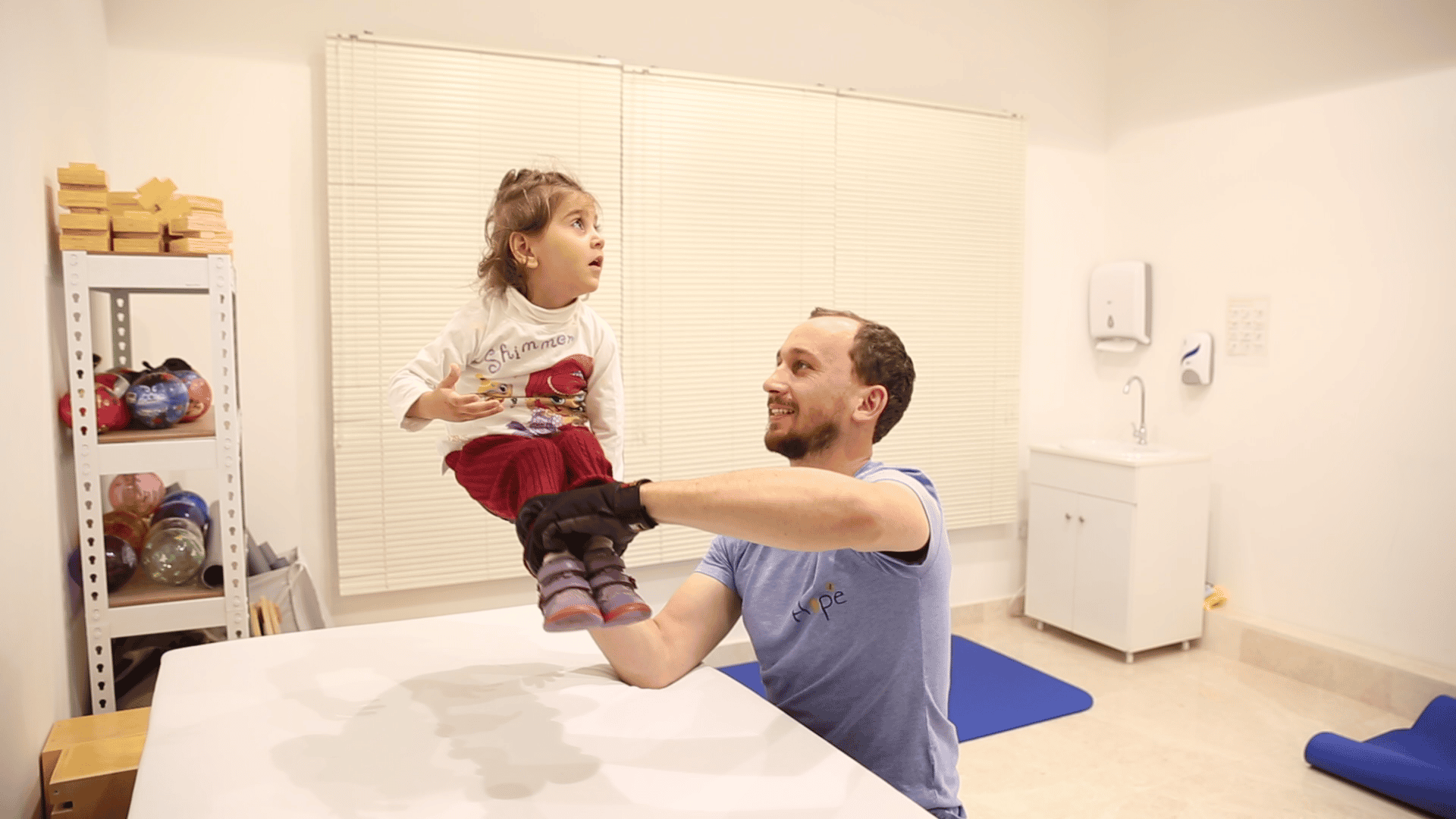
Clinics specializing in intensive therapy often employ a variety of advanced techniques. One of the most prominent is Cuevas Medek Exercise (CME). This method involves provoking the child's natural "recovery of balance" reactions. Rather than supporting the child where they are weak, the therapist holds the child as low as possible (at the ankles, for example) to force the upper body to find its own stability.
Another popular tool is the TheraSuit or "Spider Cage." The TheraSuit is a wearable orthotic that uses elastic bands to align the body properly, providing deep pressure (proprioception) to the joints and muscles. The "Spider Cage" is a system of pulleys and bungees that allows a child to stand or jump safely, providing just enough support to let them experience weight-bearing without the fear of falling.
Mastering Dynamic Standing and Squatting
As the therapy progresses, the focus shifts from static standing (standing still) to dynamic movement. At [00:10], the child is shown practicing squats and weight shifts while standing on a therapy mat. This is a crucial skill because it mimics the "eccentric" and "concentric" muscle movements required for sitting down and standing up independently.
By using foam blocks and colorful obstacles, the therapist creates a "gamified" environment. The child is no longer "doing therapy"; they are playing. This psychological engagement is vital because a motivated child will push through the physical fatigue associated with intensive programs, leading to better long-term retention of motor skills.
The Social and Emotional Impact of Improved Mobility
While the physical gains are easy to measure, the emotional impact is equally profound. Toward the end of the video [00:15], the child's joy and sense of accomplishment are evident. Being able to move toward a person of interest or a favorite toy empowers the child, reducing the frustration often associated with physical limitations.
For parents, seeing their child interact with the world on their own terms provides a renewed sense of hope. Independence in mobility often leads to improvements in other areas, such as speech, cognitive development, and social interaction, as the child is no longer solely focused on the exhausting task of keeping their body upright.
Key Benefits of Early Intensive Intervention
- Avoidance of Secondary Complications: Improving alignment and weight-bearing can prevent hip dysplasia, scoliosis, and muscle contractures.
- Enhanced Bone Density: Weight-bearing activities are essential for developing strong bones in growing children.
- Improved Digestion and Respiratory Function: Upright posture allows for better lung expansion and more efficient digestion.
- Reduced Need for Surgery: Early functional improvements can sometimes delay or eliminate the need for orthopedic surgeries later in life.
Finding the Right Intensive Therapy Program
When searching for a pediatric rehabilitation center, it is important to look for clinics that offer a multidisciplinary approach. The best programs integrate physical therapy, occupational therapy, and sometimes speech or aquatic therapy into the intensive block. Facilities should be equipped with modern tools like G-EO System gait trainers, Galileo vibration plates, and specialized suspension systems.
Families often travel internationally for these programs, as specialized intensive centers are not available in every city. Destinations like Thailand, Poland, Mexico, and certain hubs in the United States have become world-renowned for their pediatric intensive models, combining expert clinical care with supportive environments for the whole family.
Ready to Restore Your Smile in Egypt?
PlacidWay Medical Tourism connects you with top-rated dental clinics in Egypt, offering world-class care at unbeatable prices. Let us handle the details while you focus on your new smile.
GET A FREE QUOTEView Video Transcript
00:00 [The video opens with a "BEFORE" caption. A toddler in a diaper is standing in a therapy room. A male therapist in a tan shirt and face mask is kneeling behind him, holding the child's hips to provide stability. The child is looking around, appearing somewhat unsteady and reliant on the therapist's support.]
00:05 [The scene transitions to an "AFTER" caption. The same child is now wearing a striped shirt and shorts. He is standing independently in front of a female therapist who is sitting on the floor. He gestures with his hands and looks much more balanced and confident.]
00:08 [The child initiates movement toward the therapist, taking small, controlled steps. The therapist smiles and encourages him. Another person in the background is filming the progress.]
00:10 [The "AFTER" footage continues. The child is standing on a blue therapy mat next to colorful foam blocks. He performs a controlled squat and then stands back up without losing his balance.]
00:15 [The child walks toward the camera with a joyful expression. He reaches out toward a toy or person, demonstrating significantly improved gross motor control and spatial awareness compared to the initial footage.]




.png)













Share this listing