
Comprehensive Guide to Stem Cell Therapy for Autism in Mexico: Elisa's Journey
Parents navigating a neurodevelopmental diagnosis frequently search for advanced interventions that offer measurable improvements in their child's quality of life. For many families, standard therapeutic routes provide a solid foundation but may eventually yield diminishing returns. This has led to a surge in interest regarding regenerative medicine, specifically stem cell therapy for autism in Mexico. By targeting the underlying neuroinflammation and cellular dysfunctions often associated with developmental delays, regenerative treatments are providing new hope for families worldwide.
One compelling case highlighting the potential of these advanced treatments is the journey of Elisa. Her story sheds light on the profound challenges associated with severe sensory processing disorders, communication barriers, and social isolation. After undergoing targeted regenerative treatments at a specialized facility, her developmental trajectory shifted dramatically. This guide explores the foundational challenges of autism spectrum conditions, the rigorous therapeutic pathways families endure, and the specific clinical breakthroughs witnessed after utilizing stem cell treatment for developmental delays abroad.
Video Chapters & Quick Navigation
Early Indicators of Developmental Delay and Sensory Processing Challenges
Recognizing the early signs of neurodevelopmental conditions is crucial for prompt intervention. In many cases, parents are the first to notice subtle differences in how their infant interacts with the world. At [00:05], Elisa's mother recalls that by eight to twelve months of age, she began noticing a lack of imitation skills. Imitation is a fundamental building block for cognitive development, heavily tied to the brain's mirror neuron system.
When an infant does not mimic facial expressions, gestures, or sounds, it often serves as a primary clinical indicator of an underlying developmental delay. Furthermore, gross motor skill delays frequently accompany cognitive atypicalities. As noted in the video, Elisa took an unusually long time to achieve basic milestones, such as rolling over. This prompted her family to seek professional evaluations and begin therapeutic interventions at just one year old.
A significant component of these early challenges involved profound sensory processing dysfunction. At [00:27], her mother describes her as being "very low sensory," specifically regarding tactile input. Children with hyposensitivity often engage in sensory-seeking behaviors to stimulate underactive neural pathways. For Elisa, this manifested in an inability to feel standard tactile input, leading her to hug people with excessive force just to register the physical sensation.
The Role of Traditional Therapies in Autism Spectrum Disorder Management
Upon receiving a diagnosis or observing significant developmental hurdles, families are immediately thrust into the demanding world of pediatric therapies. The standard protocol typically involves a rigorous, multidisciplinary approach designed to address distinct areas of deficit. As highlighted at [00:46], Elisa's family engaged in "thousands of therapies" over the years. This exhaustive effort is a common reality for parents striving to maximize their child's neuroplasticity during critical developmental windows.
These traditional interventions usually include Applied Behavior Analysis (ABA), speech and language pathology, and occupational therapy focusing on sensory integration. Behavioral speech therapy and behavioral play therapy are specifically designed to teach children how to navigate complex social environments. While these conventional treatments are indispensable for establishing coping mechanisms and basic communication skills, they often require years of intensive repetition.
Despite unwavering dedication to these programs, many autistic children reach a developmental plateau where traditional therapies alone cannot breach the biological barriers of the condition. Persistent behavioral challenges, such as frequent yelling and an inability to self-soothe, can remain deeply ingrained. As mentioned at [01:02], Elisa would experience episodes of intense screaming with no apparent way to calm her down, highlighting the limitations of purely behavioral interventions in managing severe neurological dysregulation.
Exploring Alternative Treatments: Stem Cell Therapy for Autism in Mexico
Faced with developmental plateaus, an increasing number of parents are researching advanced biological interventions. Stem cell therapy for children with autism has emerged as a promising frontier in pediatric neurology. Facilities like MexStemCells offer targeted protocols using specialized cellular applications. The core scientific premise revolves around the utilization of Mesenchymal Stem Cells (MSCs), which possess profound immunomodulatory and anti-inflammatory properties.
Current medical literature suggests that many individuals on the autism spectrum suffer from chronic neuroinflammation, immune system dysregulation, and impaired blood flow to specific regions of the brain. When high-quality stem cells are introduced into the body, they secrete cytokines and growth factors. This paracrine effect helps to repair damaged neural tissue, reduce systemic inflammation, and promote angiogenesis, thereby enhancing overall brain connectivity.
The decision to pursue stem cell therapy for sensory processing disorder and autism is monumental for families. By addressing the cellular abnormalities that behavioral therapies cannot reach, these treatments aim to optimize the child's neurological baseline. Once the brain's physical environment is improved, children are often significantly more receptive to the traditional therapies they have been attending for years, unlocking previously dormant potential.
Breakthrough Improvements in Speech and Communication After Stem Cell Treatment
One of the most highly anticipated milestones for parents of non-verbal or minimally verbal children is the development of functional communication. Prior to regenerative intervention, Elisa's language skills were severely restricted. As her mother notes at [03:17], she arrived at the clinic capable of speaking only isolated, single words. This lack of expressive language often leads to immense frustration, driving the behavioral meltdowns common in neurodivergent children.
Following the stem cells for speech delay protocol, the transformation in her communication abilities was striking. She transitioned from isolated vocabulary to constructing complete sentences. At [01:06], her mother expresses profound relief, confirming that Elisa is now talking much more and actively engaging in two-way conversations. This represents a massive neurological leap from basic echolalia or simple labeling to complex, spontaneous language generation.
This newfound ability to communicate has fundamentally altered daily family dynamics. Previously, her mother had to guess her needs, leading to a constant cycle of trial and error regarding meals and activities. Now, Elisa successfully articulates her desires, specifying exactly what she wants to eat or where she wants to go. This expressive clarity dramatically reduces household stress and empowers the child with a critical sense of agency.
Enhancing Social Interaction, Reducing Anxiety, and Improving Eye Contact
Social integration is a notoriously difficult area for children on the spectrum, deeply intertwined with sensory overload and communication deficits. Early on, Elisa struggled to join peer activities. At [00:34], it was noted that while schoolmates would try to include her, she found it difficult to integrate into shared games. She insisted on following only her own rules, a hallmark trait of the rigid thinking patterns associated with autism.
Post-treatment observations reveal a remarkable shift in her social adaptability and emotional regulation. Her mother reports at [01:21] that Elisa is now a much calmer child. This inner tranquility translates directly into better public behavior. She can now sit patiently at a restaurant table, wait for her food, and enjoy a meal in peace. This level of emotional regulation points to a significant decrease in sensory hyper-reactivity.
Furthermore, critical non-verbal communication markers have drastically improved. Before treatment, maintaining eye contact was virtually impossible, hindering her ability to form social bonds. At [02:13], her mother reflects on her prior inability to bear visual contact or sustain attention. Today, she successfully seeks out other children, establishes collaborative games, and maintains the joint attention required to foster genuine childhood friendships.
Clinical Observations: Before and After Stem Cell Therapy
| Developmental Area | Before Stem Cell Treatment | After Stem Cell Treatment |
|---|---|---|
| Communication | Spoke only in single, isolated words. Could not express specific needs. | Forms complete sentences, holds conversations, and explicitly asks for desired items. |
| Sensory Processing | Severely hyposensitive; hugged people too tightly to feel tactile input. | Improved sensory regulation; calmer nervous system without extreme sensory seeking. |
| Social & Behavior | Prone to severe yelling episodes. Avoided eye contact. Could not share play rules. | Maintains eye contact, sits calmly in restaurants, actively seeks out peers to play. |
| Cognitive Memory | Struggled to retain multi-step instructions or recall physical routines. | Successfully recalled and executed a dance routine after a week without any instruction. |
Fostering Independence, Memory Retention, and Daily Living Skills
Beyond communication and socialization, the ultimate goal of pediatric interventions is to cultivate long-term independence. Cognitive impairments associated with autism frequently impact working memory and executive functioning. This makes executing daily living skills incredibly challenging. The cellular regeneration facilitated by these advanced therapies often yields surprising improvements in neurocognitive retention.
A prime example of this cognitive expansion is highlighted at [01:20], where Elisa's mother notes a significant improvement in her memory. Elisa had previously failed to grasp a specific dance routine. However, after treatment, she was able to spontaneously recall and perform the entire sequence a week later without any external prompting. This demonstrates an enhanced capacity for motor planning and long-term memory storage.
This newfound cognitive clarity directly impacts her self-sufficiency. Adaptive skills, such as dressing oneself, require complex coordination and focus. During a recent school sleepover, detailed at [01:34], Elisa's teacher reported that she was one of the very few children who successfully dressed herself. For a child who previously could not be left alone for a single second, this leap in autonomy represents a life-changing victory for both the patient and her caregivers.
Why Families Choose Stem Cell Treatment for Neurological Conditions in Mexico
As the demand for alternative neurological therapies grows, medical tourism has become a practical pathway for global patients. Finding the most reliable and affordable stem cell clinics in Mexico is a priority for parents who face strict regulatory limitations in their home countries. Mexico has established a progressive medical framework that permits the safe, regulated expansion and application of mesenchymal stem cells for therapeutic use.
Facilities specializing in neurodevelopmental conditions provide comprehensive care that aligns perfectly with international medical standards. These clinics employ rigorous laboratory protocols to ensure the purity, viability, and potency of the administered cells. Furthermore, the cost of autism stem cell therapy in Mexico is significantly more accessible compared to parallel experimental treatments in the United States or Europe, making it a viable option for middle-class families.
By combining advanced cellular therapies with the ongoing traditional modalities practiced at home, parents are creating a synergistic healing environment. The testimonials of patients like Elisa continue to validate the efficacy of these protocols. As neuroinflammation decreases and neural pathways regenerate, children are finally given the biological tools they need to break through their developmental barriers and thrive.
Ready to Explore Advanced Treatment Options for Your Child?
Discover how specialized stem cell therapy for autism in Mexico can help reduce neuroinflammation, improve speech, and enhance your child's overall quality of life. Contact our medical team today for a comprehensive case evaluation.
Get Free QuoteView Full Video Transcript
00:05 When Elisa is about 8 months - 1 year old I began to notice that she did not imitate,
00:13 She didn't do things that kids her age do.
00:18 She took a long time to roll, in fact she started taking therapy from a very young age,
00:24 Since she was a year she was already going to sensory therapy.
00:27 She is very low sensory, for example in the tactile, she doesn't feel anything
00:31 In fact she hugs me very tight.
00:34 As for socialization, at school when the children look for her, she goes and play
00:40 but it is difficult for her to integrate into the game because she wants to do what she wants
00:46 We have gone to thousands of therapies, we have never suspended language therapy,
00:52 She has taken behavioural speech therapy and is currently in behavioural play therapy,
00:57 language therapy and she is starting sensory therapy.
01:02 She yells, she yells a lot and then there is no way to shut her up.
01:06 I am very happy because we can already see results, thank God,
01:10 my daughter is already talking much more, she is starting to have conversations,
01:15 she is more calm, she behaves better,
01:20 at school they also report to me that she already remembers things
01:23 she already remembers things that she stopped doing,
01:26 For example, she didn't dance a dance for a long time and she didn't know how to do it
01:30 and when she danced it again after a week, she managed to do it without instructions.
01:34 As I told you yesterday, she went to a sleepover at school
01:37 and the teacher told me that she was one of the few girls who managed to dress herself.
01:41 Elisa is much calmer, she was a very restless girl,
01:45 she is still a little restless, but already manages to sit down at a restaurant table
01:50 and wait for the food to arrive, eat, everything calmer.
01:55 She also asks where she wants to go because before she didn't ask, and I had to guess,
02:01 and now she asks me what she wants to eat, before I had to guess what I fed her,
02:06 Now she asks me and if I give her something she doesn't like,
02:09 I have to give her what she asks for, now she has more decision, she knows what she wants
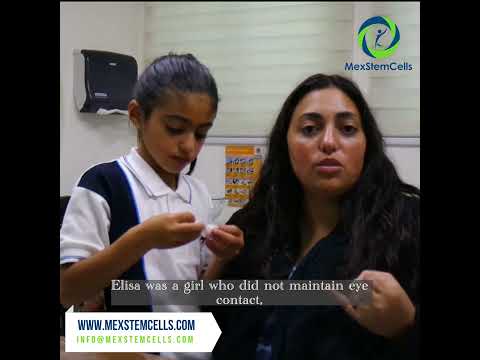
02:13 Elisa was a girl who did not maintain eye contact,
02:17 She spoke very little, she had no attention, she could hardly bear contact,
02:21 In fact, she had several sensory problems,
02:30 and she has been improving them a lot through the treatment of the cells.
02:35 Elisa has advanced a lot in her language, a lot,
02:40 She is much more attentive, concentrated, you can work better with her,
02:44 at school they report a lot of progress to me
02:47 At home she is also much quieter, before I could not leave her alone for a second,
02:51 She is more independent, she dresses herself,
02:54 we have achieved several things since the treatment.
02:57 As for social integration, she can now spend more time with the children,
03:03 she already manages to establish a game, not with her own rules,
03:10 She has to have help but she can be with the children, she looks for them more,
03:15 Her memory has also expanded a lot,
03:17 Elisa did speak when she arrived, she said single words
03:22 And right now she manages to make sentences,
03:26 she tells you what she wants, she expresses herself now, not before.






.png)
.png)
.png)




.png)
.jpg)
.png)








Share this listing