


The Science of Longevity: Decoding Anti-Aging vs. Backaging for Total Body Rejuvenation
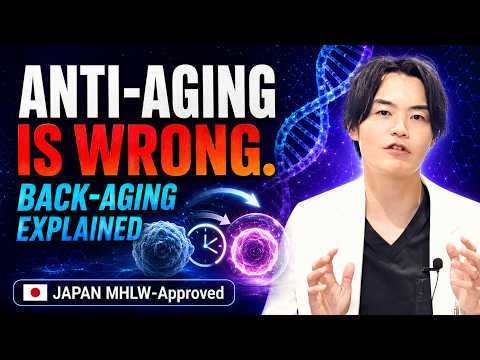
In an era where the pursuit of youth has transitioned from mythical fountains to high-tech laboratories, understanding the terminology of longevity is more critical than ever. Most people use the term "anti-aging" as a catch-all for looking younger, but in the medical world, there is a profound distinction between preventing the march of time and actively reversing it. Today, we delve into the world of regenerative medicine to explore the nuances between traditional prevention and the revolutionary concept of "backaging."
Whether you are looking to maintain your current health or seeking to restore the biological functions of a decade ago, this guide explains how cellular-level design can transform your future. Watch as we break down the medical treatments, lifestyle habits, and pharmacological breakthroughs that are redefining what it means to grow older in the 21st century.
Video Chapters & Quick Navigation
The True Definition of Anti-Aging: Prevention First
While the term "anti-aging" is frequently associated with creams and Botox, in a strictly clinical sense, anti-aging is prevention. It is the strategy of maintaining one's current state of health and slowing the rate of biological decline. It is not necessarily about looking like you are 20 again; it is about ensuring that at 50, you still have the cellular integrity and health profile you possess today.
At the core of anti-aging are two physiological processes that drive systemic decline: Oxidation and Glycation. Anti-oxidation is often described as preventing the body from "rusting," where free radicals damage cellular structures. On the other hand, anti-glycation prevents the "charring" of proteins caused by excess sugar, which leads to the formation of Advanced Glycation End-products (AGEs) that stiffen tissues and dull the skin.
The Preventive Shield
Effective anti-aging strategies focus on extending the "healthy lifespan." This involves a multi-pronged approach to keep the body's internal environment optimized so that chronic illnesses do not find a foothold. By emphasizing disease prevention, medical professionals help patients avoid the common pitfalls of aging such as metabolic syndrome, cardiovascular decline, and cognitive fatigue.
The Three Pillars of Longevity Lifestyle
Before moving to advanced medical interventions, one must master the basics. The most significant factor in longevity is improving lifestyle habits. These aren't just suggestions; they are the fundamental signals your cells receive to either thrive or deteriorate.
| Lifestyle Pillar | Impact on Aging | Key Focus Area |
|---|---|---|
| Diet & Nutrition | Reduces systemic inflammation and glycation. | Blood sugar control & antioxidants. |
| Sleep Quality | Crucial for cellular repair and brain detoxification. | Deep sleep cycles & circadian rhythm. |
| Exercise Habits | Maintains mitochondrial health and muscle mass. | Resistance training & zone 2 cardio. |
| Intestinal Health | Regulates the immune system via the microbiome. | Good bacteria & gut barrier integrity. |
Recent research highlighted in the video points toward intestinal environment as a major player in aging. A healthy gut microbiome, supported by pro- and prebiotics, ensures that the body can absorb nutrients while keeping inflammatory markers low, directly impacting how fast or slow we chronologically age.
Backaging: The Scientific Pursuit of Rejuvenation
If anti-aging is the "brake" on the aging process, then backaging is the "reverse" gear. This is what we commonly call rejuvenation. It is the process of making the body or certain tissues biologically younger than they currently are. When patients ask, "Can I look 5 or 10 years younger?" they are asking for backaging.
Backaging can be divided into two main categories:
- Aesthetic Backaging: This includes cosmetic treatments such as plastic surgery, laser skin resurfacing, and dermal fillers. These treatments change the physical structure to provide an immediate visual improvement.
- Biological Backaging: This is a more profound approach that seeks to change from the inside out. By using regenerative medicine, we can aim to restore the actual functionality of failing or aged organs and tissues.
Pharmacological Longevity: From Metformin to NMN
Modern medicine is uncovering drugs that may have systemic longevity effects beyond their original purpose. One of the most famous examples is Metformin. Originally an old drug for diabetes, researchers noticed that diabetic patients taking Metformin actually lived longer than non-diabetics. This discovery led to massive interest in its potential to remove "senescent cells"—often called zombie cells that refuse to die and instead secrete inflammatory signals.
New Frontiers: SGLT2 and Senolytics
Beyond Metformin, SGLT2 inhibitors—a newer class of diabetes medications—are being researched for their ability to clear senescent cells. These fall under a category known as senolytic drugs. While some people use common supplements like Vitamin C for antioxidant support, many are now turning to rejuvenation supplements like NMN (Nicotinamide Mononucleotide), which boosts NAD+ levels, essential for DNA repair and cellular energy production.
The Power of Regenerative Medicine: Stem Cells and Exosomes
For those looking for true backaging, stem cell therapy and regenerative medicine are considered the most effective treatments. Unlike pharmacological approaches that might slow decay, regenerative therapies aim to repair and replace damaged tissue. The core effect of stem cell therapy is its ability to repair tissue and suppress inflammation.
Treating Frailty and Hormonal Decline
As we age, we often encounter a state called frailty, where physical activity levels decline and the body becomes vulnerable. Regenerative medicine shows great promise here. Additionally, conditions like menopause (both female and male) are classic aging markers that can be addressed through medical backaging, such as hormone replacement therapy.
Measuring Your Progress: The EpiClock Test
How do you know if your anti-aging or backaging efforts are working? We no longer have to guess based on the mirror. The EpiClock test is an emerging approach that takes a blood sample and looks at the epigenetics of your genes to measure your biological age. By comparing your biological age to your chronological age, you can precisely track the efficacy of your rejuvenation treatments.
Ready to Restore Your Smile in Egypt?
PlacidWay Medical Tourism connects you with top-rated dental clinics in Egypt, offering world-class care at unbeatable prices. Let us handle the details while you focus on your new smile.
GET A FREE QUOTEView Full Video Transcript
00:00 Today, I'd like to talk about anti-aging and also back-aging.
00:09 Strictly speaking, anti-aging is actually prevention.
00:18 Actually, anti-aging isn't a term that's used all that much in English, even though it sounds like an English word.
00:28 But if you're talking about rejuvenation, I think back-aging is the more accurate term for it.
00:43 You've just explained the difference between anti-aging and back-aging, but first, could you tell us about the definition of anti-aging?
00:58 It's a bit difficult, but basically, it's prevention. To put it simply in one word.
01:10 Basically, it's about preventing illness, or stopping further aging, and things of that nature.
01:21 Anti-oxidation is about preventing the body from rusting, and anti-glycation is about preventing the body from charring.
01:28 Also, I think the biggest factor is improving one's lifestyle habits.
01:42 The intestinal environment is also considered important. Like good bacteria.
01:47 Generally speaking, anti-aging means preventing illness and extending one's healthy life expectancy.
02:02 Next, could you please take a moment to tell us in your own words about what exactly is meant by the definition of back-aging?
02:09 This is exactly what rejuvenation is. Like when people ask, 'Can I look five years younger?' or 'ten years younger?'
02:27 When it comes to anti-aging and this idea of reversing the aging process, what kinds of medical treatment methods can actually be performed effectively?
02:43 First, speaking of something familiar, I think supplements would be a good example. For instance, there are antioxidant supplements, like Vitamin C.
02:51 And also rejuvenation supplements like NMN.
03:07 'Anti-aging drugs' have been getting a lot of attention lately. A representative example would be a drug called metformin.
03:17 This is actually quite famous, but it's an old drug for diabetes. As for why it's so famous, diabetic patients taking metformin actually lived longer.
03:32 It's been researched quite a bit, and it's said that it might actually remove senescent cells.
03:40 SGLT2 inhibitors, which are relatively new diabetes medications. Since these might also have the potential to remove senescent cells.
04:12 As I mentioned before, there are aesthetic treatments that change the physical structure, like plastic surgery, removing spots, or removing wrinkles.
04:31 Unless you change from the inside out, I don't think rejuvenation really means anything.
04:48 Called the EpiClock test. It's a bit complicated, but basically, you take blood, look at the genes, and there are tests like that to measure your biological age.
05:11 A common example is menopause. male menopause has also been gaining attention recently.
05:23 Hormone replacement therapy is, to be precise, a treatment that's even covered by insurance.
05:48 In this particular area, stem cell therapy and regenerative medicine are considered to be quite effective.
05:57 It leads to a condition called frailty. Frailty is when physical activity levels decline, meaning it's a state of physical aging.
06:08 The core effect of stem cell therapy is its ability to repair tissue and suppress inflammation.
06:49 Regarding anti-aging, I think the elements of preventing aging and extending healthy life expectancy are strong. As for back-aging, it's about restoring bodily functions and rejuvenating further.
07:25 Thank you very much for joining me today.














Share this listing