
Urological Surgery in Germany by Asklepios: Robotic Surgery with da Vinci
Modern urological care is experiencing a remarkable evolution through advanced technology and precision engineering. For patients facing complex diagnoses such as prostate cancer, bladder cancer, or kidney conditions, traditional open procedures are no longer the only path forward. At Asklepios Kliniken Hamburg in Hamburg, Germany, robotic assistance is setting new benchmarks for patient outcomes, surgical accuracy, and recovery times.
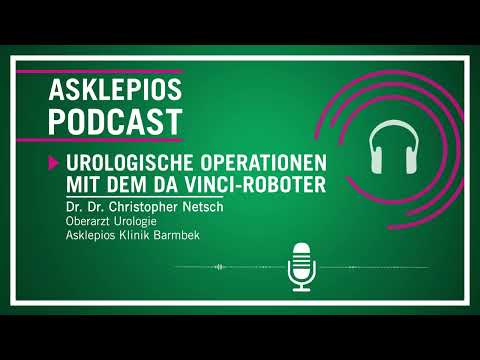
Through state-of-the-art Robotic Urological Surgery in Hamburg Germany, surgeons can replace highly invasive traditional open operations with computer-assisted precision. By combining superior 3D visualization, tremor elimination, and articulated micro-instruments, Da Vinci Surgery in Hamburg Germany provides a gentler, more effective surgical experience. In this video overview, the surgical team at Asklepios Kliniken Hamburg demonstrates how robotic platforms are revolutionizing patient care and what patients can expect when choosing modern Robotic Surgery in Hamburg Germany.
Video Chapters & Quick Navigation
Replacing Traditional Surgery: Scope of the da Vinci System
The application of robotic technology in modern medicine has fundamentally transformed surgical urology. At [00:59], specialists at Asklepios Kliniken Hamburg explain that the da Vinci robotic system can replace almost all traditional open surgical procedures in urology. From prostate cancer operations to radical cystectomies and partial or complete kidney surgeries, robotic systems provide a refined alternative to conventional open incisions.
By opting for Minimally Invasive Urology Treatment in Hamburg Germany, patients benefit from smaller port-site incisions instead of extensive abdominal cuts. This therapeutic approach lowers systemic trauma, decreases intraoperative blood loss, and allows for much smoother patient management across a variety of complex oncology cases.
Advanced Precision: Computer Control and Tremor Elimination
A common misconception is that the robotic device operates autonomously. As detailed at [01:59] and [02:59], the robot only executes movement directly commanded by the surgeon console. The computer platform translates hand gestures into microscopic, scaled instrument movements while filtering out natural physiological hand tremors.
During procedures involving Robotic Urological Surgery in Hamburg Germany, an assistant stays at the operating table to position organs and manage assistant ports while the primary surgeon works at the console [03:59]. This collaborative framework makes reaching deep pelvic structures significantly less traumatic than manual open or standard laparoscopic techniques.
Nerve Preservation & Post-Operative Urinary Continence
One of the vital measures of success in radical prostatectomy is preserving functional nerve bundles responsible for urinary continence and sexual function. High-definition 3D optics allow surgical teams to visualize subtle anatomical layers far better than the naked eye.
| Feature of da Vinci System | Clinical Advantage for Patients |
|---|---|
| Enhanced 3D Magnification | Allows clear visualization of tiny neurovascular bundles around the prostate. |
| Tremor Filtering & Wristed Instruments | Enables microscopic precision near delicate nerve fibers, promoting better urinary control post-surgery. |
| Fixed Robotic Arms | Reduces mechanical friction at incision sites, lowering overall post-operative wound pain. |
At [05:26], the expert team highlights that nerve preservation directly correlates with post-operative continence rates. The superior optics provided during Da Vinci Surgery in Hamburg Germany ensure that critical nerve networks are protected whenever clinically viable.
Comprehensive Oncological Resection: Lymph Node Removal
In addition to primary organ removal, radical oncological surgery frequently requires meticulous dissection of regional lymph nodes. At [06:52], Asklepios clinicians address how regional lymph node management is integrated into the robotic workflow.
When performing prostate cancer procedures, the prostate and seminal vesicles are removed, followed by precise reconstruction connecting the bladder to the urethra [06:52]. Concurrently, regional pelvic lymph nodes that drain the target area are dissected cleanly using robotic arms, proving that full oncological radicality is maintained alongside minimal invasiveness.
Patient Experience: Reduced Pain and Rapid Discharge
The practical benefits experienced by patients after undergoing Robotic Surgery in Hamburg Germany are noticeable early in the post-operative period. At [07:35], clinical observations reveal that robotic patients report significantly less pain and require far fewer analgesic medications compared to traditional open surgery patients.
Because the robotic arms pivot around a fixed point on the abdominal wall [08:20], there is minimal tearing or torque applied to abdominal muscle tissue. As a result of this reduced tissue trauma, hospital stay duration is dramatically shortened: patients routinely return home within 2 to 3 days post-surgery, whereas traditional open techniques often mandate 5 to 7 days of inpatient care [08:43].
Ergonomics, Surgeon Stamina, and Safety Features
Long, complex surgical procedures can induce physical fatigue in open or standard laparoscopic surgeons due to prolonged standing and awkward posture. At [09:42], experts explain how ergonomic seated consoles reduce physical tension, allowing surgeons to maintain high focus throughout lengthier operations.
Furthermore, safety is inherent to the computer system's software architecture. If the surgeon releases console controls to pause or stretch [09:58], the robotic instruments freeze immediately in position. The system will not initiate any unprompted movement, offering unmatched safety and control during Minimally Invasive Urology Treatment in Hamburg Germany.
Pragmatic Patient Selection and Limitations
While robotic assistance is versatile, Asklepios Kliniken Hamburg emphasizes a realistic, patient-centered approach. At [06:07] and [10:43], surgeons outline scenarios where open surgery remains the safer choice, such as in patients with massive abdominal adhesions from extensive prior surgeries or extremely large renal tumors (e.g., 25 cm mass) [10:52].
Individual medical consultation remains key [13:49]. Patient history, previous surgeries, blood-thinning medication, and tumor size are carefully evaluated to determine whether a patient is an ideal candidate for robotic intervention or if conventional techniques are better suited.
The Future: Image Fusion and Augmented Reality in Surgery
Looking ahead, the evolution of robotic surgical platforms is accelerating. As noted at [12:07], the next steps in surgical innovation involve real-time image fusion. Surgeons will soon view integrated 3D CT and MRI scans directly overlaying live views inside the robotic console viewfinder.
By blending augmented reality and virtual modeling directly into the surgical field [12:38], clinical teams at Asklepios Kliniken Hamburg aim to reduce tissue trauma even further, reinforcing Hamburg's position as a premier center for advanced surgical urology in Europe.
Interested in Robotic Urological Surgery in Hamburg?
PlacidWay Medical Tourism connects you with premier hospitals like Asklepios Kliniken Hamburg in Hamburg, Germany, providing world-class Robotic Surgery in Hamburg Germany and personalized medical care. Contact us today for details and personalized guidance.
GET A FREE QUOTEView Full Video Transcript
[00:00:00] Urological Surgery with the da Vinci Robot
[00:00:02] Robot
[00:00:14] [Music]
[00:00:59] In principle, the da Vinci robotic system can replace almost all so-called traditional open surgical procedures that we perform in urology.
[00:01:10] This includes surgery for prostate cancer and bladder cancer. Both procedures, as well as kidney operations, are in principle possible with the da Vinci system and can replace either open surgery or laparoscopic surgery.
[00:01:43] [Music]
[00:01:56] [Music]
[00:01:59] The instruments are inserted, but the control is then carried out through a computer system, which makes the entire procedure more precise and eliminates hand tremors.
[00:02:14] As a result, we can ultimately operate with greater precision.
[00:02:59] It only does what I do.
[00:03:56] [Music]
[00:03:59] You then have a second assistant at the operating table, who may pull the organ in a certain direction so that you can reach a specific area precisely.
[00:04:08] It is simply much less traumatic and makes it much easier for the surgeon to reach even the smallest areas.
[00:04:18] With traditional surgery, much more experience and expertise are required, and the da Vinci system provides tremendous assistance in this regard.
[00:05:26] You can see things significantly better, and continence is essentially related to preserving the nerves.
[00:05:35] Studies have shown that the nerves also play an important role in maintaining continence.
[00:05:44] Therefore, the better we can preserve the nerves, the more likely it is that the continence rate will be significantly higher.
[00:05:51] So why would you still perform an operation laparoscopically? Or do you now only use the da Vinci system?
[00:05:59] We have decided to perform as many operations as possible using the da Vinci system.
[00:06:07] But there is, of course, a pragmatic approach to where it makes sense.
[00:06:09] It does not make sense in patients who have undergone multiple abdominal operations and have extensive adhesions, to try to operate on them with the da Vinci robot if you have to spend a great deal of time releasing those adhesions.
[00:06:28] In such cases, the traditional approach, using open surgery, can sometimes be easier.
[00:06:34] But that only applies to a small proportion of patients.
[00:06:40] We have now talked about the prostate itself in prostate cancer, but I believe there are also other things that need to be removed, such as lymph nodes.
[00:06:48] Does the da Vinci system play a role there as well?
[00:06:52] In prostate cancer, the prostate is removed together with the seminal vesicles, and afterward the bladder is reconnected to the urethra.
[00:07:03] Depending on the order in which the procedures are performed, the regional lymph nodes, meaning the lymph nodes that drain the prostate, are also removed.
[00:07:18] This can also be performed using the robot.
[00:07:23] How does the patient notice that they have been treated with such a precise surgical tool?
[00:07:30] We have not yet scientifically investigated this, but subjectively, our impression is that patients experience significantly less pain and require less pain medication.
[00:07:44] [Music]
[00:07:45] This is certainly related to the fact that there is less movement during the operation.
[00:07:53] You have to imagine that there are small openings in the body, and instruments are moved through these openings.
[00:07:58] During traditional laparoscopy, the instruments are moved much more by the surgeon directly, including through the surgeon's natural hand movements and even slight hand tremors.
[00:08:12] There can also be movement from the assistant.
[00:08:16] With the da Vinci system, the robotic arms are more or less fixed.
[00:08:22] The direction in which you operate is predetermined, and the free movement within the abdominal wall is much more limited.
[00:08:30] The instruments used to reach and operate on the organs therefore move much less.
[00:08:36] And we believe that this is one reason why patients generally require significantly less pain medication.
[00:08:43] As a rule, our patients go home after two to three days following major operations, whereas patients may otherwise stay for five or seven days.
[00:08:53] Yes, and probably also...
[00:09:00] That, of course...
[00:09:07] Will...
[00:09:27] You feel fresher, and during a long operation, it is also reassuring as a patient to know that the surgeon is still fresh and focused at the end of the procedure.
[00:09:37] Is that really the case?
[00:09:38] Absolutely. It really does make a difference.
[00:09:42] Especially for surgeons who have performed a lot of laparoscopic surgery, you are not as tense after the operation.
[00:09:48] During the operation, if you need to pause, the robot does not do anything on its own.
[00:09:58] This robot does nothing unless you actively move the equipment.
[00:10:01] That means you can take your fingers off the instruments and simply relax for a second.
[00:10:08] That is already a significant advantage compared with other surgical methods, where you may sometimes have to remain in a tense position in order to continue operating in difficult areas.
[00:10:26] And we also see this as one of the main advantages of the system.
[00:10:32] But it certainly has its limitations as well.
[00:10:35] You mentioned earlier that adhesions are a reason to avoid it.
[00:10:39] Are there certain conditions that you would not treat with the da Vinci system?
[00:10:43] Again, it comes down to a pragmatic approach.
[00:10:46] Where it simply does not make sense, there is no reason to use it.
[00:10:49] For example, if a patient has a kidney tumor that is 25 centimeters in size, it obviously does not make sense to try to remove the kidney through small access points.
[00:11:00] In that situation, we would return to the traditional method and use a larger incision.
[00:11:03] A larger incision is necessary because the organ somehow has to be removed from the body.
[00:11:08] Otherwise, it would simply become an academic exercise with the instruments that would not actually help the patient.
[00:11:17] We should not try to use the da Vinci system in every case simply for the sake of doing so.
[00:11:20] But the fact is that we continue to push the boundaries of what can be operated on using the system.
[00:11:30] In the past, people also thought that bladder cancer surgery, meaning complete removal of the bladder and prostate in cases of bladder cancer, could not be performed using the da Vinci system.
[00:11:43] But this is now being performed and can be performed safely.
[00:11:48] Is that the direction things are heading?
[00:11:51] More and more toward robotic-assisted surgery?
[00:11:54] I think that is a trend that cannot be stopped.
[00:12:01] But where this development will ultimately lead, I think the next 20 years will show.
[00:12:07] I think computer assistance will continue to increase, particularly image-guided surgery.
[00:12:14] We may have image fusion during the operation, combining CT images, MRI images, and the image that I see in 3D on the small monitor while operating with the da Vinci system.
[00:12:30] I think that is where the trend is heading: being able to see these images during surgery and combine them, using virtual reality and augmented reality during an operation to operate even more precisely and keep tissue trauma as low as possible.
[00:13:11] [Laughter]
[00:13:26] Does the patient take blood-thinning medication?
[00:13:30] How many times has the patient had surgery?
[00:13:33] Have general surgeons previously operated on the abdomen?
[00:13:35] Has the organ we intend to operate on already been operated on several times?
[00:13:42] When we consider all these factors together, it becomes clear whether we can perform the procedure and whether it makes sense.
[00:13:49] This must always be discussed individually with the patient.
[00:13:52] In my opinion, you should never try to force a particular approach and simply say, "We are going to do it this way."
[00:13:56] Instead, it should always involve individual consultation with the patient to determine the best possible treatment method.
[00:14:10] Thank you very much for this interesting conversation.
[00:14:13] We will see you again on Facebook and YouTube.
[00:14:19] [Music]























Share this listing